Executive Overview
New York in September is an anomaly of urban physics. For one compressed, hyper-accelerated week, the city’s standard rhythm doubles in tempo. The transition is palpable: summer has not yet relinquished its grip, autumn waits impatiently in the wings, and suddenly every concrete vein of downtown Manhattan—from subterranean subway platforms to gilded hotel lobbies, chaotic backstage holding areas, and dimly lit after-hours sanctuaries—is co-opted by New York Fashion Week (NYFW).
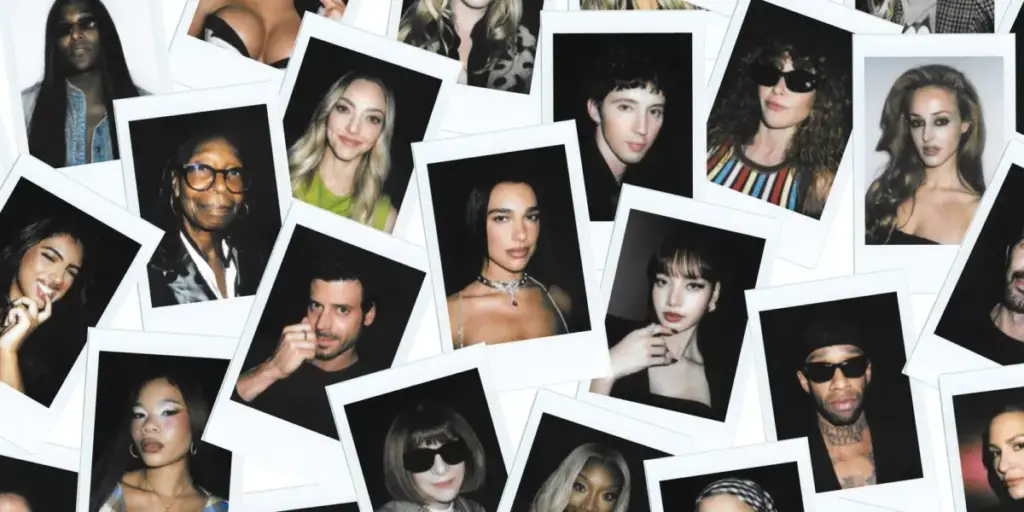
For the Spring/Summer 2027 season, the geographic boundaries of the tents and off-site venues dissolved entirely, bleeding into a citywide panorama of high culture, pop-star sightings, and sartorial experimentation. Yet, beneath the dizzying carousel of flashbulbs and trend forecasting lies a quieter, more intimate ecosystem. Armed with a Fujifilm Instax Mini 99, the photographer’s lens captures the ephemeral spaces between the chaos—those critical few seconds when the global elite, industry legends, and fresh-faced newcomers actually stand still long enough to be preserved on analog film.
If this season proved anything, it is that the theater surrounding the runway often eclipses the garments themselves. The Spring/Summer 2027 showcases were not merely displays of textiles and tailoring; they were carefully orchestrated social experiments. Pop royalty sat shoulder-to-shoulder with fashion aristocracy, downtown counter-culture icons mingled with Hollywood mainstays, and an unprecedented convergence of music, film, and digital creator culture dominated the landscape. This was the week where the front row mattered just as much as the first look, and where the after-parties served as the ultimate cultural currency.
Detailed Chronology: A Day-by-Day Examination of the NYFW Circuit
The Spring/Summer 2027 calendar moved with relentless velocity, demanding stamina from editors, buyers, and photographers alike. The week was defined by high-profile presentations that set early precedents for the season’s social hierarchy.
[Day 1-2: Opening Salvos]
   ├── Coach (Troye Sivan, Elle Fanning, Storm Reid)
   ├── Tory Burch (Amanda Seyfried, Anna Wintour)
   └── Christian Siriano (Whoopi Goldberg, Brandy)

[Day 3-4: The Avant-Garde & Playful Front Rows]
   ├── Christian Cowan (Saweetie, Yung Miami)
   ├── Rachel Antonoff x Susan Alexandra (Natasha Lyonne, Busy Philipps)
   └── 7 For All Mankind (Law Roach, Charlotte Lawrence)

[Day 5-7: The After-Hours & Luxury Apex]
   ├── PAPER x Lexus x AMBUSH (Ty Dolla $ign, Richie Shazam, Evan Mock)
   ├── Bulgari Serpenti Infinito (Dua Lipa, Lisa)
   └── Brand Launches (Marc Jacobs Beauty, Tom Ford Beauty)
The Opening Salvos: Coach, Tory Burch, and Christian Siriano
The schedule kicked off with institutional powerhouses and crowd-pleasers that immediately established the season’s star-studded baseline. At Coach, the atmosphere was thick with youthful irreverence and cinematic gravity. Nestled among the attendees were Troye Sivan, whose effortless downtown cool matched the brand’s Americana-meets-grunge ethos, alongside Elle Fanning, Storm Reid, Avantika Vandanapu, Flowerovlove, and Blu DeTiger. Each brought a distinct generational perspective to the house’s latest iterations of leather and layering.
Moving uptown to the Tory Burch runway show, the tone shifted toward polished sophistication. Here, the perennial queen of American fashion found her counterpart in Amanda Seyfried, whose classic elegance served as a physical embodiment of the collection. Naturally, no Tory Burch presentation is complete without the immutable presence of Vogue’s Anna Wintour, whose critical gaze from the front row remains the industry’s ultimate litmus test.
Meanwhile, Christian Siriano delivered his signature brand of theatricality, anchored by the legendary Whoopi Goldberg, who held court like fashion royalty, commanding the room’s attention before a single model hit the catwalk. The energy extended well into the night, capped off by an appearance from R&B icon Brandy at the exclusive after-party.
The Mid-Week Momentum: High-Concept Collaborations and Cult Favorites
As the week progressed, the presentations grew bolder, leaning into playful subversions and unexpected casting choices in the front rows. Christian Cowan injected high-octane glamour into the schedule, drawing hip-hop heavyweights Saweetie and Yung Miami. Their arrival caused a predictable media scrum, perfectly complementing Cowan’s unapologetically loud, glittering designs.
In stark yet delightful contrast, the collaborative presentation of Rachel Antonoff x Susan Alexandra felt like an exclusive downtown clubhouse gathering. The front row was a masterclass in quirky, intellectual cool, featuring Natasha Lyonne, Busy Philipps, Ella Emhoff, and Karen Elson. This specific grouping—bridging the gap between indie cinema, political adjacent art, and high-fashion modeling—represented the exact type of eclectic curation that only New York Fashion Week can successfully execute.
Later in the week, commercial sportswear and contemporary labels held their ground. LoveShackFancy welcomed Erika Jayne and Sutton Brown into its pastel-drenched dreamscape, while 7 For All Mankind enlisted the master eye of image architect Law Roach, alongside Anna Van Patten, Charlotte Lawrence, and Hayes Warner, proving that denim remains a fertile ground for high-fashion styling.
The After-Hours Economy: Parties as Cultural Anchors
While the daytime runways dictate the technical trends of the season, the nocturnal circuit is where the true social negotiations occur. This season, the after-parties and brand-sponsored celebrations were architectural feats of cultural curation.
A prime example was the high-wattage collaboration hosted by PAPER alongside Lexus and AMBUSH. The venue pulsed with kinetic energy, serving as the unofficial nexus for the city’s creative vanguard. Behind the turntables, Ty Dolla $ign commanded the closing set, anchoring a room that included fashion it-girl Richie Shazam, Rei Ami, Evan Mock, and Huddy. The convergence of skate culture, boundary-pushing design, and chart-topping hip-hop encapsulated the modern definition of a luxury crowd.
Equally monumental was the Bulgari Serpenti Infinito party, a glittering tribute to heritage and high jewelry. Under the soft amber glow of the venue, the camera lens captured two absolute global titans: Dua Lipa and Lisa. Their presence underscored the increasingly borderless nature of NYFW, where K-pop royalty and British-Albanian pop superstars command equal global gravity.
The beauty sector also claimed its stake in the nocturnal economy. Jonathan Simkhai hosted an intimate after-party attended by François Arnaud, while Marc Jacobs made a rare, celebrated appearance at his own Marc Jacobs Beauty launch party, mingling freely among a swarm of digital beauty creators and flashing cameras. Skincare and cosmetics giants also made their presence felt: Summer Fridays welcomed Morgan Stewart, and Tom Ford Beauty drew Kiel Tutin for the hyper-exclusive Ombré Leather Reserve launch party.
Supporting Context & Metrics: The Anatomy of an NYFW Season
To understand the cultural weight of New York Fashion Week Spring/Summer 2027, one must examine the shifting metrics of modern fashion presentation. NYFW is no longer a localized trade event for wholesale buyers; it is a multi-platform media event designed to generate immediate global engagement.
| Metric / Indicator | Spring/Summer 2027 Status | Historical Comparison (Pre-2025) |
|---|---|---|
| Primary Media Format | Analog/Instant (Fujifilm, 35mm) + Real-time Digital | Pure Digital / Smartphone Dominance |
| Front Row Composition | 40% Pop/Music, 30% Film/TV, 30% Traditional Fashion | 60% Traditional Press, 20% Buyers, 20% Celebs |
| After-Party Influence | Critical for Brand Equity & Viral Moments | Secondary to Runway Coverage |
| Cross-Industry Crossovers | High (K-Pop, Hip-Hop, Indie Cinema, Skate Culture) | Moderate (Primarily Hollywood & Modeling) |
The Shift Toward Analog Authenticity
In an era saturated by ultra-high-definition digital streaming, 4K runway broadcasts, and algorithmic content feeds, there is a paradoxical hunger for tangible imperfection. The prevalence of analog tools—such as the Fujifilm Instax Mini 99 utilized throughout the week—speaks to a broader cultural fatigue with the sterile perfection of digital media.
Capturing celebrities, musicians, and designers on instant film strips away the polished veneer of PR-managed digital assets. It forces a moment of stillness in an otherwise hyper-accelerated environment. When Dua Lipa, Lisa, or Whoopi Goldberg are captured on chemical film, the resulting portrait feels archival, intimate, and inherently exclusive. It transforms a transient fashion week sighting into a physical collectible artifact.
The Economics of the Front Row
The curation of a runway front row has evolved from an exercise in retail politics into a high-stakes algorithmic strategy. Brands no longer invite celebrities merely to wear their clothes; they invite them to dictate cultural narratives.
- The Global Reach Factor: Bringing in global music icons like Lisa or Troye Sivan guarantees instantaneous cross-market penetration, bridging Western runway presentations with massive Asian and digital-first demographics.
- The Intergenerational Bridge: Pairing established industry icons like Anna Wintour and Whoopi Goldberg with Gen-Z darlings like Storm Reid, Huddy, and Flowerovlove ensures that the brand dialogue spans multiple generational brackets simultaneously.
- The Lifestyle Ecosystem: The integration of beauty executives, skincare founders (such as those from Summer Fridays), and image architects (like Law Roach) reflects the holistic nature of modern luxury consumption. Consumers do not just buy a dress; they buy an entire lifestyle matrix.
Official Statements and Industry Perspectives
While much of Fashion Week is communicated through visual shorthand, industry leaders, designers, and cultural commentators offered clear perspectives on the state of the industry during the Spring/Summer 2027 presentations.
The Designers Speak on Cultural Integration
Speaking backstage after her presentation, veteran American designer Tory Burch emphasized the necessity of bridging traditional craftsmanship with contemporary cultural relevance.
"Fashion cannot exist in a vacuum," Burch noted while reviewing polaroids of the evening’s attendees. "The clothes we construct are vessels for how people want to feel and how they want to be seen in the world. When you look at who is in the front row—from Amanda [Seyfried] to the young artists shaping our cultural dialogue—you are seeing the actual narrative of the season. The runway is just the beginning of the conversation."
Christian Cowan echoed a similar sentiment regarding the integration of music and fashion, particularly concerning his high-octane casting choices.
"New York is loud, it’s unapologetic, and it demands attention," Cowan stated amid the post-show chaos. "Having artists like Saweetie and Yung Miami here isn’t just about getting a photo op; it’s about matching the energy of the clothes with the energy of the culture. If the fashion doesn’t match the music playing in the room, you’re missing the point."
The Media and Creator Perspective
From the perspective of those documenting the fringes of the tents, the Spring/Summer 2027 season marked a definitive return to vitality. For years, critics whispered about the fragmentation of NYFW, questioning whether the city could maintain its status against Paris, Milan, and London.
However, the sheer density of unexpected cameos—spanning pop stars, downtown regulars, and Hollywood actors—dispelled those doubts. As independent documentarians and photographers noted throughout the week, the energy on the ground was palpable. The city felt alive in a way it hadn’t in years, driven by a collective desire to participate in real-world communal spectacles.
Future Outlook: Where Goes New York Fashion Week?
As the dust settles on the Spring/Summer 2027 season and the fashion circus packs its trunks for Europe, it is worth evaluating the trajectory of New York Fashion Week. What do these seven days of sensory overload and star-studded positioning tell us about the future of the industry?
1. The Blurring of Sectors
The traditional lines separating fashion, music, beauty, and digital creation are officially obsolete. Future iterations of NYFW will likely lean even further into cross-industry collaborations, where a fashion show functions simultaneously as a music concert, a beauty product launch, and a digital art installation. The success of multi-partner events—such as the PAPER, Lexus, and AMBUSH convergence—proves that audiences crave multi-sensory brand experiences.
2. The Premium on Tactility
Even as artificial intelligence and virtual reality threaten to infiltrate every corner of design and media, the physical realities of NYFW remain irreplaceable. The scramble for physical tickets, the sweaty crush of the after-party dance floor, and the tactile nature of analog photography point to a future where physical presence is the ultimate luxury. Expect brands to invest heavily in immersive, in-person moments that cannot be replicated through a smartphone screen.
3. New York’s Enduring Resilience
Despite perennial predictions of its decline, New York remains the world’s most dynamic cultural crucible. The Spring/Summer 2027 season proved that the city’s unique friction—that undeniable double-speed rhythm that takes over in September—is its greatest asset. It forces a collision of disparate worlds that simply cannot happen anywhere else.
As the Fujifilm Instax exposures finally dried and the polaroids were filed away, one thing remained abundantly clear: New York Fashion Week is not just surviving; it is evolving into a multifaceted cultural beast, capturing the attention of the world one unforgettable face at a time.