Executive Overview
The 2026 MTV Video Music Awards (VMAs) have officially come and gone, leaving behind a pop-cultural landscape that feels simultaneously oversaturated and strangely hollowed out. While the evening featured undeniable high points—most notably a legendary, internet-breaking opening sequence orchestrated by Madonna, who brought out modern pop icons Sabrina Carpenter and Charli xcx, alongside breakthrough hardware wins for visionary artists like PinkPantheress and Sienna Spiro—the overarching fashion narrative left a great deal to be desired.
For nearly four decades, the VMAs red carpet operated as the antithesis of the stuffy, overly manicured corridors of the Golden Globes or the Grammys. It was a chaotic, irreverent, and brilliantly bawdy playground where celebrities could let down their guard, push the boundaries of taste, and treat clothing as performance art rather than a corporate marketing exercise. Yet, as the flashbulbs popped along the 2026 carpet, a sobering realization set in: contemporary celebrity style has grown paralyzed by caution.
Plagued by the relentless, hyper-critical gaze of the internet, a relentless global press machine, and an industry-wide obsession with brand safety, today’s stars are increasingly retreating into predictable, floor-length metallic gowns and inoffensive silhouettes. This article investigates the systemic causes behind this cultural shift, examining how the fear of viral ridicule has choked out camp, humor, and audacity. Through exclusive industry commentary, historical context, and a breakdown of the few brave rule-breakers who salvaged the evening, we explore why the modern red carpet is suffering from a famine of fun—and why the industry desperately needs to learn how to fail gloriously again.
Detailed Chronology of an Event: From Iconoclasm to Uniformity
To fully grasp the magnitude of the sartorial safety on display at the 2026 VMAs, one must look back at the historical DNA of the event. Since its inception in 1984, the MTV Video Music Awards have deliberately thumbed their nose at establishment norms. It was never meant to be a night of polite applause and haute couture restraint; it was rock-and-roll rebellion translated into fabric.
[1984: VMAs Inception]
       │
       ▼
[1990s-2000s: The Golden Age of Chaos]
(Lil Kim’s pasty, Rose McGowan’s naked dress, Britney’s python)
       │
       ▼
[2010s: The Shift Toward Brand-Driven Curation]
       │
       ▼
[2026: The Height of Algorithmic Caution & The "Safe" Red Carpet]
A Legacy of Defiance
The VMAs red carpet is home to some of the most shocking and culturally indelible fashion moments of the late 20th and early 21st centuries. Viewers do not tune in to see understated elegance; they tune in for the unscripted, the jaw-dropping, and the utterly bizarre. Consider the pantheon of unforgettable VMA looks:
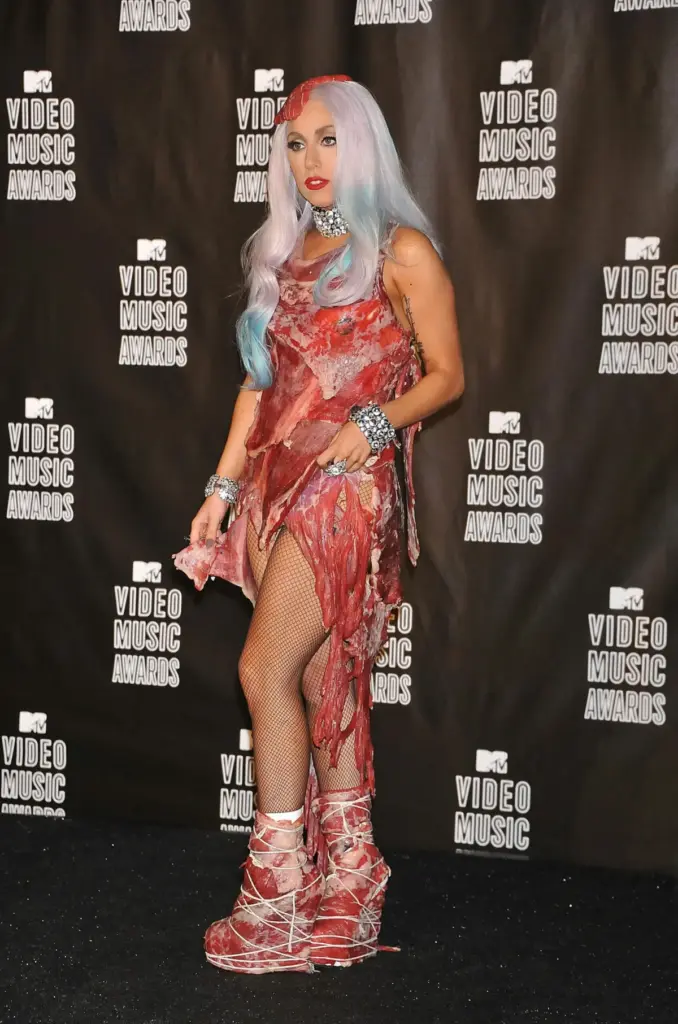
- The Meat Dress: Lady Gaga’s raw beef creation in 2010 completely hijacked global news cycles, sparking intense debates about vegetarianism, art, and shock value.
- The Pastry Cover: Lil Kim’s iconic 1999 mermaid-inspired purple jumpsuit—complete with a matching sequined pasty covering her bare breast, famously adjusted on stage by Diana Ross—remains a masterclass in unapologetic bodily autonomy.
- The Naked Dress Era: Rose McGowan walking hand-in-hand with Marilyn Manson in 1998, wearing little more than a beaded mesh string vest, redefined red-carpet vulnerability.
- The Fuzzy Pink Hat: Pamela Anderson’s oversized, candy-pink fluffy hat at the 1999 ceremony became an instant touchstone of Y2K camp that continues to inspire designers decades later.
- Denim Shock: Britney Spears and Justin Timberlake’s matching all-denim Canadian tuxedos in 2001 permanently cemented themselves in pop-culture lore.
These moments worked because they were inherently risky. They were not pre-vetted by corporate PR committees or algorithmic safety checkers; they were visceral, messy expressions of personality.
The 2026 Reality: A Homogenized Parade
Fast-forward to 2026, and the contrast is stark. As the stars arrived for the latest installment of the awards, the red carpet bore an uncanny resemblance to a mid-tier Oscar after-party. Rows upon rows of safe, heavy, architectural gowns, predictable sheer corsetry, and risk-averse metallic columns dominated the arrivals.
While the show itself delivered on musical nostalgia and high-energy performances—such as Madonna commanding the stage with effortless dominance—the fashion failed to match the kinetic energy of the room. The clothes whispered where they should have screamed. Instead of sparking water-cooler debates about taste and boundary-pushing design, the conversation quickly devolved into a monotonous review of which major fashion house supplied the safest, most marketable silhouette.
Supporting Context & Metrics: The Anatomy of Fashion’s Risk Aversion
What caused this dramatic shift from anarchic self-expression to calculated uniformity? According to fashion insiders, cultural critics, and stylists, the modern red carpet is choked by a convergence of technological, psychological, and commercial pressures.
The Tyranny of the Algorithmic Panopticon
The primary driver behind this wave of sartorial caution is the viciousness of contemporary internet culture. In the era of TikTok, X (formerly Twitter), and Instagram, a single misstep on a red carpet can instantly transform a celebrity into a permanent meme.
┌────────────────────────────────────────────────────────┐
│               The Modern Outrage Cycle                 │
├───────────────────────┬────────────────────────────────┤
│ 1. Risk-Taking Outfit │ Star wears unconventional look │
├───────────────────────┼────────────────────────────────┤
│ 2. Instant Capture    │ Paparazzi zoom in / TikTok live│
├───────────────────────┼────────────────────────────────┤
│ 3. Viral Condemnation │ Internet mobs weaponize memes   │
├───────────────────────┼────────────────────────────────┤
│ 4. Commercial Backlash│ PR firms enforce strict safety │
└───────────────────────┴────────────────────────────────┘
This hyperspeed outrage cycle leaves zero room for nuance or experimentation. If a look is deemed unconventional, confusing, or ugly by the digital mob, the backlash is instantaneous, merciless, and permanent. Consequently, wearing a basic, floor-length, universally flattering metallic dress has become the ultimate defensive strategy—a surefire way to fly under the radar, collect positive engagement, and avoid becoming the internet’s punching bag of the week.
The Exhaustion of the Global Press Machine
Compounding the fear of online ridicule is the sheer velocity of the modern fashion calendar. Celebrities are no longer just movie stars or pop musicians; they are 24-hour content machines servicing dozens of global events annually.
With over 5,000 active stars making the rounds across hundreds of international festivals, fashion weeks, and award ceremonies each year, the fashion ecosystem is running on fumes. Designers, stylists, and talent alike are simply exhausted. Originality requires time, psychological safety, and creative bandwidth—three commodities that are in critically short supply within the modern entertainment complex.
Official Statements & Expert Perspectives
To understand how the industry views this decline in red-carpet audacity, we turn to the professionals tasked with navigating this high-stakes landscape.
Ron Hartleben on the "Famine of Fun"
Celebrity stylist Ron Hartleben, known for his visionary work with trendsetting artists like Tyla and Camila Cabello, pulls no punches when assessing the current state of affairs.
"I think we are in a famine of fun and excitement when it comes to celebrity dressing," Hartleben remarks. "Everyone is so concerned with what the Internet will say and how they’ll be picked apart. I grew up in the days of Diana Ross slapping Lil Kim’s pasty, Rose McGowan being next to naked holding hands with Marilyn Manson, and Pam Anderson wearing a hat twice the size of her. This kind of risk-taking and nonsensical styling used to be what the VMAs were all about."
Hartleben argues that the institutionalization of red-carpet styling has stripped the art form of its raw, unpredictable joy. Stylists, he contends, have become overly beholden to corporate sponsors and major luxury PR firms, prioritizing brand relationships over artistic creation.
"I think real stylists need to throw more caution to the wind and start making moments again versus the safe, ‘nice’ option that may get them favors with a big brand or PR firm," Hartleben urges. "It’s just fashion!"
The Bright Spots: Who Broke the Rules in 2026?
Despite the pervasive climate of fear, a select group of artists at the 2026 VMAs proved that rule-breaking is still alive and well for those willing to embrace the absurdity of the night.
Tyla’s Unapologetic Mowalola Moment
Pop sensation Tyla arrived at the ceremony to introduce Lisa’s performance clad in a fresh-off-the-runway creation by Mowalola. Featuring a waistline that dipped perilously low to celebrate the human form, the look was an masterclass in sensual, provocative styling.
Rather than leaning into traditional high-jewelry tropes, Tyla elevated the ensemble with:
- A turquoise snakeskin choker that added raw texture.
- A Chopard watch worn unconventionally around her ankle—a brilliant display of thumbing one’s nose at jewelry etiquette.
- Matching snakeskin Le Silla pumps with lethal heels.
The look was pure sex, unabashedly campy, and most importantly, deeply fun.
Charli xcx’s Masterclass in Subversive Cool
No discussion of 2026 fashion rebellion is complete without Charli xcx. Known for her uncompromising aesthetic and cultural footprint, Charli teased convention throughout the entire evening:
- The Arrival: She stepped out in a custom Saint Laurent creation that expertly bared skin, injecting raw sex appeal into an arena otherwise dominated by heavy layers of stifling tulle.
- The Stage Reunion: When joining Madonna on stage for "Danceteria Afterhours," Charli paid homage to pop history by wearing a direct recreation of a Dsquared Spring/Summer 2004 look that was cheeky, irreverent, and perfectly tailored to the chaotic energy of the performance.
- The Presentation: In a stroke of anti-fashion genius, when presenting Madonna with the Best Dance VMA alongside Troye Sivan, Charli wore a simple henley shirt and classic blue jeans. By stripping away all red-carpet artifice, she proved that confidence requires no scaffolding.
Future Outlook: Reclaiming the Joy of Dressing Up
The lesson of the 2026 MTV Video Music Awards extends far beyond the hemlines and accessories of a single evening; it serves as a critical mirror for the entire entertainment industry. Fashion was never intended to be a permanent exercise in risk mitigation.
The Cost of Perfection
When every celebrity on a red carpet looks polished, acceptable, and completely sanitized, the culture loses its vitality. Perfection is sterile; imperfection is where human character lives. By designing exclusively to appease anonymous algorithms and avoid viral critique, the fashion world risks collapsing into a sea of boring, interchangeable homogeneity.
A Call to Action for the Next Era
As we look toward the future of red-carpet culture, the mandate for stylists, designers, and public figures is clear: embrace the glorious flop.
┌────────────────────────────────────────────────────────┐
│           The Path Forward for Red Carpet Fashion      │
├────────────────────────────────────────────────────────┤
│ • Abandon Algorithmic Fear: Stop designing for memes.  │
│ • Prioritize Joy Over Approval: Fashion is play,       │
│   not diplomacy.                                       │
│ • Embrace the Risk of Failure: A messy, bold swing     │
│   beats a boring safe look every time.                 │
│ • Reclaim the VMA Spirit: Bring back the shock, camp,  │
│   and irreverence of the 1990s and 2000s.              │
└────────────────────────────────────────────────────────┘
Life is far too short to spend it wearing yet another meticulously vetted, perfectly acceptable sequined column dress. If there is any venue on earth where a star should feel liberated enough to throw caution to the wind, test the limits of taste, and risk total stylistic disaster, it is the god-damn VMAs. It is time for pop culture to shake off the shackles of digital timidity, remember how to laugh at itself, and put the fun back into fashion.