Autumnal fashion and beauty cycles have long adhered to a predictable, comforting palette. As the leaves begin to turn and temperatures dip, consumer habits traditionally pivot toward a heavy, grounding spectrum of hues: full-bodied burgundies, deep warm espressos, charred terracottas, and the ubiquitous, comforting warmth of pumpkin spice. This seasonal transition has historically acted as an unspoken boundary, walling off the airy pastels of spring and summer in favor of earthier, heavier tones designed to mirror the encroaching chill of winter.
Yet, the aesthetic landscape of late 2026 has introduced a fascinating anomaly. Breaking decades of seasonal color theory, a singular pastel shade has successfully bridged the gap between seasons, making a stealthy and pervasive infiltration into autumn wardrobes and beauty routines. That shade is lilac—a delicate, evocative hue defined by New York City-based nail artist Miss Pop as the precise intersection “where pastel purple meets pink.”
Far from being a transient, sun-drenched memory of warmer months, lilac has proven to have genuine seasonal staying power. What began as a surprising uptick in digital interest during the transitional months has materialized physically across runways, red carpets, high-profile sporting events, and prestige cosmetic formulations. Supported by significant data shifts, celebrity endorsements, and expert validation from the beauty industry, lilac’s unexpected cross-seasonal dominance signals a broader shift in modern consumer behavior: the traditional rules of seasonal color coding are rapidly dissolving in favor of mood-driven, versatile aesthetics.
Detailed Chronology: The Evolution of a Pastel Takeover
The journey of lilac from a conventional warm-weather staple to a year-round heavyweight began quietly, long before the first autumn leaves hit the pavement.
Spring and Summer Incubation
In the early months of the year, lilac bubbled up naturally across digital mood boards and social platforms, behaving precisely as trend forecasters anticipated. As daylight lengthened and temperatures rose, consumers gravitated toward lighter, uplifting tones. Pastel purples populated spring nail inspiration galleries, summer dress shopping carts, and warm-weather accessory lines. Traditionally, this is the phase of the trend lifecycle where saturation peaks, paving the way for the inevitable autumn purge as consumers pack away their pastels in favor of jewel tones and neutrals.
The Late-Summer Pivot
The turning point for the shade arrived unexpectedly in August and September. Rather than experiencing the steep drop-off characteristic of seasonal pastels, lilac maintained its momentum, transitioning seamlessly into late-summer and early-fall wardrobes. Digital search metrics revealed that consumers were actively planning autumn events—from back-to-school styling to early transitional layering—around the color.
The Real-World Infiltration
As the digital metrics manifested physically, the shade emerged in high-visibility real-world settings. At the US Open—the cultural and athletic nexus serving as the unofficial bridge between summer and autumn in New York City—pop artist Tate McRae stepped out sporting immaculate, lilac-painted nails, signaling to fans and trend-watchers alike that the color was primed for the fall season.
Simultaneously, the high-fashion world embraced the shift. During LoveShackFancy’s autumn runway presentation, nail artist Miss Pop sent sheer lilac pedicures down the catwalk, proving the shade’s versatility in footwear-optional and open-toe transitional looks. On the red carpet, the shade achieved undeniable prestige status when Hollywood heavyweights Florence Pugh and Emilia Clarke arrived at major industry events wearing striking lilac ensembles against contrasting backdrops.
Beauty brands swiftly capitalized on the momentum. Major cosmetic houses, including Prada Beauty (with its Wisteria collection) and Make Up For Ever, rolled out targeted autumn collections featuring the airy shade of purple, officially cementing its transition from a grassroots internet trend to a fully commercialized seasonal staple.
Supporting Context & Metrics: Decoding the Data Behind the Trend
To understand the mechanics of lilac’s unexpected autumn reign, industry analysts look beyond anecdotal observations and into hard digital analytics. Platforms like Pinterest serve as a crystal ball for consumer intent, capturing what people plan to buy, wear, and create long before those choices materialize in the physical world.
According to Sydney Stanback, global head of trends and insights at Pinterest, the data collected during the late-summer transition period of August and September 2026 shattered conventional forecasting models.
Key Statistical Indicators (YoY Growth, Aug/Sept 2025 vs. Aug/Sept 2026):
“Lilac dress styling” searches: Increased by an astonishing 345%, indicating that consumers were actively seeking ways to incorporate the color into transitional outerwear and layering pieces as the weather cooled.
“Milky lilac nails” searches: Rose by 425%, demonstrating a massive consumer appetite for specific, tactile nail art interpretations of the color heading into the cooler months.
“This signals that lilac is more than a fleeting seasonal shade,” notes Stanback. The metrics reflect a fundamental shift in consumer psychology: shoppers are increasingly unwilling to restrict their color palettes based on outdated, rigid seasonal calendars. Instead, they are opting for shades that evoke specific emotional responses—calmness, playfulness, and subtle sophistication—regardless of the calendar month.
Official Statements & Expert Perspectives
Behind every major micro-trend lies the technical expertise of the artisans and trend forecasters translating abstract color concepts into physical reality. Industry insiders emphasize that lilac’s unique chemical and visual properties make it uniquely suited for transitional weather.
The Bridge Between Warmth and Coolness
Los Angeles-based nail artist Sarah Chue points to the chromatic balance of the shade as the primary driver of its success. When consumers are ready to transition away from the neon brights and electric pastels of mid-summer, diving straight into the heavy, moody depths of deep burgundy or espresso can feel jarring. Lilac offers a psychological and visual reprieve.
“It’s an easy option when you’re ready to shift into the cooler season but still want something vibrant on your nails,” explains Chue. “It’s a much more toned-down and cool-toned color compared to summer’s bright colors.”
The Neutral-Colorful Sweet Spot
Furthermore, nail artists have identified lilac as inhabiting a rare conceptual category within modern manicures. Chue categorizes the shade as the “sweet spot between neutral and colorful.”
In an era dominated by clean-girl aesthetics, ultra-minimalist milky whites, and sheer nude overlays, consumers frequently experience color fatigue when confronted with heavy autumn darks. Lilac provides a whisper of chromatic personality without demanding the commitment of a vibrant primary color or a stark seasonal contrast. It reads almost as a neutral when paired with gray tailoring, black leather, or navy knitwear, yet retains enough playful character to stand out on its own.
Future Outlook: How to Wear Lilac This Season and Beyond
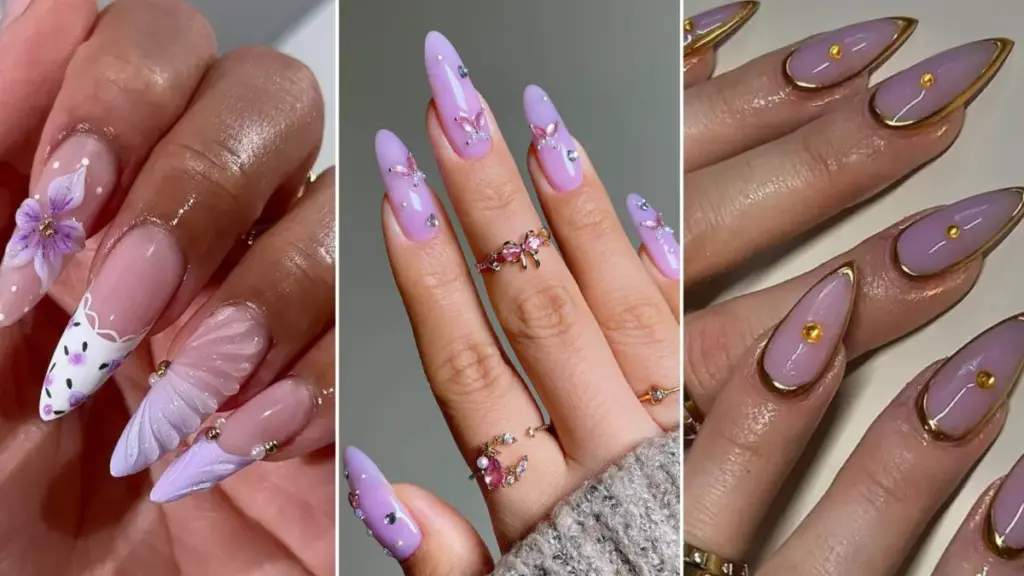
As the beauty industry looks toward the remainder of the season and beyond, lilac has established a secure foothold as a versatile canvas for artistic expression. Far from being restricted to a flat, opaque coat of polish, the shade has inspired a myriad of sophisticated nail art techniques that elevate it from a basic pastel to an elevated design statement.
1. The Modern Lilac French Manicure
For those who prefer a minimalist approach, the classic white-tipped French manicure is receiving a modern, transitional update. By swapping traditional stark white tips for a soft, creamy lilac, wearers can achieve a clean, polished look that nods subtly to color trends without overwhelming the hand. Nail artists suggest pairing this with a sheer, milky pink or neutral base to maintain an understated elegance.
2. Dimensional Florals and 3D Art
Even though seasonal botanical blooms have faded from gardens, floral motifs remain a powerhouse on fingertips. Detailed hand-painted florals rendered in complementary shades of violet, white, and silver look exceptionally striking against a lilac base. For a more tactile, modern finish, beauty enthusiasts are turning to 3D gel formulations to create sculptural, raised floral petals that catch the light.
3. Bedazzled and Embellished Manicures
The inherent sweetness of pastel purple provides a brilliant juxtaposition against heavy metallic hardware and crystalline bling. Integrating gems, gold foil accents, and chrome details adds instant edge and contrast to the delicate hue. Whether opting for tiny, minimalist gold studs centered on each nail or full-scale clusters of crystals, lilac acts as a surprisingly cooperative backdrop for high-impact accessories.
4. Velvet and Cat-Eye Finishes
Perhaps the most mesmerizing evolution of the trend is the combination of lilac with magnetic polish. Known popularly as cat-eye or velvet nails, these formulations utilize metallic particles that shift and catch the light dynamically when exposed to a magnet. Applying this technique to a soft lilac base results in an ultra-plush, dimensional finish that feels simultaneously cozy and futuristic—making it the ultimate sophisticated manicure for crisp autumn evenings.
Essential Polish Picks for the Trend
For those looking to recreate the look at home, industry-standard formulations offer immediate access to the trend:
OPI Nail Lacquer in Do You Lilac It: A classic, creamy pastel purple that delivers smooth, reliable coverage.
Essie Nail Polish in Lilacism: A definitive, cool-toned favorite that perfectly captures the airy softness of the trend.
Orly Nail Polish in Just Squid-ing: A playful, modern take on the hue that leans into contemporary playful aesthetics.
Ultimately, lilac’s unexpected survival through the autumn threshold proves that contemporary beauty is no longer governed by strict seasonal edicts. By offering versatility, emotional resonance, and a seamless bridge between vibrant summer expression and moody winter introspection, lilac has transitioned from a passing novelty into a timeless, multi-seasonal essential.