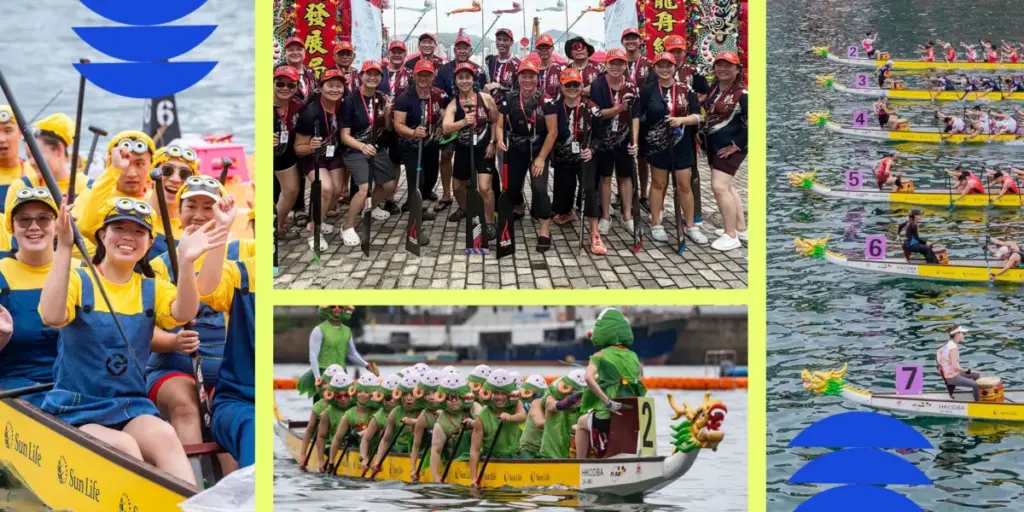
On a humid, overcast morning in late June, the bustling metropolis of Hong Kong plays host to one of the most visually stunning and culturally rich spectacles in the global sporting calendar: the Hong Kong International Dragon Boat Festival. Amidst a backdrop of towering skyscrapers embedded into lush green mountains, Victoria Harbour comes alive with the synchronized splash of paddles, the rhythmic thrum of drums, and the vibrant colors of handcrafted dragon boats slicing through the water.
While the modern incarnation of the sport celebrated its 50th anniversary in 2026—dating back to the inaugural international races held in Hong Kong in 1976—its roots stretch back more than two millennia into the murky depths of ancient Chinese folklore. Today, dragon boat racing has evolved from a regional memorial tradition into a thriving international phenomenon. Attracting over 220 teams from across the globe, the sport bridges generational divides, unites diverse demographics, and serves as a masterclass in collective human synchronization.
Far from being an exclusive discipline reserved for elite rowers or professional athletes, dragon boating has carved out a unique space in the athletic landscape as the ultimate egalitarian team sport. From ten-year-old novices to eighty-one-year-old seasoned veterans, the community champions a culture of radical inclusivity, mental fortitude, and deep-seated camaraderie. This investigative feature explores the origins, anatomy, physical demands, and explosive global growth of a sport where success is entirely dependent on a unified pulse.
Detailed Chronology: From Ancient Tragedy to Modern International Sport
The Legend of Qu Yuan
The historical foundation of dragon boat racing is rooted in a tale of political protest, heartbreak, and communal grief. More than 2,000 years ago during China’s Warring States period, the Kingdom of Chu suffered under a corrupt and oppressive government. Among its aristocracy was Qu Yuan, a brilliant and deeply respected poet whose literary works fiercely criticized the emperor’s policies and the moral decay of the court.
Disillusioned and unjustly banished from his homeland, Qu Yuan fell into a state of profound despair. In an ultimate act of political defiance and personal tragedy, he drowned himself in the Miluo River. According to folklore, local villagers who held the poet in high regard were devastated by his loss. Desperate to save his body, they rushed out onto the water in long, narrow wooden boats. To ward off fish and river scavengers from consuming his remains, the villagers beat frantically on drums and splashed their paddles violently in the water—traditions that directly mirror the visual and auditory elements of modern races today. Furthermore, villagers threw packets of sticky rice into the river to feed the fish, giving rise to the culinary traditions of the Dragon Boat Festival (Tuen Ng Festival).
The Birth of Modern Competition
While the commemorative rituals persisted locally for centuries, the sport underwent a massive structural transformation in the latter half of the 20th century. In 1976, the Hong Kong Tourism Board organized the first-ever modern Hong Kong International Dragon Boat Races, effectively codifying the festival into an international sporting competition.
This watershed moment birthed the global framework for the sport, establishing standardized boat designs, race distances, and regulatory bodies. Over the subsequent decades, the movement spread rapidly across Asia, North America, Europe, and Australia. Today, international federations host world championships every two years, drawing elite club crews and national teams alike to compete under standardized regulations.
Supporting Context & Metrics: The Anatomy of a Dragon Boat
To the untrained spectator watching from the shoreline, a dragon boat race looks deceptively simple: a fleet of colorful canoes powered forward by enthusiastic paddlers. However, a closer look reveals a highly technical, finely tuned aquatic machine requiring absolute precision.
Boat Composition and Crew Dynamics
A standard international dragon boat is a massive, highly synchronized vessel operated by a crew of 22 people. The precise breakdown of the crew is as follows:
The Drummer (1 person): Seated at the very front of the boat facing the crew, the drummer acts as the heartbeat of the team. Using a traditional drum, they keep the pace, call out stroke rates, and visually motivate the paddlers.
The Paddlers (20 people): Arranged in 10 rows of two sitting side-by-side on wooden benches. The crew is strategically distributed based on physical attributes and biomechanical function:
The Pacers (Front benches): Responsible for setting the timing and rhythm that the rest of the boat must strictly follow.
The Power Paddlers (Middle benches): Typically the physically larger and stronger athletes, tasked with generating maximum torque and sustained propulsion.
The Rockets (Rear benches): The final three benches, filled with endurance specialists who maintain stroke efficiency under extreme fatigue to propel the boat across the finish line.
The Steersperson (1 person): Positioned at the stern of the boat, this individual utilizes a long sweep oar to navigate the vessel, compensate for currents and wind, and ensure the boat maintains a straight, efficient trajectory.
Physical Demands and Physiology
Dragon boat racing is fundamentally a sprint event rather than a long-distance endurance marathon. Standard competitive distances measure 500 meters (approximately one-third of a mile), though elite events occasionally feature 1-kilometer or 2-kilometer races.
At a competitive level, a premier 500-meter race is finished in under two minutes. This places an immense demand on the anaerobic and aerobic energy systems. Contrary to popular belief among spectators, power does not originate in the arms and shoulders.
"It’s coming from your lats, your core, your hips; your big muscles are recruited to provide that power to propel the boat," explains Lisa Minerd, president of the San Diego Dragon Boat Team. "The way we train for it is like any sport—you break it down and you take one component at a time."
Athletes must master a complex kinetic chain that involves driving force through the footboard, rotating the pelvis, engaging the obliques and latissimus dorsi, and executing a clean catch and exit with the paddle.
Official Statements and Perspectives from the Water
The true essence of dragon boating lies within its community. Interviews with athletes, coaches, and leaders reveal a sport defined by inclusivity, mental resilience, and lifelong passion.
The Ultimate Team Sport
Lisa Minerd, who grew up watching the festival in Hong Kong before discovering the sport in her late 50s in the United States, emphasizes the absolute necessity of cohesion.
"You can be an Olympian or you can be the 60-year-old who paddled for two or three years and that’s it," Minerd notes. "And you get into that boat together, you are working together as a team. You have to, or that boat isn’t going to move very well, and you can forget about winning anything."
This sentiment is echoed by Zoe Chiang, women’s head coach of the San Diego Dragon Boat Team. Chiang highlights how the sport transcends gender divides, allowing women to compete not just within gender-segregated brackets, but as integral, powerhouse athletes across mixed divisions.
"I look at myself as an athlete first, not a female athlete," Minerd adds, summarizing the mindset of many competitors. "I don’t look at it as, ‘Who do I have to compete against?’ within my female friends to earn a spot in that boat. I want to beat my male friends as well."
Multigenerational Legacies
The demographic makeup of teams like the San Francisco-based Oyster Point Dragons demonstrates the sport’s unique cross-generational appeal. Ranging from ten-year-old youths to eighty-one-year-old co-captains like Shirley Lau, the community acts as an extended family.
Lau’s journey full circle—from sitting on her father’s shoulders as a child watching the Hong Kong races to discovering a recruitment booth after running a half-marathon in her thirties—exemplifies the magnetic pull of the sport.
"Now, I’m paying it forward and trying to train people the same way—be patient, a lot of love, a lot of encouragement," Lau reflects. "This group that I have right here is really like a family."
Jane Chao Pun, a 54-year-old nurse practitioner who joined the Oyster Point Dragons alongside her son, notes the profound impact the sport has had on her physical health and longevity:
"At 54, this is the best shape I’ve ever been in my whole life. Doing this activity will even maybe add years to my life that I didn’t think I would gain before."
Future Outlook: Growth, Inclusivity, and the Next Generation
As dragon boat racing looks toward the future, its trajectory points steadily upward. Industry leaders note a significant surge in youth participation, driven by university club teams and community outreach programs that introduce adolescents to paddle sports.
Training Methodologies and Mental Toughness
To sustain growth, clubs have professionalized their training regimens while maintaining an open-door policy for recreational members. Off-season training typically combines:
On-Water Technique: Focusing on stroke uniformity and hydrodynamics.
Cardiovascular Conditioning: Emphasizing Zone 2 and Zone 3 endurance training, along with high-intensity interval sprints.
Strength Training: Incorporating deadlifts, TRX rows, and ergometer simulations to build lower back, core, quad, and shoulder resilience.
Beyond the physical requirements, elite competitors emphasize the psychological burden of racing. Minerd recalls competing for Team USA at the 2023 World Dragon Boat Racing Championships in Thailand, where her crew secured a silver medal in the grueling 1,000-meter race.
"The final 50 meters, what went on in my head was, ‘Don’t die. Don’t die. You got to finish this,’" she recalls. "I had a saying that I keep in my head all the time, which is, ‘When you think you are completely spent, you have 40 percent more.’ And that plays on a loop in my head."
Expanding Horizons
The future of dragon boating is characterized by an absence of gatekeeping. Teams actively encourage newcomers to commit to at least a three-practice trial period to overcome the initial learning curve. With specialized initiatives—such as upcoming teams composed entirely of cancer survivors and rising youth engagement—the sport is expanding its cultural footprint far beyond its traditional hubs.
Ultimately, whether competing for world championship medals in international regattas or enjoying a sunrise paddle on a local municipal lake, dragon boat racing remains a powerful testament to human synchronization. As Minerd aptly concludes:
"Everyone’s equal. You get in that boat, you work together or succeed or fail, you are together."