Executive Overview
In the fast-paced ecosystem of modern fashion, few shifts capture the zeitgeist quite like a sudden, collective demand for tactile depth in accessories. For the past several years, the industry has undergone a quiet yet profound material revolution. It began with the unexpected ubiquity of mesh footwear around 2022, catalyzed by brands like Alaïa and their cult-favorite netted ballet flats. What initially registered as a daring, avant-garde stylistic experiment quickly snowballed into a widespread design philosophy.
Designers rapidly realized that introducing woven materials, mesh paneling, and intricate cutouts unlocked an entirely new dimension of visual depth for shoes. Heels and sandals naturally followed suit, capturing the market’s imagination with breezy cutouts and textural complexities. As the calendar flipped and warm weather gave way to transitional climates, the footwear sector faced a familiar seasonal dilemma: how to bridge the gap between airy summer staples and structured autumn wardrobes without sacrificing style or comfort.

Enter the woven loafer.
Bridging the gap between the relaxed, breathable ease of a beachside resort shoe and the crisp, academic polish required for leaf-strewn city streets, woven loafers have emerged as the definitive transitional footwear of the season. They offer a masterclass in seasonal duality. Rejecting the notion that consumers must abruptly swap their strappy sandals for heavy knitwear and enclosed leathers the moment the temperature drops, this trend champions a nuanced middle ground. By combining the timeless silhouette of the classic leather loafer with intricate, artisanal weaving techniques, the market has delivered a product that feels both utterly contemporary and enduringly classic. This comprehensive report examines the trajectory of the textural trend, analyzes the structural shift in consumer purchasing habits, reviews the standout market offerings, and projects the longevity of woven footwear in contemporary wardrobes.

Detailed Chronology: From Netted Ballet Flats to Intricate Weaves
To understand the sudden dominance of the woven loafer, one must trace the evolutionary breadcrumbs left across recent runway seasons and street-style capitals. The resurgence of textural footwear did not happen overnight; it is the culmination of a multi-year appetite for tactile surfaces that challenge the dominance of flat, smooth leather.
2022–2023: The Mesh Phenomenon and the Rise of Transparency
The narrative truly commenced in 2022, when transparency and breathability conquered footwear. For decades, traditional shoes relied on solid surfaces—smooth calfskin, patent leather, or heavy suede. However, the post-pandemic style revival demanded a sense of lightness and playfulness.

The turning point arrived with the widespread adoption of netted and mesh ballet flats. Spearheaded by luxury houses like Alaïa, whose fishnet ballet flats achieved an unprecedented level of viral success, the industry woke up to the power of negative space. Consumers gravitated toward shoes that revealed glimpses of the foot while maintaining a structured silhouette. This trend proved that footwear could be delicate yet durable, minimalist yet visually intricate.
2024–2025: Extension into Heels and Warm-Weather Crochet
Encouraged by the commercial triumph of mesh flats, footwear designers rapidly scaled the technique across categories. By 2024, the obsession with texture manifested in heels, mules, and slingbacks constructed from woven ribbons, raffia, and leather mesh.

By the summer of 2025, warm-weather footwear was utterly dominated by crochet and intricate fiber arts. Artisanal techniques that were once confined to beach bags and vacation wear migrated onto high-fashion runways and urban sidewalks. Consumers were no longer looking for simple, clean leather slides; they wanted handcrafted elements, artisanal imperfections, and visible structural construction. The eye had grown accustomed to complexity.
The Present: The Ascent of the Woven Loafer
As the seasonal pendulum swings toward autumn, the natural evolution of the textural trend has landed squarely on the loafer. The loafer has long been a pillar of transitional dressing—a symbol of understated elegance and Ivy League heritage. However, classic smooth leather iterations can sometimes feel rigid or prematurely heavy during the liminal weeks between late summer and true autumn.

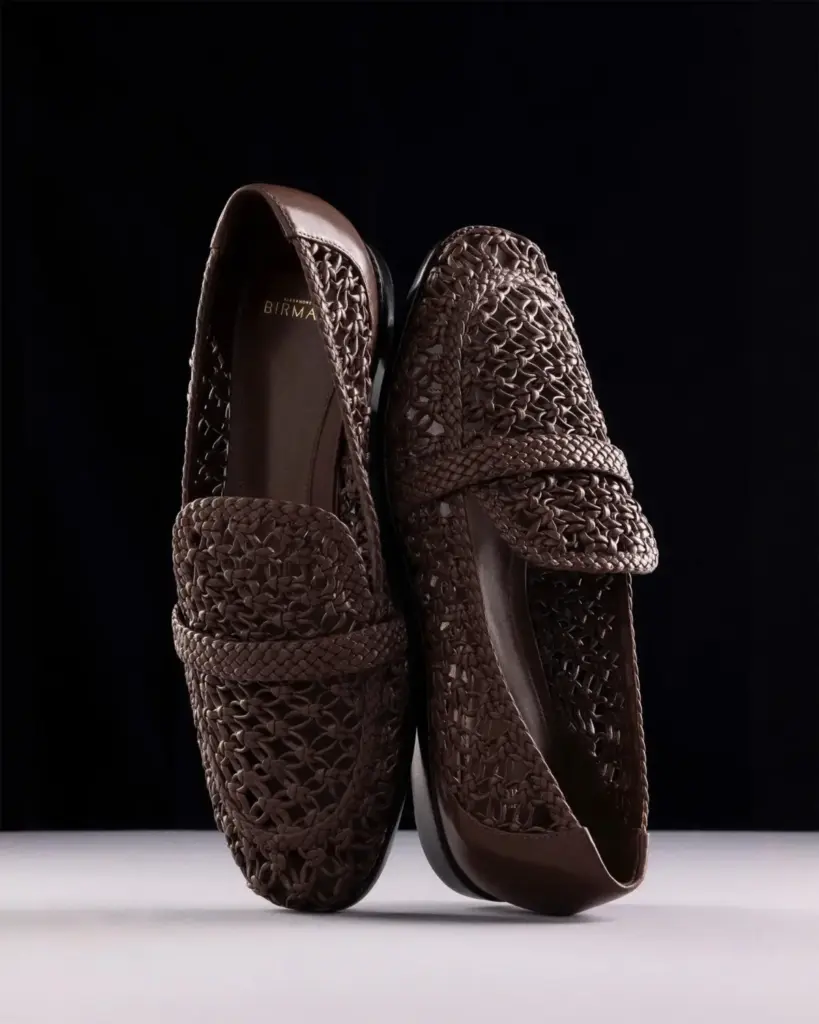
The woven loafer solves this design puzzle. By rendering the traditional loafer silhouette in interwoven leather strips, supple suede weaves, and mixed-media raffia, designers have managed to retain the intellectual polish of the shoe while stripping away its seasonal inflexibility. It is a footwear category engineered for a world where seasons are increasingly blurred by climate shifts and flexible lifestyles.
Supporting Context & Metrics: The Economics of Transitional Dressing
The meteoric rise of the woven loafer is backed by significant shifts in consumer psychology and retail data. In the current economic and cultural landscape, wardrobe versatility is no longer just a nice-to-have feature; it is a primary purchasing driver.

The Death of Hard Seasonal Boundaries
Historically, fashion operated on a rigid binary: summer shoes were open, light, and colorful; winter shoes were closed, dark, and heavy. Consumers maintained distinct seasonal wardrobes, packing away sandals in September and unboxing heavy boots in October.
However, metrics from major luxury e-commerce platforms indicate a dramatic pivot toward "transitional dressing" categories. Shoppers increasingly favor items that can cross-pollinate across multiple seasons. A woven leather loafer, for instance, can be worn sockless with linen trousers in August, transitioned with lightweight ankle socks and a trench coat in October, and integrated into early spring ensembles. This high cost-per-wear ratio makes woven loafers an attractive investment for the modern, value-conscious consumer.

The Artisanal Value Proposition
In an era dominated by fast fashion and mass-produced synthetic goods, tactile textures signal craftsmanship. The intricate weaving required to create a durable, comfortable leather loafer cannot easily be automated to the same degree as stamping out solid leather panels.
Whether crafted from hand-woven intrecciato leather or structured raffia, these shoes tap into a growing consumer appreciation for slow fashion aesthetics. Retail analysts note that searches for terms like "hand-woven leather," "raffia loafers," and "texture-blocked footwear" have seen double-digit year-over-year increases, proving that shoppers are willing to pay a premium for visual and structural depth.

Market Landscape: Standout Offerings Across Price Points
The versatility of the woven loafer trend is reflected in its broad market adoption. From accessible contemporary labels to ultra-luxury heritage houses, brands have reinterpreted the silhouette through their unique design lenses.
Accessible & Mid-Range Standouts
- J. Crew Factory Woven Penny Loafers: Delivering classic prep school aesthetics with a textural twist, these loafers offer an approachable entry point for those looking to test the trend without a major financial commitment. Frequently found at accessible price points, they pair effortlessly with denim and blazers.
- The Frye Company Faith Woven Loafer: Known for legendary leather craftsmanship, Frye brings its heritage durability to the trend. The Faith loafer blends robust construction with delicate interwoven panels, striking an ideal balance between ruggedness and refinement.
- Madewell The Dolli Glove Loafer: Emphasizing comfort and glove-like softness, Madewell’s woven leather iteration molds to the foot instantly, making it an ideal candidate for all-day urban commuting.
- Sam Edelman Avril Loafer: A staple in contemporary footwear, Sam Edelman’s woven offerings provide trend-forward styling backed by reliable comfort engineering.
Designer & Luxury Mastery
- Bottega Veneta Sveglia Intrecciato Leather Loafers: As the undisputed masters of woven leather goods, Bottega Veneta sets the gold standard for the category. The intrecciato weave elevates the humble loafer into an exquisite piece of wearable art, commanding a luxury price point for unmatched craftsmanship.
- Le Monde Beryl Woven Leather Loafers: Celebrated for their luxurious take on traditional Venetian gondolier slippers and loafers, Le Monde Beryl infuses the trend with an understated, effortless European sophistication.
- Loeffler Randall Rachel Woven Leather Loafer: Balancing feminine charm with practical tailoring, Loeffler Randall’s espresso-toned woven loafers serve as a masterclass in rich autumnal color palettes.
- Stuart Weitzman Spencer Woven Loafer: Combining architectural precision with artisanal texture, Stuart Weitzman’s design leans into rich, boho-tan leather aesthetics that anchor transitional tailoring.
- Alexandre Birman Jane Tresse Loafer: Infused with subtle Brazilian flair, Birman’s braided and woven leather details add structural intrigue to traditional tailoring.
Why Trust ELLE
Every product featured on ELLE.com is independently researched, tested, or editor-approved. We only recommend products that we stand behind, and the merchandise featured on our site is always driven by editorial and product testing standards, not by affiliate deals or advertising relationships. Any content created in partnership with advertisers is marked as such.

Our fashion editors spend countless hours analyzing runway presentations, interviewing designers, and road-testing seasonal pieces in real-world urban and resort environments. When a trend like the woven loafer transitions from the design studios of Milan and Paris to the sidewalks of global style capitals, our mission is to cut through the noise, evaluate the craftsmanship, and guide our readers toward investments that offer genuine longevity, style, and utility.
Future Outlook: Where Do We Go From Here?
As we look beyond the current season, the trajectory of the woven shoe suggests that texture is no longer a fleeting novelty—it has become a permanent pillar of footwear design.

The success of the woven loafer signals a broader consumer fatigue with flat, uninspired surfaces. In the coming seasons, industry insiders predict that this textural philosophy will expand further into hybrid categories. Expect to see performance-driven soles paired with woven uppers, winterized weather-treated leather weaves, and experimental color-blocking that utilizes contrasting strips of suede, patent, and matte leather.
Ultimately, the woven loafer is more than just a passing footnote in footwear history. It is a symptom of a smarter, more adaptable approach to dressing—one that honors heritage craftsmanship while embracing the fluid, boundary-pushing nature of modern style. Whether paired with tailored wool trousers, crisp denim, or minimalist midi skirts, the woven loafer has cemented its status as an essential modern classic.