Executive Overview
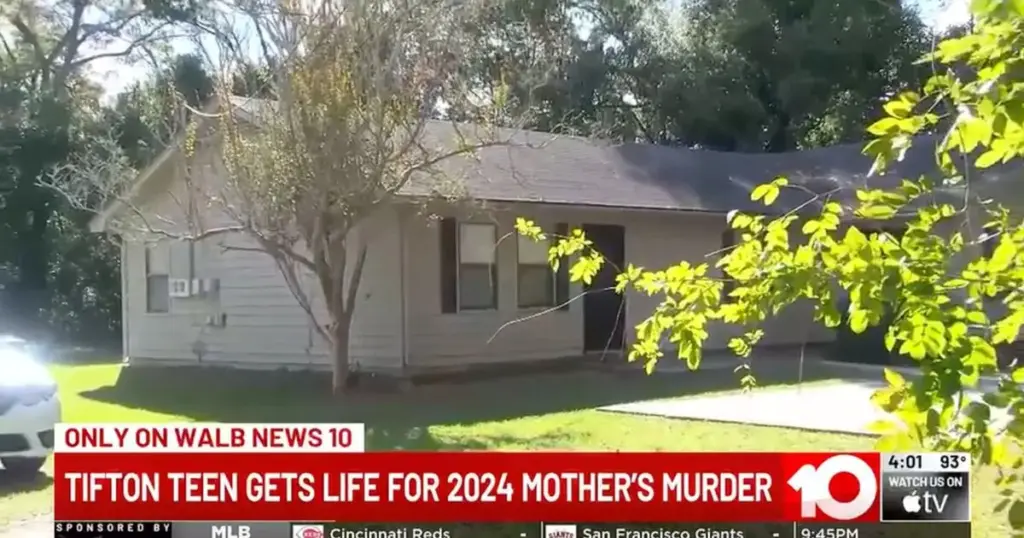
In a case that has sent shockwaves through local communities and ignited a national conversation regarding digital radicalization, a Georgia teenager has been sentenced to life in prison with the possibility of parole after 30 years. Now 16 years old, the defendant pleaded guilty to felony murder and aggravated assault for the November 2024 killing of her mother, Rachel Wagner. The perpetrator was just 14 years old when she shot her mother in the back of the head while she slept.
What initially appeared to be a tragic domestic homicide quickly transformed into a complex and terrifying investigation. During the subsequent probe, authorities uncovered a handwritten confession revealing that the matricide was, in the teenager’s own words, a substitute plan for a planned school shooting at her former middle school. Forensic examiners and digital investigators uncovered a deep-seated obsession with mass casualty events, an extensive online footprint, and encrypted communications with radicalized anonymous actors who encouraged her violent ideation.
The tragic sequence of events has prompted stern warnings from prosecutors and law enforcement officials regarding the unchecked dangers of unsupervised internet access among minors. As policymakers and mental health advocates grapple with the rising tide of youth radicalization, this case serves as a grim reminder of the devastating intersection between digital subcultures, adolescent mental health vulnerabilities, and the accessibility of firearms within the home.
Detailed Chronology: From Digital Obsession to Tragic Reality
The Seeds of Radicalization
Long before the fatal shot was fired in November 2024, the teenager had become deeply immersed in dark corners of the internet. Investigators examining her digital footprint discovered an alarming transformation in her online behavior over several months. Rather than engaging in typical teenage social media usage, she gravitated toward forums, chat rooms, and message boards dedicated to the glorification of historical mass shooters, school attacks, and domestic terrorism.
Law enforcement analysts noted that the teenager maintained an active presence across multiple platforms, seeking out communities that validated her growing alienation and violent fantasies. In these digital echo chambers, she found validation and encouragement. According to case files, anonymous online contacts actively mentored and goaded her, feeding her obsession and discussing tactics for carrying out mass casualty events.
The Original Target: A Former Middle School
As her fascination with mass violence escalated, the teenager transitioned from passive consumption to active planning. Her primary target was her former middle school located within the region. Investigators recovered digital blueprints, notes, and strategic outlines detailing how she intended to execute a mass shooting at the campus.
She spent weeks obsessing over the logistics, studying past mass casualty incidents, and evaluating her access to weapons. However, as law enforcement would later learn from her own written admissions, mounting doubts, logistical hurdles, or a shifting sense of target availability caused her to pivot away from the school setting—not to abandon her violent impulses, but to redirect them closer to home.
The Fatal Night in November 2024
The fateful turning point occurred inside the family’s residence in the Tifton Judicial Circuit area of Georgia. Approximately a month prior to the incident, Rachel Wagner had purchased a firearm from a pawn shop in Valdosta, Georgia. For reasons that investigators and family members continue to scrutinize, the teenager was permitted to keep the pistol and accompanying ammunition unsecured inside her bedroom.
On the night of the murder, the teenager bypassed any hesitation and turned the weapon against her mother. Rachel Wagner was in her bed, asleep and defenseless, when she was struck by a single gunshot to the back of the head. The killing was executed with a chilling lack of immediate provocation, underscoring the profound detachment the teenager felt as a result of her radicalization.
Discovery and Investigation
The crime was brought to light through a serendipitous and alarming chain of events. Police first encountered the teenager when she was involved in a single-vehicle car crash elsewhere in the area in November 2024. Responding officers at the scene noted her erratic demeanor and began asking standard investigative questions, including inquiries about her living situation and parents.
Authorities learned that Rachel Wagner had uncharacteristically failed to show up for work that day and was ignoring repeated phone calls. Growing concerned, local law enforcement dispatched officers to conduct a wellness check at the family home.
Upon entering the residence, officers discovered the gruesome scene: Rachel Wagner dead in her bed, the victim of a targeted execution-style shooting. The firearm used in the crime was quickly recovered, and forensic analysis linked it directly to the weapon purchased in Valdosta weeks prior. The teenager was promptly taken into custody, initiating a high-profile legal battle that would culminate in her guilty plea and sentencing on Monday.
Supporting Context and Metrics: The Epidemic of Youth Violence and Online Radicalization
The Written Confession
The most chilling dimension of the prosecution’s case centered on a handwritten letter authored by the teenager following her arrest. In the document, she laid bare her psychological state and the calculated nature of her actions.
The note explicitly stated:

"This whole thing was a last-minute choice. I was going to commit a school shooting at my old middle school but chose this instead."
This revelation shocked even seasoned investigators. It highlighted a terrifying reality: the teenager viewed her mother’s life not as an end in itself, but as a secondary or opportunistic target born out of an unfulfilled desire to perpetrate mass slaughter. The confession cemented the prosecution’s argument that the defendant posed an ongoing, calculated danger to society, dispelling any notion that the killing was an impulsive act of teenage domestic friction.
The Broader Landscape of Digital Radicalization
Criminologists and digital safety experts point to this case as a textbook example of modern extremist recruitment and radicalization pathways. Unlike traditional street gangs or organized ideological groups, contemporary online grooming often operates through decentralized, anonymous networks where vulnerable adolescents are systematically desensitized to violence.
Key risk factors identified in similar cases include:
- Social Isolation: Adolescents experiencing feelings of inadequacy, bullying, or alienation often seek validation in fringe online communities.
- Algorithmic Amplification: Social media algorithms frequently feed vulnerable users increasingly extreme content once they show an interest in dark or taboo topics.
- Gamification of Violence: Mass shooters and killers are often mythologized, memetized, and turned into anti-heroes within specific internet subcultures, lowering the psychological barrier to emulation.
- Access to Lethal Means: The presence of unsecured firearms within the household transforms online ideation into immediate, catastrophic physical capability.
Official Statements and Legal Perspectives
The emotional weight of the case resonated deeply within the courtroom and throughout the local judicial system. District Attorney Patrick Warren of the Tifton Judicial Circuit issued a powerful and sobering statement following the conclusion of the sentencing proceedings, directing his words at parents, guardians, and educators across the nation.
"I urge you to never underestimate the influence that exists behind your child’s screen," Warren stated during a press briefing.
"It is your duty to know who is influencing your child, and it is your duty to know what they are being taught to believe is acceptable. Most importantly, please keep the door open for them to come to you as the best time to intervene is before an online influence becomes a criminal record."
Legal analysts noted that while the defendant was prosecuted as a minor given her age at the time of the offense (14), the severity of the charges—felony murder and aggravated assault—warranted the stiff adult-level sentence of life imprisonment with the possibility of parole after 30 years. The guilty plea spared the community a protracted and emotionally draining trial, but it left fundamental questions unanswered regarding how the warning signs were missed entirely by those closest to the perpetrator.
Future Outlook: Lessons Learned and Preventative Imperatives
As the teenager begins serving her life sentence, the ripple effects of the Wagner case continue to reverberate through educational institutions, law enforcement agencies, and digital safety advocacy groups. The incident has catalyzed calls for systemic reforms across multiple fronts:
1. Parental Digital Literacy and Monitoring
The stark warning issued by District Attorney Warren highlights an urgent need for parental education regarding digital literacy. As children spend increasingly vast amounts of time in virtual spaces, parents must bridge the technological divide. Experts recommend active engagement, open dialogue, and age-appropriate monitoring tools to detect early indicators of extremist radicalization, depression, or obsession with violence.
2. Secure Firearm Storage Laws and Awareness
The accessibility of the firearm used in the murder remains a critical focal point for safety advocates. Had the weapon been stored in a secure gun safe with restricted access, the trajectory of that November night might have been entirely different. Law enforcement agencies continue to emphasize the vital importance of responsible gun ownership, urging gun-owning parents to employ biometric safes, trigger locks, and strict separation of ammunition from firearms, particularly when adolescents in the home exhibit behavioral red flags.
3. Early Intervention Programs in Schools
With the revelation that the teenager had actively planned a school shooting at her former middle school before pivoting to matricide, educators and school psychologists are re-evaluating threat assessment protocols. Modern educational institutions are increasingly investing in behavioral threat assessment teams trained to identify students who exhibit social withdrawal, fascination with past attacks, or concerning statements made online or in school assignments.
Ultimately, the tragic case of Rachel Wagner stands as a harrowing monument to the dangers of the digital age. It underscores the reality that online radicalization is not a distant, abstract threat confined to national security headlines, but a domestic crisis capable of penetrating the most intimate spaces of family life. Through rigorous vigilance, proactive communication, and responsible firearm stewardship, authorities hope that future tragedies of this magnitude can be identified and averted before another life is irreparably lost.