Executive Overview
The modern British Royal Family finds itself navigating a deeply complex era defined by shifting public perceptions, intense media scrutiny, and a radical reinvention of what it means to hold a public-facing royal title in the 21st century. At the center of this dynamic are two contrasting approaches to life under the global microscope: that of His Majesty King Charles III, who continues to fortify the traditional, service-oriented bedrock of the institution, and that of Prince Harry and Meghan Markle, the Duke and Duchess of Sussex, who are carving out an independent, commercialized path across the globe.
Recent commentary by royal observers—including insights from Express reporter Adam Toms—has brought this dichotomy into sharp relief. While King Charles frequently commands public approval through traditional displays of duty, local patronage, and gestures of quiet philanthropy, the Sussexes continue to polarize audiences. Their recent high-profile international engagements, commercial ventures, and high-ticket speaking tours have led critics to accuse them of leveraging their royal status for rapid financial gain.
This ideological divide extends beyond the Sussexes, casting a wider shadow over peripheral figures within the extended royal ecosystem, including Prince Andrew and Sarah Ferguson. As public polling from organizations like YouGov consistently demonstrates, these contrasting behavioral patterns directly influence public favorability, charting a clear roadmap of who captures the hearts of the British public and who continues to struggle with reputation management.
Detailed Chronology: Recent Engagements and Commercial Ventures
To understand the current state of public discourse surrounding the monarchy, one must trace the timeline of key events that have shaped the contrasting narratives of the sovereign and the non-working royals.
The Sussexes Down Under: Philanthropy Meets Commerce
Earlier this year, Prince Harry and Meghan Markle touched down in Australia for a whirlwind tour that immediately reignited debates over their post-royal status. Although they stepped down as senior working members of the House of Windsor in 2020, their public appearances bore all the hallmarks of a traditional royal visit. They walked red carpets, met with enthusiastic crowds, and championed causes close to their hearts.
However, the trip quickly attracted controversy due to its heavily commercialized undertones:
- The Sydney Wellness Retreat: Alongside their charitable engagements, Duchess Meghan participated in an in-person conversation at an exclusive, five-star beachside hotel in Sydney.
- High-Sticker-Price Access: Reports indicated that guests paid upwards of £1,674 to attend a curated "girls’ weekend," with VIP packages explicitly including the opportunity to secure a group photograph with the Duchess.
- The Duke’s Speaking Circuit: Prince Harry similarly commanded substantial attention—and revenue—by delivering a headline speech at an exclusive business and leadership summit, where attendee tickets reached up to £1,260 per person.
Industry analysts quickly connected these events to broader commercial strategies. Speculation mounted that Australia is viewed as a highly lucrative market for Meghan’s lifestyle and commercial endeavors, including her lifestyle brand, As Ever. Reports indicate that trademarks for the brand were registered across multiple product categories in Australia, signaling a concerted push to expand her commercial footprint internationally.
The King’s Steadfast Routine at Home
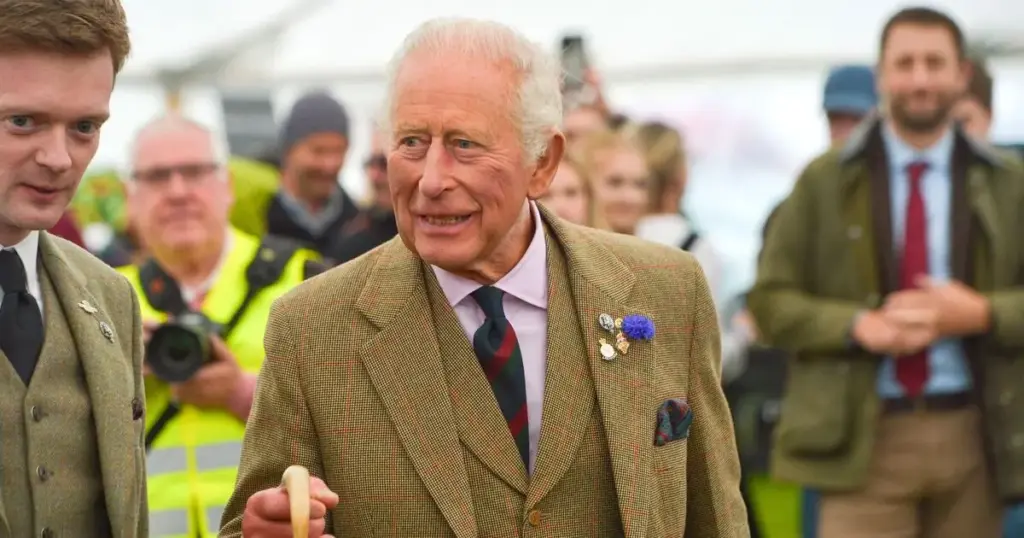
In stark contrast to the glitz and commercialism of the Sussexes’ international tours, King Charles has maintained a rigorous schedule rooted in traditional royal duties across the United Kingdom. From presiding over official state business to making localized appearances—such as his recent attendance at the historic Mey Highland Games in Scotland—the monarch’s public engagements are designed to project stability, continuity, and regional engagement.

Rather than unveiling new revenue-generating enterprises, the King’s recent headlines have frequently centered on acts of grassroots support and charitable generosity. A notable example involved Emily Hurst, a British hat maker who faced acute difficulties sourcing sustainable, high-quality straw for her craft. Upon learning of her plight, the King made headlines by gifting her an entire field of Maris Widgeon wheat directly from his private Sandringham Estate.
While critics may rightly point out that a single field of wheat represents a negligible fraction of the Sovereign’s vast property portfolio, the psychological and public relations impact of the gesture was profound. It underscored a paternal, supportive role that resonates deeply with traditional royalists and positions the Crown as a benevolent patron of British craftsmanship and small business.
Supporting Context & Metrics: Public Sentiment and Financial Realities
The divergence in public relations strategies between the Firm and its departed members is vividly reflected in hard data, public opinion polling, and the financial architecture supporting each faction.
The YouGov Popularity Index
Public sentiment toward members of the Royal Family is continuously tracked by polling agencies such as YouGov, and the results provide an empirical snapshot of how these differing lifestyle choices impact public favorability.
- King Charles III: Despite historical scrutiny and the turbulence of family dynamics, the monarch consistently ranks near the top of public approval ratings, holding steady as the fourth most popular royal in the United Kingdom. His adherence to duty and visible workload anchor his standing.
- Prince Harry and Meghan Markle: Conversely, the Duke and Duchess of Sussex occupy lower rungs on the popularity ladder. In recent YouGov metrics, Prince Harry languishes around 11th place, while Meghan Markle sits further down in 14th place. Observers note that their transition from public servants to independent, wealth-generating public figures has alienated sections of the British public who view their commercial deals—such as past multi-million-pound contracts with Netflix and Spotify—as capitalizing on royal prestige.
The Burden of Extended Family Controversies
The broader Windsor ecosystem faces additional reputational challenges from other peripheral figures, which inevitably drag down the institution’s overall brand health:
- Sarah Ferguson: The Duchess of York has faced persistent scrutiny over past financial entanglements, including revelations regarding a £15,000 payment from convicted sex offender Jeffrey Epstein and subsequent offers to broker access to her former husband. Her standing reflects in YouGov polling, where she sits in 18th place.
- Prince Andrew: Stripped of his military titles and patronages, Andrew Mountbatten-Windsor fails to register on YouGov’s primary favorability leaderboards entirely. His reputational standing has been further battered by controversies involving taxpayer-funded travel—such as utilizing Ministry of Defence (MoD) aircraft for golfing trips costing upwards of £7,300—and allegations regarding financial compensation for administrative favors.
These cumulative controversies contrast sharply with the streamlined, duty-bound core that King Charles has attempted to cultivate, emphasizing a smaller, more accountable working monarchy.
Official Statements & Institutional Perspectives
While Buckingham Palace maintains a strict policy of "never complain, never explain" regarding the personal endeavors of Prince Harry and Meghan Markle, royal aides and independent commentators have frequently articulated the philosophical divide between the two sides.
Insiders close to the Royal Household emphasize that King Charles views the monarchy primarily as a lifetime of public service, where personal branding takes a back seat to constitutional obligations, national unity, and charitable patronage. An anonymous royal source noted:

"The Sovereign’s role is fundamentally defined by selflessness and continuity. Every public appearance, every gesture of support to local artisans or charities, reinforces the social contract between the Crown and the people."
On the other side of the Atlantic, representatives for the Duke and Duchess of Sussex have consistently defended their right to pursue independent professional lives. Following their departure from royal duties in 2020, the couple released a foundational statement asserting their intention to carve out a progressive new role within the institutional framework:
"After many months of reflection and internal discussions, we have chosen to make a transition this year in starting to carve out a progressive new role within this institution. We intend to step back as ‘senior’ members of the Royal Family and work to financially independent, while continuing to fully support Her Majesty The Queen [and subsequently King Charles]."
Despite these assurances, media analysts and commentators—such as Express writer Adam Toms—frequently challenge the execution of this independence, arguing that the couple continues to trade heavily on their royal titles and heritage while engaging in high-fee commercial enterprises that blur the line between private entrepreneurship and royal representation.
Future Outlook: The Monarchy’s Road Ahead
As King Charles looks toward the future of his reign, the challenge of managing the periphery of the royal family remains paramount. The contrast between Sandringham’s quiet acts of agricultural philanthropy and Sydney’s high-end wellness retreats highlights two fundamentally irreconcilable paths.
For the Crown, the path forward relies on consolidation, transparency, and a visible commitment to national welfare. By trimming the working royal roster and focusing intensely on core constitutional duties, the King aims to insulate the monarchy from the commercial scandals and controversies that plague non-working relatives.
Meanwhile, Prince Harry and Meghan Markle face the ongoing challenge of establishing long-term commercial and philanthropic viability independent of royal friction. As their media projects evolve and lifestyle brands like As Ever seek to capture international markets, the public will undoubtedly continue to watch closely, weighing every commercial venture against the timeless expectations of royal heritage.
Ultimately, the tale of these two paths serves as a fascinating case study in modern brand management, public psychology, and institutional survival. Whether the public will warm to the Sussexes’ entrepreneurial journey or remain steadfastly loyal to the traditional pageantry of King Charles will remain one of the defining cultural questions of the decade.