Executive Overview
The modern fitness landscape has experienced a profound and encouraging cultural shift. For decades, conventional fitness advice for women often centered around light cardio, low-intensity aerobics, and minimal resistance training. Today, that paradigm has been thoroughly dismantled. A well-deserved, robust push encourages women—particularly those in their 40s, 50s, and beyond—to embrace heavy weightlifting. The physiological benefits are undeniable: increased bone mineral density, enhanced metabolic function, preserved lean muscle mass, and improved functional longevity.
Yet, this surge in popularity brings hidden risks, especially for individuals who are adopting heavy resistance training later in life. According to Dr. Tiffany Rogers, a fellowship-trained, board-certified orthopedic spine surgeon at the Torrence Memorial Physician Network, the enthusiasm for compound movements like deadlifts must be tempered with meticulous attention to biomechanics. Hormonal shifts, cumulative wear and tear, and natural age-related changes in connective tissue can make the spine uniquely vulnerable to severe injury when complex lifts are performed with improper form.
This comprehensive report examines the anatomical vulnerabilities that women face during midlife, explores the distinct mechanical failure of spinal discs caused by improper deadlifting, details how to differentiate between normal post-workout soreness and debilitating spinal trauma, and outlines safe, highly effective gym-machine alternatives that build strength without compromising spinal integrity.
Detailed Chronology: The Evolution of Midlife Fitness and the Rise of Spine Vulnerability
To understand why midlife weightlifting injuries are on the rise, we must examine the intersection of modern wellness trends and human physiology over time.
The Shift Toward Heavy Resistance Training
In the early 2000s, fitness messaging aimed at women shifted marginally from fat-loss cardio regimens toward toning routines. However, it was not until the late 2010s and early 2020s that sports science widely popularized the concept of "lifting heavy" for women. Influenced by powerlifting, CrossFit, and a broader public health campaign against age-related muscle loss (sarcopenia) and bone degradation (osteoporosis), millions of women over 40 entered weight rooms for the first time.
The Midlife Physiological Transition
Simultaneously, women entering their 40s and 50s experience perimenopause and menopause. During this transition, fluctuating and ultimately declining estrogen levels profoundly affect collagen production, ligament elasticity, and bone turnover rates.
Furthermore, historical factors such as pregnancies, fluctuating menstrual cycles, and sedentary periods in office-bound careers contribute to underlying structural vulnerabilities. When a body experiencing changing ligament laxity is suddenly introduced to axial loads—such as pulling heavy weights off the floor—without decades of foundational movement practice, the margin for error narrows dramatically.
The Mechanics of Failure: The Jelly Doughnut Analogy
Dr. Rogers uses a vivid, accessible clinical analogy to explain what happens inside the spinal column during a compromised lift:
"I explain spinal discs to my patients as a jelly doughnut wrapped in a car tire: thick and strong on the outside, with a soft center that moves and conforms with your body. The danger, especially when it comes to deadlifting, comes when you lift in a forward-leaning position. This severely compresses the disc and pushes that jelly core backward. If the outer wall ruptures, the core gets squeezed out and presses on the nerve. That’s a disc herniation, and it can cause severe pain in the buttock and down the leg."
When an individual attempts a deadlift with a rounded back or a forward-leaning posture under a heavy load, the anterior (front) portion of the vertebrae pinches together. This forces the nucleus pulposus (the jelly) backward toward the spinal canal, where delicate nerve roots reside. If the annulus fibrosus (the tire) gives way, the resulting herniation alters a person’s biomechanics, mobility, and quality of life overnight.
Supporting Context & Metrics: Bone Health, Hormones, and Injury Prevention
The Imperative of Progressive Overload
Despite the risks, stopping resistance training altogether is not the answer. Bone is a living, dynamic tissue that responds structurally to mechanical stress through a process known as Wolff’s Law. To stimulate osteoblasts (bone-building cells), the skeleton must experience mechanical loads greater than those encountered in daily life.
Dr. Rogers emphasizes this fundamental principle of sports science:
"Progressive overload matters most for bone. Aim to add weight or reps every one to two weeks on the lift."
However, progressive overload does not exclusively mean executing free-weight compound lifts like barbell deadlifts or squats. For many individuals, especially those beginning their lifting journeys later in life, the spinal shear forces introduced by free weights outweigh the benefits when technique falters under fatigue.
Differentiating Workout Soreness from Spinal Trauma
A common barrier to proper medical care is the inability to distinguish between normal delayed onset muscle soreness (DOMS) and acute structural injury. Misinterpreting a herniated disc as "just a tight lower back" can lead to dangerous delays in diagnosis and treatment.
| Clinical Feature | Normal Muscle Soreness (DOMS) | Herniated Disc / Spinal Injury |
|---|---|---|
| Onset | 12 to 24 hours post-workout, peaking at 48 hours. | Immediate or rapid onset during or immediately after the lift. |
| Pain Quality | Dull ache, stiffness, tenderness to the touch across muscle bellies. | Sharp, shooting, electric, or burning pain radiating into the glutes or legs (sciatica). |
| Physical Signs | Muscles feel fatigued; range of motion is temporarily limited by tightness. | Severe muscle spasms that lock the spine; inability to stand upright or maintain a vertical posture. |
| Gait and Posture | Normal walking pattern, though slightly stiff initially. | Antalgic (abnormal) gait; visible struggle to straighten the torso; leaning to one side. |
Dr. Rogers notes that back spasms are the single most telling sign of a serious disc issue:
"When a disc ruptures and herniates, the body does everything it can to lock down that segment to protect it. That ‘locking down’ is what produces the spasms… A herniation tends to bring crippling pain. I can usually spot a herniation just by the way someone walks—the person struggles to stand up straight and hold a vertical spine."
Official Statements and Expert Insights
To contextualize these findings, we examine the professional background and clinical philosophy of our primary expert, Dr. Tiffany Rogers.
About the Expert: Dr. Tiffany Rogers, M.D., M.P.T.
Dr. Rogers is a fellowship-trained, board-certified orthopedic spine surgeon practicing within the Torrence Memorial Physician Network. Her clinical focus centers on the diagnosis and surgical as well as non-surgical management of complex cervical, thoracic, and lumbar spine conditions.
What uniquely qualifies Dr. Rogers to address midlife weightlifting injuries is her intersection of personal and professional experience:
- Athletic Background: She is a former Division I All-American basketball player.
- Personal Injury History: Having experienced a serious back injury herself during her competitive athletic career, she possesses deep empathy for active individuals facing structural setbacks.
- Rehabilitation Expertise: Holding a Master’s degree in Physical Therapy (M.P.T.) prior to completing her medical and surgical training, Dr. Rogers bridges the gap between passive surgical intervention and active, biomechanically sound physical conditioning.
Her overarching clinical message to women over 40 is balanced and empowering:
"There’s a huge and well-deserved push right now for women to lift heavy, and I’m all for it. The challenge is that many women are adopting weightlifting later in life, when proper form and training are harder to master. In addition, the body is often already dealing with ligament laxity that shifts with the menstrual cycle, pregnancy, and the perimenopausal years."
Spine-Friendly Alternatives: Rebuilding Strength Safely
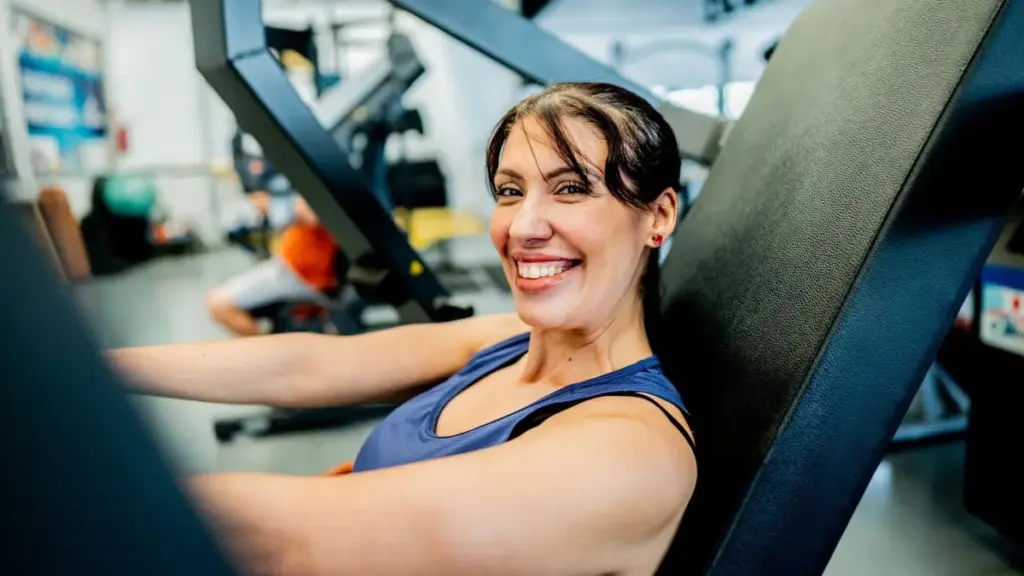
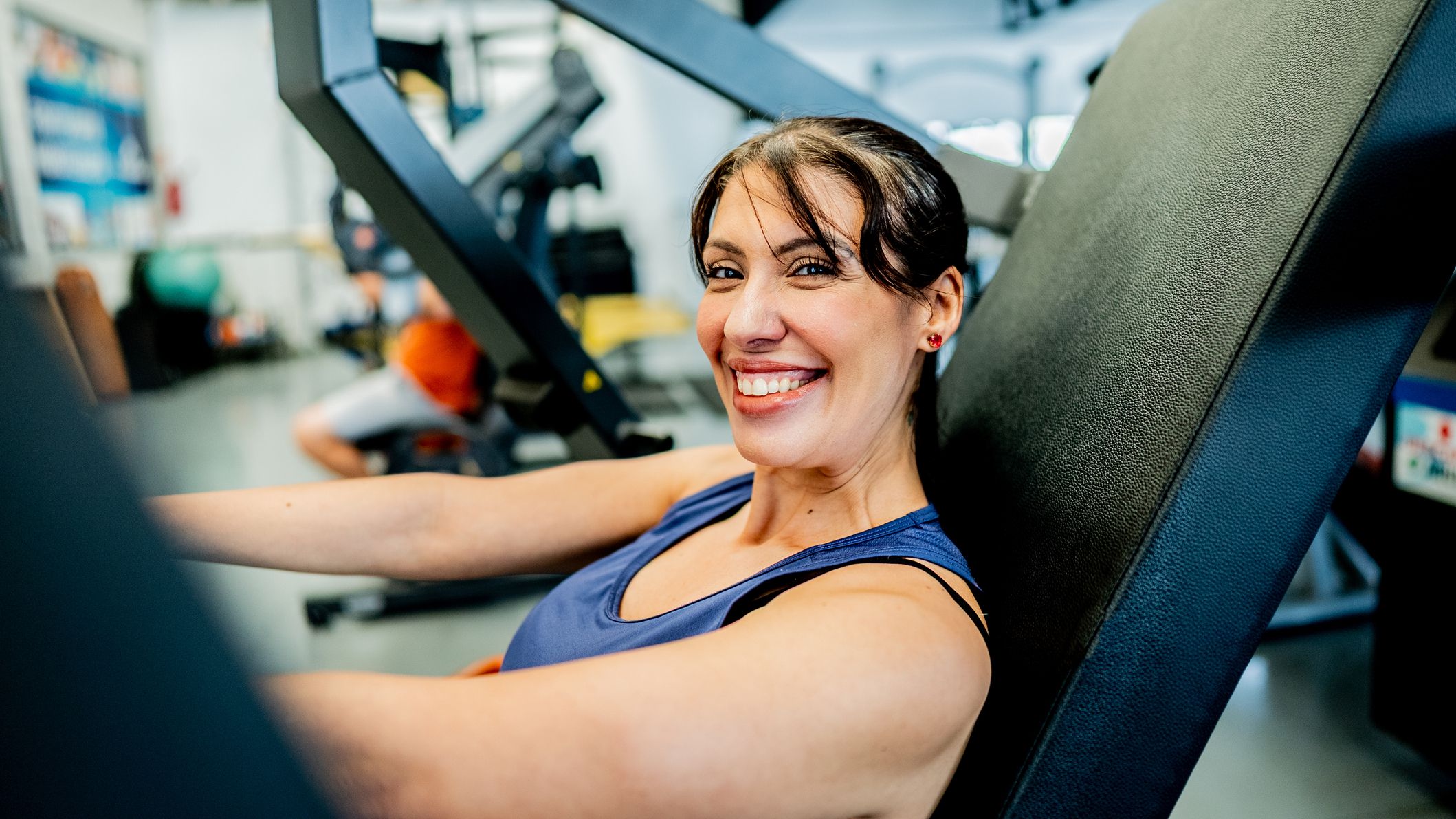
For individuals who want to reap the anti-aging, bone-strengthening rewards of heavy resistance training without risking a debilitating disc herniation, Dr. Rogers advocates for a strategic pivot: utilizing gym machines.
The Case for Machine-Based Training
Free weights require the core and spinal stabilizers to work overtime to manage free-floating loads in space. For example, holding dumbbells for curls or stabilizing a loaded barbell during a deadlift places immense compressive and shear forces directly onto the lumbar spine.
By contrast, properly designed selectorized and plate-loaded gym machines guide the movement path, externalize the stabilization requirements, and allow the user to isolate target muscle groups safely.
"My advice is to lift but to take advantage of machines that are not constantly loading the lower back," Dr. Rogers advises. "Something as simple as grabbing two dumbbells for curls puts a lot of pressure on the spine to stabilize the load. Machines help you build strength without overly loading the spine, which is exactly what you want to avoid."
Guidelines for Implementing a Spine-Safe Routine
To maximize safety and efficacy, fitness enthusiasts should adhere to the following evidence-based programming parameters:
- Frequency: Perform structured lower-body and upper-body machine workouts twice a week.
- Recovery: Never repeat the exact same workout on consecutive days to allow adequate tissue remodeling and nervous system recovery.
- Progressive Overload: Increase either weight or repetitions incrementally every one to two weeks, adhering to the biological requirements for bone density adaptation.
- Machine Familiarity: Because gym equipment varies significantly across manufacturers (e.g., Technogym, Life Fitness, Hammer Strength), always review the visual instructions posted on the machines or consult a certified fitness professional to ensure proper seat and lever adjustments before loading weight.
Future Outlook: The Next Era of Longevity Fitness
As sports medicine and orthopedic surgery continue to evolve, the conversation surrounding women’s fitness is maturing. The era of "all cardio" is officially behind us, replaced by a sophisticated understanding of musculoskeletal health. However, the next frontier of fitness longevity must move beyond a blanket endorsement of "lifting heavy at all costs" to a more nuanced, individualized approach.
Future fitness paradigms will likely place greater emphasis on diagnostic screening, baseline mobility assessments, and hormonal profile integration before prescribing heavy compound movements to women in perimenopause and post-menopause. Furthermore, the stigma surrounding the use of gym machines—unfairly dismissed by some free-weight purists as "suboptimal"—is rapidly fading. As orthopedic experts like Dr. Rogers demonstrate, machines are not a compromise; they are a sophisticated clinical and athletic tool designed to preserve spinal health while unlocking lifelong strength, vitality, and independence.