EXECUTIVE OVERVIEW
The Scottish Highlands, one of the United Kingdom’s most breath-taking and globally celebrated tourist destinations, stands on the cusp of a major economic shift. Following years of deliberation, the Highland Council has officially agreed to move forward with a public consultation regarding the introduction of a controversial visitor levy. Under the proposed framework, overnight visitors staying in commercial accommodation—ranging from traditional hotels and bed-and-breakfasts to short-term lets—would face an additional charge of £5 per room, per night. Meanwhile, budget-conscious travelers utilizing hostels and campsites would experience a reduced rate of £2 per night.
The levy, designed to function for nine months of the year while exempting the winter lull of December, January, and February, is projected to generate roughly £9.5 million annually. Local authorities argue this revenue is urgently required to maintain, repair, and upgrade critical infrastructure, such as rural roads, pathways, and waste management facilities, which are heavily strained by the influx of nearly 9.4 million annual visitors.
However, the path to implementation is fraught with tension. The hospitality sector, already reeling from skyrocketing operating costs, labor shortages, and shifting consumer habits, has pushed back vigorously. Regional industry associations argue that while the principle of a visitor tax is understood, the timing could not be worse. As Edinburgh rolls out its own pioneering tourist tax and other Scottish cities prepare to follow suit, the debate in the Highlands exposes a deep fracture between municipal revenue ambitions and the financial reality facing local tourism businesses.
DETAILED CHRONOLOGY: A SEVEN-YEAR MARATHON TO A CONSULTATION
The journey toward a tourist tax in the Scottish Highlands has been neither swift nor straightforward. Discussions surrounding a potential visitor levy have quietly simmered within council chambers for roughly seven years, hindered by legislative hurdles, shifting national policies, and the unprecedented disruption of the COVID-19 pandemic.
The Legislative Path and Local Government Push
The concept gained legislative traction following the passing of the Visitor Levy (Scotland) Act, which granted local authorities across Scotland the discretionary power to introduce overnight accommodation charges. Seizing this legislative tool, the Highland Council began formulating a structural framework tailored to the unique geographic and economic landscape of the region.

Council leader and SNP councillor Raymond Bremner has been a vocal proponent of the measure, noting that the local authority has been "labouring" for a long time to establish a mechanism that captures value from the millions of tourists who traverse the region each year. According to internal council surveys and administration arguments, public sentiment among residents—who frequently shoulder the burden of degraded local infrastructure, traffic congestion, and environmental wear and tear—largely leans in favor of making visitors contribute directly to upkeep.
The Vote and Political Fractures
The decision to proceed to a public consultation was not reached without political friction. During the pivotal council meeting, opposition groups attempted to stall or modify the timeline:
- The Liberal Democrats pressed for explicit guarantees that local Highland residents would be entirely exempt from the charge when traveling or staying within different parts of their own home region.
- The Scottish Conservatives formally moved to delay the authorization of the public consultation entirely, arguing that proceeding without the benefit of a comprehensive, independent economic impact assessment was premature and reckless.
Despite these challenges, neither amendment gathered the requisite political support. The motion to authorize the public consultation ultimately passed, kicking off a formal engagement period that will test the waters with both the local community and industry stakeholders.
SUPPORTING CONTEXT & METRICS: THE NUMBERS BEHIND THE HIGHLANDS’ TOURISM BOOM
To understand why the Highland Council is pursuing this levy, one must examine the staggering scale of tourism in the region, contrasted against the severe economic pressures facing local businesses.
The Scale of Highland Tourism
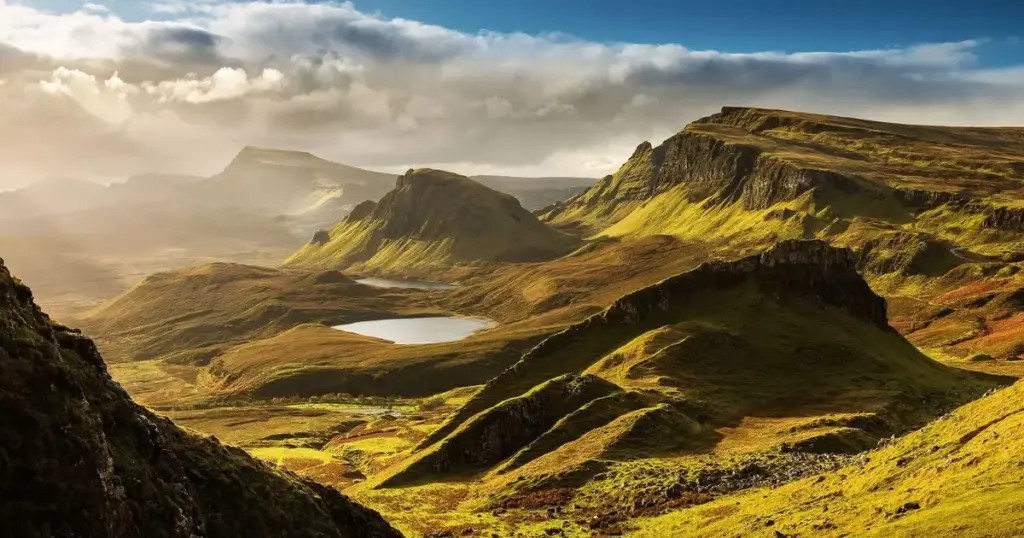
- Annual Visitors: Research indicates that approximately 9.4 million people visit the Scottish Highlands every year, drawn by iconic landmarks such as Ben Nevis, the Isle of Skye, and the rugged expanses of the Quiraing.
- Projected Revenue: Financial models presented to councillors estimate that the proposed levy could yield a gross annual revenue of approximately £9.5 million.
- Fee Structure:
- Hotels, B&Bs, and Short-Term Lets: £5 per room, per night.
- Hostels and Campsites: £2 per bed/pitch, per night.
- Seasonal Applicability: Levied across nine months of the year, providing a complete exemption during the bleak winter months of December, January, and February to protect off-peak domestic travel.
- Administrative Allowance: To mitigate the burden on small business owners acting as tax collectors, accommodation providers will be permitted to retain 5 percent of the total revenue they collect to cover administrative overheads.
The Broader Scottish Landscape
The Highlands are not operating in a vacuum. Scotland’s approach to visitor taxes is rapidly evolving across municipal boundaries:
- Edinburgh: Became the vanguard of the movement earlier this summer, introducing a flat 5% levy on overnight stays across hotels, B&Bs, and self-catering accommodations.
- Glasgow: Scheduled to implement a matching 5% levy in January 2027.
- Aberdeen: Looking toward an even steeper 7% charge, slated to take effect from April 2027 at the earliest.
While urban centers have largely gravitated toward percentage-based models, the Highland Council opted for a tiered fixed-rate system, which industry experts acknowledge is simpler to calculate, though still fiercely contested regarding its monetary value.

OFFICIAL STATEMENTS: INDUSTRY OUTRAGE AND "NOT NOW"
While municipal leaders view the £9.5 million windfall as a vital lifeline for crumbling infrastructure, representatives of the hospitality and tourism sectors have raised the alarm. Their collective stance is not necessarily an outright rejection of the tourist tax concept, but a desperate plea for temporal pragmatism.
The Highland Hotel Association Speaks Out
Craig Ewan, chairman of the Highland Hotel Association (HHA), summarized the industry’s frustration, pointing to an unsustainable economic climate characterized by compounding inflation, high energy bills, and softening consumer demand.
"Our message to Highland Council is clear: it is not ‘no’ to a visitor levy, but ‘not now’,".
Ewan emphasized that the industry is currently battling a "perfect storm of soaring operating costs and weakening demand." Citing HHA internal data, he noted that summer occupancy rates across the region have plummeted by roughly 10% compared to the previous year. Adding a mandatory £5 nightly surcharge, the association argues, risks pricing out middle-income families and driving holidaymakers toward unregulated or cheaper alternatives—or worse, deterring them from visiting Scotland altogether. Furthermore, the HHA contends that a £3 cap would be a far more palatable and economically sustainable figure than the proposed £5 maximum.
Self-Caterers Demand Transparency
The Association of Scotland’s Self-Caterers (ASSC) echoed these concerns, acknowledging that while a tiered fixed-rate system is cleaner than a percentage model, the process is moving far too quickly without adequate empirical backing.
Fiona Campbell, chief executive of the ASSC, criticized the council’s decision to press ahead with the consultation prior to the publication of an independent economic impact assessment.

"Businesses and communities deserve to see the full picture of what this levy could mean before they’re asked to make an informed judgement," Campbell stated. The lack of foresight, according to self-caterers, risks blinding policymakers to the cumulative effect that cascading taxes, regulations, and licensing schemes are having on small family-run accommodation providers.
FUTURE OUTLOOK: WHAT LIES AHEAD FOR TRAVELERS AND BUSINESSES
As the Highland Council opens its public consultation, the coming months will serve as a critical crucible for the future of Scottish tourism.
- The Public Consultation Phase: Over the next few months, local residents, business owners, tourism operators, and visitors will have the opportunity to formally voice their opinions on the structure, pricing, and timing of the levy. Given the polarization of views, high turnout and fierce debate are all but guaranteed.
- Economic Reality vs. Municipal Need: The council must weigh the desperate necessity for road repairs, environmental management, and visitor center maintenance against the very real threat of alienating the goose that lays the golden egg. If occupancy rates continue to trend downward, introducing an additional financial hurdle could accelerate closures among independent B&Bs and rural hotels.
- Implementation Timeline: Should the consultation yield a favorable outcome for the council and the Scottish Government ultimately greenlights the final statutory scheme, the Highlands could see the levy operational within the next couple of years—joining Edinburgh, Glasgow, and Aberdeen in reshaping how Britain pays for the upkeep of its most cherished cultural and geographical landscapes.
For now, travelers planning a scenic retreat to the Highlands can breathe a temporary sigh of relief—no charges will appear on their bills immediately, and the winter months remain entirely protected. However, the shadow of the £5 nightly tax looms large, signaling a permanent evolution in how the UK’s holiday hotspots manage the delicate balance between commercial tourism and sustainable community living.