Executive Overview
As the video game industry approaches the twilight of the current hardware generation, few titles command the staggering weight of anticipation carried by Grand Theft Auto VI. Set against the sun-soaked, neon-drenched backdrop of the fictional state of Leonida, Rockstar Games is once again poised to redefine the boundaries of open-world interactive entertainment. Following the release of the unvoiced "Extended Look" showcase on Netflix and subsequent developer disclosures, a clearer, more breathtaking picture of the upcoming blockbuster has begun to emerge.
According to fresh insights shared by Rockstar North’s head of development, Rob Nelson, GTA 6 will not merely iterate on the formulas of its predecessors—it will structurally eclipse them. Promising a map that dwarfs both Grand Theft Auto V and Red Dead Redemption 2, alongside a sweeping narrative campaign that commands roughly 80 hours of player investment, the studio is setting a new benchmark for scope, density, and player agency.
This comprehensive report examines the staggering logistical metrics behind the map of Leonida, the narrative philosophy driving the reduction of playable protagonists from three down to two, and how Rockstar aims to deliver the definitive digital playground when GTA 6 launches on November 19, 2026.
Detailed Chronology: From Silent Showcases to Exclusive Revelations
The path toward Grand Theft Auto VI has been defined by unprecedented levels of secrecy, punctuated by catastrophic leaks and meticulously calculated corporate reveals. To understand the current landscape of GTA 6 information, one must trace the recent sequence of events that brought these new details to light.
The Netflix Premiere and the Silent Teaser
The promotional cycle shifted dramatically with the sudden drop of the GTA 6: An Extended Look video on Netflix. Eschewing traditional marketing tropes, the featurette arrived completely devoid of voiceover narration, developer commentary, or on-screen text prompts. Instead, it relied entirely on raw, unedited in-game footage captured on PlayStation 5 hardware.
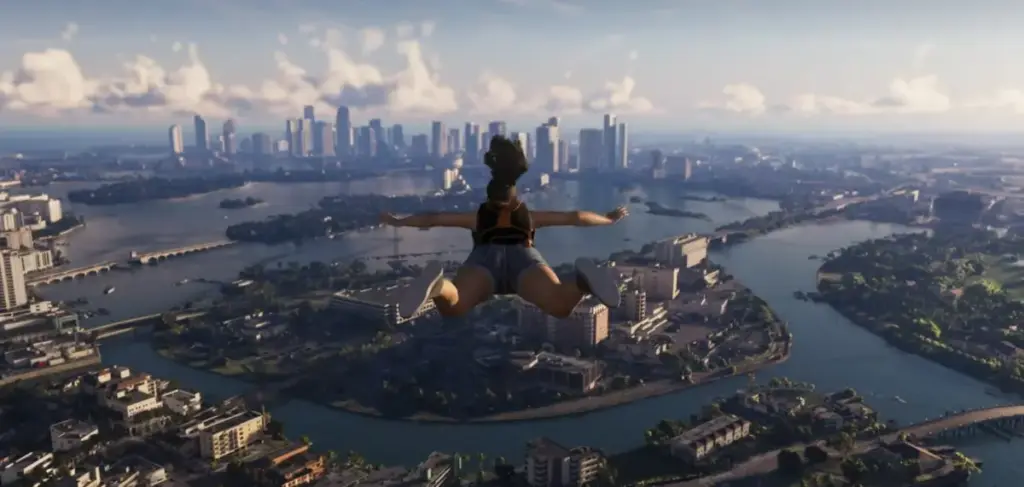
While the silent format left fans to decode environmental details, atmospheric lighting, and crowd density frame-by-frame, it left a crucial question unanswered: just how vast is this new iteration of Vice City? Because the video offered sweeping vistas without geographic scale markers, the community was left clamoring for hard metrics.
Behind Closed Doors at Rockstar North
To bridge the information gap, prominent content creators and members of the games press were invited to Rockstar North’s headquarters in the UK to go hands-on with exclusive presentations. Among them was YouTuber TGG, who sat down for an extensive debrief with Rob Nelson.
The details divulged during these closed-door sessions shattered prior expectations. Rather than offering a modest expansion over GTA V, Rockstar’s developers outlined a world design philosophy centered on verticality, regional diversity, and unprecedented urban sprawl. Simultaneously, interviews with major outlets like The New York Times and IGN unveiled crucial data points regarding campaign lengths, design choices, and structural character dynamics, painting a holistic portrait of a game that has been over a decade in the making.
Supporting Context & Metrics: Measuring the State of Leonida
For years, the open-world genre has been locked in a quiet arms race regarding sheer square mileage. Titles like No Man’s Sky and Microsoft Flight Simulator boast planetary scales, yet often sacrifice intimate, handcrafted detail for procedural generation. Rockstar, conversely, has historically prioritized a different metric: functional density.

The Numbers Behind the Map
During his conversation with Rockstar leadership, TGG relayed staggering statistics regarding the sheer physical volume of the Leonida map:
- Overall Landmass: The map of GTA 6 is reportedly twice the size of GTA V’s Los Santos and Blaine County combined, and three times the size of the sprawling frontier found in Red Dead Redemption 2.
- Urban Expansion: Vice City itself has been scaled up to be twice the size of GTA V’s Los Santos.
- The Greater Metropolitan Area: When factoring in the surrounding suburbs, satellite towns, and rural municipalities, the extended Vice City region is a staggering 11 times bigger than Los Santos and its immediate peripheries.
To contextualize these figures, GTA V mapped out roughly 49 square miles of terrain. Doubling that footprint—while maintaining the hyper-dense pedestrian AI, interior environments, and interactive physics engines characteristic of the developer’s output—represents an unprecedented engineering feat for current-generation console architecture.
The Geography of Leonida
Set within the fictionalized Florida-inspired state of Leonida, the game’s geography extends far beyond the neon avenues of Vice City proper. Players will navigate coastal wetlands modeled after the Everglades (the Leonida Keys), industrial shipping hubs like Port Gellhorn, and vast stretches of sun-baked backcountry.
Leaked gameplay footage and early map assemblies—which circulated widely across social media earlier this year—point to a heavily urbanized focus. Unlike GTA V, which dedicated vast tracts of land to empty mountain ranges and desert wilderness, GTA 6 appears to prioritize densely populated urban environments, suburban sprawls, and interconnected highway systems that encourage vehicular exploration and emergent sandbox chaos.
Official Statements: Narrative Focus and the Duo Dynamic
While map size dictates the physical boundaries of the sandbox, narrative structure defines the emotional core of a Rockstar title. Following the multi-protagonist experiment of GTA V—which split player attention across Michael, Franklin, and Trevor—the studio faced a critical design choice for their next outing.
Why Rockstar Downgraded to Two Protagonists
In an exclusive interview with IGN, Rob Nelson detailed the internal deliberations regarding the game’s playable cast. The team initially toyed with the concept of expanding the roster even further, questioning whether a four-protagonist structure could push the boundaries of storytelling.
Ultimately, the studio decided to dial the number back to two: Jason and Lucia. The primary motivation behind this decision was the preservation of player-character intimacy.
"As the narrative unfolds, we’re quite conscious to try and make sure that players have enough time with each character," Nelson explained to IGN. "After doing GTA 5, we talked about different ideas of — do we do more characters? How do we follow up three characters? Is it four characters now? But we worried about diluting the amount of player time with each and therefore player connection with those characters. So we decided to step in this direction of two characters in a relationship."
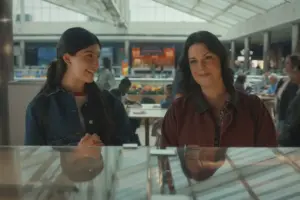
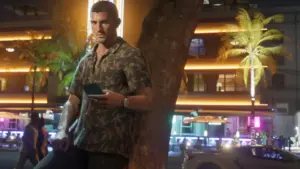
This creative gamble pays immediate dividends in the Extended Look footage, where the romantic and criminal partnership between Jason and Lucia forms the beating heart of the narrative. Rather than bouncing between three disparate lives, players will delve deeper into a tightly wound, Bonnie-and-Clyde-inspired dynamic that allows for more nuanced character arcs.

Campaign Length and Structural Ambition
Beyond character dynamics, the sheer scope of the campaign has been clarified through Nelson’s internal playtesting metrics. Speaking with The New York Times, Nelson revealed that his most recent playthrough in February 2026 clocked in at approximately 80 hours.
Crucially, this 80-hour figure encompasses both the critical path of the main story and optional goals with tangible narrative ramifications. This points to the integration of complex side missions and systemic choices that dynamically influence the unfolding plot—a design philosophy honed in Red Dead Redemption 2.
For comparison:
- Grand Theft Auto V: ~32 hours (Main Story) / ~51.5 hours (Main + Extras, per HowLongToBeat).
- Red Dead Redemption 2: ~50 hours (Main Story) / ~84.5 hours (Main + Extras).
GTA 6 sits comfortably alongside Rockstar’s western epic in terms of sheer time commitment. If Nelson’s metrics hold true for the average player, the community is looking at a narrative journey that will require weeks, if not months, to fully unpack. Furthermore, recent preview leaks have confirmed the inclusion of returning mechanics such as a refined affinity system and a moral standing framework akin to Red Dead’s honor system, ensuring that how players interact with the citizens of Leonida will matter more than ever before.
Future Outlook: The Road to November 19, 2026
As the countdown to November 19, 2026, officially ticks down, the gaming landscape finds itself collectively holding its breath. Grand Theft Auto VI arrives at a fascinating cultural and technological crossroads. The industry has evolved significantly over the thirteen years since GTA V first hit PlayStation 3 and Xbox 360 shelves. Expectations for physics simulations, artificial intelligence, environmental storytelling, and technical fidelity have reached astronomical heights.
Yet, if history serves as any indication, Rockstar Games operates in a league of its own. By combining a map that is exponentially larger and denser than anything they have previously attempted with an intimate, character-driven narrative centered on Jason and Lucia, the developer is addressing the primary critique of modern open-world design: the tendency for vast spaces to feel hollow.
The transition to current-generation hardware—showcased by the PlayStation 5 native footage—promises lightning-fast load times, staggering draw distances, and bustling urban environments that react dynamically to player input. Whether exploring the sun-bleached marinas of the Leonida Keys or executing high-stakes heists across the sprawling avenues of Vice City, players are being promised a living, breathing virtual ecosystem unlike anything the medium has ever witnessed.
As marketing ramps up over the coming months, fans will undoubtedly continue to dissect every frame of footage, every leaked map fragment, and every developer interview. But one reality is already indisputable: when the doors to Leonida finally fly open this November, the gaming world will never be the same.