Executive Overview
Few motion pictures in recent memory have arrived on the cinematic landscape bearing quite the identity crisis of The Uprising. Directed with the characteristic grit and handheld urgency of veteran filmmaker Paul Greengrass, the historical drama aims to transport audiences back to the visceral, mud-soaked turmoil of 14th-century England.
Yet, long before the film ever flickered onto silver screens, it found itself trapped inside a bewildering international marketing labyrinth. Weeks ahead of its scheduled release, United States distributors abruptly pivoted, attempting to rebrand the prestige historical piece as an unapproved, gritty "Robin Hood origin film." Across the Atlantic, however, British distributors stood firm, insisting the project was an uncompromised dramatization of the 1381 Peasants’ Revolt.
This transatlantic tug-of-war left a lasting mark on the film’s rollout, overshadowing what should have been a landmark cinematic examination of a rarely explored chapter in British history. Anchored by a powerhouse cast featuring Andrew Garfield, Jamie Bell, and Cosmo Jarvis, The Uprising boasts undeniable acting talent. Yet, as the final credits roll, audiences are left navigating a relentless, visually muddy slog of misery—one that ultimately struggles to balance historical authenticity with Hollywood’s persistent need for bankable folklore.
Detailed Chronology: From 1381 Realities to the Modern Marketing Blunder
Setting the Scene: England, 1381
The narrative foundation of The Uprising is rooted in a devastating epoch of British history. Opening in the shadow of the Black Death—which had wiped out roughly half of the nation’s population—the film paints a grim portrait of a society wrapped in collective grief.

We are introduced to the protagonist, known simply as "Ploughman" and played with brooding intensity by Andrew Garfield. His domestic life is defined by the stark, haunting emptiness of his sleeping quarters, immediately establishing a tone of profound, unyielding loss. Life is heavy, laborious, and caked in 14th-century mud.
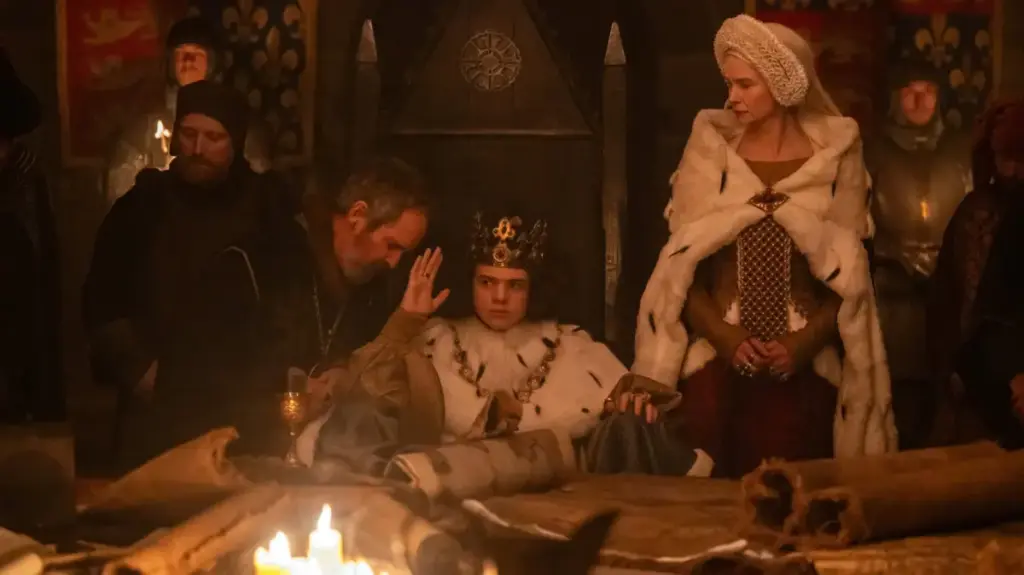
Political pressure mounts as the boy king, Richard II (portrayed by Woody Norman), sits precariously upon the throne. Guided solely by his formidable mother, Joan of Kent (Katherine Waterston), and a cadre of panicked royal advisors, the monarchy faces an empty treasury. To stave off financial ruin, the ruling class enacts yet another round of crushing taxation on the common people, most notably the oppressive poll tax levied per head and revived death taxes.
The Spark of Rebellion
Pushed past the breaking point, Ploughman reacts with a primal fury when local lords attempt to squeeze his impoverished community for funds they simply do not possess. This defiance sparks a broader chain reaction, drawing in historic figures who anchor the historical uprising.
Ploughman joins forces with:

- John Ball (Jamie Bell): A radical priest branded a heretic for his fiery sermons championing social and economic equality.
- Wat Tyler (Cosmo Jarvis): A battle-hardened soldier and the legendary historical leader of the Peasants’ Revolt.
- Alyce (Thomasin McKenzie): A fiercely dedicated follower of Ball and a fictionalized composite representing the often-overlooked women who fueled the rebellion from the grassroots.
As the peasants mobilize and march toward London to confront their oppressors directly, the film shifts from local tragedy to mass resistance. Yet, despite these compelling narrative ingredients, the screenplay struggles to make the sprawling historical movement feel intimate or personally resonant for its core trio.
The Transatlantic Marketing Debacle
The true friction surrounding The Uprising, however, occurred off-screen. In the United States, Focus Features executed a late-stage marketing pivot that shocked cinephiles and historians alike, marketing the project as a gritty origin story for Robin Hood.
The strategy left UK audiences and critics profoundly bewildered. Chronologically, the events of 1381 place the narrative roughly two centuries too late for the traditional Sherwood Forest legend. Aside from a late-film sequence where Garfield’s character momentarily dons a hood, wields a bow and arrow to hold up a passing carriage, and a fleeting poetic reference to the folktale, the connection to Robin Hood is virtually nonexistent.
For British viewers intimately familiar with their nation’s school history curricula, the forced association felt not only historically inaccurate but deeply distracting—transforming a genuine populist rebellion into an awkward brand-name exercise.

Supporting Context & Production Metrics
Paul Greengrass is world-renowned for his signature documentary-style realism, famously deployed in political thrillers like United 93 and Captain Phillips. In The Uprising, he applies his trademark scrappy, handheld camera techniques to events that transpired nearly 650 years ago.
However, translating this kinetic, fast-paced style to the medieval era yields mixed results. The cinematography frequently lapses into visual chaos, compounded by an oppressive color palette dominated by slate grays and sickly greens. The resulting aesthetic can make it difficult to distinguish individual non-noble characters through the layers of mud, anger, and dense regional dialects.
Production and Release Factsheet
| Category | Details |
|---|---|
| Director | Paul Greengrass |
| Writer | Paul Greengrass |
| Cast | Andrew Garfield, Jamie Bell, Cosmo Jarvis, Katherine Waterston, Thomasin McKenzie, Woody Norman, Tom Hollander, Jonny Lee Miller, Stephen Dillane, Dónal Finn |
| Age Rating (UK) | 15 |
| Run Time | 2 hours 8 minutes |
| US Release Date | September 10, 2026 |
| UK & Irish Release | Friday, October 9, 2026 |
| Studio / Distributor | Focus Features |
Despite the heavy atmosphere, the film does find moments of narrative relief through its antagonists. Tom Hollander delivers a deliciously wicked performance as Treasurer Sir Robert Hales, backed by Stephen Dillane as a hardline bishop and Jonny Lee Miller as Sir William Walworth, the Lord Mayor of London. Their palpable panic as the peasant horde inches closer to the capital injects a welcome dose of high-stakes tension into an otherwise monochromatic narrative.
Official Statements and Critical Reception
The stark divide between the studio’s promotional framing and the artistic reality of the film has dominated entertainment headlines. While American trade publications initially debated the merits of the studio’s "reimagined folk hero" angle, British cultural critics were swift to correct the record.

In interviews surrounding the release, insiders noted that the decision to lean into the Robin Hood archetype in North America was driven by a perceived lack of US audience familiarity with the specific historical nuances of the Peasants’ Revolt.
Critics, however, have argued that underestimating the audience did the film a profound disservice. Cultural commentators point out that the 1381 uprising—marked by the march on London, the storming of the Tower of London, and the historic confrontation between King Richard II and Wat Tyler—possesses enough inherent drama, political intrigue, and class struggle to stand entirely on its own merits without needing to borrow folklore credentials.
Performance-wise, Andrew Garfield has received universal praise for his emotional depth, though reviewers note he is frustratingly confined to a single, unyielding register of intense grief and explosive fury throughout the runtime. Similarly, Jamie Bell and Cosmo Jarvis deliver grounded, commanding performances that deserved a more nuanced, less monotonous script.
Future Outlook
As The Uprising completes its rollout across UK and international cinemas, its legacy appears destined to be bifurcated.

On one hand, it serves as a cautionary tale for modern film distribution—demonstrating how panicked, last-minute marketing adjustments and contradictory international campaigns can alienate core audiences and distract from an artist’s genuine vision. The studio’s clumsy attempt to shoehorn a legendary outlaw into a rigorous historical chronicle will likely be studied in film marketing classes for years to come as a textbook miscalculation.
On the other hand, the film may yet carve out a respectable niche among aficionados of historical dramas who are willing to look past its relentless bleakness and stylistic clutter. By thrusting a largely ignored, vital moment of class consciousness and labor resistance onto the big screen, Greengrass has opened the door for future filmmakers to explore medieval history beyond traditional knights and chivalric romances.
Whether The Uprising can overcome its initial PR turbulence to find long-term appreciation on streaming platforms and home video remains to be seen. What is certain, however, is that history—much like the mud in Paul Greengrass’s frame—is difficult to wash away once it has been stirred.