Executive Overview
For over three decades, Bone Thugs-N-Harmony has stood as an indomitable pillar of hip-hop royalty, renowned for their breakneck delivery, harmonious vocal styling, and a gritty melodic synthesis that forever changed the soundscape of American rap. However, even the most legendary brotherhoods are not immune to the frictions born of longevity, business pressures, and the intense crucible of touring life. Recently, the iconic Cleveland ensemble found themselves at the center of media scrutiny following a bizarre sequence of events that left founding member Steven "Layzie Bone" Howse conspicuously absent from the opening legs of their current tour routing.
The exclusion sparked widespread speculation, fan anxiety, and pointed digital exchanges among group members. Yet, true to the resilient spirit that birthed anthems like "Tha Crossroads," the group has seemingly patched the fracture. A triumphant homecoming concert in their native Ohio marked a full-scale reunion, featuring the legendary lineup performing their most enduring classics to an adoring, sold-out crowd.
This comprehensive report delves into the anatomy of the recent rift, tracing the roots of the dispute from backstage tensions and miscommunications to public social media sparring involving Krayzie Bone and Layzie Bone. Furthermore, we explore the high-stakes backdrop of their current live ventures—co-headlining the monumental Wu-Tang Forever: The Final Chamber tour alongside New York hip-hop royalty the Wu-Tang Clan—and analyze what this reconciliation means for the enduring legacy of one of rap music’s most sacred institutions.
Detailed Chronology: The Anatomy of a Rift and the Road to Reunion
The Disappearance from the Road
The trouble first surfaced quietly before erupting into the public consciousness as fans attending the initial dates of the Wu-Tang Forever: The Final Chamber tour noticed a glaring omission: Layzie Bone, one of the definitive faces and foundational architects of the group, was missing from the stage. In a touring landscape where legacy acts rely heavily on complete original lineups to drive ticket sales and evoke nostalgia, the absence of a primary member immediately set off alarm bells across hip-hop forums and social media platforms.
Initially, rumors swirled regarding health concerns or routine scheduling conflicts—common occurrences in the grueling world of veteran hip-hop touring. However, it quickly became apparent that the absence was symptomatic of deeper, underlying fractures within the internal ecosystem of Bone Thugs-N-Harmony.
The Hollywood Walk of Fame Illusion
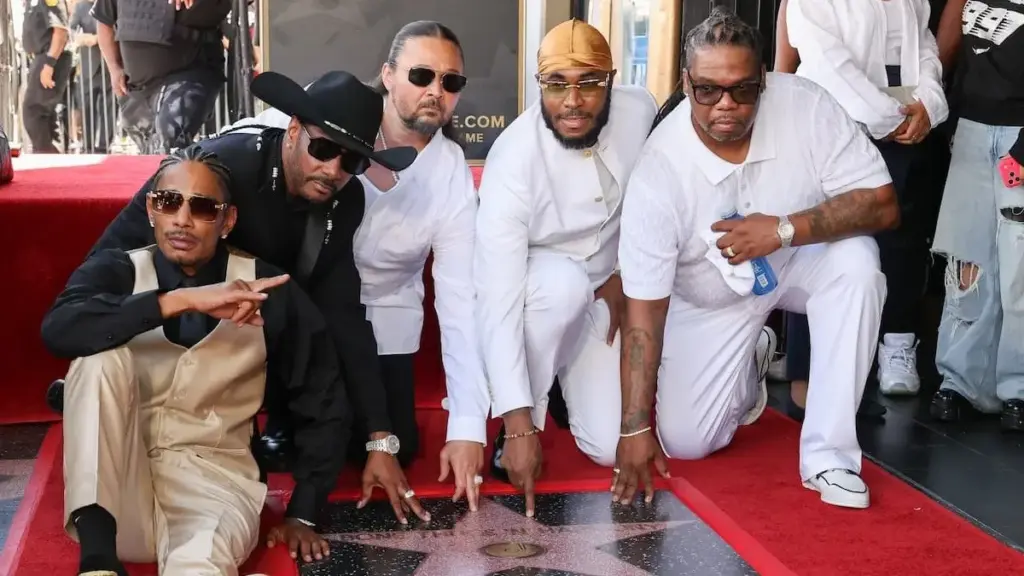
For Layzie Bone, the exclusion was particularly perplexing given the recent milestones achieved by the group. Earlier in the timeline, the collective gathered for a momentous career high: their induction into the Hollywood Walk of Fame. For fans and members alike, the star-studded ceremony felt like a definitive healing of old wounds, a symbolic cementation of their brotherhood and historic contribution to American culture.
Layzie assumed that the shared pride and public celebration of their legacy would effectively wipe the slate clean, paving the way for a unified front on the road. "I thought after the Hollywood Walk of Fame, everything was all good," Layzie noted in a revealing series of video dispatches shared on Instagram. Instead, the friction persisted behind the scenes, culminating in his exclusion from the tour bus as his brothers hit the highway.
The Ohio Homecoming: Healing on Sacred Soil
Despite the digital back-and-forth and weeks of uncertainty, the ultimate test of any musical collective happens live on stage. That test came during a highly anticipated homecoming concert in the group’s native Ohio. To the absolute delight of the home-state faithful, Layzie Bone rejoined his brothers—Krayzie Bone, Bizzy Bone, Wish Bone, and Flesh-n-Bone—to deliver a masterclass in melodic rap performance.
The energy inside the venue was electric, charged with the palpable relief of a family feud momentarily suspended for the greater good of the art. The setlist was a veritable museum of golden-era masterpieces. Fans were treated to soaring renditions of "1st of Tha Month," a sun-drenched anthem of survival and payday relief; the haunting, spiritually charged Grammy-winning classic "Tha Crossroads," dedicated to fallen hip-hop icons; and their seamless lyrical collaboration on "Notorious Thugs," paying homage to their mentor and collaborator, The Notorious B.I.G.
Captured on camera and immortalized by regional outlets like Cleveland Magazine, the performance proved that when the members of Bone Thugs-N-Harmony occupy the same stage, the chemistry remains utterly untouchable.
Supporting Context & Metrics: The Stakes of the Wu-Tang Forever Tour
To fully understand the weight of this internal conflict, one must examine the monumental scale of the enterprise at hand. Bone Thugs-N-Harmony is currently sharing stages across North America with the Wu-Tang Clan on what has been heavily publicized as Wu-Tang Forever: The Final Chamber tour.
A Clash of Hip-Hop Titans
Pairing Wu-Tang Clan—the cinematic, martial-arts-infused powerhouse from Staten Island—with Bone Thugs-N-Harmony—the rapid-fire, harmonic shamans of Cleveland—represents a dream-tier double bill for 1990s hip-hop connoisseurs. The tour has been marketed as a once-in-a-lifetime opportunity to witness two of the most influential, distinct, and enduring collectives in the history of the genre share a single platform.
Consequently, the financial, promotional, and historical stakes are extraordinarily high. Promoters, venue operators, and fans invested in these dates expect pristine, uncompromised execution. Internal dysfunction threatening to bench founding members risks tarnishing the legacy and commercial viability of what is billed as a farewell lap for New York’s finest, while simultaneously threatening to erode the hard-earned goodwill of Bone Thugs’ devoted fanbase.
The Business of Brotherhood
At this stage in their career cycle—spanning over 35 years since their formation under the mentorship of Eazy-E in the early 1990s—Bone Thugs-N-Harmony operates simultaneously as a brotherhood, a corporate entity, and a cultural institution. Managing the administrative, financial, and interpersonal dynamics of a group featuring multiple distinct personalities, solo careers, and distinct personal trajectories is a monumental logistical challenge.
Industry metrics show that legacy hip-hop touring is currently at an all-time economic peak, driven by aging Gen X and millennial demographics with disposable income. However, the margins for error are razor-thin. Group longevity often correlates with accumulated grievances; business decisions regarding booking fees, travel accommodations, and promotional duties can easily metastasize into personal betrayals if communication channels break down. The dispute between Layzie and his bandmates serves as a stark reminder of the fragile infrastructure supporting many of hip-hop’s most revered legacy acts.
Official Statements and Digital Dispatches: He Said, They Said
The public nature of modern hip-hop journalism means that private organizational disputes are frequently litigated in real-time across social media platforms. The feud between Layzie Bone and the rest of the group was no exception, playing out via emotional Instagram videos and subsequently deleted online posts that provided a rare, unfiltered look into the group’s internal politics.
Layzie Bone Speaks Out: "My Bags Been Packed"
In his direct address to fans and followers, Layzie Bone expressed deep bewilderment and hurt over his exclusion from the tour lineup, emphasizing his foundational role in building the group’s infrastructure over three and a half decades.
"Like I said, all due respect, you know what I mean? I had some issues with Bone Thugs-N-Harmony earlier this year, true enough," Layzie shared candidly via Instagram. "You know, I wasn’t on some shows, and people who went to the shows earlier saw that I wasn’t there. But I thought after the Hollywood Walk of Fame, everything was all good."
Layzie went on to categorically deny that his absence was voluntary, placing the decision squarely on the shoulders of management and his fellow group members.
"It was another reason after another reason, which I’m going to let them answer. Let them tell me why they put me off the road because I didn’t put myself off the road. I assembled this group; I helped build this group for 35-plus years. I spent my whole life, over 35 years of my life, building something to have a classic moment like that. It was no call of mine for me not to be there. My bags been packed. I was told I wasn’t going."
Krayzie Bone Counters: "It’s Not That Serious"
The response from within the camp was swift. Krayzie Bone stepped forward to offer the group’s side of the narrative, pushing back against the notion that Layzie had been maliciously frozen out or discarded by his brothers. In a post that was later deleted—suggesting a desire by the camp to de-escalate the public relations fallout—Krayzie insisted that the door had always been open for Layzie to join the tour.
"So no, we didn’t just leave you out in the cold, bro. We told you what it was. And we told you we still had your money! Waiting for you," Krayzie stated, attempting to reassure fans that financial fairness was not the root of the disconnect. Urging his brother to move past the grievances, he added: *"You need to just bring your a* on tour, because it’s not that serious."
The exchange highlighted a classic dynamic within veteran groups: a mixture of genuine familial affection, stubborn ego, administrative miscommunication, and a shared exhaustion with ongoing drama. While Krayzie framed the issue as an easily rectifiable logistical hiccup, Layzie viewed it as an existential slight against his foundational contributions to the Bone Thugs legacy.
Future Outlook: Preservation of a Sacred Legacy
As the dust settles on their triumphant Ohio homecoming, the immediate future of Bone Thugs-N-Harmony on the Wu-Tang Forever tour appears stabilized, much to the relief of concertgoers and promoters alike. The reconciliation on home soil demonstrates that despite decades of internal friction, shifting music industry landscapes, and personal evolution, the magnetic pull of their shared history remains extraordinarily potent.
Can the Unity Hold?
The central question moving forward is whether this reunion represents a permanent mending of fences or merely a temporary truce designed to fulfill contractual obligations on a high-profile co-headlining tour. Legacy acts navigating their third and fourth decades often experience cyclical periods of estrangement followed by pragmatic reconciliations.
For Bone Thugs-N-Harmony, the path forward requires establishing more transparent channels of internal communication and separating interpersonal grievances from the sacred trust they hold with their global fan base. The group’s historical significance—as pioneers who bridged the gap between G-funk West Coast aesthetics and Midwest rapid-fire lyricism while introducing melodic harmony to hardcore street rap—demands a level of professional stewardship that honors their monumental cultural footprint.
Final Thoughts
Hip-hop history is littered with the tragic autopsies of legendary groups that imploded under the weight of ego, miscommunication, and unmanaged business disputes, robbing fans of future collaborations and tarnishing their historical standing. By pulling back from the precipice, addressing their grievances—however imperfectly—and reuniting on stage to deliver pristine renditions of "Tha Crossroads" and "1st of Tha Month," Bone Thugs-N-Harmony has signaled a collective desire to write a different kind of history.
As Layzie Bone unpacks his bags and steps back onto the tour bus alongside his brothers, the message to the hip-hop world is clear: while the internal dynamics of a family forged in the crucible of Cleveland’s streets will always be complex, the music, the brotherhood, and the enduring spirit of Bone Thugs-N-Harmony ultimately refuse to be broken.