When the phrase “core workout” is spoken in most fitness settings, the mind immediately conjures up the monotonous, repetitive imagery of floor-mounted crunches, bicycle kicks, and endless scissor lifts. For decades, the pursuit of midsection aesthetics has been dominated by flexion-based abdominal exercises, driven by the persistent myth that spot-reduction and surface-level isolation are the keys to a strong body. However, modern biomechanics and functional fitness experts are shifting the narrative.
True core strength goes far beyond a visible, superficial six-pack. It serves as the mechanical foundation of total-body stability, spinal protection, and powerful, fluid movement. According to Faith Ellis, a Level Three certified kettlebell specialist and founder of the women’s kettlebell training app and community The KettleBelle, hammering out hundreds of traditional crunches is no longer the gold standard—nor is it even the most effective option.
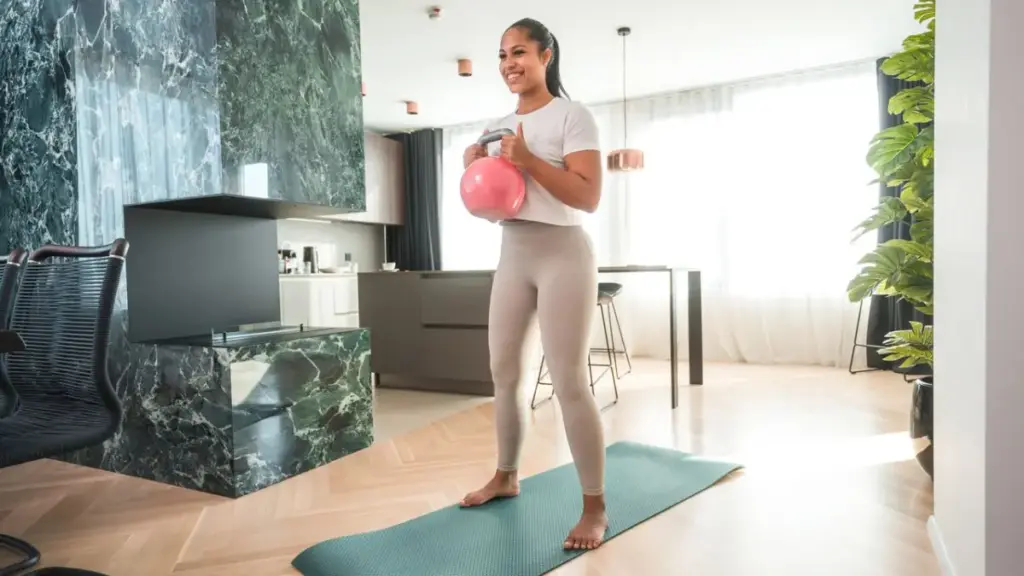
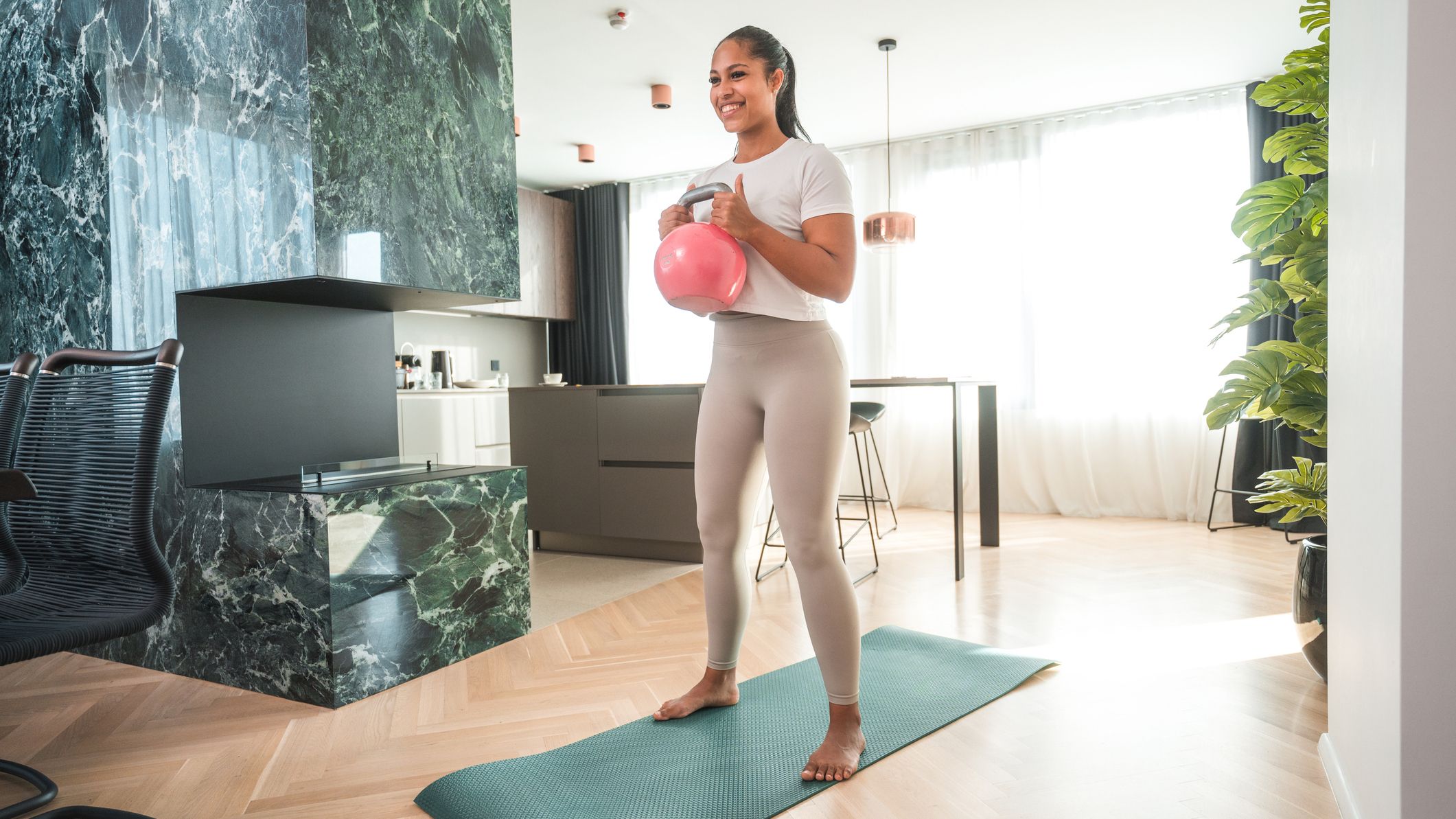
Instead, Ellis advocates for the integration of a single, versatile piece of iron: the kettlebell. Having spent over four years teaching complex kettlebell mechanics, she identifies the tool as her absolute favorite instrument for constructing a resilient, functional core. Because of its unique design—where the center of mass is displaced entirely from the handle—a kettlebell is inherently asymmetrical and dynamic. This structural shift forces deep stabilizing muscles, such as the transverse abdominis and the obliques, to fire constantly simply to maintain balance. In essence, every kettlebell movement functions inherently as an active core exercise.
This comprehensive report examines the physiological shift away from traditional spinal flexion, breaks down three dynamic kettlebell movements designed to forge ultimate midsection stability, and explores the future outlook of functional strength training.
Detailed Chronology: The Evolution of Core Training
To understand why kettlebells have emerged as the premier choice for modern trainers and strength coaches, it is necessary to examine how our understanding of the human core has evolved over the past fifty years.
The Era of Isolation (1970s–1990s)
For decades, the fitness industry was heavily influenced by bodybuilding paradigms. The core was viewed almost exclusively through the lens of the rectus abdominis—the "six-pack" muscle. Workouts were designed to isolate this muscle through repeated spinal flexion, popularized by infomercials promising washboard abs in minutes a day. Little attention was paid to the deep intrinsic stabilizers of the spine, and the potential wear-and-tear of repetitive lumbar flexion was largely ignored by mainstream fitness culture.
The Functional Fitness Revolution (2000s–2010s)
As sports science advanced, researchers began to recognize the spine’s primary role: not to bend repeatedly under load, but rather to resist movement and protect the central nervous system. Pioneers in biomechanics introduced concepts like "core stability" versus "core strength." The focus shifted toward planks, bridges, and anti-rotation holds. Concurrently, the kettlebell—long a staple of Russian strongman and military conditioning—began to permeate Western commercial gyms, heralded for its ability to bridge the gap between strength, cardiovascular endurance, and dynamic stability.
The Modern Paradigm: Asymmetrical Loading (Present Day)
Today, elite coaches like Faith Ellis are pushing the envelope further by emphasizing asymmetrical, dynamic loading. Rather than static holds or linear crunches, modern core training utilizes implements whose weight distribution constantly challenges the nervous system to react in real time. Kettlebells have taken center stage in this movement, transforming the way athletes and everyday fitness enthusiasts build functional resilience.
Supporting Context & Metrics: The Anatomy of Functional Stability
To appreciate why kettlebell training yields superior results compared to traditional floor work, one must examine the specific musculature involved and the physics of the equipment itself.
The Transverse Abdominis and Obliques
The human core is not a single muscle; it is a complex cylinder of tissue surrounding the spine and abdominal viscera. While the rectus abdominis is responsible for bending the spine forward, the deeper layers—most notably the transverse abdominis—act as a natural weightlifting belt, compressing the abdomen and stabilizing the lumbar spine. Meanwhile, the internal and external obliques manage rotational forces and lateral flexion.
When executing a traditional crunch, these deep stabilizers often take a backseat to the hip flexors and rectus abdominis. Conversely, when lifting an offset weight like a kettlebell, the brain immediately signals the transverse abdominis and obliques to contract isometrically or eccentrically to prevent the spine from twisting or collapsing under the shifting load.
Physics of the Kettlebell vs. The Dumbbell
Feature
Traditional Dumbbell
Kettlebell
Center of Mass
Aligned directly within the hand/grip
Displaced outward from the handle
Moment Arm
Shorter, more predictable leverage
Longer, creates dynamic rotational forces
Grip Demands
Standard neutral or closed grip
Thick handle demanding active grip endurance
Core Activation
Primarily targeted via fixed loads
Constantly engaged via reactive stabilization
Because the kettlebell’s mass hangs below the handle, it creates an unstable lever. This instability requires the entire musculoskeletal system to work cooperatively, driving higher caloric expenditure, greater neuromuscular coordination, and superior core engagement.
Official Statements & Expert Breakdown: Three Core-Crushing Kettlebell Exercises
Faith Ellis recommends a specific triad of movements designed to challenge both strength and multi-planar stability. Below is a detailed breakdown of how to execute each movement with impeccable form, accompanied by expert insights from Ellis herself.
1. Plank Kettlebell Drag
[ Sets: 3 ] | [ Reps: 10-12 each side ]
How to Execute:
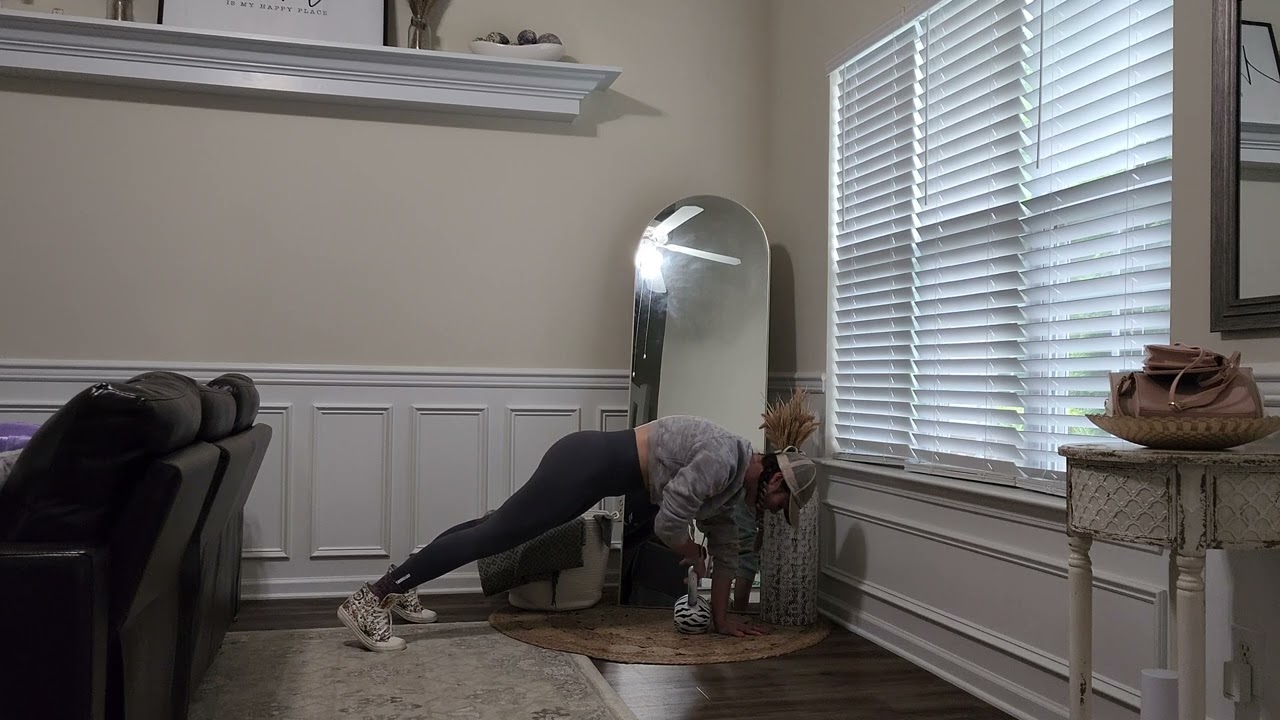
Setup: Begin in a high plank position with your hands stacked directly beneath your shoulders, your feet slightly wider than hip-width apart for a stable base of support, and your core braced tightly.
Placement: Place a single kettlebell on the floor just outside one of your hands, resting on the outside of your arm.
The Drag: Reach underneath your body with the opposite hand, grab the handle of the kettlebell, and drag it smoothly across the floor to the opposite side.
Resist Rotation: As you move the weight, focus intensely on keeping your hips and shoulders completely square to the floor. Do not allow your torso to open up or rotate as the weight shifts.
Completion: Return your hand to the floor, pause briefly, and repeat the drag using the opposite hand.
Expert Insight from Faith Ellis: "This is the ultimate anti-rotation exercise. While it looks deceptively like an arm movement, your core is working overtime to prevent your hips from shifting. It forces deep core activation and teaches you foundational trunk stability that translates directly into everyday lifting and athletic performance."
2. Kettlebell Halo
[ Sets: 3 ] | [ Reps: 8-10 in each direction ]
How to Execute:
Setup: Stand tall with your feet hip-width apart, engaging your glutes and bracing your abdomen. Hold the kettlebell upside down (by the horns/sides of the handle, with the heavy bell pointing upward) at chest height.
The Orbit: Slowly circle the kettlebell around your head in a smooth, controlled circular motion, keeping the path as close to your head and crown as possible without hitting yourself.
Head and Neck: Keep your head completely still; do not duck or tilt your neck to accommodate the weight. Instead, let the kettlebell travel around a stationary head.
Direction Change: Complete all designated repetitions in one direction before seamlessly reversing the path and circling the kettlebell the other way.
Form Tips:
Maintain a tight, rigid midsection throughout the entire movement. Avoid letting your lower back arch excessively as the weight passes behind your head.
Choose a moderate weight initially; a heavy kettlebell on a halo movement can quickly compromise your posture if your shoulder mobility or core strength is insufficient.
Expert Insight from Faith Ellis: "The kettlebell halo is a phenomenal dynamic stability movement. As the weight moves around your head, your center of gravity constantly shifts. Your core has to react in real time to keep your torso perfectly upright, which beautifully carves out the obliques while enhancing upper-back mobility."
3. Kettlebell Snatch
[ Sets: 3-4 ] | [ Reps: 6-8 each side ]
How to Execute:
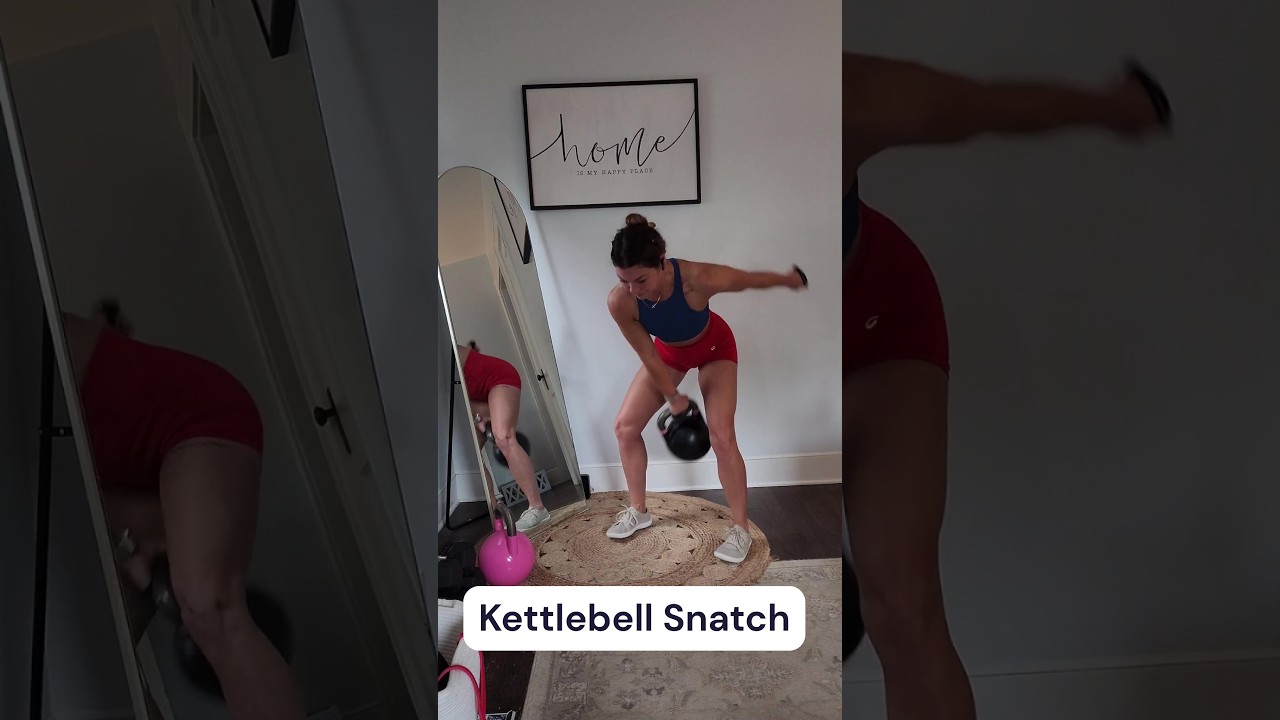
Setup: Stand with your feet slightly wider than shoulder-width, with a kettlebell on the floor a foot in front of you. Hinge at your hips, maintain a flat back, and grip the handle with one hand.
The Pull: Hike the kettlebell back between your legs like a football snap, then forcefully drive your hips forward, exploding upward through your heels and glutes.
The Punch: As the kettlebell floats upward from the power of your hip drive, pull your elbow high and back, smoothly "punching" your hand up through the window of the handle as the bell wraps around your forearm.
The Lockout: Finish in a fully locked-out overhead position with your arm straight, bicep near your ear, and your entire body rigid.
The Descent: Safely guide the kettlebell back down into the hike position to prepare for the next repetition.
Form Tips:
Never muscle the weight up solely with your arm and shoulder power; the explosive drive must originate entirely from the hips and legs.
Ensure a soft, controlled deceleration when locking out the weight overhead to protect the shoulder joint and spine.
Expert Insight from Faith Ellis: "This is an advanced, explosive, full-body power movement. The kettlebell travels from the floor all the way overhead in one fluid motion, requiring maximum deceleration at the top. I love it because it forces the entire abdominal cavity to stabilize dynamically to catch and secure the weight safely overhead."
Future Outlook: The Next Generation of Functional Fitness
As the fitness landscape continues to mature, the emphasis on longevity, injury prevention, and functional capability is permanently eclipsing purely cosmetic training models. The days of mindless crunching are giving way to intelligent, multi-planar conditioning regimens that respect the true design of the human body.
Tools like the kettlebell are leading this charge. By challenging the core through asymmetrical loading, rotational resistance, and explosive ballistic movements, trainees are developing bodies that are not only visually impressive but exceptionally resilient. Looking ahead, fitness professionals anticipate a continued integration of functional implements into standard wellness routines, empowering individuals of all fitness levels to build a body that performs as powerfully as it looks.
About Our Expert
Faith Ellis is a certified kettlebell specialist (Level Three) and the visionary founder of The KettleBelle, a premier fitness application and community designed to empower women through functional strength and progressive kettlebell training. Her coaching philosophy centers heavily on advanced biomechanics, ironclad core stability, and sustainable, lifelong physical strength.