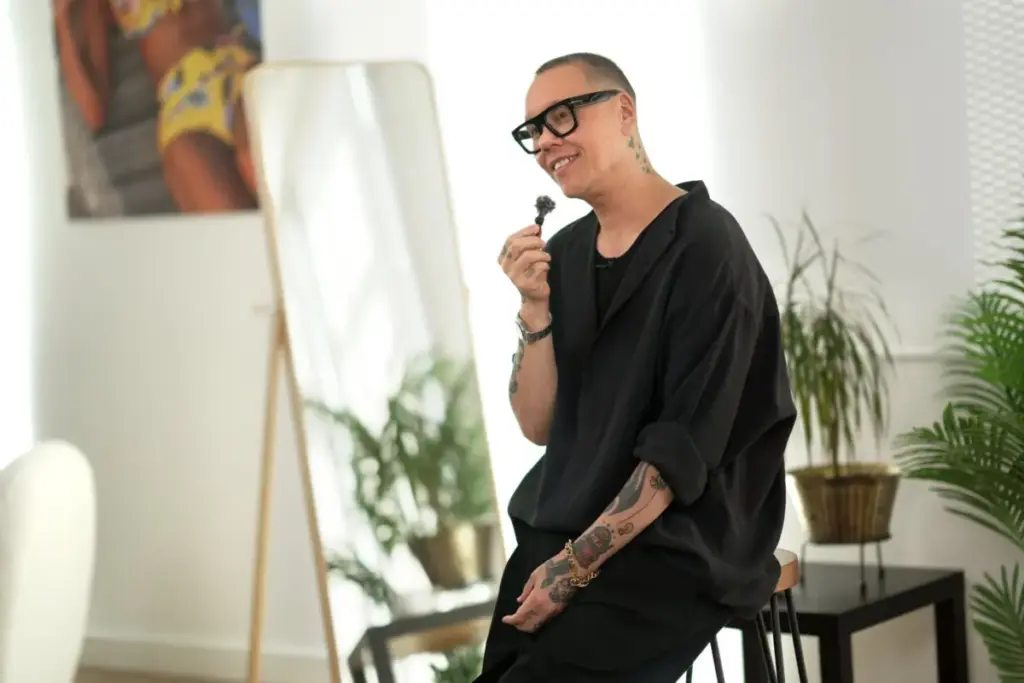
Two decades after he first bounced onto television screens with his signature trilby hat, perfectly tailored frames, and an infectious, unyielding zeal for body positivity, Gok Wan remains a towering cultural fixture. For the millennial generation, he is more than just a stylist—he is a generational milestone. As the architect of Channel 4’s landmark 2006 reality hit, How to Look Good Naked, Wan cemented himself as the nation’s "Fairy Gokmother," radically shifting the conversation surrounding body image, self-worth, and personal style for a generation of women.
Today, at 52, Wan’s footprint extends far beyond the realm of daytime makeovers. As a multi-faceted entertainer, acclaimed DJ, author, and champion of inclusive fashion, he continues to work tirelessly to help individuals find both confidence and their "perfect fit." In a wide-ranging, candid interview, Wan reflects on his enduring legacy, the potential return of controversial noughties fashion staples, the psychological toll of sudden fame, and his ongoing partnership with lingerie brand Pour Moi. Furthermore, he offers an authoritative, unvarnished critique of contemporary fashion trends, addressing the concerning resurgence of ultra-thin beauty standards in the modern "Ozempic era," and demystifying the reality behind his own public persona.
Detailed Chronology: From Vauxhall Flat to A-List Icon
The story of Gok Wan’s ascent is one of television folklore, anchored in an era before streaming algorithms and decentralized media dictated pop culture. In 2006, reality television was experiencing a golden age, yet the landscape of daytime programming was frequently characterized by high-pressure environments and critical, exclusionary judgment. How to Look Good Naked fundamentally subverted this dynamic.
[2006] ➔ The Launch of 'How to Look Good Naked' & Sudden Stardom in Vauxhall
  │
[2008-2015] ➔ Evolution into a Household Name, Parodies, and Mainstream Ubiquity
  │
[2015-Present] ➔ Diversification: DJing Global Clubs, Publishing, & Lingerie Collaborations
  │
[2026] ➔ Partnering with Pour Moi & Reflecting on a 20-Year Legacy
Wan recalls the precise moment his life changed overnight. Living in a modest two-bedroom flat in Vauxhall, central London, he woke up to a reality where his face—and his mission—belonged to the public.

"I remember waking up and instantly feeling like the world knew who I was," Wan shares. Having previously worked behind the scenes dressing high-profile celebrities, Wan initially associated fame with an intrusive demand for personal information. "I hid for quite a few days because I was trying to get my head around it."
The psychological adjustment required a tangible reality check. The turning point arrived while he was shopping with the band All Saints, whom he was styling at the time. Noticing two young girls peering through the shop window, Wan instinctively stepped back—a protective reflex developed from years of shielding celebrity clients from overzealous crowds. Instead of backing away, the girls walked straight into the shop to request his autograph.
"That was the moment I realised my life had changed and that people weren’t trying to trip me up," Wan reflects. "They just wanted to say thank you a lot of the time."
That expression of gratitude became the bedrock of his career. Every episode of How to Look Good Naked was designed not merely to style an outfit, but to deconstruct internalized shame. By teaching women how to understand their proportions, embrace their natural bodies, and master the mechanics of proper undergarments—affectionately referring to breasts as "bangers"—Wan equipped an entire generation with the tools to reclaim their self-esteem.

Supporting Context & Metrics: The Noughties Renaissance and Cultural Footprint
The cultural resonance of the noughties has experienced a massive resurgence, fueled in large part by digital memory loops on platforms like TikTok, where retro clips of makeover shows are consumed by younger demographics who originally watched the broadcasts alongside their mothers.
Yet, this retrospective appreciation brings back not only the empowering ethos of Wan’s television work, but also the distinct sartorial eccentricities of the era. Among them, the elasticated waist belt stands out as the ultimate noughties sartorial equalizer. Paired with chunky gold buckles and vibrant splashes of color, the waist-cinch was ubiquitous.
When asked about the likelihood of these items returning, Wan is remarkably pragmatic.
┌────────────────────────────────────────────────────────┐
│             Noughties Fashion Resurgence               │
├──────────────────────────┬─────────────────────────────┤
│ Staple Item              │ Market Signal               │
├──────────────────────────┼─────────────────────────────┤
│ Elasticated Waist Belts  │ "Waiting behind the door of │
│                          │  next season's collections" │
│ Avant-Garde Silhouettes  │ Huge shoulders, nipped-in   │
│                          │ waists, and big skirts      │
└──────────────────────────┴─────────────────────────────┘
"I think it’s waiting behind the door of next season," Wan teases. "We’re already seeing huge shoulders, nipped-in waists, and big skirts. Everything is beautifully avant-garde and exaggerated. A belt is one of the first things we’d go to to accentuate those shapes. So yeah, I think the elasticated waist belt is literally on the periphery."

Wan’s cultural footprint extends far beyond fashion enthusiasts, stretching deep into contemporary A-list circles. He recounts an anecdote from a DJing set at the legendary Pikes hotel in Ibiza, where the venue’s owner approached him to facilitate an introduction.
"Nick, who owns it, said, ‘Dua Lipa’s in tonight,’" Wan recalls. "He went over to her and said, ‘Do you want to meet Gok Wan?’ and apparently she was like, ‘Do I want to meet Gok Wan? Every girl wants to meet Gok Wan!’"
While logistical constraints—specifically, an imminent DJ set—prevented a face-to-face meeting, the interaction underscored his enduring reach. Before Dua Lipa became a global megastar, she was a young girl navigating her identity and body image, finding reassurance in Wan’s television output.
Official Statements & Industry Insights: The "Ozempic Era" and Body Politics
Despite his optimistic public persona, Wan maintains a sharp, critical eye on the shifting tides of the fashion industry. Two decades after he first championed the inclusion of diverse body shapes, plus-size mannequins, and realistic representation on high streets, the industry faces a troubling regression.

The rise of the so-called "Ozempic era"—characterized by the widespread availability of powerful weight-loss medications and a sudden cultural pivot back toward hyper-thin beauty ideals—is a development Wan views with deep concern, though he admits he is far from surprised.
"I’m not shocked. I knew it was never going to go away. We definitely saw a change. We saw a movement. We campaigned to have plus-size mannequins in shop windows and ensure people were represented… I think we need to be really honest and vocal with the next generation about it. Talk about the images they’re seeing and how they feel about them."
This philosophy underpins his latest professional venture: a partnership with British lingerie brand Pour Moi for the "Designed to Fit" campaign. By combining his decades of expertise with an inclusive, no-fuss approach to undergarments, Wan aims to educate women on fit, comfort, and anatomical proportions. True to form, Wan claims his diagnostic skills remain razor-sharp: "I can still guess a woman’s bra size like a true expert. Whoever you are, I can size you on sight!"
Wan’s cultural ubiquity also made him a frequent subject of satire during the height of his television fame. Comedians from Kevin Bishop to Jon Culshaw, alongside historical sketch shows like Horrible Histories, regularly parodied his mannerisms and distinctive aesthetic. Rather than harboring resentment, Wan embraced the impersonations.

"It just made me laugh!" he says. "When Horrible Histories did it, I felt really proud. And then with Kevin Bishop, I thought it was funny as hell. And I absolutely, 100 percent just took it as that. I was absolutely not offended at all, in the slightest."
Future Outlook: Demystifying the Man Behind the Brand
As Wan looks toward the future, balancing his high-energy DJ sets at international clubs, ongoing television appearances, and fashion collaborations, he remains acutely aware of the disconnect between his public profile and his private reality.
"People think that I really genuinely care what people look like," he admits with a laugh. "And I don’t. I’ll only ever help people out if they’re asking for my help, and I’ll give them my opinion. But I couldn’t care if you’re wearing the latest fashion, whether you’ve got your make-up done or whatever. I care about the person that you are."
He acknowledges that public perception frequently frames him through a lens of glittering superficiality—a misconception compounded by his glamorous career in styling and electronic music. Yet, away from the flashbulbs and DJ booths, Wan’s life is anchored in domestic simplicity.

"I think people still don’t know whether I’m real or not," Wan muses. "Over my career, I’ve heard, ‘Oh, he’s not really gay. He’s definitely straight.’ People also think that I live in this kind of concrete, grey expanse of minimalism. It’s not. I live in colour and textures. I don’t live the celebrity lifestyle. I don’t only go on yachts on my holidays or eat at fancy restaurants or whatever. I love garden centres with my family. There’s nowhere I’d rather be."
For an icon who spent twenty years teaching millions how to feel comfortable in their own skin, Wan’s ultimate triumph is not just the legacy of his styling commandments, but the quiet, grounded authenticity that sustains him. As he enters his next chapter, the "Fairy Gokmother" proves that true style is not about rigid adherence to fleeting trends, but about embracing humanity in all its colorful, imperfect, and wonderfully unpretentious forms.
For more information on the Gok Wan x Pour Moi "Designed to Fit" campaign, visit the official Pour Moi website.