Executive Overview
In the contemporary digital landscape, internet subcultures frequently borrow religious iconography to articulate devotion to pop superstars. Yet, few cultural phenomena have achieved the intellectual rigor, emotional resonance, and mass mobilization of "Megalations."
Rooted in the lyrical lexicon of three-time Grammy Award-winning rapper Megan Thee Stallion, Megalations functions as a crowdsourced spiritual framework—a secular liturgy playfully structured around biblical verse notation (e.g., Megalations 3:12). Across TikTok, Instagram, and X (formerly Twitter), millions of fans utilize these lyrical scriptures as emergency emotional literature, deprogramming tools, and feminist manifestos against systemic patriarchy.
The movement surged into public consciousness following high-profile relationship betrayals in spring 2026, when internet communities weaponized Megan’s verses to dismantle toxic dating dynamics and rally around the Houston-born artist. However, Megalations is far more than a transient internet meme. It is the latest evolution in a rich lineage of Black feminist thought within hip-hop, positioning Megan Thee Stallion not merely as a dominant chart-topper, but as a prophetic cultural architect who teaches her followers how to survive heartbreak, reject respectability politics, and reclaim radical self-possession.
Detailed Chronology: From Underground Hustle to Digital Canonization
To understand how Megan Thee Stallion’s lyrics became holy text, one must trace the meticulous, barrier-breaking trajectory of her career—a path forged through relentless artistic output, academic perseverance, and profound personal resilience.
2018–2019: The Birth of Hot Girl Meg
Megan’s professional ascent began in early 2018 when she signed with 1501 Certified Entertainment, establishing herself as the label’s foundational female rapper. That June, she released her breakout EP, Tina Snow, introducing the world to her brazen, uninhibited alter ego named after the classic pimp persona. The standout track, "Big Ole Freak," shattered commercial barriers, officially charting at number 65 on the Billboard Hot 100 in May 2019.
The introduction of her commercial mixtape, Fever, later that spring cemented the global persona of "Hot Girl Meg." By August 2019, the release of "Hot Girl Summer" featuring Nicki Minaj and Ty Dolla $ign accrued over one million views and 129,000 likes within 24 hours. The accompanying hashtag (#hotgirlsummer) instantly dominated social media, forcing fans and critics alike to acknowledge a new set of cultural commandments anchored in autonomy and unapologetic joy.
2020–2021: Chart Dominance and Academic Triumph
The global pandemic did little to stall Megan’s momentum; instead, it elevated her to superstardom. On April 29, 2020, the "Savage (Remix)" featuring Beyoncé claimed the number one spot on the Billboard Hot 100, marking Megan’s first chart-topping hit. Later that year, her debut studio album, Good News, debuted at number 2 on the Billboard 200.
Simultaneously, Megan balanced grueling global tour schedules and studio sessions with her education, ultimately graduating from Texas Southern University in December 2021 with a Bachelor of Science degree in Health Administration. In 2022, she officially trademarked the phrase "Hot Girl Summer," legally cementing her cultural footprint.
2023–Present: Public Resilience and the Rise of Megalations
This meteoric rise, however, occurred under the harsh glare of public trauma and profound personal loss. In March 2019—just as Fever was being recorded—her mother and manager, Holly Thomas, passed away from brain cancer, followed shortly by the loss of her grandmother. In July 2020, a highly publicized shooting incident involving rapper Tory Lanez subjected Megan to intense public scrutiny, systemic disbelief, and unrelenting misogynoir across media platforms.
Rather than shrinking from the spotlight, Megan channeled her trauma into her artistry. Her third, self-titled studio album, Megan (2024), featured the raw, introspective lead single "Cobra," in which she addressed her battles with depression and public betrayal with unflinching honesty.
It was within this crucible of public empathy and fierce parasocial protectiveness that Megalations was born. Fans began cataloging her sharpest, most empowering bars into canonical verses, utilizing them to process everything from everyday microaggressions to devastating romantic betrayals.
Supporting Context & Metrics: The Sociological Impact of Hot Girl Rhetoric
The cultural staying power of Megalations is grounded in robust academic frameworks and measurable digital engagement. Scholars and digital ethnographers have increasingly turned their attention to how Megan’s lyricism disrupts traditional, restrictive archetypes of Black womanhood.
Academic Perspectives on Hot Girl Rhetoric
In her foundational study, The Megan Movement: Defining and Exploring Hot Girl Rhetoric, Dr. Ebony L. Perro, Professor of Practice at Tulane University, examines how the artist subverts historical expectations. Dr. Perro notes:
"She problematizes one-dimensional readings of Black womanhood and generates a language for her fanbase to challenge oppressive ideologies. While many artists contest discourses about Black women, Megan Thee Stallion’s hot girl rhetoric generates cultural phenomena that disrupt the respectable/ratchet binary for Black women."
By refusing the Madonna-whore dichotomy historically imposed upon sexually liberated women, Megan’s music foregrounds Black feminist thought. Lines like "I’m a Savage / Classy, bougie, ratchet / Sassy, moody, nasty" from her ubiquitous hit "Savage" explicitly reject the notion that women must conform to a single, sanitized mode of existence to be worthy of respect.
Digital Metrics and Community Engagement
The digital footprint of the Megalations phenomenon is vast and quantifiable across major social platforms:
- TikTok Virality: Audio clips featuring instructional recitations of tracks like "Plan B" (specifically the line "Dick don’t run me, I run dick") routinely generate tens of thousands of video creations, user saves, and comment threads dedicated to relationship recovery.
- Lexical Integration: On Urban Dictionary and Reddit communities such as
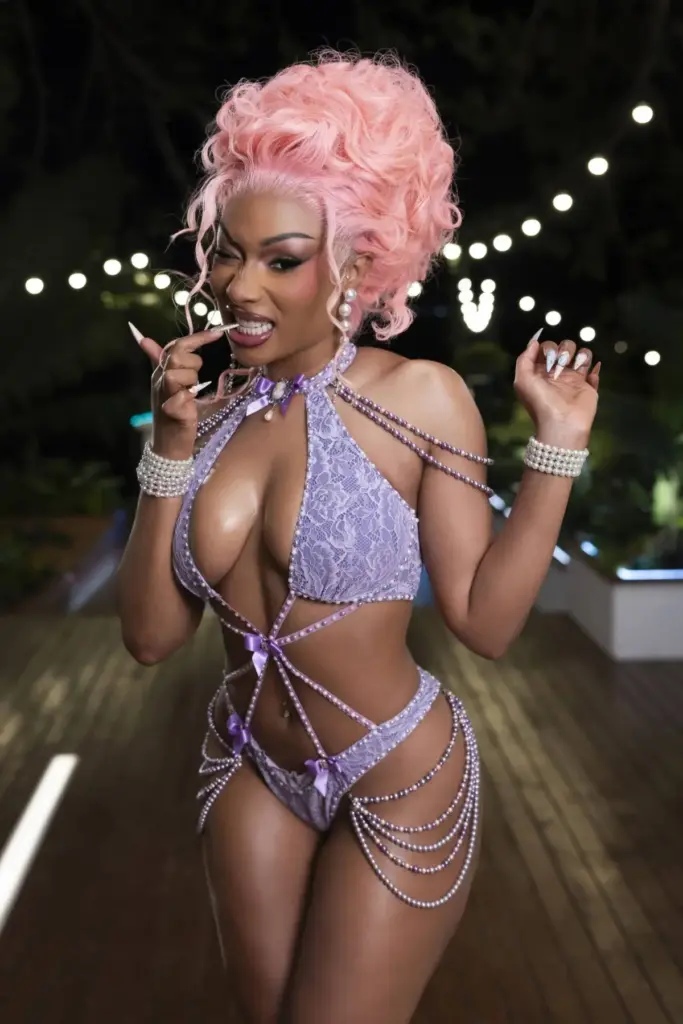
r/megantheestallion, threads dissecting her discography often mirror literary analysis, with users exchanging specific "verses" to navigate workplace toxicity, breakups, and self-doubt. - Mainstream Cross-Pollination: Cultural touchstones, such as Megan’s guest appearance on the reality television phenomenon Love Island—where she hosted a "Hot Girl Bakery" challenge dressed as a modern Marie Antoinette—served as a masterclass in boundary-setting. Reminding the male contestants that they could participate in the show’s dating mechanics while still maintaining fundamental respect for women, Megan bridged the gap between reality television spectacle and feminist pedagogy.
Official Statements and Cultural Testimony
The emotional architecture of Megalations relies heavily on personal testimony from fans, artists, and cultural commentators who view Megan’s work as an essential psychological lifeline.
New York-based actress and musician Mona Swain captured the internet’s zeitgeist in May 2026 with a viral video titled "please stand for the national anthem," set to the empowering lyrics of Megan’s "Plan B." The post rapidly amassed over 83,000 likes and thousands of saves, drawing comments such as "in meg we trust" and "PREACH."
Reflecting on the cultural resonance of the track, Swain shared with industry press:
"Songs like ‘Plan B’ feel empowering because they challenge the idea that women should shrink themselves, tolerate disrespect, or stay loyal to situations that are hurting them. For me, those lyrics read less as revenge and more as reclamation, protecting your peace, and remembering your worth even when emotions are involved. I think a lot of women connect to Megan because she makes confidence and self-respect feel unapologetic."
This sentiment echoes through generations of women in hip-hop. Megan Thee Stallion’s work stands upon the broad shoulders of foundational pioneers—including Roxanne Shanté, MC Lyte, Queen Latifah, Salt-N-Pepa, Yo-Yo, Missy Elliott, and Lil’ Kim—who fought to carve out space for female sexual agency and self-definition within a male-dominated genre. Megan has successfully translated this historical lineage into the hyper-connected, digital age, providing contemporary listeners with a ready-made lexicon of resistance.
Future Outlook: The Enduring Legacy of the Book of Meg
As Megan Thee Stallion continues to tease boundary-pushing unreleased projects—such as her mid-2026 previews signaling the dawn of a fiercely independent single season—the cultural infrastructure of Megalations shows no signs of abating.
The phenomenon has permanently altered how fan communities interact with popular music, shifting the paradigm from passive consumption to active spiritual and political devotion. In a media ecosystem that frequently attempts to penalize women—particularly Black women—for asserting their autonomy, Megalations provides an unbreakable armor.
Ultimately, the canonization of Megan Thee Stallion’s lyrics is a testament to the transformative power of art born from resilience. Whether recited in quiet moments of self-doubt, screamed at the top of lungs in crowded concert venues, or invoked as protective wards against toxic entanglements, the scriptures of the Hot Girl Bible offer a timeless directive: own your power, demand your worth, and never let anyone make you feel small.
For millions across the globe navigating the turbulent waters of modern life, the directive remains clear: A Megalation a day keeps the bad news away.