Executive Overview
In the modern landscape of live entertainment, the boundary between an artist’s platform and political activism has grown increasingly porous. Few recent incidents highlight this delicate and volatile intersection quite like the intense public fallout stemming from Macklemore’s pro-Palestinian remarks during his opening sets for Ed Sheeran’s Loop Tour. What began as an onstage declaration at New Jersey’s MetLife Stadium quickly snowballed into a cross-platform digital firestorm, drawing in industry heavyweights, activist organizations, and—most notably—pop icon Pink.
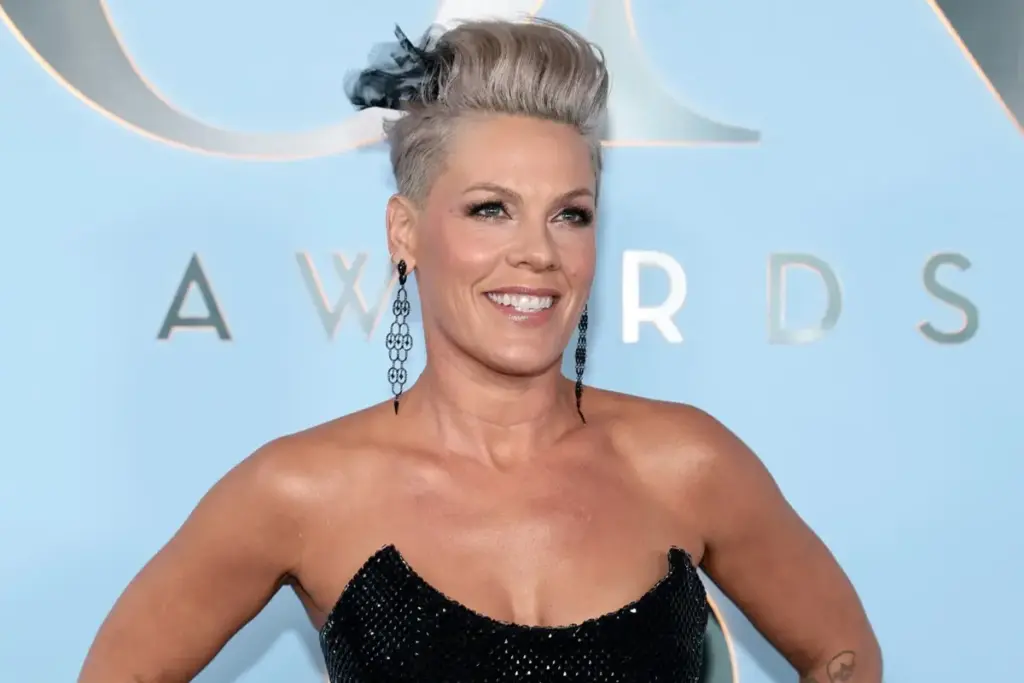
Following a criticized social media repost and subsequent online exchanges, Pink issued a comprehensive, three-part statement addressing the controversy, her Jewish heritage, the nuances of political discourse on social media, and an uncomfortable historical precedent involving Macklemore. This report provides an exhaustive, chronological examination of the events, analyzes the underlying tensions surrounding celebrity activism, details the organizational backlash spearheaded by groups like the Israeli-American Council (IAC), and evaluates the broader implications for artists navigating geopolitical conflicts in the public eye.
Detailed Chronology
The Catalyst: MetLife Stadium and the "Free Palestine" Chants
The controversy took root during the early September stops of Ed Sheeran’s Loop Tour. Serving as the direct support act, rapper Macklemore (Ben Haggerty) took the stage at MetLife Stadium in East Rutherford, New Jersey, on September 4 and September 5.
During his sets, Macklemore incorporated pro-Palestinian messaging into his performance, utilizing large screens displaying evocative imagery from the ongoing Middle Eastern conflict and explicitly calling to "free Palestine." While concert environments have increasingly become forums for social commentary, the inclusion of geopolitical slogans within a family-oriented stadium pop tour instantly polarized the audience.
For many attendees, the statements were a welcome display of humanitarian solidarity; for others—particularly Jewish concertgoers—the display felt imposing, triggering anxieties about rising antisemitism and the weaponization of cultural spaces.
The Digital Spark and Pink’s Repost
Shortly after the September performances concluded, pop superstar Pink—whose legal name is Alecia Beth Moore—weighed in digitally. Rather than issuing a tailored statement, Pink amplified a post originally shared by StopAntisemitism, an organization that tracks and exposes antisemitic incidents. The post heavily criticized Macklemore’s onstage remarks and explicitly called for his removal from the remainder of Ed Sheeran’s stadium tour.
The repost immediately ignited a digital wildfire. Critics accused Pink of attempting to silence pro-Palestinian speech or censorship, while supporters praised her for highlighting what they perceived as an alienating and potentially unsafe environment for Jewish fans within mainstream entertainment venues.
Recognizing the escalating tension and the limitations of digital discourse, Pink elected to provide a detailed, long-form clarification via Instagram on Friday, September 11.
Supporting Context & Metrics
The Mechanics of Social Media Backlash
The incident underscores a broader sociological phenomenon within the entertainment industry: the compression of complex geopolitical conflicts into flattened, algorithm-driven social media binaries. In her statement, Pink candidly addressed the pitfalls of this dynamic, noting:
"A repost isn’t a statement, and a meme isn’t a spine. Social media makes all of us cheap and fast, and we all know it."
The metrics surrounding the digital fallout were staggering. Within hours of Pink’s repost, engagements—ranging from shares and quote-tweets on X (formerly Twitter) to thousands of polarized comments on Instagram—reached millions of impressions. This digital acceleration forced both artists into reactive postures, transforming a localized stadium incident into a global culture-war flashpoint.

Historical Precedents: The 2014 Costume Controversy
Pink’s long-form statement introduced a significant historical layer to the current dispute, drawing attention to a previous controversy involving Macklemore. In May 2014, the rapper performed at the Experience Music Project Museum in Seattle while wearing a costume featuring a large prosthetic nose, a black beard, and a wig—attire widely condemned as perpetuating antisemitic tropes.
At the time, the backlash was severe, prompting Macklemore to issue a public apology in which he stated, "A ock of my hair, a fake beard, and a nose that I thought looked like Andy Rooney when I bought it at a Halloween store on Capitol Hill later paved my way into a category of ‘anti-Semitic’ or ‘Hebraic caricature’ … I respect all cultures and all people."
In her September 2025 statement, Pink recalled this incident to contextualize her emotional reaction at MetLife Stadium:
"Every Jew I know knew exactly what it was. But he apologized, and I let it go, because that’s what we do. We let it go. Then last weekend he stood in front of a stadium full of music-loving families… and then took the mic to tell all of the Jews in the stadium that it wasn’t about them. You don’t get to decide that for us."
Official Statements
Pink’s Clarification and Humanitarian Stance
Pink’s statement was multifaceted, aiming to reclaim ownership of her narrative after what she described as external assumptions regarding her identity and beliefs. Key components of her declaration included:
- On Heritage and Assumptions: "I was born a Jew. I didn’t pick it, and I’ve never hidden it. And this week a whole lot of people decided what I believe without asking me, without checking a single thing I’ve ever said or done, because a repost and the word ‘Jew’ were apparently enough to fill in the rest."
- On Geopolitics and Hamas: "I have never spoken for Israel, or for any government… Hamas is a terrorist organization. Palestinians deserve a future that honors their humanity and their aspirations. Protecting innocent life comes first, everywhere, and nobody should ever celebrate the death of a child. Anybody’s child."
- On Humanitarian Work: Highlighting her decade-long tenure as a UNICEF ambassador, Pink emphasized her active, boots-on-the-ground involvement in conflict zones globally. "I have grieved every one of them, on both sides of that fence… I didn’t do it from behind a screen; I went to those children and held them. I’m not going to litigate a complex war in an Instagram caption, and I’m not going to recite anybody’s slogan to earn back a follower."
- On Censorship and Personal Fear: Clarifying her intent behind the initial repost, she wrote: "Not ‘Free Palestine,’ and not anyone’s right to say it. I have never asked for another artist to be silenced and I’m not asking now. I don’t need anyone fired, and I don’t need a refund. What I need is to be able to say, as a Jewish mom, that scared me, and it scared people I love, without being told our fear is just propaganda…"
Macklemore’s Defense
Macklemore remained resolute in his stance following the public criticism. Turning to social media platform X, the rapper doubled down on his onstage messaging by sharing video footage of his MetLife Stadium speech accompanied by the caption:
"Wanting all humans to be treated equal should never be controversial."
Institutional Action: The Israeli-American Council Petition
The cultural fallout quickly translated into organized political pressure. The Israeli-American Council (IAC) stepped into the fray by launching an official petition. The document called for Macklemore’s immediate removal as the opening act for the remaining eight U.S. stadium dates on Ed Sheeran’s tour schedule, which were slated to run through early November.
The IAC’s mobilization demonstrated how rapidly artistic performances intertwined with political advocacy can trigger formal contractual and commercial consequences.
Future Outlook
The clash between Pink and Macklemore—magnified by digital amplification, historical baggage, and organized advocacy—illuminates a profound structural challenge facing the contemporary live music industry. As concert tours increasingly double as platforms for socio-political expression, promoters, venues, and headliners must navigate a minefield of competing stakeholder expectations.
Key Takeaways and Industry Implications:
- The Erosion of Nuance: Platforms like X and Instagram continue to penalize nuanced dialogue, forcing artists into binary camps where emotional reactions are routinely scrutinized as geopolitical policy statements.
- The Limits of Tour Partnerships: Headliners like Ed Sheeran may find themselves compelled to implement clearer guidelines regarding guest performers’ stage content to prevent alienation of diverse fan bases or potential tour disruptions.
- Artist Accountability vs. Artistic Freedom: The incident revives ongoing debates regarding where the line rests between an artist’s right to free expression and an audience’s right to experience live entertainment free from targeted political alienation.
As the dust settles on the initial wave of controversy, the episode serves as a sobering reminder that in an interconnected global culture, words spoken on a stadium stage carry weight that extends far beyond the final encore—testing personal relationships, inflaming historical sensitivities, and reshaping the boundaries of celebrity activism for years to come.