Executive Overview
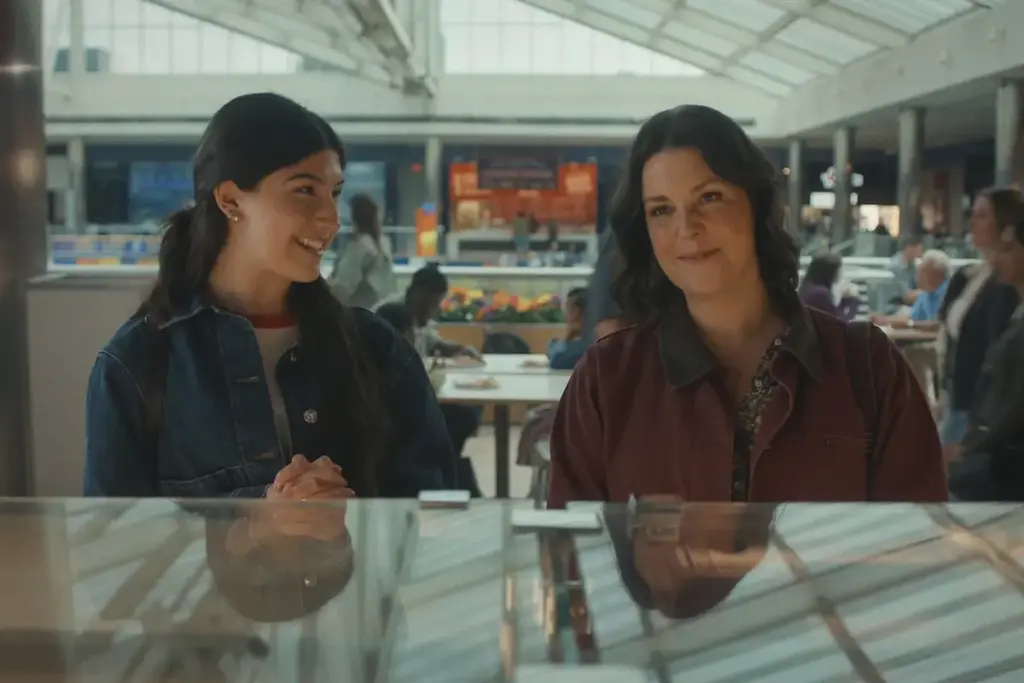
In the vast and often predictable landscape of contemporary streaming content, coming-of-age dramas frequently tread well-worn paths of teenage angst, first loves, and high school rivalries. However, Netflix’s latest offering, Don’t Say Good Luck, deliberately shatters that cheerful mold, delivering a poignant, emotionally devastating exploration of terminal illness, familial devotion, and the bittersweet transition into adulthood. Directed by Julia Hart from a screenplay co-written by Hart, Jordan Horowitz, and Laura Hankin, the film stars breakout talent Sunny Sandler as Sophie, a young woman navigating the dizzying heights of high school theatrical success while grappling with the agonizing, day-by-day decline of her terminally ill mother, played by Emmy-nominated actress Melanie Lynskey.
Produced under Adam Sandler’s Happy Madison banner—a production company historically celebrated for its broad, goofy comedies—Don’t Say Good Luck represents a stark tonal departure. It avoids cheap sentimentality in favor of raw, grounded vulnerability, anchoring its emotional weight in real-world experiences. The narrative draws heavily from co-writer Laura Hankin’s own adolescence, mirroring a period when Hankin secured the lead role in her high school musical simultaneously as her mother fought a terminal cancer battle.
Since its debut on Netflix in mid-August 2026, the film has captured the cultural zeitgeist, sparking widespread discussion across social media platforms, critical circles, and entertainment forums. Audiences have been universally warned to keep tissues close at hand, as the narrative builds toward an ambiguous yet emotionally resonant climax. This deep-dive feature explores the intricate mechanics of the film’s narrative, unpacks the true-life events that inspired its creation, breaks down its heavily discussed ending, and examines its broader impact on the streaming landscape.
Detailed Chronology: The Journey of Don’t Say Good Luck
The genesis of Don’t Say Good Luck traces back to the personal history of co-writer Laura Hankin. Years before the script ever found its way to a Hollywood development slate, Hankin was a teenager dealing with an unimaginable duality. On one hand, she was experiencing the exhilarating rush of the theater world, landing the lead role in her school’s musical production. On the other hand, she was returning home each evening to a household overshadowed by the encroaching reality of her mother’s terminal cancer.
Decades later, Hankin channeled this deeply personal crucible into a screenplay, collaborating with filmmaking partners Jordan Horowitz and director Julia Hart. The project eventually caught the attention of Happy Madison Productions. While the company is famously synonymous with slapstick comedies and lighthearted family fare, its leadership recognized the universal resonance of Hankin’s script. They cast Sunny Sandler—whose previous appearances in family-friendly Sandler projects demonstrated natural screen presence—in the demanding lead role of Sophie.
Principal photography moved forward with a clear vision: to maintain emotional authenticity without succumbing to exploitative melodrama. Melanie Lynskey was brought on board to portray Elizabeth Birenbaum, the matriarch whose fading health frames the narrative. Max Greenfield rounded out the core family dynamic as Ted, the devoted father struggling to keep his household afloat.
Upon wrapping production, Netflix slated the film for an August release. Within days of its premiere on the platform, Don’t Say Good Luck transitioned from a quiet platform drop into a viral phenomenon. Viewers took to digital platforms to share their emotional reactions, driving substantial viewing metrics and establishing the film as a dark horse contender in the streaming giant’s prestige drama library.
Supporting Context & Metrics: The Anatomy of a Tearjerker
To understand the cultural resonance of Don’t Say Good Luck, one must examine the critical and audience metrics surrounding its release. In an era dominated by high-concept science fiction, gritty crime thrillers, and comfort-watch reality television, deeply intimate melodramas often struggle to capture mainstream attention unless backed by massive marketing campaigns. Yet, Don’t Say Good Luck defied traditional algorithmic expectations through organic word-of-mouth promotion.
Within its first week on the platform, the film secured a top-ten placement globally on Netflix, driven largely by user-generated warnings on platforms like TikTok and X (formerly Twitter). Content creators and everyday viewers alike posted reaction videos featuring tear-stained faces, warning prospective audiences that a box of tissues was mandatory viewing equipment. This grassroots marketing campaign propelled the film past major studio releases in daily streaming hours during the third week of August 2026.
Furthermore, the film’s soundtrack—anchored by emotional musical theater numbers, most notably the soaring ballad "She Used to Be Mine" from Sara Bareilles’ hit Broadway musical Waitress—became a trending topic on music streaming services. The choice of musical theater as a narrative device serves a dual purpose: it acts as an escape valve for Sophie’s suppressed grief and a metaphorical bridge connecting her internal emotional state to the external tragedy unfolding in her home.
The production metrics also highlight a strategic shift for Happy Madison Productions. By backing a mid-budget, character-driven indie drama rooted in autobiographical trauma, the studio diversified its portfolio, proving that its creative scope extends far beyond crowd-pleasing comedies. This pivot has opened doors for younger talent, particularly Sunny Sandler, whose performance has been widely praised by critics as nuanced, restrained, and emotionally mature.
Official Statements and Behind-the-Scenes Insights
In interviews conducted around the film’s release, the creative team behind Don’t Say Good Luck opened up about the emotional toll and therapeutic necessity of bringing such a vulnerable story to the screen. Co-writer Laura Hankin spoke candidly with media outlets about the blurred lines between her real-life memories and the cinematic adaptation.
Discussing whether her mother managed to see her perform in her high school production, Hankin shared the fallibility of memory under traumatic conditions:
"She came to our dress rehearsal, I believe. Although memory is a tricky thing—I was like, ‘She was at the dress rehearsal,’ and my dad was like, ‘No, she came to the real performance.’ So we’ll never know. But she did see it, and then she passed away a few weeks later."
Unlike Sophie in the film—who performs a stunning rendition of "She Used to Be Mine" in a backyard recreation of a beach house—Hankin’s real-life high school musical was a distinctly different theatrical experience: Moby Dick! The Musical. Despite the absurdities of staging a theatrical production centered around Herman Melville’s leviathan, the emotional core remained identical: a daughter performing under the shadow of impending loss, desperate to offer her mother a moment of joy.
Director Julia Hart and producer Adam Sandler’s camp emphasized the importance of tonal control. In production notes, the filmmakers noted that the danger with terminal illness narratives is slipping into emotional manipulation. To combat this, they focused heavily on the mundane, everyday details of caregiving: the exhaustion of the father, the quiet solidarity between siblings, and the fleeting moments of normalcy that interrupt the grief.
Melanie Lynskey, renowned for her ability to portray complex, vulnerable women, approached the role of Elizabeth with a focus on dignity. Rather than playing a passive victim of disease, Lynskey’s portrayal emphasizes Elizabeth’s agency, intelligence, and deep concern for how her family will cope in her absence.
The Ending Explained: Unpacking the Final Moments
For viewers reaching the conclusion of Don’t Say Good Luck, the final sequence offers a masterclass in emotional resonance without explicit finality. While the film avoids showing an explicit death scene or a funeral, the narrative cues leave no room for ambiguity regarding Elizabeth Birenbaum’s fate.
The Parallel Climax
The final scene is structured as a powerful cross-cut sequence. On one side, we see Sophie on the opening night of her high school musical, pouring her entire soul into her performance of "She Used to Be Mine." On the other side, we see a heartbreakingly intimate domestic scene: a makeshift "beach house" constructed by Sophie and her brothers in the backyard. Because Elizabeth is far too frail to travel to the family’s traditional summer vacation spot, her children bring the beach experience to her.
Wheelchair-bound, frail, and visibly nearing the end of her physical strength, Elizabeth nonetheless radiates warmth as she surveys the effort her family has made. In a quiet, devastatingly symbolic gesture, she hands her husband, Ted (Max Greenfield), a copy of the novel she had been reading, Jane Eyre. Tucked inside is a note bearing a simple, profound message: "You’ll have to tell me how it ends."
This line serves as the emotional linchpin of the film’s climax. Both Elizabeth and Ted implicitly acknowledge that she will not live long enough to turn the final page of the book. She has run out of time, and the remainder of the story’s journey must be walked by Ted alone.
The Backyard Performance and Final Embrace
Though Elizabeth never makes it to the high school auditorium to see Sophie perform on the official stage, the narrative offers a superior emotional resolution. Sophie brings the performance directly to her mother. Following her solo number, the film cuts back to the backyard stage, where Sophie sings directly to Elizabeth.
As the music swells, Elizabeth claps weakly, and Sophie breaks character, running across the grass to embrace her mother in a desperate, clinging hug. With this embrace, the screen fades to black.
Interpreting the Ambiguity
Some viewers might wonder why the filmmakers chose to cut away before showing Elizabeth’s actual passing or the immediate aftermath of her death. The creative decision aligns with the perspective of the protagonist. For Sophie, the moment captured in the backyard—the music, the love, the shared presence—is the final memory she preserves before the definitive loss.
Furthermore, the real-world inspiration provides the ultimate confirmation. As Laura Hankin’s personal history dictates, mothers who battle terminal cancer through their daughters’ high-school milestones do not miraculously recover. They pass away shortly after the curtain falls.
For those who remained skeptical, the closing lyrical choice of the film provides an unmistakable thematic thesis. As Sunny Sandler’s voice echoes over the final credits, the haunting words of Sara Bareilles’ ballad ring out:
"She is gone, but she used to be mine."
Future Outlook and Cultural Legacy
As Don’t Say Good Luck continues to circulate across streaming algorithms, its long-term cultural legacy appears secure. In a media environment frequently criticized for recycling intellectual property and leaning into algorithmic safety, original, personal dramas like Hart and Hankin’s film prove that audiences still crave authentic, emotionally challenging storytelling.
For Sunny Sandler, the film marks a pivotal turning point in her burgeoning career. By stepping away from the ensemble comedies of her father’s productions and anchoring a heavy, dramatic narrative, she has established her individual artistic identity. Industry analysts predict that her performance will open doors to more dramatic indie features, positioning her as a versatile young actress capable of holding the screen alongside seasoned veterans like Melanie Lynskey.
For Netflix, the success of Don’t Say Good Luck reinforces the strategic viability of investing in mid-budget, character-driven dramas. By providing a platform for deeply personal stories rooted in real-world grief and resilience, the streaming giant demonstrates that emotional resonance can be just as powerful a driver of engagement as high-octane spectacle.
Ultimately, Don’t Say Good Luck transcends its status as a simple tearjerker. It functions as a cinematic memorial to the complex realities of caregiving, the resilience of family bonds, and the painful yet beautiful art of letting go. As viewers continue to discover the film—armed with their mandatory boxes of tissues—they participate in a collective cultural ritual of empathy, proving that even the heaviest stories, when told with honesty and grace, possess the power to heal.