Executive Overview
For decades, the architectural blueprint of the British retail landscape has been shaped by endurance, heritage, and, increasingly, distress. At the center of this turbulent transformation stands billionaire Mike Ashley, a polarizing titan whose corporate vehicle, Frasers Group, has systematically rewritten the rules of high-street and luxury commerce. Known historically for scaling Sports Direct from a single storefront into a multibillion-pound empire through opportunistic acquisitions, Ashley is now engineering his most audacious play yet: steering his mass-market machinery into the upper echelons of British luxury by acquiring the storied, yet struggling, department store Harvey Nichols.
This high-stakes maneuver arrives against a backdrop of deep industry anxiety. While Ashley’s supporters lionize him as a pragmatic dealmaker who rescues faltering assets from the brink of insolvency, his aggressive, unpredictable corporate tactics have long unnerved luxury brands. Those fears crystallized in early 2023 when Frasers acquired high-end e-tailer Matches, only to plunge it into administration less than three months later. The fallout left independent designers and luxury houses staring down unpaid invoices and trapped inventory—a cautionary tale that now looms heavily over Harvey Nichols’ next chapter.
Yet, dismissing Ashley as a blunt-force liquidator overlooks the sophisticated, sprawling ecosystem Frasers Group has quietly constructed. Beyond Harvey Nichols and Matches, Ashley’s empire commands an extraordinary footprint: luxury fashion destination Flannels, substantial equity stakes in global powerhouses like Hugo Boss, Mulberry, Burberry, and Puma, as well as a vast network of commercial real estate, retail parks, and outlet malls. Frasers is no longer merely a retailer; it is an integrated infrastructure giant capable of acting as a brand’s shareholder, wholesale partner, landlord, logistics provider, and retail competitor all at once.
As explored on a recent episode of the Glossy Fashion Podcast, featuring international fashion reporter Zofia Zwieglinska and senior fashion reporter Danny Parisi, this total-supply-chain strategy presents an unprecedented challenge to traditional luxury norms. Can a retail group rooted in value-driven sports goods successfully navigate the delicate, prestige-dependent world of luxury department stores? Or will the ghosts of Matches ultimately deter the very brands Harvey Nichols needs to survive? As Frasers Group tightens its grip on the UK retail ecosystem, the global fashion industry is being forced to confront a sobering reality: Mike Ashley’s ambitions are no longer on the fringes—they are setting the agenda.
Detailed Chronology: The Rise, Fall, and Consolidation of an Empire
To understand the weight of the Harvey Nichols acquisition, one must trace the evolutionary arc of Mike Ashley’s business philosophy—a trajectory defined by calculated opportunism, resilience, and a relentless appetite for distressed assets.
The Foundation: From Sports Direct to Frasers Group
Mike Ashley’s ascent began humbly in 1982 with the opening of a single sports equipment shop in Maidenhead, England. Operating under the name Sports Direct, Ashley capitalized on a nascent market for branded athletic wear, undercutting traditional department stores and independent outfitters through sheer buying power and aggressive discounting. By the turn of the millennium, Sports Direct had evolved into a dominant high-street powerhouse, known as much for its stack-em-high-and-sell-em-cheap retail floor plans as for its astute, opportunistic corporate maneuvers.
As the 2008 global financial crisis battered the British retail sector, Ashley perfected a playbook that would define his career: swooping in to acquire iconic, debt-laden brands at a fraction of their historical valuations. Over the next fifteen years, this strategy absorbed household names such as House of Fraser, Jack Wills, and Evans Cycles. In 2019, to reflect its broadening ambitions beyond discount athletics, Sports Direct International officially rebranded as Frasers Group, signaling a pivot toward premium and luxury retail.
The Luxury Ambitions and the Matches Misadventure
Frasers’ entry into the luxury sphere was spearheaded by Flannels, a contemporary and high-end fashion retailer that Ashley acquired and subsequently expanded across the UK. Buoyed by Flannels’ success, Frasers began accumulating strategic equity stakes in venerable global brands—including Hugo Boss, Mulberry, and Burberry—positioning itself not just as a retail partner, but as a powerful institutional shareholder capable of influencing corporate direction.
However, Frasers’ aggressive expansion into pure-play digital luxury met a catastrophic roadblock in December 2023 with the acquisition of Matches (formerly Matchesfashion) from Apax Partners for approximately £52 million. Billed as a crown jewel that would instantly elevate Frasers’ digital luxury credentials, the deal quickly unraveled. Burdened by legacy debts and mounting operational losses, Frasers pulled financial support less than three months post-acquisition, throwing the e-tailer into administration.
The collapse of Matches sent shockwaves through the global fashion community. Luxury houses found themselves owed millions of pounds for consigned and wholesale goods, with many reporting profound difficulties in recovering their physical inventory from automated warehouses. This debacle fundamentally damaged trust between luxury brands and Frasers Group, leaving a legacy of skepticism that now casts a long shadow over the Harvey Nichols takeover.
Supporting Context & Metrics: Anatomy of a Retail Giant
The acquisition of Harvey Nichols must be viewed through the lens of its current cultural and commercial standing, as well as the unique structural power wielded by its new parent company.
The Evolution and Erosion of Harvey Nichols
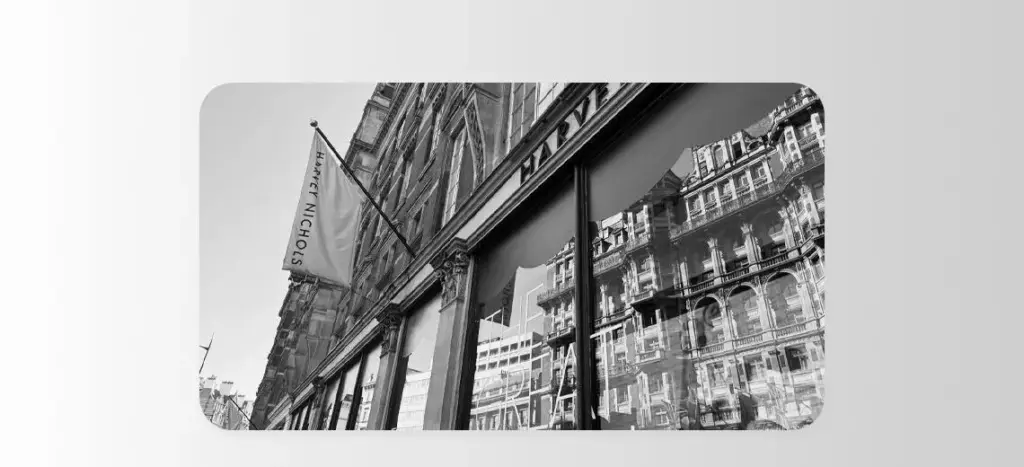
Founded in 1831, Harvey Nichols is indisputably one of the crown jewels of British retail. Located on Knightsbridge’s Sloane Street, the flagship department store reached its cultural zenith in the 1990s. Under the visionary guidance of then-creative director Mary Portas, Harvey Nichols transformed into an irreverent, style-forward destination featuring iconic window displays and a fierce fashion-first attitude. Its cultural footprint was cemented globally through pop-culture touchstones, most notably its prominent role in the hit British sitcom Absolutely Fabulous, earning it a London cultural cachet comparable to Barneys New York’s immortalization in Sex and the City.
Yet, in the decades since, the retailer has struggled to maintain its competitive edge against upscale neighbors Harrods and Selfridges. While Harrods catered successfully to ultra-high-net-worth international tourists and Selfridges embraced experiential retail and digital innovation, Harvey Nichols drifted into a middle ground, losing some of its distinct brand identity.
Compounding these internal struggles are severe external pressures facing the British luxury market. The post-Brexit abolition of tax-free shopping for international visitors has stripped London’s West End of a vital competitive advantage, driving high-spending tourists toward Paris, Milan, and Madrid. Against this challenging macroeconomic backdrop, Harvey Nichols’ turnaround requires far more than superficial cosmetic updates; it demands a radical reimagining of its retail assortment, customer experience, and digital capabilities.
The Frasers Infrastructure Advantage
What sets Frasers Group apart from traditional department store operators—and indeed from private equity firms like American giant Authentic Brands Group—is the sheer breadth of its operational ecosystem. While firms like Authentic typically acquire intellectual property and license it out to third-party operators, Ashley’s model relies on deep vertical integration and operational control.
+-----------------------------------------------------------------+
|                       FRASERS GROUP ECOSYSTEM                   |
+-----------------------------------------------------------------+
         |                                       |
         v                                       v
+------------------+                   +------------------+
| Brand Ownership  |                   | Physical Retail  |
|  - Hugo Boss     |                   |  - Harvey Nichols|
|  - Mulberry      |                   |  - Flannels      |
|  - Burberry      |                   |  - House of Fraser|
|  - Puma          |                   +------------------+
+------------------+                             |
         |                                       v
         |                             +------------------+
         +---------------------------> | Real Estate      |
                                       |  - Shopping Parks|
                                       |  - Outlet Malls  |
                                       +------------------+
                                                 |
                                                 v
                                       +------------------+
                                       | Logistics & Tech |
                                       |  - Supply Chain  |
                                       |  - Consumer Fin. |
                                       +------------------+
As Zofia Zwieglinska noted on the Glossy Fashion Podcast, Frasers is methodically acquiring every touchpoint in the customer journey and fashion supply chain:
- Real Estate: Frasers controls a vast portfolio of shopping centers, retail parks, and outlet malls across the UK, giving the group unmatched leverage over physical store locations and rental overheads.
- Wholesale & Retail: By owning multibrand retailers like Flannels alongside department stores like House of Fraser and now Harvey Nichols, Frasers can dictate terms across both wholesale and retail channels.
- Equity Stakes: Significant shareholdings in design houses grant Frasers insider visibility into product pipelines and brand strategies.
- Infrastructure Services: The group provides its own internal logistics, supply chain management, and consumer credit services.
This multifaceted positioning allows Frasers to act simultaneously as a brand’s shareholder, customer, competitor, and landlord. While efficient on paper, this omnipotent reach generates acute anxiety among independent luxury brands that fiercely guard their autonomy and market positioning.
Official Perspectives and Industry Insights
The complexities of the Harvey Nichols deal and the broader trajectory of Frasers Group were dissected in depth by international fashion reporter Zofia Zwieglinska and senior fashion reporter Danny Parisi during their recent appearance on the Glossy Fashion Podcast.
Addressing the immediate fallout of the Matches collapse and its implications for Harvey Nichols, Zwieglinska highlighted the palpable distrust lingering among luxury executives:
"Because of what happened with Matches, there is concern around what is worth keeping [with Harvey Nichols]. There might be brands too that are less keen to be associated with Frasers, considering how brands were affected [with Matches]."
This sentiment underscores the delicate tightrope Frasers must walk. Luxury retail relies fundamentally on brand equity, exclusivity, and enduring relationships of trust. Unlike discount sports apparel or mass-market high-street fashion, where price and availability are the primary drivers of consumer behavior, luxury consumers and the houses that supply them are deeply sensitive to corporate governance and reputation.
Expanding on the unique operational model constructed by Mike Ashley, Zwieglinska emphasized the unprecedented vertical integration of the group:
"Frasers is buying up different parts of the fashion supply chain and the customer journey. You’re talking about essentially owning every part of the customer experience."
This sentiment was echoed by Danny Parisi, who underscored the unstoppable momentum driving the conglomerate forward despite external skepticism:
"In the next year or two, we will definitely be hearing more about Frasers Group. It doesn’t seem to be slowing down."
Future Outlook: Can Frasers Master Luxury?
As the dust settles on the acquisition, the definitive question facing the global fashion industry is whether Mike Ashley’s playbook—forged in the crucible of value-driven discount retailing—can successfully adapt to the nuanced, prestige-driven ecosystem of high-end luxury.
Reviving Harvey Nichols will require a capital injection that extends far beyond the initial purchase price. To recapture its 1990s cultural prominence, the department store must address several structural imperatives:
- Rebuilding Brand Partnerships: Frasers must extend an olive branch to luxury houses alienated by the Matches liquidation. Restoring faith will require transparent communication, guaranteed payment structures, and a demonstrated commitment to preserving brand prestige.
- Elevating the In-Store Experience: In an era where digital e-commerce and experiential retail collide, physical department stores must offer more than mere inventory; they must provide immersive, culturally relevant environments that justify premium pricing.
- Navigating Macroeconomic Headwinds: Surviving the UK luxury market under current tax and tourism policies demands innovative retail strategies that attract local affluent consumers while compensating for the loss of international tax-free shopping.
If Mike Ashley and Frasers Group can navigate these turbulent waters, they will have achieved what many industry observers once thought impossible: bridging the chasm between mass-market retail dominance and luxury prestige. However, should the heavy-handed tactics that defined the Matches era resurface, Frasers risks transforming Harvey Nichols into a cautionary monument of overreach.
One thing remains certain: the global fashion industry can no longer afford to view Mike Ashley as a high-street outlier. Frasers Group is actively reshaping the architecture of modern commerce, and its next moves will dictate the terms of engagement for British luxury for years to come.