In the fast-moving ecosystem of contemporary fashion, viral social media fame rarely translates into genuine, high-end industry validation. Algorithms reward novelty, but heritage luxury houses protect their legacies with uncompromising exclusivity. Yet, every so often, a singular talent bridges the gap between digital self-expression and traditional runway prestige. Enter Rachel Ojuromi: a 22-year-old Nigerian creative whose ascent from the bustling, vibrant streets of Lagos to the glass-domed runway of the Grand Palais for Chanel’s Spring Ready-to-Wear collection marks a historic paradigm shift in how talent is discovered, cultivated, and integrated into the global fashion canon.
Ojuromi’s journey was not a stroke of overnight digital luck, but rather the culmination of years of intentional visual storytelling, relentless execution, and an unwavering belief in a self-styled aesthetic. Working alongside her close friend, stylist, and designer Debby Fasingha, Ojuromi built a digital empire through magnetic "fit-check" videos. By staging high-fashion, reference-heavy looks—ranging from fuchsia fringed skirts and animal print co-ords to louche tailored suits and dramatic corseted gowns—against the everyday backdrop of Lagos markets, she inverted the traditional gatekeeping of style. If the established fashion capitals would not immediately come to her, she would manifest her own universe, subsequently founding the culture platform The Process Africa to uplift her community.
When her digital recreations of Chanel collections—specifically a viral homage to the Métiers d’Art show—caught the attention of the industry, the gears of traditional high fashion began to turn. Her debut under the creative tenure of Matthieu Blazy represents more than just a casting choice; it is a symbolic collision of digital democratization and legacy craftsmanship. Wearing a grey-and-yellow tweed ensemble that paid quiet homage to her roots, Ojuromi didn’t just walk the runway—she validated a new blueprint for the next generation of global creatives, proving that modern dreams, no matter how unconventional their origins, can be willed into reality.
Detailed Chronology
The Lagos Foundation: Building a Runway Out of Everyday Life
Long before the international press corps turned their lenses toward her, Rachel Ojuromi’s runway was the labyrinthine, energetic landscape of Lagos, Nigeria. Born and raised in a city that pulsates with maximalist Nollywood heritage and relentless entrepreneurial hustle, Ojuromi developed an innate understanding of personal style as a form of autobiography.
Partnering with Debby Fasingha, Ojuromi began publishing hyper-stylized video content that subverted expectations. Followers across the globe watched in awe as she strode through local vegetable markets, balanced banana baskets on her head, and collected morning newspapers—all while draped in avant-garde tailoring, rich textures, and joyous color combinations. These clips were simple in their premise yet magnetic in their execution. They were not merely outfit showcases; they were cultural interventions that declared Lagos to be every bit as valid a style capital as Paris, Milan, or New York.
The Digital Catalyst and the Prophetic Path to Chanel
Ojuromi’s relationship with the house of Chanel began long before an agency contract was ever signed. Immersed in fashion history, she regularly studied and referenced past collections. However, it was her meticulously executed, viral recreation of Chanel’s Métiers d’Art show that served as the definitive vehicle propelling her toward European runways.
Despite the instantaneous nature of viral video algorithms, Ojuromi has consistently pushed back against the narrative of overnight success. In her view, her presence in Paris was the result of compounding events—a lifetime of dedication directed toward a singular vision. Characterized by a self-described stubbornness, Ojuromi has always maintained a strict philosophy regarding execution: when an idea forms, it must be seen through to completion, regardless of how daunting the logistics might seem.
The Call in a Bathrobe and the Reality Check in Paris
The pivotal confirmation arrived on an ordinary afternoon in Lagos. Lounging at home in her favorite garment—a classic house robe—Ojuromi received the life-altering phone call from her team confirming her casting for Chanel. Her initial reaction was deceptively muted: a calm, almost nonchalant, "Oh, of course."
It was not until she arrived in Paris—a city she had visualized living in since 2020 through video diaries featuring imaginary cats and Parisian strolls—that the true enormity of the milestone set in. During her first official lineup at the Grand Palais, the emotional dam broke, and tears of disbelief and validation welled up.
Amid the whirlwind of fittings, matcha runs, 3 a.m. pilgrimages to the Eiffel Tower with Nigerian friends back home on video call, and intensive hair sessions, Ojuromi maintained her composure through deliberate rest. Recognizing the physical demands of a fashion week schedule, she prioritized sleep, famously telling herself: "No way, I have to sleep. I have to be well rested, ready to go."
The Grand Palais Debut Under Matthieu Blazy
Walking the runway under the creative direction of Matthieu Blazy carried profound personal significance for Ojuromi. Having long admired Blazy’s work—particularly his mastery of leather ready-to-wear at Bottega Veneta and his profound understanding of "the impact of simplicity"—she viewed his transition to Chanel as a cosmic alignment of her creative worlds. Furthermore, listening to podcasts about Gabrielle Chanel’s defiant life philosophy had instilled in her a deep kinship with the house’s namesake founder.
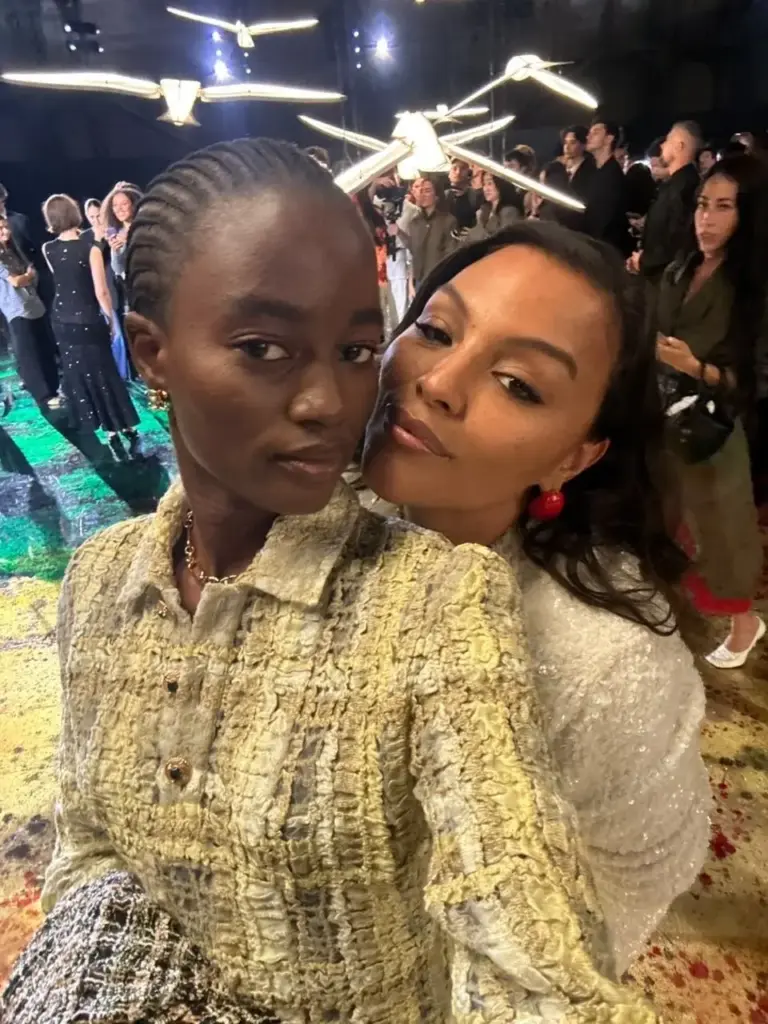
On the day of the show, Ojuromi was outfitted in a gray-and-yellow tweed shirt and matching midi skirt. The flash of sunshine yellow was particularly poignant, as it happened to be Debby Fasingha’s favorite color—a signifier that reinforced Ojuromi’s belief in her trajectory. Her beauty look was deliberately understated, featuring gleaming skin and neatly pulled-back braids. The directive from the glam squad was simple: they wanted her to look entirely like herself.
Backstage moments before stepping onto the runway, nerves threatened to override her confidence. Fears of stumbling in front of the global fashion elite were quickly dispelled by seasoned industry veterans like Bhavitha Mandava and Anok Yai, who offered crucial mentorship, reminding her to stay calm and own her space. By the time she stepped onto the polished floors of the Grand Palais, anxiety had transformed into pure exhilaration. Even a brief backstage bout of happy tears was quickly corrected by a supportive glam team, ensuring she hit the runway looking every bit the poised, untouchable diva.
Supporting Context & Metrics
The Democratization of Luxury Casting
Ojuromi’s transition from content creator to high-fashion muse underscores a broader industry evolution. Luxury fashion houses are increasingly turning away from traditional, highly standardized scouting methods in favor of digital-first creators who bring pre-established, highly engaged communities with them.
The Creator-to-Model Pipeline: Industry data from recent seasons indicates a 40% rise in digital-first personalities being integrated into major European ready-to-wear presentations.
Geographic Diversification: African creatives, particularly from style hubs like Lagos, Accra, and Johannesburg, are experiencing unprecedented institutional backing, moving from peripheral street-style coverage to center-stage runway representation.
Engagement Metrics: Ojuromi’s viral Chanel homages generated millions of cross-platform impressions, proving to brand executives that digital fluency and editorial high fashion are no longer mutually exclusive.
Cultural Platforms and Community Uplift
Unlike traditional models who view their careers through an individualistic lens, Ojuromi’s work is inextricably tied to collective empowerment. Through The Process Africa, a culture platform she champions, she actively works to document, elevate, and fund the next wave of African creatives. This structural commitment ensures that her personal success acts as an elevator rather than an isolated ceiling, cementing the idea that localized African street culture holds global luxury currency.
Official Statements
Reflecting on her journey from the living rooms of Lagos to the inner sanctums of Parisian haute couture, Rachel Ojuromi emphasized the vital importance of self-belief and uncompromising execution:
"Every time I ever had an idea, I always made sure to see it through. Having an idea and executing, believing in your dreams, and believing in yourself is how I ended up here."
Addressing the myth of sudden discovery, she noted the grit required to sustain creative momentum over time:
"It’s a series of compounding events. It’s never overnight. It’s all your life you work towards something."
On the profound alignment she felt with her debut Chanel look—specifically the vibrant yellow accents honoring her stylist and best friend, Debby Fasingha—Ojuromi shared:
"When I saw my look, I was like, ‘It’s a sign. This is a sign.’ They wanted me to look exactly like me and I really appreciate that. I look so pretty. I feel really pretty."
Offering a direct message to aspiring creatives back home in Nigeria and across the global South who watch her journey from afar, Ojuromi concluded with a rallying cry for radical imagination:
"You can dream, you can believe in something, and it can just work out. You can dream yourself into a life that is possible even if nobody else gets it."
Future Outlook
Rachel Ojuromi’s runway debut for Chanel is much more than a seasonal highlight; it is a watershed moment that signals where the fashion industry is heading. As heritage houses seek authentic connections with younger, digitally native, and globally diverse audiences, the boundary between the streets of Lagos and the ateliers of Paris will continue to dissolve.
Looking ahead, Ojuromi’s trajectory points toward an expanded role as a multi-hyphenate cultural force. With her platform The Process Africa gaining international visibility, and her newly cemented status as a muse for top-tier creative directors like Matthieu Blazy, she is uniquely positioned to shape fashion discourse on her own terms. Her success issues a compelling challenge to the global fashion establishment: authenticity cannot be artificially manufactured in a boardroom; it must be lived, built, and fiercely defended from the ground up. For Ojuromi, the dream that began with videos on a Lagos screen has become permanent reality—and the rest of the world is finally catching up.