Executive Overview
For well over two decades, the defining characteristic of the podcasting medium was its invisibility. It was an intimate, purely aural format designed for the margins of modern life—the morning commute, the mechanical rhythm of the iron on the board, the punishing repetition of the gym treadmill, and those ever-shrinking pockets of time not surrendered to glowing glass screens. It was an audio-first refuge.
However, the landscape has radically shifted. What began as a fringe experiment in 2009—when Joe Rogan casually trained a webcam on himself and his studio guests as they smoked and bantered—has matured into an industry-wide imperative. By 2026, the transformation of podcasting from a purely aural medium into a fully integrated audio-visual ecosystem is complete. Platforms, networks, and independent creators alike have bowed to market forces, embracing the "pivot to video" with varying degrees of enthusiasm.
This comprehensive report examines the seismic shift shaking up the podcasting world. We explore the platform wars between YouTube, Spotify, and Netflix; analyze the cultural and physical toll this transition takes on creators; weigh the artistic compromises against the undeniable marketing advantages; and project what the future holds for a medium caught between the purity of sound and the relentless demand for visual content.
Detailed Chronology: From Audio Sanctuary to Visual Hegemony
To understand how the podcast industry arrived at its current visual crossroads, it is necessary to trace the gradual erosion of its purely auditory boundaries over the past decade and a half.
- 2009: The Seed is Planted. Comedian and commentator Joe Rogan pioneers the video-podcasting format by broadcasting unedited, long-form studio sessions via webcam alongside audio feeds. At the time, industry traditionalists dismiss it as a quirky byproduct of Rogan’s unique broadcasting style, failing to recognize it as a harbinger of things to come.
- The Mid-2010s to 2020: The Clip Economy Rises. As platforms like TikTok, Instagram Reels, and YouTube Shorts explode in popularity, independent creators realize that short, punchy video snippets drive discovery. Audio-only shows begin scrambling to install makeshift cameras to capture "viral moments," sowing the seeds of a dual-format workflow.
- 2024: YouTube Claims the Throne. A major cultural tipping point occurs as YouTube officially surpasses traditional audio-first platforms to become the preferred podcast destination for the vast majority of American consumers. The medium’s center of gravity shifts decisively from RSS feeds to visual recommendation engines.
- January 2026: Netflix Enters the Fray. In a desperate bid to claw back market share in an escalating turf war with YouTube, streaming giant Netflix begins actively broadcasting video versions of high-profile podcasts from production stables like The Ringer, iHeartMedia, and Barstool, alongside its proprietary video-first content.
- Late 2026: The UK Follows Suit. Edison Research data reveals that the phenomenon has crossed the Atlantic. YouTube officially surpasses Spotify as the UK’s preferred podcast platform, prompting Spotify to rapidly accelerate its own viewing capabilities to retain user retention.
Supporting Context & Metrics: The Platform Wars and Creator Realities
The numbers behind the pivot to video are staggering, driven by aggressive corporate strategy and shifting consumer habits.
The Platform Hegemony
For years, dedicated podcast apps—Apple Podcasts and Spotify—held a near-monopoly on distribution. Today, the battle lines are drawn between visual giants. YouTube’s dominance is predicated on passive viewing habits; millions of users treat the platform as a background television network, leaving video podcasts playing while they multitask.
Recognizing this threat, Spotify has aggressively overhauled its infrastructure to support video playback, attempting to prevent users from migrating to video-first competitors. Meanwhile, subscription video-on-demand (SVOD) services like Netflix view the medium as a low-cost, high-engagement retention tool. By acquiring video rights to top-tier audio properties, Netflix bridges the gap between prestige television and unscripted creator culture.
The Studio Aesthetic and Ergonomic Toll
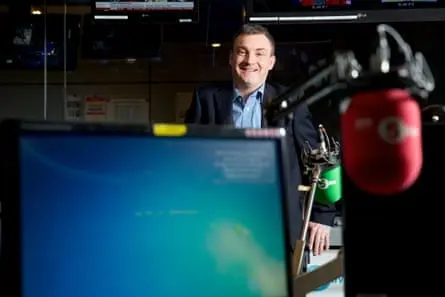
Zooming in on the physical environments of modern video podcasts reveals a uniform aesthetic. Walk into almost any high-end podcast studio today, and you are met with a design scheme heavily reminiscent of an upscale 2008 Ikea showroom. There are felt throw cushions, exposed brick walls, neon branding signs, and—most notoriously—chairs that are absurdly poorly suited for two people to face one another and have a natural, sustained conversation.
This introduces a bizarre ergonomic crisis for the modern podcaster. Creators are increasingly caught in a physical tug-of-war, forced to swivel uncomfortably between their conversational partner and a strategically placed camera lens. The long-term physiological impact on podcasters’ backs and necks from hours of skewed posture remains an unquantified occupational hazard of the visual era.

Official Statements & Industry Perspectives
The debate over the video pivot has divided creators, purists, and audiences into distinct camps.
Industry analysts point to the democratization of marketing as the primary driver behind the shift. Without the multi-million-dollar marketing budgets of legacy media conglomerates, independent podcasters face an uphill battle for discoverability.
"Making a show visual as well as aural allows podcasters to clip up their best bits and share them for potential new fans on social media. It is a crucial arrow in the quiver of smaller podcasts that lack deep pockets."
Conversely, cultural purists argue that the forced inclusion of video dilutes the intimate magic of the medium. Longtime listeners frequently voice frustration over the changing dynamics of their favorite shows. When hosts begin relying heavily on visual gags, physical gesticulations, or uncontextualized studio laughter without explaining the joke to their audio-only audience, it alienates the core listener base.
Furthermore, not all brilliant audio talent possesses the on-camera presence required to sustain visual interest. Forcing a gifted radio broadcaster or investigative journalist to constantly worry about lighting, framing, and lens contact risks compromising the raw authenticity that made podcasts appealing in the first place.
Future Outlook: Coexistence or Complete Assimilation?
As we look toward the horizon of the late 2020s, the podcast industry has settled into a pragmatic, if occasionally uneasy, compromise.
The traditional audio purist’s "King Canute" stance—attempting to hold back the rising tide of video with sheer stubbornness—has proven futile. The video podcast is not a temporary fad; it is a permanent structural evolution of the medium. However, the apocalypse of audio has not materialized either. Commuters, gym-goers, and domestic multitaskers still demand friction-free audio experiences that do not require visual lock-in.
Moving forward, successful creators are adopting a hybrid model: producing shows robust enough to satisfy the visual-first metrics of YouTube and Netflix, while maintaining narrative clarity for the listener washing dishes miles away.
Ironically, as the industry grapples with the ethical and artistic challenges of video integration—and casts wary glances at the looming horizon of entirely synthetic, AI-generated podcasts—human creators finding their visual footing may prove to be the medium’s greatest asset. Let podcasts be podcasts, perhaps; but in 2026, they are proudly wearing a camera lens on their sleeve.