Executive Overview
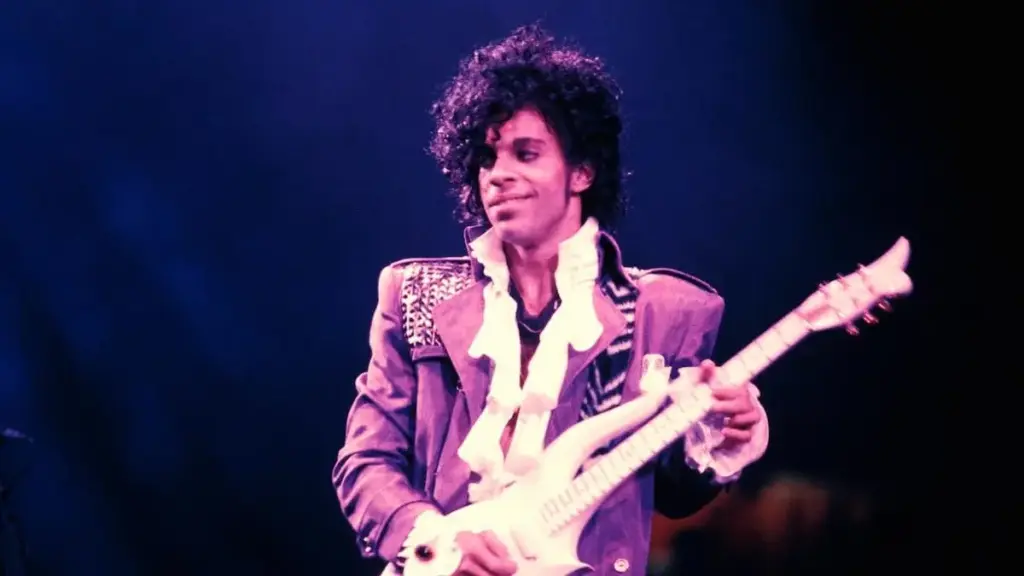
Nearly a decade after his untimely passing in April 2016, Prince Rogers Nelson remains one of modern music’s most enigmatic and fiercely protected cultural architects. While his status as a legendary icon was cemented decades ago, a fascinating cultural phenomenon is currently unfolding across digital spaces. A new legion of listeners—born long after the release of his seminal 1984 masterpiece Purple Rain—is discovering the Purple One.
Fuelled by viral TikTok edits, poignant Instagram reels pairing his devastating guitar bridges with coming-of-age milestones, and a massive streaming surge sparked by features in pop-culture juggernauts like Netflix’s Stranger Things, Gen Z is falling deeply in love with Prince. Yet, this modern renaissance comes with a formidable hurdle. Prince’s discography is an intimidating labyrinth of staggering proportions. Spanning dozens of studio albums, endless side-projects, unreleased vaults, and a relentless, non-stop creative output that outpaced the traditional music industry, his career can easily overwhelm the uninitiated.
Where does one begin when the artist’s "prime" lasted decades and crossed every genre boundary imaginable? Standard greatest-hits compilations barely scratch the surface of his monumental artistic scope. To truly understand Prince, one must move past the easy commercial singles and venture into the deeper cuts—tracks that capture his vulnerability, his unmatched musicianship, and his insatiable appetite for reinvention. This deep-dive examines four essential tracks curated for anyone who fell in love with Purple Rain and is hungry to explore the boundless universe of the Minneapolis genius.
Detailed Chronology: Navigating the Eras of Prince’s Monumental Output
To appreciate Prince’s deeper cuts, one must first understand the breathtaking velocity of his career. Prince did not merely release music; he lived in the recording studio, viewing sound as an extension of his oxygen supply. This relentless work ethic frequently put him at war with his record labels, who preferred the traditional, calculated cadence of a multi-year album cycle. Prince, conversely, was perpetually looking three steps ahead, eager to purge his mind of incoming melodies before the next creative wave hit.
The 1980s: The Reign of the Purple Icon
The genesis of this modern rediscovery naturally tracks back to 1984. Purple Rain was as close to a flawless commercial and artistic collision as popular music has ever witnessed. It turned Prince from an R&B/funk crossover sensation into a global deity. Yet, the pressure that accompanied this explosion of fame was immense. Keyboardist Lisa Coleman of The Revolution once noted the profound isolation that came with his meteoric rise, describing him as a "deer in headlights" who struggled to reconcile the colossal expectations of global superstardom with his deeply introverted personality.
This tension birthed incredible, albeit overlooked, material. When an artist creates work of such staggering quality that monumental masterpieces like "17 Days" are relegated to the B-side of a monumental single like "When Doves Cry," you know you are dealing with a transcendent tier of creativity.
The 1990s: Rebellion and the Triple-Album Epoch
By the mid-1990s, Prince’s battle with Warner Bros. reached a fever pitch, culminating in him changing his name to an unpronounceable Love Symbol and writing "SLAVE" on his cheek. Yet, commercial friction only supercharged his artistic output. When he finally gained a degree of release freedom, he flooded the market with projects of staggering scale. In 1996 alone, he released a traditional studio album and a soundtrack, followed immediately by a staggering triple album boasting a runtime of well over three hours.
Many artists would have diluted their creative pool with that volume of output; Prince simply shifted gears, exploring jazz-fusion, adult contemporary, and deep, aching soul with effortless mastery.
The 2000s and Beyond: The Master Craftsman in the Digital Age
Even as cultural landscapes shifted dramatically in the 2000s—with hip-hop ascending to undisputed dominance and the music industry splintering into digital fragments—Prince remained a relentless student and master of his craft. While casual observers tended to dismiss his later-era work, true aficionados recognized that his penmanship and melodic intuition only grew sharper with age, proving that his artistic pulse beat far beyond the neon-lit synthesizers of the 1980s.
Supporting Context & Metrics: The Streaming Surge and Cultural Resurgence
The resurgence of Prince in the streaming era is not merely anecdotal; it is backed by profound behavioral shifts among younger demographics. According to industry analytics following major sync placements—such as the Stranger Things finale—catalog streams for legacy acts frequently experience unprecedented spikes. In Prince’s case, overall platform streams surged by nearly 200% in the immediate aftermath of key television placements, introducing generations raised on algorithmic discovery to the analog warmth and raw virtuosity of the Minneapolis sound.
| Metric / Indicator | Contextual Impact on Prince’s Catalog |
|---|---|
| Post-Sync Streaming Surge | Up to 190%+ increase in daily streams following major pop-culture syncs (e.g., Stranger Things). |
| Demographic Shift | A significant rise in listeners aged 18–24 discovering Prince via short-form video platforms (TikTok, Instagram Reels). |
| Vault Inventory | Thousands of unreleased master tapes housed in the Paisley Park vault, ensuring decades of potential archival releases. |
| Album Output Velocity | Over 39 studio albums released during his lifetime, alongside numerous side-project records. |
This data illustrates a fundamental truth: great art transcends its era. The emotional resonance of Prince’s lyricism—touching on alienation, unrequited longing, digital-age isolation, and pure romantic euphoria—speaks directly to modern anxieties.
Four Essential Tracks to Expand Your Prince Horizon
For those whose journey began and ended with the title track of Purple Rain, standard hits like "1999" or "Kiss" are obvious next steps. However, true comprehension of his genius requires a broader scope. Here are four essential deep cuts that map the expansive terrain of his career.
1. "Somebody’s Somebody" (Emancipation, 1996)
All Prince wanted to do was create, share, and move on to the next sonic frontier. When Warner Bros. attempted to bottle his lightning, he retaliated by delivering Emancipation, a fearless 1996 triple-album project totaling three hours of music.
While the sheer scope could deter casual listeners, tracks like "Somebody’s Somebody" showcase a seasoned master operating at the peak of his emotional powers. Here, loneliness is visceral. Prince sings with a desperate intensity, as though his physical form might dissolve if he isn’t anchored by human touch:
"This big old world can be so empty, living in it all alone / I realize, in its best disguise, a pretty house don’t make a home."
It is a stunning, soul-baring ballad that proves his 90s output rivaled his 80s golden age.
2. "17 Days" (Purple Rain B-Side, 1984)
The Purple Rain era is historic precisely because its creative overflow was so rich. "17 Days," originally issued as the B-side to "When Doves Cry," is widely considered by musicologists to be one of his finest compositions.
Driven by a stark, hypnotic rhythm machine and a haunting vocal delivery, the song chronicles a man whose lover has abandoned him for another. Every day drags like an eternity while he waits by a silent phone. Keyboardist Lisa Coleman noted that this vulnerability mirrored Prince’s real-world struggle with fame:
"He was like a deer in headlights, a very vulnerable person. Those big brown eyes would kill you. But he struggled with his success… It was hard for him to decide when he could just be Prince, the guy, and when he had to become Prince the superstar."
"17 Days" captures the exact moment the superstar dropped his armor to reveal a deeply wounded human being.
3. "Strollin’" (Graffiti Bridge, 1990)
Moving away from heartbreak and heavy existential dread, "Strollin’" offers a masterclass in acoustic, breezy optimism. Rather than leaning into the hyper-sexualized funk and flamboyant pomp that defined much of his radio output, Prince strips the arrangement down to a swinging, jazz-inflected groove that evokes an old-school schoolyard crush.
The song plays out like a cinematic montage of an idyllic afternoon: renting roller skates, eating ice cream, sharing private jokes, and appreciating the simple beauty of everyday life. It serves as a vital reminder that Prince didn’t just write anthems of apocalyptic party energy; he was also a master of quiet, understated joy.
4. "Somewhere Here On Earth" (Planet Earth, 2007)
Dismissing Prince’s post-2000s output is a severe mistake made only by those unfamiliar with his late-career renaissance. Even as hip-hop culture dominated the charts and digital production overhauled the mainstream landscape, Prince remained an uncompromising artisan.
On the tender, sophisticated ballad "Somewhere Here On Earth," Prince tackles the emotional friction of long-distance romance in the digital age. Long before modern FaceTime fatigue or social media burnout, he observed the coldness of technological connectivity:
"In this digital age, you could just page me / I know it’s the rage, but it just don’t engage me / Like the face-to-face."
Rich with lush orchestration and intimate vocal phrasing, this track proves that his melodic genius endured long after the purple smoke of the 1980s had cleared.
Future Outlook: Preserving and Perpetuating the Legacy
As the estate and the archivists at Paisley Park continue to comb through the legendary vault—releasing pristine deluxe editions and unearthing lost recordings—the cultural footprint of Prince is expanding rather than fading.
The organic rediscovery of his music by Gen Z points to a durable truth: authentic musicianship, emotional transparency, and fearless artistic experimentation never go out of style. Whether through a viral TikTok edit of a guitar solo or a deep late-night dive into a 1990s triple album, new fans are realizing that Prince was not merely a pop star of a bygone era. He was a timeless institution. For anyone willing to look past the monolithic shadow of Purple Rain, an entire universe of staggering sonic artistry is waiting to be explored.