
Executive Overview
For over a decade, the disappearance of American journalist and former US Marine Austin Tice has remained one of the most haunting and opaque enigmas of the modern geopolitical landscape. Vanishing in Syria in August 2012, Tice stands as a tragic symbol of the dangers faced by independent foreign correspondents reporting from the frontlines of brutal civil conflicts. If he is still alive, he holds the grim distinction of being the second-longest detained journalist anywhere in the world.
Yet, the pursuit of his truth has recently broadened far beyond a standard missing-persons investigation. In the third season of his critically acclaimed BBC podcast series, I’m Not a Monster, investigative journalist Josh Baker peels back the complex layers of international espionage, state-sponsored terror, and dictatorship. What began as a mission to bring answers to a grieving mother transformed into a harrowing journey through the inner workings of the Syrian regime’s industrial complex of disappearance and torture.
Baker, an intrepid reporter whose own brush with death in the ruins of Mosul profoundly altered his career trajectory, provides a masterclass in narrative investigative journalism. Through unprecedented access, a torrent of intelligence leaks, and an unyielding commitment to humanizing complex geopolitical tragedies, Baker’s latest work bridges the gap between cold historical records and urgent contemporary realities. This article explores the genesis of the Tice investigation, Baker’s extraordinary career evolution, the broader context of the Syrian civil war, and the shifting dynamics of global intelligence networks.
Detailed Chronology
1. The Disappearance of Austin Tice (2012)
In the summer of 2012, Austin Tice—a former US Marine Corps officer turned freelance journalist—traveled to Syria to chronicle the escalating violence of the country’s nascent civil war. His dispatches provided vital on-the-ground reporting for outlets like McClatchy, The Washington Post, and CBS. In August 2012, while reporting in a contested suburb of Damascus, Tice was detained at a checkpoint. A heavily circulated video surfaced weeks later showing him blindfolded and held by unidentified armed men, but concrete proof of his subsequent whereabouts or status has remained frustratingly elusive ever since.
2. Josh Baker’s Reporting and the Mosul Bombing (Mid-2010s)
Years later, Josh Baker was deeply embedded as a documentary director covering the offensive against the Islamic State (IS) in Iraq. While embedded with Iraqi special forces during the brutal battle for Mosul, Baker experienced the terrifying reality of modern urban warfare. While sheltering in a local home, a massive vehicle-borne improvised explosive device (VBIED)—filmed by IS drone operators—detonated directly outside. The resulting collapse buried Baker, fracturing his back and necessitating emergency medical evacuation to England.

3. The Catalyst: Uncovering Matthew’s Story (Post-Mosul Recovery)
During his recovery in the UK, Baker was contacted by a well-placed intelligence source with whom he had developed a complex working relationship. The source shared a raw, unedited home video smuggled out of Raqqa—then the de facto capital of the Islamic State. The footage showed a young American boy named Matthew, the oldest son of an American woman named Sam, who had been radicalized and drawn into the caliphate. Matthew was being forced to assemble a suicide bomb. Galvanized by the discovery and driven by post-trauma determination, Baker launched an independent hunt that successfully located the child seven months later, ultimately inspiring the first season of I’m Not a Monster.
4. The Shamima Begum Investigation and Canadian Intelligence
The web of sources cultivated during Baker’s IS investigations soon entangled another global headline: Shamima Begum. Alerted by a Dutch former IS bride via Twitter who was housed in the same refugee camp, Baker expanded his reporting on British citizens who had joined the caliphate. Through meticulous field research in Turkey and deep source cultivation, Baker uncovered a critical piece of the puzzle: the active role played by Canadian intelligence operatives in smuggling Begum across the Turkish-Syrian border. This revelation cast profound doubt on the official narratives pushed by Western governments and elevated the discourse surrounding the legal and ethical failures of stripping citizenship from vulnerable, groomed minors.
5. The Pivot to the Tice Investigation and the Fall of Assad
Building upon his mastery of Middle Eastern intelligence networks, Baker turned his formidable focus toward the unresolved fate of Austin Tice. Collaborating closely with Tice’s parents, Marc and Debra Tice, Baker embarked on a multi-year investigative initiative. Rather than hitting a cold trail, Baker reported receiving an unprecedented volume of leaks from intelligence agencies across the globe. The investigation took a staggering historical turn with the collapse of the Assad regime, opening up long-sealed detention facilities and offering an unprecedented, harrowing look inside the state apparatus responsible for the disappearance of tens of thousands of Syrian citizens.
Supporting Context & Metrics
To fully understand the gravity of Josh Baker’s work, one must examine the staggering scale of the human rights violations and intelligence failures that characterize the Syrian conflict.
- The Scale of Enforced Disappearances: Human rights organizations conservatively estimate that upwards of 100,000 individuals have been forcibly disappeared by the Syrian regime since the civil war began in 2011. Baker’s podcast frames Tice’s disappearance not as an isolated incident, but as a prominent node within an industrialized state network of arbitrary detention, torture, and extrajudicial execution.
- The Global Reach of the Caliphate: During the height of the Islamic State’s territorial control, an estimated tens of thousands of foreign fighters—originating from potentially as many as 100 different nations—were successfully radicalized and recruited through sophisticated digital and on-the-ground propaganda campaigns.
- The Cost of Investigative Journalism: Baker’s transition from hard news to narrative podcasting reflects a broader exhaustion among elite journalists regarding the limitations of daily news cycles. Traditional reporting often reduces complex humanitarian catastrophes to flat, matter-of-fact statistics, whereas long-form investigative audio allows audiences to emotionally engage with the human cost of geopolitical violence.
Official Statements and Industry Perspectives
The methodology behind I’m Not a Monster relies heavily on navigating the opaque, often perilous waters shared by intelligence agencies, government press offices, and independent investigative teams. Baker has been remarkably candid regarding the stark differences in intelligence accessibility between the United Kingdom and the United States.
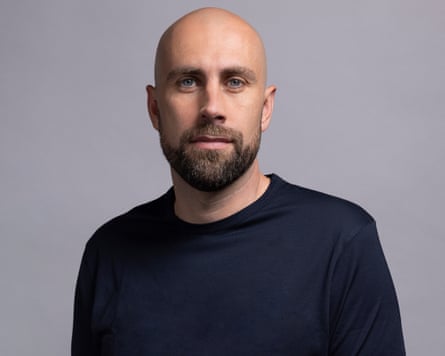
"In Britain, when people say they have an intelligence source, they often mean they’ve spoken to a press officer. In America, and particularly in Washington, that world is much more accessible. You can meet intelligence officers or senior law enforcement at dinner parties or even in bars."
However, this accessibility is not without its friction points. Baker notes a notable chilling effect in recent years, observing that under shifting political administrations—particularly during and following the Trump presidency—sources within the American security apparatus have become significantly less willing to speak openly.
Regarding the controversial practice of stripping citizenship from individuals like Shamima Begum, security and legal experts interviewed across Baker’s series have universally challenged the efficacy of current Western counter-terrorism strategies. Baker summarizes the consensus:
"You will struggle to find a security expert who’ll say that our current strategy—stripping people like Begum of statehood—is making us safer."
Speaking on the emotional core of the Austin Tice investigation, Baker reveals that his primary motivation transcended professional ambition. While studying the tireless advocacy of Tice’s mother, Debra Tice, across nearly a decade of agonizing uncertainty, Baker drew a deeply personal parallel:

"What I identified with was his mother. I remember seeing her do a press conference, nine or 10 years into his disappearance, and thinking about my own mum. I’m from a single-parent household—we’re very close. I just thought, ‘Jesus Christ, what an awful existence to have.’"
Future Outlook
As the third season of I’m Not a Monster reaches global audiences, the implications of Josh Baker’s reporting extend far beyond the confines of true-crime audio entertainment. The sudden collapse of the Assad regime has transformed the landscape of accountability in Syria, shifting the mission from a theoretical search for a missing person into a race to unearth physical evidence from the regime’s abandoned torture complexes.
While Baker admits that absolute certainty regarding the ultimate fate of Austin Tice may remain forever out of reach, his multi-year investigation has successfully mapped the architecture of the forces that swallowed him. More importantly, by humanizing the statistics and challenging the complacent security narratives of Western governments, Baker’s work ensures that the world cannot easily turn away from the ongoing reckoning in Syria.
For the journalism industry, Baker’s trajectory serves as a powerful testament to the value of slow, immersive, and empathetic investigative reporting. By refusing to let complex humanitarian crises fade into diplomatic convenience, projects like I’m Not a Monster redefine the standard for how the media confronts the darkest corners of modern history.