Executive Overview
In the hyper-connected ecosystem of contemporary internet subcultures, the barrier separating real-world atrocities from abstract digital iconography is frequently paper-thin. This phenomenon was starkly demonstrated when a purportedly new photograph of Patrick Crusius—the perpetrator of the devastating 2019 El Paso Walmart shooting—surfaced across multiple mainstream and fringe social media platforms. Crusius, whose visage serves as the literal blueprint for "Chudjak," one of the most recognizable and widely disseminated Wojak-derivative memes of the late 2010s and 2020s, is currently serving multiple consecutive life sentences in federal prison. Despite the grim reality of his crimes and the severity of his punishment, his digital caricature has largely eclipsed his real-world identity for millions of online users, functioning as a shorthand for extremist fatalism and nihilistic internet humor.
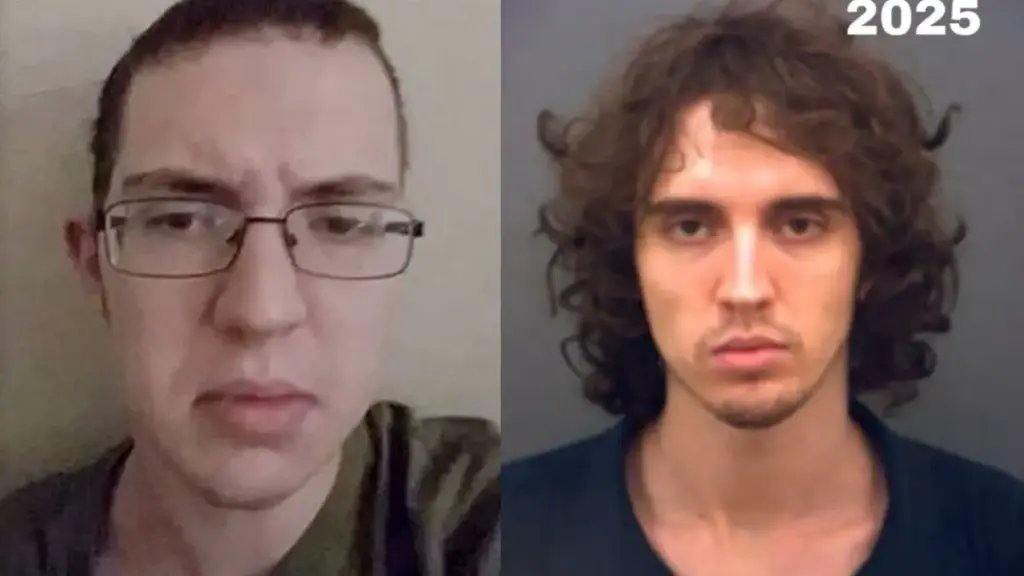
The circulation of this recent photograph—initially leaked via the Reddit community /r/masskillers via a Freedom of Information Act (FOIA) request and subsequently amplified on X (formerly Twitter)—sparked a bizarre and unsettling viral discourse. Because the photograph depicted Crusius without his signature glasses, sporting longer curly hair and facial scruff, a subset of internet users began humorously or derisively commenting on his "glow-up." Memes comparing the mass murderer to an "indie rock singer" or joking about a post-prison transformation quickly amassed millions of impressions. This incident highlights a disturbing trend within modern digital culture: the detachment of real-world violence from its victims and perpetrators, reducing horrific historical events to surreal fodder for engagement-driven meme economies. This report provides an exhaustive investigation into the chronology of the leak, the cultural genealogy of the Chudjak meme, the metrics of its digital spread, and the broader sociological implications of memetic saturation.
Detailed Chronology of the Leak
The chain of events leading to the recent viral surge began in late April 2025, operating through the subterranean channels where true crime sleuths, internet archivists, and meme historians intersect.
April 25, 2025: The Reddit Leak
On April 25, 2025, a Reddit user operating under the handle /u/uncanealguinzaglio published a post to the subreddit /r/masskillers. The post introduced what the user claimed was a newly obtained federal mugshot of Patrick Crusius. According to the uploader, the image had been acquired through a Freedom of Information Act (FOIA) request.
The photograph immediately drew attention because it showed a starkly different visual presentation of Crusius compared to his widely circulated, bespectacled police booking photo from August 2019. However, the post was swiftly scrubbed by platform moderators, presumably due to violations of Reddit’s Content Policy regarding the glorification or harassment-adjacent sharing of mass casualty perpetrators. Despite the rapid removal, the image had already been harvested by digital onlookers, ensuring its migration to less-moderated platforms.
Clarifying the origin of the image, the original poster later noted that the photograph dated back to approximately July 2023—coinciding with a period when Crusius was navigating federal guilty pleas—rather than 2025. The uploader clarified:
"From when he plead guilty to federal charges. Circa July of 2023. It was not taken BY the federal government; it was taken by El Paso holding him for them. For some reason. But it still came from his federal charges and not state."
April 27, 2025: The X (Twitter) Explosion
The inflection point for viral mainstream saturation occurred two days later, on Sunday, April 27, 2025. An X user identified as @TruueDiscipline published a post featuring the 2023 photograph alongside the provocative caption: "This is what chudjak looks like now… feel old yet?"
The tweet deliberately bridged the gap between the real-world criminal and his digital caricature. Stripped of his glasses and featuring softer, unkempt features, Crusius bore a superficial resemblance that internet commentators quickly seized upon. The post catalyzed a massive algorithmic reaction, rocketing past 1.2 million views and accumulating over 17,000 likes within a 48-hour window.
Late April 2025: Evolution into Meta-Humor and Retractions
As the image circulated, derivative meme formats proliferated. Accounts such as @Halsted_19 posted ironic commentary regarding internet subculture dynamics, while @hayasaka_aryan shared a side-by-side comparison bearing the caption, "From chud to indie rock singer." Another popular reaction format featured the classic "Cereal Guy" webcomic character spitting out his breakfast in feigned shock.
Realizing the viral trajectory of the initial post, @TruueDiscipline followed up with additional context. They acknowledged that the viral image actually reflected Crusius’s appearance from mid-2023 and contrasted it with more recent documentation. Specifically, they pointed to imagery from a court hearing on April 21, 2025, where Crusius—once again wearing glasses and sporting a fuller beard—faced proceedings related to ongoing legal accountability for the El Paso Walmart massacre, where he pleaded guilty to capital murder charges under a state-level framework running concurrent to his federal life sentences.

Supporting Context & Metrics
To understand why a prison photograph of a mass murderer generated this specific brand of absurd, detached humor, one must examine the origins and cultural footprint of the "Chudjak" meme.
The Genealogy of Chudjak and "Billions Must Die"
The Chudjak meme emerged in late 2019 from the deep recesses of 4chan’s infamous /pol/ (Politically Incorrect) board. It belongs to the broader family of Wojak (or "feels guy") derivatives—simple, hand-drawn vector illustrations used to signify specific archetypes, political viewpoints, or emotional states.
- Visual Characteristics: Chudjak is distinguished by wire-rimmed glasses, prominent nasolabial folds, a downturned mouth, and an expression of miserable, defeated resignation.
- Thematic Association: The character became intrinsically linked to internet doomerism, far-right fatalism, and the catchphrase: "The West has fallen. Billions must die."
- Cultural Shift: Over the ensuing half-decade, the phrase and the image mutated from specific extremist dog-whistles into generalized internet hyperbole. Gen Z and millennial internet users began deploying "Billions Must Die" ironically to describe minor inconveniences, mundane daily disappointments, or absurd hypothetical scenarios.
By detaching the caricature from the real-world atrocity committed by Crusius on August 3, 2019—where 23 people were killed and 22 others injured at a Walmart in El Paso, Texas—the internet effectively sanitized the image into a generic digital prop. When the "real" face behind the drawing surfaced with an altered aesthetic, the cognitive dissonance triggered an avalanche of dark, ironic humor.
Viral Metrics Breakdown
- Initial Exposure: Reached over 1.2 million impressions on X within 48 hours of posting.
- Engagement Rate: Garnered upwards of 17,000 direct likes, alongside thousands of reposts, quote-tweets, and derivative image macro submissions across X, Reddit, and TikTok.
- Demographic Cross-Section: Interaction was primarily driven by younger internet subcultures fluent in 4chan-derived vernacular, meme lore, and true-crime spaces.
Official Statements & Legal Context
While internet users parsed the aesthetic changes of the prisoner, the legal machinery governing Patrick Crusius’s fate has continued its methodical course.
Crusius, now 26 years old, executed a series of guilty pleas that ensured he would spend the remainder of his natural life behind bars without the possibility of parole. In early 2023, he pleaded guilty to 90 federal hate crime and firearms charges, resulting in Judge David Briones sentencing him to 90 consecutive life sentences in July 2023—the exact timeframe from which the leaked "indie singer" photograph originates.
Subsequent state-level prosecutions in Texas culminated in further guilty pleas, including capital murder charges finalized in April 2025. Texas state and federal authorities maintained strict protocols regarding the handling of prisoner imagery, making the unauthorized leak of the 2023 holding facility photograph via FOIA channels a subject of internal scrutiny regarding how incarcerated felons’ likenesses enter the public domain.
Legal experts and institutional representatives have consistently emphasized the danger of allowing high-profile perpetrators of mass violence to achieve notoriety or pop-cultural aesthetic redemption, even if ironic. However, decentralized digital networks consistently defy containment efforts, rendering total suppression of leaked media nearly impossible once initial upload barriers are breached.
Future Outlook
The rapid lifecycle of the Crusius "glow-up" meme underscores the profound weirdness—and ethical precariousness—of contemporary digital discourse. As artificial intelligence, advanced image-generation tools, and Freedom of Information Act transparency laws continue to collide, the boundaries protecting victims of real-world tragedies from digital exploitation will face continuous pressure.
In the near term, the viral photograph will likely be absorbed into the permanent pantheon of cursed internet lore, referenced periodically alongside other surreal true-crime crossover memes. Yet, the underlying sociological phenomenon remains deeply troubling. It exposes a cultural numbness wherein the architects of mass casualty events can be reframed through the lens of aesthetic irony, detached entirely from the spilled blood of their victims.
As long as anonymous image-boards and algorithmic social media networks reward engagement driven by shock value and absurdist humor, the digital specter of Chudjak will continue to haunt the internet—serving as an uncomfortable reminder of how easily human suffering is flattened into pixels.