Executive Overview
In the shadowy landscape of modern geopolitical conflict, the front lines are no longer confined to the blood-soaked trenches of eastern Ukraine. They now run through the tarmac of civilian logistics hubs, the sorting floors of European parcel facilities, and the secure perimeters of major international airports.
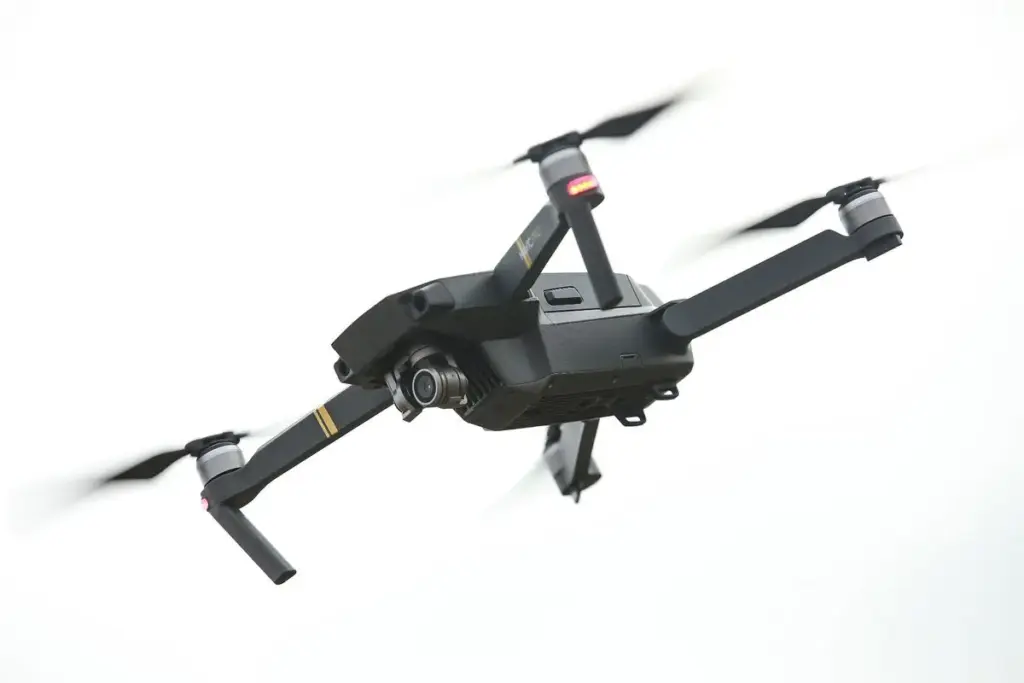
A chilling incident on August 4—in which an explosive-laden drone was discovered in a restricted zone at a major German airport—has ignited severe security concerns across the West. According to U.S. government officials and European intelligence agencies, the sophisticated device may be the handiwork of Vladimir Putin’s Russia. Packed with the military-grade explosive Semtex, equipped with dual SIM cards, and featuring a remote release mechanism, the drone was found dangerously close to a Ukrainian Antonov cargo aircraft. Had it detonated near the aircraft’s fuel tanks, investigators warn it would have triggered a catastrophic inferno, potentially destroying the plane and claiming dozens of lives.
While German officials tread carefully, officially categorizing the event as "a new level of danger" and investigating potential foreign state sponsorship, the broader intelligence picture suggests a disturbing pattern. DNA recovered from the drone has been linked to evidence gathered from a July 2024 incendiary parcel fire at a DHL logistics center in Leipzig, Germany. That incident, alongside a wider European parcel-bomb campaign orchestrated by operatives allegedly linked to Russia’s GRU military intelligence service, points toward a coordinated campaign of hybrid warfare designed to test NATO resolve, paralyze critical infrastructure, and sow terror across the continent without triggering a formal military response.
Detailed Chronology: The Anatomy of a Near-Miss
The unfolding security crisis comprises a tightly wound series of events that began long before the August 4 discovery on the German tarmac, spanning multiple European borders and involving complex networks of proxy operatives.

The Leipzig Incident: July 20, 2024
The evidentiary trail connecting current sabotage attempts to Russian intelligence networks stretches back to the summer of 2024. On July 20, an ordinary-looking parcel caught fire at DHL’s sprawling logistics center in Leipzig, Germany. The package, loaded with an incendiary device, was intended for placement onto a DHL cargo aircraft. However, a fortuitous flight delay kept the package on the ground, where it ignited prematurely in the sorting facility.
While the fire was contained before causing mass casualties or destroying the aircraft, it served as a brutal wake-up call for European postal and aviation security. Subsequent forensic investigations revealed that this parcel was part of a broader scheme involving at least four incendiary devices mailed across Europe. Eurojust, the European Union Agency for Criminal Justice Cooperation, later revealed that 22 suspects had been identified in connection with the parcel-bomb campaign, operating on direct orders from the GRU, Russia’s foreign military intelligence agency. Currently, five men are standing trial in Lithuania, accused of spearheading the logistics of this transnational terror campaign.
The August 4 Airport Incident
Weeks after the Leipzig wake-up call, the threat materialized directly on an active airfield. On August 4, security protocols at a major German airport were thrown into total disarray following the discovery of a rogue drone.
The device, heavily laden with Semtex—a high explosive favored by military forces and saboteurs alike—was located within a secure area perilously close to a parked Ukrainian Antonov cargo aircraft. According to preliminary aviation reports and intelligence assessments, the drone is believed to have physically struck the cargo plane near its fuel tank. Miraculously, the primary explosive charge failed to detonate.

The impact, however, caused visible structural damage to the drone and left scattered fragments embedded on the aircraft’s wing. Following the collision, the device fell to the ground, where it remained active in an emergency low-power mode for approximately four hours. In a stroke of immense fortune, the ticking device went unnoticed until a routine airport bus driver accidentally stepped on it, immediately recognizing the danger and alerting airport security.
The discovery forced an emergency shutdown of the airport, grounding flights and paralyzing operations for the entire night. Compounding the chaos, investigators later revealed that a second unidentified object struck another cargo plane that had been forced to abort its landing due to the sudden airport closure. That aircraft sustained minor damage and managed to land safely at an alternate destination, deepening suspicions that the airfield was subjected to a coordinated multi-pronged assault.
The Forensic Breakthrough
The breakthrough in the investigation came from the microscopic details left behind on the tarmac. German forensic teams recovered DNA evidence from the remains of the fallen drone. When run through international databases and compared against recent counter-terrorism files, the DNA matched evidence collected from the July 20, 2024, Leipzig DHL parcel fire.
While the DNA profile has not yet been tied to a known state actor or high-ranking military official, it has been successfully matched to an unidentified individual in Lithuania—the very country where the five suspects are currently facing trial for the GRU-linked parcel-bomb campaign. This forensic golden thread provides the most tangible physical link yet between the parcel sabotage operations and the direct deployment of explosive drones against aviation targets.

Supporting Context & Metrics: The Mechanics of Hybrid Warfare
To fully grasp the magnitude of the threat facing European security, one must examine the technological makeup of the recovered drone and the strategic doctrine guiding modern Russian intelligence operations.
Inside the Device
Intelligence briefings leaking to European media outlets have detailed the sophisticated nature of the drone recovered in Germany. Unlike consumer-grade quadcopters purchased off-the-shelf for recreational use, this device was weaponized with professional-grade components:
- The Payload: Packed with Semtex, a plastic explosive known for its high velocity of detonation and stability, designed to maximize kinetic and thermal destruction upon impact.
- Communication Architecture: Equipped with dual SIM cards, allowing the device to maintain redundant cellular connections for remote tracking, telemetry, or remote detonation commands across multiple carrier networks.
- Release Mechanism: Fitted with a specialized payload drop or detonation trigger, indicating it was engineered to either release incendiary packages mid-flight or detonate autonomously upon reaching a target coordinate.
The Broader Sabotage Landscape
The targeting of aviation and logistics infrastructure is not an isolated phenomenon. Over the past three years, European security agencies have documented a sharp escalation in Russian-backed hybrid warfare tactics. These operations are explicitly designed to operate below the threshold of Article 5—NATO’s collective defense clause—making a proportionate military response difficult to justify while maximizing disruption.
| Incident Date | Location | Target / Facility | Modus Operandi | Suspected Attribution |
|---|---|---|---|---|
| July 20, 2024 | Leipzig, Germany | DHL Logistics Centre | Incendiary parcel primed for cargo aircraft | Russian GRU (via proxy network) |
| Mid-2024 | Across Europe | Various Postal Hubs | Coordinated dispatch of explosive/incendiary mail | 22 suspects identified by Eurojust; trial ongoing in Lithuania |
| August 4, 2024 | Unnamed German Airport | Ukrainian Antonov Cargo Plane | Semtex-laden drone strike near fuel tank | Linked via DNA to Leipzig; U.S./German investigations ongoing |
These metrics illustrate a chilling operational pivot. By utilizing proxy networks—often recruiting local criminals, marginalized individuals, or unwitting couriers through encrypted messaging apps—the GRU creates plausible deniability while waging a persistent campaign against Western supply chains.

Official Statements and Political Fallout
The political reaction across Germany and the broader transatlantic alliance reflects a delicate balancing act: acknowledging an unprecedented escalation in foreign-state aggression without prematurely triggering an open diplomatic or military crisis.
German Interior Minister Alexander Dobrindt did not mince words when addressing the press regarding the August 4 incident. Describing the discovery as "a new level of danger" and "a new threat scenario," Dobrindt underscored the gravity of deploying weaponized drones against civilian infrastructure on native soil. While German investigators—led by the Federal Criminal Police Office (Bundeskriminalamt)—are carefully examining whether a foreign state actor was directly behind the attack, government officials have remained cautious about explicitly pointing the finger at Moscow before investigations are legally airtight.
Behind closed doors, however, the narrative is starkly different. U.S. government officials speaking to international journalists have been far more direct, asserting that the explosive-laden drone likely belonged to or was directed by Vladimir Putin’s government.
This assessment aligns with warnings issued by Western intelligence chiefs throughout 2023 and 2024. Intelligence assessments consistently warn that Moscow views the West’s steadfast support for Ukraine as an act of indirect belligerence, justifying asymmetric retaliation. By targeting logistics hubs, transport networks, and aviation assets, the Kremlin seeks to exhaust public patience, inflate security costs for European nations, and compel Western governments to scale back their military aid to Kyiv.

Future Outlook: Securing the Skies and Shoring Up NATO’s Rear
The near-disaster at the German airport serves as a grim harbinger for the future of European security. As the war in Ukraine grinds on, the invisible war within Western borders is projected to intensify.
Security experts warn that critical infrastructure protection must undergo an immediate paradigm shift. Traditional airport security has historically focused on passenger screening, baggage checks, and perimeter fences designed to keep unauthorized individuals off the tarmac. The emergence of low-flying, GPS-guided or remotely piloted explosive drones capable of targeting parked cargo aircraft demands a radical upgrade in counter-unmanned aerial systems (C-UAS) at civilian airports.
Furthermore, the trial in Lithuania and ongoing investigations by Eurojust and the German Federal Criminal Police Office will play a pivotal role in dismantling the human infrastructure that enables these attacks. Halting the flow of Russian intelligence funding and dismantling proxy recruitment pipelines across Eastern and Central Europe is now an urgent priority for Western counter-intelligence agencies.
Ultimately, the drone that failed to explode on a German runway has delivered a loud, unmistakable message. The walls of fortress Europe are porous, and the grey-zone conflict engineered by Moscow is no longer knocking at the door—it has landed on the tarmac. Whether Western intelligence and law enforcement can adapt quickly enough to neutralize this shadow war before the next device successfully detonates remains the defining security question of our time.