Executive Overview
In the sprawling and often mercurial landscape of the fashion canon, few garments have achieved the mythic, immutable status of the trench coat. Conceived in the crucible of military necessity during the late 19th and early 20th centuries, this weather-resistant outerwear has undergone an extraordinary metamorphosis. It has bridged the gap between functional combat gear and the pinnacle of high fashion, securing a permanent home in the wardrobes of cultural icons ranging from Hollywood royalty like Audrey Hepburn to modern street-style architects like Alexa Chung.
As the industry transitions into the autumn/winter 2026 fashion cycles, the trench coat continues to serve as an ultimate litmus test for both heritage legacy houses and contemporary labels. It remains living proof that a well-chosen trench is not a fleeting seasonal purchase, but a foundational investment piece. Designed to withstand decades of shifting micro-trends, acquiring the right trench coat is an exercise in discerning craftsmanship, fabric integrity, and silhouette longevity.
This comprehensive report explores the historical trajectory of the trench coat, examines the material science that defines its gold standards, analyzes the avant-garde runway interpretations for the upcoming autumn/winter 2026 season, and provides a curated breakdown of the finest iterations available on the market today—ranging from heirloom luxury masterpieces to sleek high-street staples.
Detailed Chronology: From the Trenches of War to the Catwalks of Couture
To truly understand the enduring dominance of the trench coat, one must trace its evolution through a precise historical chronology, charting how a garment born of mud and battlefields successfully infiltrated the highest echelons of luxury style.

The Pre-WWI Era: The Waterproof Innovation (1850s–1910s)
The genesis of the trench coat is rooted in the technological race to keep soldiers dry during the rain-swept battlefields of Europe. In the mid-19th century, British luxury institutions stepped forward to revolutionize outerwear. Thomas Burberry invented gabardine in 1879—a tightly woven, breathable, and remarkably water-resistant fabric that fundamentally changed outdoor apparel. Simultaneously, Charles Macintosh was perfecting rubberized fabrics, though it was Burberry’s breathable gabardine that ultimately won the favor of the British War Office.
Originally worn by British officers during the Boer War and later codified during the First World War (hence the moniker "trench coat"), the design was entirely utilitarian. Every structural element served a specific battlefield purpose:
- The epaulettes were used to display military rank insignia or secure gloves and caps.
- The D-rings on the belt served as functional attachments for carrying hand grenades, maps, or swords.
- The storm flap across the upper back provided extra ventilation while shedding rainwater away from the body.
- The throat latch (or hook-and-eye collar closure) allowed the wearer to seal out bitter winds and driving rain.
Mid-Century Glamour and Cinematic Immortalization (1940s–1970s)
As soldiers returned home following the conclusion of World War II, they brought their utilitarian coats with them into civilian life. Hollywood quickly recognized the garment’s undeniable cinematic potential. The trench coat became synonymous with mystery, espionage, and effortless romanticism.
Humphrey Bogart sheltering Ingrid Bergman in Casablanca (1942) and Audrey Hepburn stepping into the rain in a classic beige belted trench in Breakfast at Tiffany’s (1961) etched the coat into the global collective consciousness. It transformed from an emblem of martial duty into a symbol of chic, unstudied sophistication. During this era, the trench shed its purely masculine associations, becoming a gender-fluid canvas embraced by screen sirens and intellectuals alike.
.jpg)
The Contemporary Era and Runway Reimagining (1980s–Present)
By the turn of the 21st century, the trench coat had graduated from a classic layering essential to a playground for experimental design. Visionary designers began stripping away, exaggerating, and reassembling its traditional architecture. Today, contemporary style icons like Alexa Chung perpetuate its legacy by pairing vintage-washed gabardine with casual denim and loafers, proving that the garment effortlessly bridges decades without losing its distinct cultural cachet.
Supporting Context & Material Science: The Anatomy of a Masterpiece
When investing in a trench coat, understanding the underlying material science and construction techniques is paramount. Not all trenches are created equal, and the longevity of the garment relies heavily on fabric selection and tailoring precision.
The Gold Standard: Gabardine and Technical Weaves
At the apex of trench coat engineering sits cotton gabardine. Because the warp and woof yarns are tightly twisted and woven before the waterproofing process takes place, the fabric repels water naturally while retaining high breathability—a critical feature that prevents the wearer from overheating.
While cotton gabardine remains the undisputed monarch of durability and weather-proofing, contemporary designers have expanded the material lexicon. Recent seasons have witnessed a surge in alternative finishes, including:

- Plush Suede: Offering a tactile, luxurious hand-feel that elevates the trench from a practical raincoat to a statement outerwear piece for dry autumn days.
- Supple Leather: Imparting a sleek, rock-and-roll edge that updates the classic silhouette with a modern, rebellious attitude.
- Washed Matte Nylon: Engineered by modern luxury houses to provide technical wind-resistance with a contemporary, ultra-matte aesthetic.
Color Theory: Neutrals vs. Statement Hues
While traditionalists continue to champion the enduring appeal of neutral palettes—beige, camel, black, rich chocolate brown, cream, and olive khaki—the modern market demands versatility. High-fashion houses frequently inject vibrancy into their seasonal collections through saturated colorways, most notably striking cherry reds, deep burgundies, and royal blues. However, for those treating the trench as a multi-decade investment, neutral gabardine remains the safest and most versatile financial allocation.
Runway Analysis: The Autumn/Winter 2026 Collections
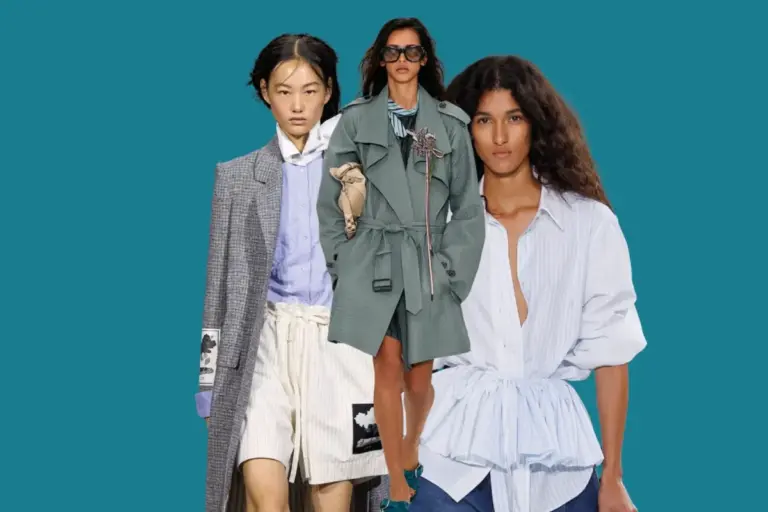
The autumn/winter 2026 international fashion weeks provided a masterclass in how historic tailoring can be radically reinterpreted for the modern wardrobe. Designers split into two distinct philosophical camps: those who strictly honored traditional heritage, and those who embraced radical avant-garde deconstruction.
Radical Deconstruction: Lacoste AW26
Lacoste firmly planted its flag in the experimental camp for AW26. The brand’s signature trench coat received a dramatic structural overhaul, featuring a daringly low drop-waisted belt paired with an exaggerated funnel neck. This combination yielded an entirely unconventional silhouette that completely subverted the traditional V-neck storm flap aesthetic, offering a sporty yet architectural take on rainy-day dressing.
Modern Utilitarianism: Victoria Beckham AW26
Known for her sharp, immaculate tailoring, Victoria Beckham offered a masterclass in minimalist luxury for autumn/winter 2026. Her interpretation favored an oversized royal blue trench coat executed with pristine proportions. Paired with a modern twist on the utilitarian uniform—a crisp blue collared shirt layered beneath slim-leg brown trousers—the look underscored the trench’s capacity to anchor an entire daily outfit with effortless authority.

Party-Ready and Tonal Styling: Celine and Tod’s
Celine injected high-octane glamour into the AW26 catwalks by styling a classic trench coat as unexpected evening wear, carelessly throwing it over a sequin-embellished dress and stark white knee-high boots.
Meanwhile, Tod’s pursued a sophisticated, monochromatic vision. The Italian house paired its traditional leather-accented trenches with matching shirts and polo necks in identical tonal shades, proving that layering within a single color family creates an immediate sense of high-end polish.
Official Industry Perspectives & Investment Guide
When evaluating where to allocate your budget, fashion editors and market analysts generally divide the trench coat market into two distinct categories: high-street accessibility and luxury heritage longevity.
The High-Street Edit: Accessible Versatility
For shoppers seeking sleek, trend-conscious designs without committing four-figure sums, the high-street market offers exceptional craftsmanship. Brands like COS, Arket, H&M, Whistles, and & Other Stories consistently deliver well-tailored options featuring oversized silhouettes, structured lapels, and durable cotton-blend canvases. These pieces allow fashion enthusiasts to experiment with directional cuts—such as cropped hems, integrated hoods, and toggle fastenings—without breaking the bank.

The Luxury Heirloom Tier: Unrivaled Investment Pieces
For those seeking true investment pieces that retain their financial and aesthetic value over decades, legacy houses remain unrivaled. Burberry stands at the absolute summit of this category; its Castleford trench coat is widely considered the closest thing the fashion industry has to a wearable heirloom. Similarly, Gucci’s technical nylon iterations and Toteme’s organic cotton-blend masterpieces represent the pinnacle of modern luxury acquisition—garments designed to be handed down through generations.
Future Outlook: The Next Era of Outerwear
As the fashion industry pivots toward circularity, sustainability, and durability, the trench coat is uniquely positioned to thrive. In an era increasingly fatigued by hyper-fast fashion cycles and disposable micro-trends, the appeal of a garment designed to age gracefully—developing a softer hand-feel and a richer patina with every passing year—is stronger than ever.
Future innovations are projected to focus on bio-engineered waterproof membranes, recycled organic cotton blends, and modular designs featuring detachable linings, hoods, and capes that allow a single coat to transition seamlessly from brisk autumn mornings to freezing winter nights.
Ultimately, whether you lean toward a classic double-breasted Burberry heritage piece or a avant-garde drop-waisted silhouette from the AW26 runways, the trench coat remains an indispensable anchor of style. It is an investment in timeless elegance—a quiet armor that ensures you will always face the elements with uncompromised grace.