Executive Overview
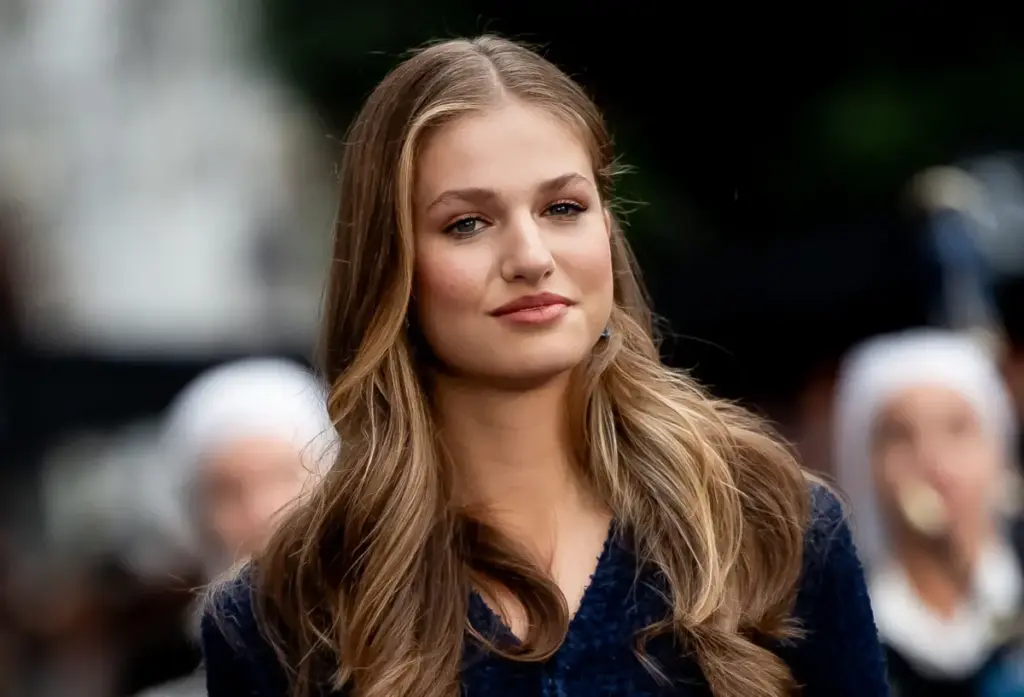
In an era where traditional European monarchies face unprecedented scrutiny, shifting cultural expectations, and the relentless glare of digital media, the Spanish royal family is quietly steering a masterclass in institutional longevity. At the absolute center of this modernization strategy is Princess Leonor of Spain, the 20-year-old Princess of Asturias and the heir presumptive to the Spanish throne.
Born on October 31, 2005—fittingly on Halloween, in Madrid—Leonor de Borbón y Ortiz represents a vital bridge between centuries-old dynastic heritage and the realities of a 21st-century constitutional democracy. As the eldest daughter of King Felipe VI and Queen Letizia, a former journalist, Leonor has spent her formative years not merely preparing for a crown, but actively redefining what it means to be a modern female leader in a country tethered to conservative traditions.
Leonor’s path to the throne is a historic milestone. When she ascends, she will become Spain’s first reign queen since Isabella II ruled from 1833 to 1868. Yet, her journey is underscored by fascinating geopolitical and constitutional anomalies. While much of Europe has transitioned to absolute primogeniture—where the firstborn child inherits the throne regardless of gender—Spain remains one of only two European monarchies (alongside Monaco) that clings to male-preference primogeniture. This dynamic makes Leonor’s current position a precarious and hard-fought reality, shaped by legislative limits, dynastic preservation, and rigorous, cross-branch military and academic preparation.
This in-depth analysis explores the mechanics of Princess Leonor’s succession, the rich historical weight of her titles, the strict military and educational roadmap that has shaped her young adulthood, and what her eventual reign means for the future of the Spanish monarchy.
Detailed Chronology of Succession
To understand the weight of Princess Leonor’s current standing, one must trace the timeline of her life against the backdrop of modern Spanish history—a history scarred by civil war, a decades-long dictatorship, and a fragile transition back to democracy.
1. The Birth of a Dynasty’s Future (2005)
On October 31, 2005, the birth of Infanta Leonor brought widespread celebration across Madrid. As the firstborn child of then-Prince Felipe and Princess Letizia, her arrival immediately shifted the dynastic calculus. However, because the Spanish Constitution of 1978 maintained male-preference primogeniture, Leonor’s status as heir was technically conditional. She was heir presumptive; if her parents were to have a subsequent son, that boy would automatically displace Leonor in the line of succession. This rule mirrored the exact mechanism that allowed her father, Felipe, to bypass his older sisters, Infantas Elena and Cristina.

2. The Proclamation of King Felipe VI (2014)
A seismic shift occurred on June 19, 2014, following the abdication of King Juan Carlos I amid a series of financial and personal scandals that threatened the institution’s survival. With her father’s accession to the throne as King Felipe VI, eight-year-old Leonor officially became the Crown Princess of Spain and assumed the historic title of Princess of Asturias, alongside subsidiary titles historically linked to the crowns of Castile, Aragon, and Navarre.
3. Stepping into the Public Eye and International Education (2018–2023)
As she entered her teens, Leonor’s public profile expanded exponentially. In 2018, she delivered her first public speech at the Princess of Asturias Awards, echoing her father’s historic first address at the exact same age (13).
Seeking to broaden her worldview outside the Spanish court, Leonor was sent abroad for her secondary education. She enrolled at the United World College (UWC) of the Atlantic in Wales—a progressive, international institution affectionately nicknamed "Hippie Hogwarts." There, she completed her International Baccalaureate far from the immediate pressure of the Spanish press, rubbing shoulders with peers from across the globe and developing a reputation for grounded diplomacy.
4. Constitutional Majority and Swearing Allegiance (2023)
The definitive turning point of her young life occurred on October 31, 2023—her 18th birthday. In a solemn, highly choreographed constitutional ceremony broadcast live across the nation, Princess Leonor formally swore allegiance to the Spanish Constitution before the Cortes Generales (the Spanish Parliament). This rite of passage legally cemented her status as a fully empowered adult heir, guaranteeing that she could immediately act as head of state should her father become incapacitated.
Supporting Context & Metrics: The Constitutional and Military Landscape
Leonor’s elevation is uniquely fascinating when analyzed through comparative European constitutional law and the rigorous physical demands placed upon her as future Commander-in-Chief.
The Primogeniture Dilemma
Spain’s 1978 Constitution was drafted during a delicate democratic transition following the death of right-wing dictator Francisco Franco (who had restored the monarchy and designated Juan Carlos I as his successor). While the constitution established a parliamentary monarchy and guaranteed fundamental rights, Article 57 preserved male-preference primogeniture.

While nations like Sweden, the Netherlands, Norway, Belgium, Denmark, Luxembourg, and the United Kingdom modernized their succession laws to absolute primogeniture, Spain has stalled. Amending the Spanish Constitution requires an arduous political consensus, a dissolution of parliament, new elections, and a subsequent referendum—a political risk that successive Spanish governments have been hesitant to trigger.
Consequently, persistent rumors suggest that King Felipe VI and Queen Letizia intentionally stopped having children after the birth of their second daughter, Infanta Sofía, in 2007, ensuring that Leonor’s path to the throne would never be legally jeopardized by the birth of a brother.
Comprehensive Military Training
Per the Spanish Constitution, the monarch serves as the supreme commander of the Spanish Armed Forces. To prepare for this heavy constitutional duty, Princess Leonor embarked on an unprecedented three-year military socialization program, training across all three branches of the military:
- The Army: She completed her initial officer training at the General Military Academy in Zaragoza, enduring grueling physical conditioning, tactical drills, and field exercises.
- The Navy: She served aboard the historic training ship Juan Sebastián de Elcano and studied at the Naval Military Academy in Marín (Pontevedra), learning maritime navigation and naval warfare strategies.
- The Air and Space Force: She rounded out her military education at the General Air and Space Academy in San Javier, earning high honors, including the prestigious Grand Cross of Aeronautical Merit.
This multi-branch military immersion not only validates her future role as Captain General of the Armed Forces but has also significantly boosted her approval ratings among the conservative and military sectors of Spanish society.
Official Statements and Institutional Voice
Princess Leonor’s public speeches are carefully managed by the Royal Household (La Zarzuela) to project poise, neutrality, and a deep sense of patriotic duty. Her words consistently emphasize unity, continuity, and service to the Spanish people.
During her landmark 2019 address at the Princess of Asturias Awards—her first major speech as heir—she articulated her bond to her titular region and her commitment to the nation:

"It is also the land that gives its name to the title I hold as Heir to the Crown, just as my father, the King, did for so many years. And I do so with a sense of responsibility; I feel deeply honored by it. It is a title that commits me to the dedication and effort of serving Spain and all Spaniards. In my home, the words Spain and Asturias are always linked with the same strength with which history has bound them. That is how I feel in my heart."
Furthermore, upon turning 18 and swearing her oath to the Constitution in October 2023, Leonor addressed the nation with a maturity that won praise across political divides:
"I swear to faithfully discharge my duties, to obey and ensure that the Constitution and the laws are obeyed, to respect the rights of citizens and the Autonomous Communities, and to be faithful to the King… From this day on, I owe myself entirely to all Spaniards, whom I will serve with dignity and exemplary conduct. I ask you to place your trust in me, just as I have placed all my confidence in our future."
Future Outlook: The Horizon for Queen Leonor
As Princess Leonor looks toward her immediate future, her calendar is packed with milestones that will further transition her from royal heir to functioning head of state.
Following the completion of her military obligations, Leonor is scheduled to begin her civilian university education. She will pursue a bachelor’s degree in political science at Madrid’s prestigious Universidad Carlos III, starting on September 7. This academic focus is a deliberate choice; while her predecessors often studied law, a grounding in political science will offer her a nuanced understanding of democratic governance, international relations, and legislative mechanics in a fractured modern political climate.
Challenges Ahead
Despite her high popularity—polls frequently show her as one of the most favorably viewed members of the royal family—Leonor will inherit a monarchy walking a tightrope. Republican sentiment remains strong in regions like Catalonia and the Basque Country, and the lingering shadows of her grandfather Juan Carlos I’s financial scandals have made the Spanish public hyper-vigilant regarding royal transparency and fiscal accountability.

As a queen regnant, Leonor will not hold executive political power; the Spanish Crown remains strictly neutral, acting as a symbolic guarantor of the state’s permanence and institutional unity. However, the efficacy of a modern European crown relies almost entirely on the personal brand, integrity, and cultural relevance of the monarch.
By pairing rigorous military credentials, an elite international education, political acumen, and a flawless public demeanor, Princess Leonor is positioning herself to be much more than a historical novelty. She is shaping up to be the stabilizing force that secures the House of Bourbon’s place in late 21st-century Europe. When her time comes to step onto the dais as Spain’s reigning queen, she will do so not merely by right of birth, but through earned competence and modern grace.