Executive Overview
In a television landscape increasingly dominated by high-octane drama and serialized escapism, long-running serial dramas retain a unique cultural power: the ability to mirror, validate, and educate audiences on real-world struggles. ITV’s flagship soap opera, Coronation Street, has long understood this responsibility, frequently utilizing its massive platform to shine a light on underrepresented health crises, social stigmas, and institutional oversights.
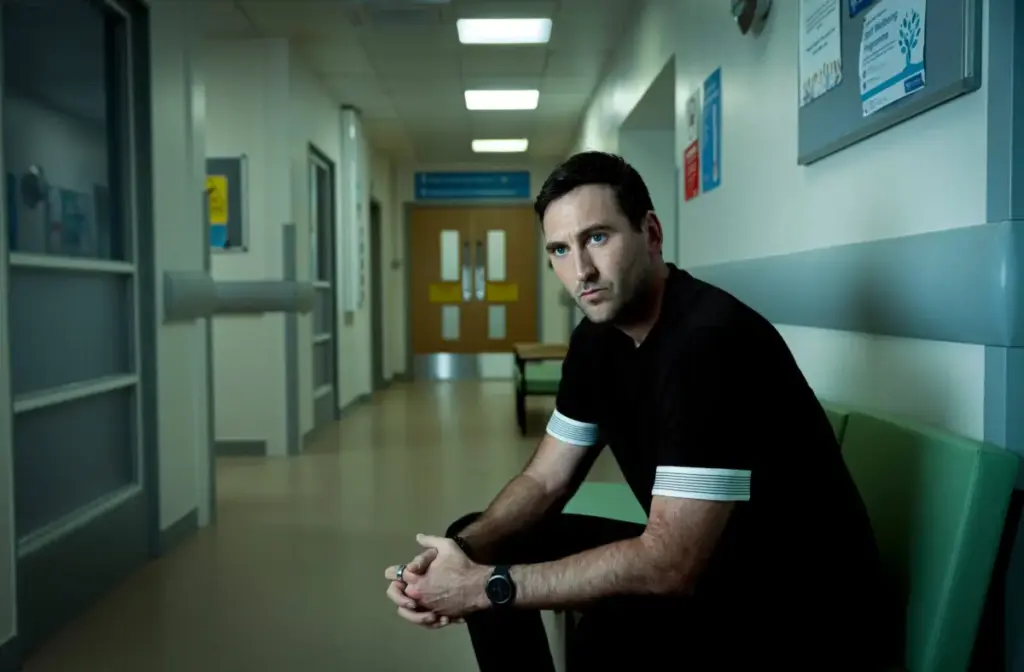
Beginning next week, the iconic Manchester-based soap is set to embark on one of its most socially significant and groundbreaking narratives to date. Police officer Kit Green, portrayed by acclaimed actor Jacob Roberts, is scheduled to receive a devastating breast cancer diagnosis. This narrative trajectory will not only alter the foundations of Kit’s character arc and challenge his deeply engrained notions of masculinity, but it will also spotlight a critical public health blind spot: male breast cancer.
Collaborating closely with prominent health organizations, including Macmillan Cancer Support and Breast Cancer Now, the creative minds behind Coronation Street are leaning into the stark realities of a disease that is frequently misconstrued as exclusively affecting women. By charting Kit’s journey from initial bewilderment to diagnosis and treatment, the soap aims to break longstanding taboos, dismantle dangerous stigmas, and encourage viewers to seek medical counsel at the earliest sign of bodily changes.
Detailed Chronology: Unraveling the Tragedy and the Diagnosis
The path toward Kit Green’s diagnosis begins not with routine medical screenings, but with family tragedy, long-simmering resentment, and a fateful encounter on the cobbles.
The Death of Celeste Butterfield
The narrative catalyst takes root following the death of Celeste Butterfield. Celeste, who had been battling terminal cancer, spent her final days residing at the Chariot Square hotel, where she had enlisted Todd Grimshaw to meticulously plan her upcoming funeral arrangements. Despite her terminal prognosis, a deep-seated family rift kept her niece, Bernie Winter-Alahan, entirely absent from her final days. This estrangement stemmed from a historical falling-out between Celeste and her twin sister—who happens to be Bernie’s mother.
While the rest of the estranged family maintained a stubborn distance, Gemma Winter-Brown broke ranks. Gemma became the sole family member to visit Celeste during her final hours at the hotel. Tragically, Celeste passed away, leaving behind a complex web of family dynamics and an unspoken medical legacy.
The Revelation at Roy’s
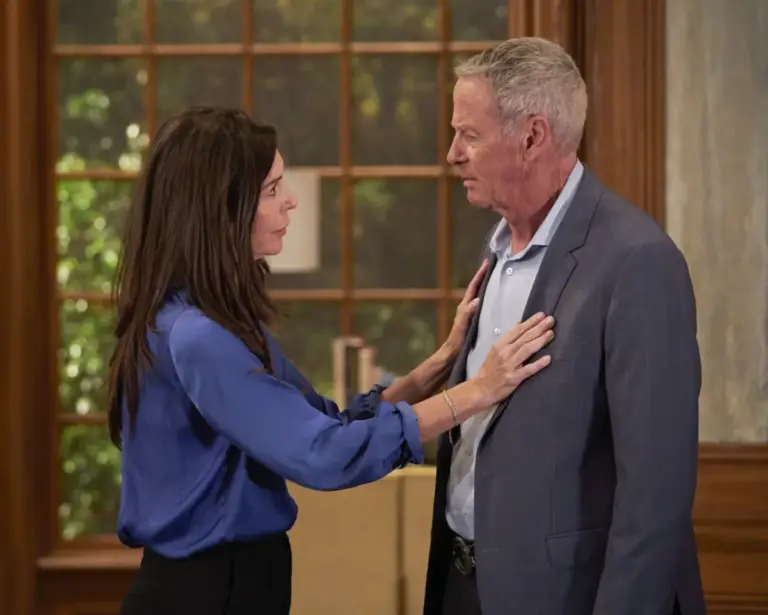
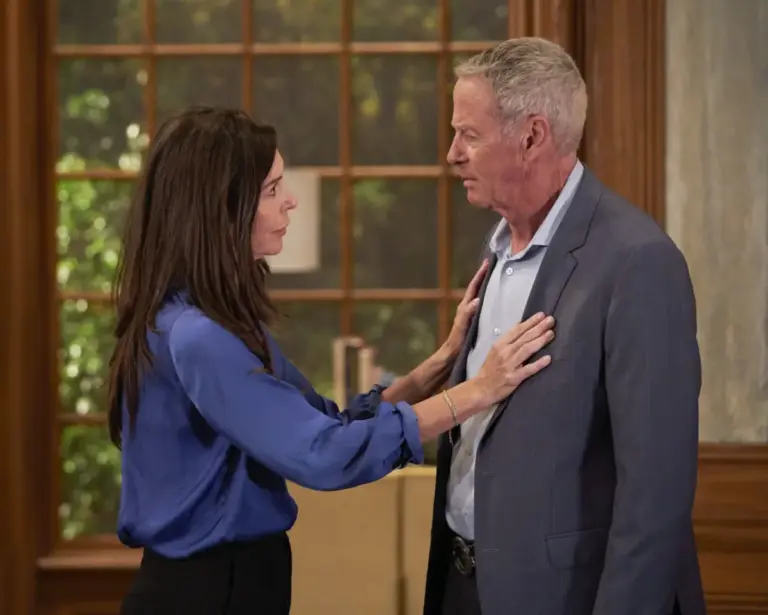
The reverberations of Celeste’s passing immediately ripple through Weatherfield in scenes scheduled to air on Monday, August 31. In a dramatic preview clip, Gemma corners Kit Green inside Roy’s Rolls, delivering the blunt news that Celeste has passed away from breast cancer.
Initially, Kit reacts with characteristic detachment, struggling to see how a distant great-aunt’s passing relates to his own tightly controlled life. However, Gemma’s next revelation changes everything: she casually mentions that breast cancer is hereditary and runs deep within their shared family line.

The gravity of the statement visibly stuns Kit. The expression of detached indifference vanishes, replaced by sudden shock and disorientation. Abruptly cutting the conversation short, Kit tells Gemma he has to leave, retreating into a private spiral of anxiety.
The Build-Up to the Diagnosis
While viewers watch this public confrontation unfold, upcoming soap spoilers confirm that Kit’s internal panic is not unfounded. Behind closed doors and entirely off-camera, Kit has already been seeking medical help for mysterious, persistent symptoms he has been experiencing in recent weeks. Gemma’s timely—yet terrifying—revelation regarding their shared genetic history serves as the final piece of a deeply troubling puzzle.
Over the coming weeks, the narrative will accelerate as Kit receives his official diagnosis of male breast cancer. The diagnosis will force a hard man of the law to confront an invisible enemy, testing his psychological resilience and reshaping his relationships with everyone on the cobbles.
Supporting Context & Metrics: Shedding Light on Male Breast Cancer
While breast cancer is widely recognized as one of the most prevalent cancers among women globally, public awareness regarding its occurrence in men remains critically low. By centering a prime-time narrative on a male character with the disease, Coronation Street is tackling a subject shrouded in societal ignorance and misplaced shame.
Understanding Male Breast Cancer
Though statistically rare—accounting for approximately less than 1% of all breast cancer diagnoses in the United Kingdom—male breast cancer is a serious and potentially fatal condition. Because breast tissue is present in both men and women, male breasts can undergo cancerous cellular mutations, typically manifesting as a lump in the chest area, skin dimpling, nipple retraction, or unexplained discharge.
Medical experts emphasize that the primary danger of male breast cancer is not merely biological, but behavioral. Due to a profound lack of public awareness, men frequently fail to recognize the early warning signs, attributing lumps or skin changes to benign causes like gynecomastia (enlarged male breast tissue) or muscle strain. Consequently, men are often diagnosed at a significantly later stage than women, which can severely impact prognosis and treatment outcomes.
The Power of Soap Opera Advocacy
Historically, serialized television has proven exceptionally effective at driving health-seeking behaviors among the viewing public. Academic studies examining health storylines in British soaps have repeatedly demonstrated spikes in GP visits, helpline calls, and self-examinations following high-profile medical storylines.
By working alongside institutional authorities like Macmillan Cancer Support and Breast Cancer Now, Coronation Street ensures that Kit Green’s fictional struggle is anchored in medical accuracy. The partnership aims to arm viewers with actionable information, transforming passive entertainment into a life-saving public health intervention.

Official Statements and Behind-the-Scenes Insights
The gravity of the storyline has elicited profound reflections from both the actors bringing the narrative to life and the creative leadership guiding the soap’s future.
Jacob Roberts on Portraying Kit’s Shock
Stepping into a narrative of this magnitude requires a delicate balance of emotional honesty and dramatic tension. Actor Jacob Roberts, who plays the complex police officer, admitted that the storyline challenged his own preconceptions about the disease.
"I genuinely didn’t know that men could get breast cancer," Roberts candidly shared. "I felt, to make it authentic, that Kit shouldn’t know that men can get breast cancer either."
For Roberts, capturing Kit’s initial reaction required tapping into a very specific brand of disbelief—one born from a total lack of cultural reference points for the diagnosis.
"Speaking to charities and male survivors has been really insightful," Roberts continued. "Lots of men don’t know they can get this, and for Kit, it’s that utter disbelief of ‘how can this be?’ — not only for his age, but also ‘how can I have this as a bloke, and who else in the family could be affected?’"
Producer Kate Brooks on Identity and Vulnerability
Coronation Street producer Kate Brooks elaborated on the broader thematic resonance of the storyline, emphasizing that the narrative is designed to test Kit’s psychological armor to its absolute limits.
"This diagnosis absolutely shakes the foundations of Kit’s life, as he struggles to digest what this means not only for him but also for his family and loved ones," Brooks stated.
She noted that Kit’s professional background as a police officer—a career field that often demands the suppression of vulnerability and emotional display—will compound his internal struggle.

"Kit’s a complex character, and he struggles as he navigates this new world he’s been thrust into. His vulnerabilities become all too apparent as he wrestles with what this means to his sense of identity," Brooks added. "Whilst male breast cancer is rare, it’s important that we show it can happen to anyone. We must normalise conversations around this to encourage people to consult their GP at the earliest opportunity if any changes arise."
Future Outlook: What Kit’s Journey Means for Viewers
As Coronation Street prepares to roll out these pivotal episodes over the coming weeks, the impact of Kit Green’s diagnosis is poised to resonate far beyond the confines of the Weatherfield cobbles.
The narrative promises to test Kit’s resilience, forcing him to cast aside his stoic bravado and lean on a support system he has historically kept at arm’s length. For viewers, the storyline offers a vital educational blueprint. By demystifying the diagnostic process, normalizing men speaking openly about chest abnormalities, and dismantling the outdated stigma that breast cancer is exclusively a "women’s disease," Coronation Street is once again proving why it remains a vital cultural institution.
As Kit navigates the harrowing reality of treatment, the audience will be taken on an emotional, educational, and ultimately empowering journey—one that has the potential to save lives in the real world simply by breaking the silence.
Coronation Street airs on weeknights at 8:30 PM on ITV1 and streams on ITVX.
If you or someone you know would like more information, guidance, or emotional support regarding living with cancer or treatment options, please consult resources provided by Macmillan Cancer Support, Breast Cancer Now, or Stand Up to Cancer.