Executive Overview
High-Intensity Interval Training (HIIT) has long carried an intimidating reputation. Mention the term to a fitness novice, and images of sweat-drenched athletes, sprinting tracks, or collapsing in exhaustion under the watchful eye of an unyielding drill instructor immediately come to mind. For years, the prevailing cultural narrative suggested that HIIT was reserved exclusively for seasoned veterans, CrossFit enthusiasts, or elite endurance competitors.
However, a quiet revolution is taking place across the global fitness landscape. Leading exercise physiologists, biomechanists, and certified trainers are demystifying the framework of high-intensity training, proving that the methodology is not only accessible to absolute beginners but can be custom-tailored to any starting fitness level.
According to Angela Brooks, a National Academy of Sports Medicine (NASM)-certified personal trainer from VASA Fitness, the core mechanism of HIIT is remarkably democratic. "The goal of HIIT is to push your heart rate up using bursts of high effort," Brooks explains. "What gets my heart rate up will be less than what it takes for an Olympic athlete doing HIIT, but as long as I put the appropriate amount of effort in at the appropriate amount, I’ll benefit."
In an era defined by hyper-busy schedules, the modern workforce is constantly seeking workouts that maximize efficiency without sacrificing results. Traditional steady-state cardio—such as a 30- to 45-minute jog on a treadmill—has its undeniable merits, particularly for active recovery and establishing an aerobic base. Yet, for individuals pressed for time who want to rapidly build cardiovascular fitness, optimize metabolic health, and trigger measurable changes in body composition, HIIT consistently outperforms steady-state training while demanding a fraction of the time investment.
This comprehensive report explores the science, structure, and execution of beginner-friendly HIIT, featuring an exclusive 10-minute, equipment-free workout designed by Brooks to bridge the gap between intimidation and achievement.
Detailed Chronology: The Evolution of HIIT and Its Mainstream Accessibility
To understand why HIIT is currently experiencing a massive surge in popularity among novices, it is helpful to trace its historical trajectory within sports science.
The Research Phase (Early to Mid-20th Century)
The intellectual roots of interval training can be traced back to track and field coaching in the 1920s and 1930s, notably utilized by Finnish distance runners like Paavo Nurmi. However, the scientific formalization of high-intensity intervals began in the late 1960s and 1970s. Researchers studying Scandinavian endurance athletes discovered that alternating periods of intense work with short recovery periods yielded superior cardiovascular adaptations compared to continuous, moderate-effort training.
The Tabata Breakthrough (1996)
The modern lexicon of HIIT was galvanized in 1996 by Japanese researcher Dr. Izumi Tabata and his team at the National Institute of Fitness and Sports in Tokyo. Tabata’s study evaluated Olympic speed skaters using a protocol consisting of 20 seconds of ultra-intense exercise followed by 10 seconds of rest, repeated for four minutes. The results proved that this brief, excruciating protocol improved both anaerobic and aerobic capacity simultaneously. This study cemented the public perception of HIIT as an extreme, punishing protocol meant only for top-tier competitors.
The Democratization Movement (2010s–Present)
Over the past decade, sports scientists and fitness educators began pivoting away from the grueling "Tabata-style" extreme protocols to examine how interval training could be scaled for the general population. Recognizing that the vast majority of the population suffers from sedentary lifestyle-related health complications, researchers began testing longer work intervals (such as 30 to 45 seconds) paired with generous rest periods (15 to 30 seconds) at lower absolute intensities.
This shift birthed the concept of scalable HIIT. No longer restricted to sprint tracks or specialized gym equipment, high-intensity intervals were successfully adapted for bodyweight calisthenics, resistance bands, and low-impact functional movements. Today, platforms like VASA Fitness and leading digital health institutions are championing scalable HIIT as the gold standard for efficient, inclusive physical conditioning.
Supporting Context & Metrics: Why HIIT Outperforms Steady-State Cardio
The physiological dividends of HIIT are well-documented across peer-reviewed sports medicine journals. When executed correctly, high-intensity intervals trigger adaptations that transcend traditional steady-state workouts.
The Time-Efficiency Advantage
"HIIT produces outsized results relative to the time invested," notes Brooks. While a traditional steady-state cardio session requires 30 to 60 minutes of continuous movement to achieve significant caloric expenditure, a well-structured HIIT session can trigger similar or superior cardiorespiratory adaptations in just 10 to 20 minutes.
Excess Post-Exercise Oxygen Consumption (EPOC)
One of the primary metabolic mechanisms driving HIIT’s success is EPOC, colloquially known as the "afterburn effect." When individuals push their heart rates into high-effort zones during work intervals, the body incurs an oxygen deficit. To restore homeostatic balance—replenishing ATP stores, clearing lactate, and lowering body temperature—the body continues to consume elevated amounts of oxygen and burn calories long after the workout has concluded. This metabolic elevation can persist for hours post-exercise, a phenomenon far less pronounced during steady-state endurance training.
Metabolic Health and Body Composition
Clinical studies consistently demonstrate that regular HIIT participation improves insulin sensitivity, reduces visceral adipose tissue, and enhances mitochondrial density within skeletal muscle fibers. For beginners, these changes translate into improved blood sugar regulation, increased lean muscle retention, and a more favorable body composition without requiring joint-pounding mileage.
The 10-Minute, Equipment-Free Beginner HIIT Protocol
Designed by Angela Brooks, this routine is built around two fundamental pillars: accessibility and scalability.
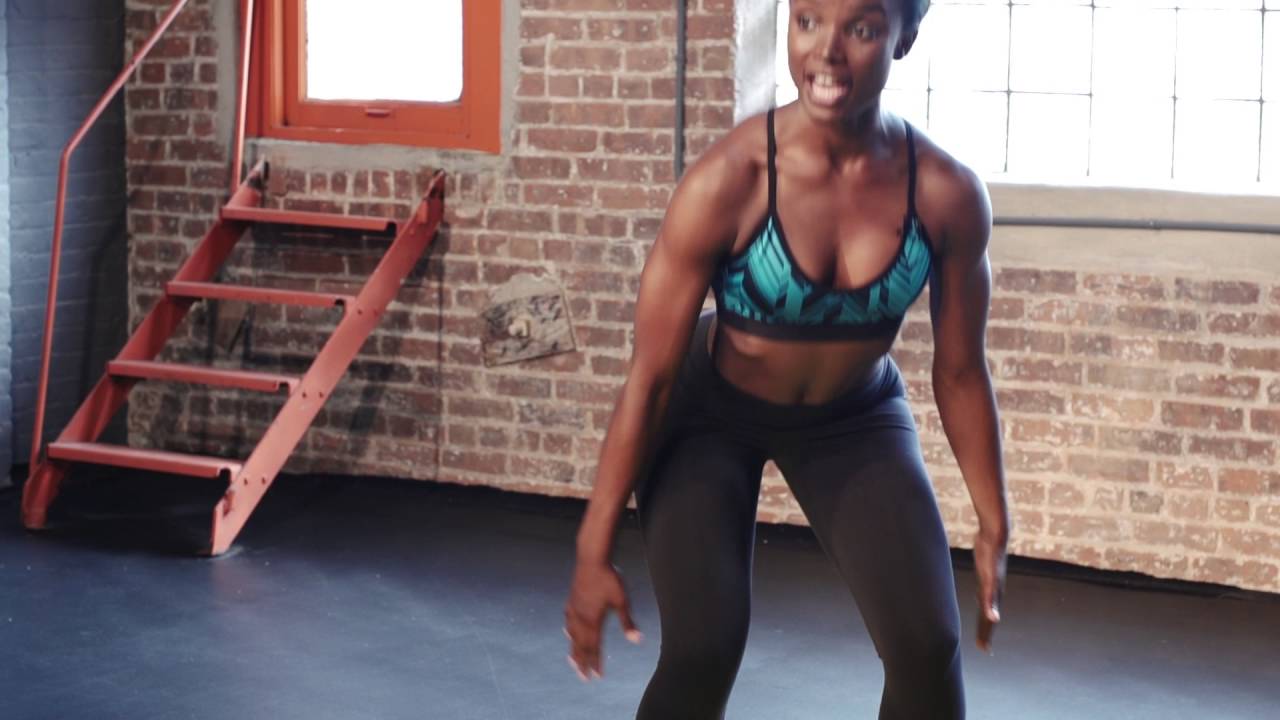
"Each movement is low-impact at its base level, and I’ve included a progression for those ready to push further," Brooks explains.
Workout Structure
- Work Period: 45 seconds per exercise
- Rest Period: 15 seconds between exercises
- Round Structure: Complete all 5 exercises to finish one round.
- Volume: Perform 2 rounds in total (Total duration: 10 minutes).
Exercise Guides
1. Overhead March
- Time: 45 sec | Rest: 15 sec
- Watch Demo: High Knee Marches Demo on YouTube
- How to Execute: Stand tall with your feet hip-width apart. Raise both arms straight overhead, keeping your biceps close to your ears. Begin marching in place, driving your knees upward toward your chest one at a time while engaging your core to prevent your torso from swaying.
- Trainer Insight: "An overhead march is the perfect opener," says Brooks. "It elevates your heart rate gently, warms your hip flexors and core, and forces overhead shoulder stability. Plus, it’s a low-impact movement pattern that works for every fitness level. Marching with arms raised also cues proper posture."
- Add a Challenge: Continue moving continuously through the full 60 seconds without taking the 15-second rest break.
2. Squat to Calf Raise
- Time: 45 sec | Rest: 15 sec
- Watch Demo: Improve Your Balance with a Squat-to-Calf-Raise Move on YouTube
- How to Execute: Stand with your feet slightly wider than shoulder-width apart. Initiate a bodyweight squat by pushing your hips back and bending your knees, keeping your chest proud and heels planted. As you drive through your feet to return to the standing position, seamlessly transition onto your toes, lifting your heels as high as possible into a calf raise before lowering back down.
- Trainer Insight: "This compound movement targets the primary lower-body muscles in a single fluid motion," Brooks explains. "The squat builds glute and quad strength, and the calf raise at the top adds an ankle stability and calf endurance component."
- Add a Challenge: Replace the calf raise with an explosive jump squat, pushing forcefully off the floor at the top of each repetition.
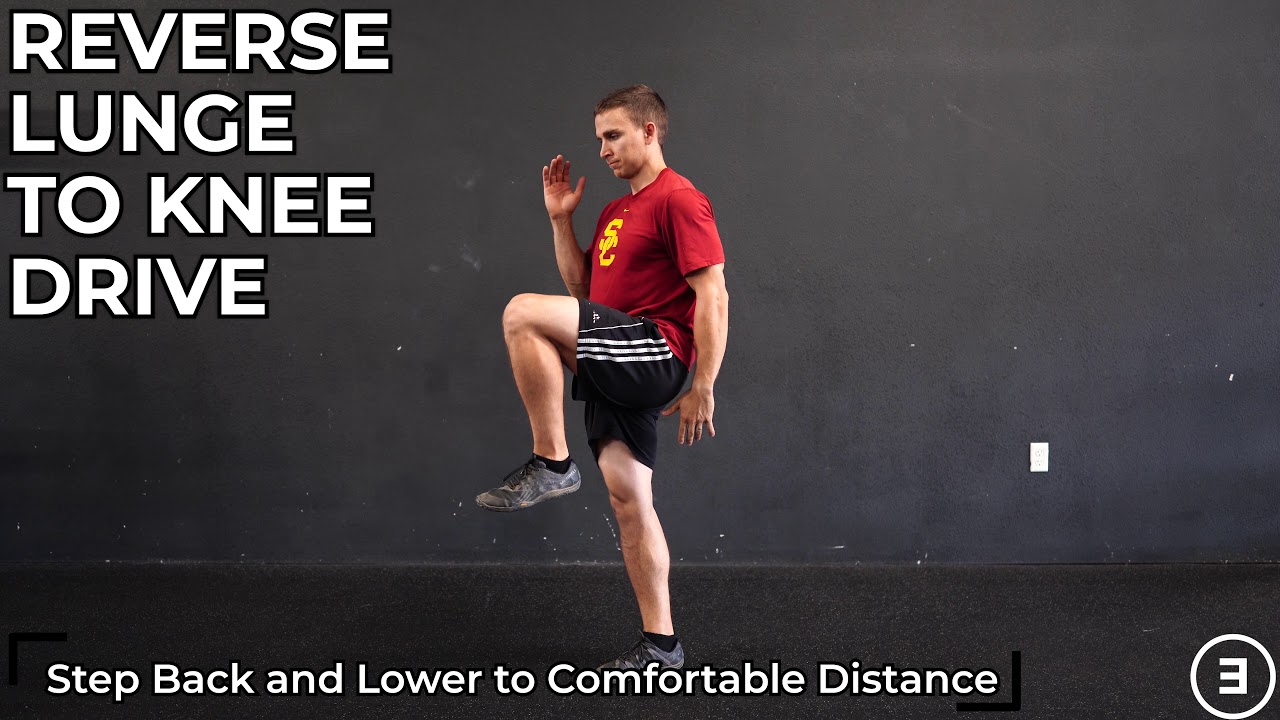
3. Reverse Lunge to Knee Drive
- Time: 45 sec | Rest: 15 sec
- Watch Demo: Reverse Lunge to Knee Drive on YouTube
- How to Execute: Stand upright with your feet together. Take a large step backward with your right foot, lowering your hips until both knees form roughly 90-degree angles. Push off your back foot, driving your right knee forward and upward toward your chest in one fluid motion while balancing on your left leg. Step back down into the next lunge. (Alternate legs halfway through, or switch sides each repetition).
- Trainer Insight: "The reverse lunge is one of the safest lunge variations for beginners because it places less shear force on the knee," notes Brooks. "Adding the knee drive at the top turns it into a balance and hip flexor challenge, and a natural progression into more dynamic movements. It’s unilateral, which also develops stability and corrects side-to-side imbalances."
- Add a Challenge: Upon completing the knee drive, transition directly into three fast high knees before stepping back into the next lunge.
4. Bear Crawl Hold
- Time: 45 sec | Rest: 15 sec
- How to Execute: Begin on your hands and knees in a tabletop position, with your wrists stacked directly beneath your shoulders and knees under your hips. Tuck your toes, engage your core, and hover your knees just one to two inches off the floor. Maintain a flat back and hold this position statically while breathing steadily, avoiding any sagging in the lower back.
- Modification: Place your hands on an elevated sturdy bench or aerobic step to reduce wrist and shoulder pressure.
- Trainer Insight: "This movement trains both the superficial core—the muscles you can see—and the deep stabilizing core—the muscles that protect your spine," says Brooks. "Moving into a bear crawl position demands full-body tension and coordination. It’s deceptively challenging without any jumping or joint impact."
- Add a Challenge: Add a strict push-up each time you return from a hovering bear crawl to a high plank position.
5. Lateral Shuffle to Rotational Punch
- Time: 45 sec | Rest: 15 sec
- Watch Demo: Side Step Rotational Punch on YouTube
- How to Execute: Assume an athletic, quarter-squat stance with your knees soft and core braced. Take two rapid lateral shuffle steps to the right. As you plant your right foot, pivot on your back foot and throw a dynamic cross punch across your body, rotating from your hips. Immediately shuffle back to the left and throw a rotational punch on the opposite side.
- Trainer Insight: "The lateral shuffle activates the glutes and inner/outer thighs in a way most exercises miss," Brooks emphasizes. "This exercise trains the side-to-side movement patterns that are essential for athletic function and injury prevention. The rotational punch at the end of each shuffle activates the obliques and trains the body to generate rotational power from the hips."
- Add a Challenge: During the final 15 seconds of the work interval, drop into rapid-fire fast feet with alternating jabs, throwing quick punches continuously on both sides.
Official Statements and Industry Perspective
The broader fitness community is increasingly aligning with the philosophy that exercise science must prioritize inclusivity over intimidation. Major fitness institutions are pivoting their curriculum to educate trainers on how to scale high-intensity protocols for aging populations, rehabilitation clients, and absolute beginners.
Industry analysts note that post-pandemic consumer behavior has permanently shifted toward time-compressed, highly efficient home and club workouts. According to fitness industry data, members increasingly prioritize workouts that deliver measurable metabolic improvements in under 20 minutes over sprawling, unstructured gym sessions.
"The myth that you have to destroy your joints to get a great HIIT workout is fading," states Angela Brooks. "When we focus on scalability, functional movement patterns, and intentional effort rather than reckless speed, HIIT becomes a lifelong tool for health and longevity."
Future Outlook: Where Beginner HIIT Is Headed Next
As sports technology continues to evolve, the future of beginner-friendly HIIT is poised for even greater personalization. The integration of wearable heart-rate monitors, biofeedback sensors, and AI-driven fitness applications will allow novices to track their exertion zones in real-time, ensuring they remain safely within their optimal high-effort windows without overtraining.
Furthermore, community-driven fitness environments—ranging from specialized boutique classes to expansive club networks like VASA Fitness—are expected to roll out dedicated beginner interval programming. By removing the psychological barriers associated with high-intensity training, the fitness industry is opening the door for millions of new participants to experience the profound cardiovascular, metabolic, and mental health benefits of interval training.
Ultimately, breaking the sweat barrier does not require an extreme athletic background. With scalable movements, expert guidance, and a willingness to embrace purposeful effort, anyone can harness the transformative power of HIIT.