Executive Overview
For decades, the prevailing dogma of cardiovascular fitness has been inextricably linked to high-impact activities. Running marathons, sprinting up steep inclines, executing plyometric box jumps, and high-intensity interval training (HIIT) classes have long been marketed as the gold standard for aerobic health and fat loss.
However, this high-impact paradigm presents a significant barrier to entry and sustainability for a vast demographic. Millions of individuals—ranging from fitness novices and older adults to those managing chronic joint conditions, recovering from injuries, or simply navigating sensitive lower backs and cranky knees—find themselves systematically alienated by traditional, high-impact programming. The cultural mantra of "no pain, no gain" has historically forced these populations to choose between enduring joint degradation or abandoning cardiovascular conditioning altogether.

Enter the modern revolution of low-impact, high-reward bodyweight cardio. Contrary to long-standing misconceptions, elevating the heart rate does not require relentlessly pounding ankles, knees, hips, and the lumbar spine against hard surfaces. By strategically leveraging compound movements, total-body muscle engagement, dynamic pacing, and modified high-intensity patterns, fitness experts have unlocked a new frontier of aerobic conditioning.
This comprehensive report examines the physiological mechanics of low-impact cardiovascular exercise. Drawing insights from leading strength and conditioning specialists, we explore how low-impact training protects joint integrity, stimulates critical bone density adaptations, and democratizes fitness for practitioners at every stage of their physical journey.

Detailed Chronology: The Evolution of Cardiovascular Training Paradigms
To understand the current pivot toward low-impact cardio, one must examine the chronological shifts in fitness culture over the past half-century.
The High-Impact Era (1970s–1990s)
The modern fitness boom of the late 20th century was catalyzed by the running craze of the 1970s and the high-energy aerobics movement of the 1980s. Popularized by media personalities and early exercise physiologists, the focus was overwhelmingly placed on maximal exertion coupled with vertical displacement. Leaping, bounding, and rapid directional changes were viewed as essential markers of a "real" workout. While these methods successfully improved cardiovascular health for millions, orthopedic clinics simultaneously witnessed a surge in overuse injuries, shin splints, plantar fasciitis, and premature osteoarthritis.

The Specialized Machine and Cycling Surge (2000s)
As injury rates climbed, the fitness industry responded by introducing low-impact gym machinery. Indoor stationary cycling, the elliptical trainer, and rowing machines gained immense popularity. These modalities successfully spared the joints by maintaining continuous contact with a pedal, handle, or track. However, these machines introduced a new limitation: they largely insulated the body from functional, load-bearing movement, failing to challenge balance, spatial awareness, or functional multi-planar stability in the same manner as free-form, bodyweight calisthenics.
The HIIT Explosion and the "No-Pain" Backlash (2010s–Present)
The subsequent dominance of High-Intensity Interval Training (HIIT) brought back explosive, plyometric-heavy movements to mainstream boutique studios and home workouts. While effective for caloric burn, the sheer volume of burpees, jump squats, and tuck jumps wreaked havoc on recreational exercisers lacking adequate foundational strength or mobility.

In response, contemporary movement specialists began re-engineering classic cardiovascular movements. By stripping away the vertical impact while amplifying muscular density, tempo, and compound range of motion, trainers established a bridge between joint preservation and cardiovascular taxation. This evolution has birthed a new category of bodyweight training: workouts that require zero equipment, can be performed anywhere, and achieve significant aerobic stress without a single jump.
Supporting Context & Metrics: The Mechanics of Joint-Friendly Aerobic Conditioning
How is it physiologically possible to achieve a cardiovascular training effect—typically defined as sustaining an elevated heart rate within 60% to 85% of one’s maximum heart rate—without running or jumping? The answer lies in thermodynamics, neuromuscular recruitment patterns, and vascular dynamics.

1. Recruiting Large Muscle Masses and Compound Movements
The human heart acts as a dynamic pump designed to supply oxygenated blood to working skeletal muscles. When exercise is restricted to a small muscle group (such as bicep curls), the demand for oxygen is localized, resulting in minimal systemic cardiovascular response.
Conversely, when an exercise recruits multiple large muscle groups simultaneously—such as the glutes, quadriceps, latissimus dorsi, and core—the body experiences a massive surge in metabolic demand. By incorporating sweeping arm movements alongside lower-body actions (e.g., integrating an overhead reach into a deep squat, or combining large arm swings with high-knee marches), practitioners force blood to circulate rapidly throughout the entire body. This total-body distribution prevents blood pooling and rapidly elevates the heart rate, fulfilling the exact physiological criteria of aerobic conditioning without requiring high-impact force.

2. Modifying High-Impact Patterns
Many classic high-impact movements can be deconstructed and rebuilt for joint preservation. Consider the ubiquitous burpee or jumping jack.
- The Burpee Modification: By stepping the feet backward into a plank position rather than explosively jumping them out, the practitioner eliminates the high-impact deceleration forces that typically shock the knees and lower back.
- The Jumping Jack Modification: Tapping one foot out laterally in an alternating fashion, combined with an expansive overhead clap of the arms, maintains the lateral agility and heart-rate spike of a traditional jack while keeping one foot firmly planted on the floor at all times.
3. Harnessing Dynamic Planks and Core Integration
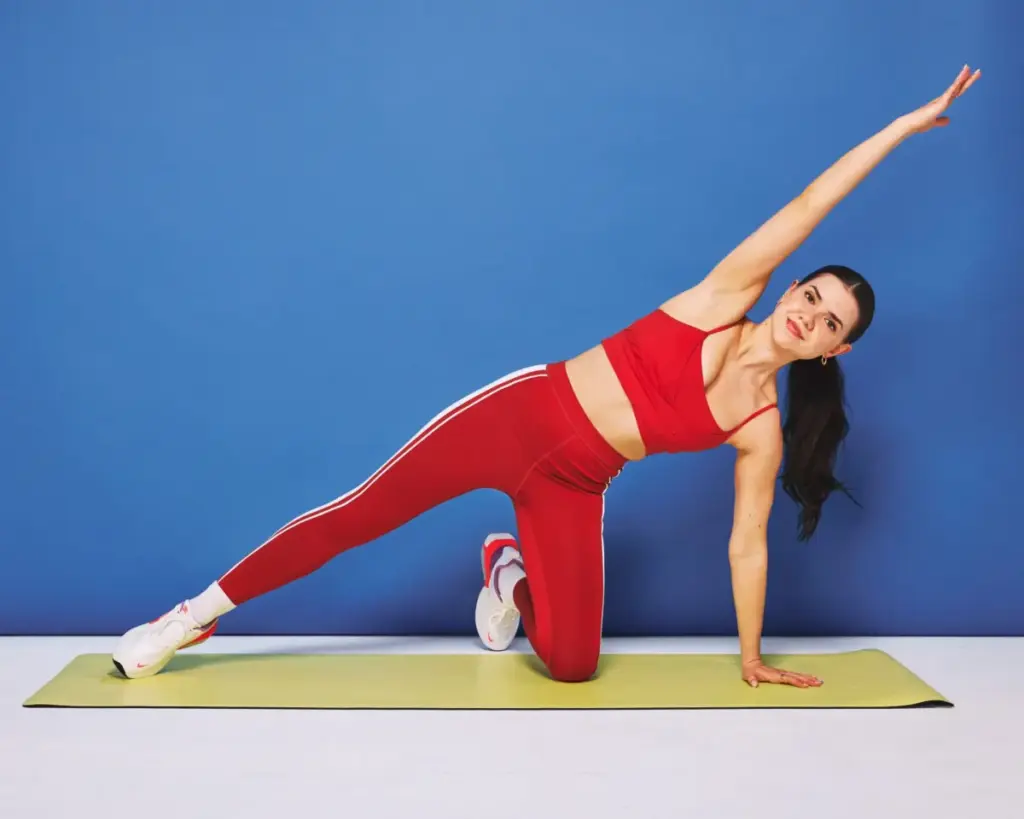
Planks are globally recognized as formidable tests of isometric core strength. However, when dynamic elements are layered into a plank framework, the movement transforms into a potent cardiovascular stimulus.

- Adding alternating shoulder taps increases the upper-body and stabilizing core challenge.
- Weaving in twisting knee drives fires up the obliques.
- Walking sideways in a plank position tests multi-directional stability.
Because these variations require continuous stabilization from the shoulders, core, hips, and upper back, multiple muscle systems fire concurrently. This sustained muscular tension demands a high volume of oxygen, effectively taxing the heart and lungs in the absence of external momentum or jumping.
Official Statements and Expert Insights
To gain a deeper clinical and practical understanding of low-impact conditioning, we turn to certified fitness professionals who specialize in functional movement and rehabilitation.

"Low-impact cardio exercises can be a smart choice for people with joint conditions or injuries, as well as folks who are new to working out," explains Cara Bonney, CSCS, CPT, a certified strength and conditioning specialist and Club Pilates Master Trainer in Melbourne, Florida.
Bonney emphasizes that the primary advantage of this training methodology is its ability to bypass the mechanical trauma associated with high-impact stress.

"That’s because they get your blood pumping without pounding your ankles, knees, hips, and back," Bonney notes. "That means they carry a lower risk of injury compared to high-impact activities like running, jumping, or other plyometrics and bounding. And that can allow you to be more consistent with your exercise routine if you’re dealing with certain limitations—say, cranky knees or a sensitive back—or just getting in the workout groove."
Beyond joint protection, Bonney highlights a frequently overlooked physiological benefit: bone density stimulation. There is a common misconception that in order to combat osteopenia or osteoporosis, exercise must involve violent, high-impact shocks. However, bone remodeling responds dynamically to mechanical loading and gravitational stress.

"Impact exercises are good for bone health, like preventing or improving osteoporosis, but it doesn’t always have to be high-impact," Bonney explains. "As long as you have some contact with the ground, you’re stressing your bones, which is ultimately what makes them stronger."
This positions low-impact ground exercises in a uniquely advantageous category. Compared to zero-impact modalities like stationary cycling or swimming—which, while excellent for cardiovascular health, provide minimal gravitational load-bearing stimulus—low-impact bodyweight exercises deliver crucial bone-boosting mechanical stress while shielding the joints from acute trauma.

Future Outlook: The Democratization of Fitness
As the global fitness demographic ages and awareness around long-term joint health grows, the future of cardiovascular training is shifting firmly toward intelligent, sustainable conditioning. The cultural narrative is permanently pivoting away from exhaustion-based metrics ("no pain, no gain") toward longevity-based performance markers.
The Integration of Smart Programming and Tempo Control
Future workout programming will increasingly rely on tempo and interval manipulation rather than raw mechanical impact to achieve cardiovascular conditioning. As Bonney highlights, two primary levers drive intensity in low-impact environments:

- Pace Acceleration: Increasing the speed at which an exercise is performed while maintaining pristine biomechanical form ensures continuous blood flow and sustained cardiovascular stress.
- Interval Density: Structuring workouts with extended work intervals and abbreviated rest periods creates metabolic stress and cardiovascular adaptations identical to traditional high-intensity protocols, minus the orthopedic cost.
Accessibility in Home and Clinical Settings
The rise of zero-equipment, low-impact cardio libraries democratizes fitness on a global scale. Individuals living in urban apartments with downstairs neighbors, older adults maintaining functional independence, and rehabilitation patients returning from surgery can all access rigorous cardiovascular training from their living rooms.
By dismantling the artificial barrier that equates heavy sweating and breathlessness with joint destruction, the fitness industry is entering a more inclusive era. The twenty-exercise low-impact bodyweight movement library serves as a blueprint for this new generation of training: a sustainable, empowering approach that proves physical exertion does not need to come at the expense of bodily longevity.

Conclusion
Low-impact cardio is no longer viewed as a passive alternative or a "lesser" workout for those unable to handle high-intensity training. Instead, it stands recognized as a sophisticated, highly effective methodology for building aerobic capacity, preserving joint health, and stimulating bone density. By capitalizing on compound muscle engagement, dynamic pacing, and intelligent movement modifications, practitioners can safely elevate their heart rates, challenge their respiratory systems, and build resilient, long-lasting physiques without ever leaving the floor.