Executive Overview
As the cultural phenomenon that is Big Brother prepares to fling open its iconic doors once more on ITV, audiences and casting directors alike inevitably find themselves casting an eye backward. Modern reality television is saturated with meticulously curated influencers, pre-planned brand deals, and scripted dramatic arcs. Yet, long before the era of Instagram algorithms and high-definition streaming, the golden age of British reality TV relied on raw, unfiltered human emotion captured in real-time under the unblinking gaze of live cameras.
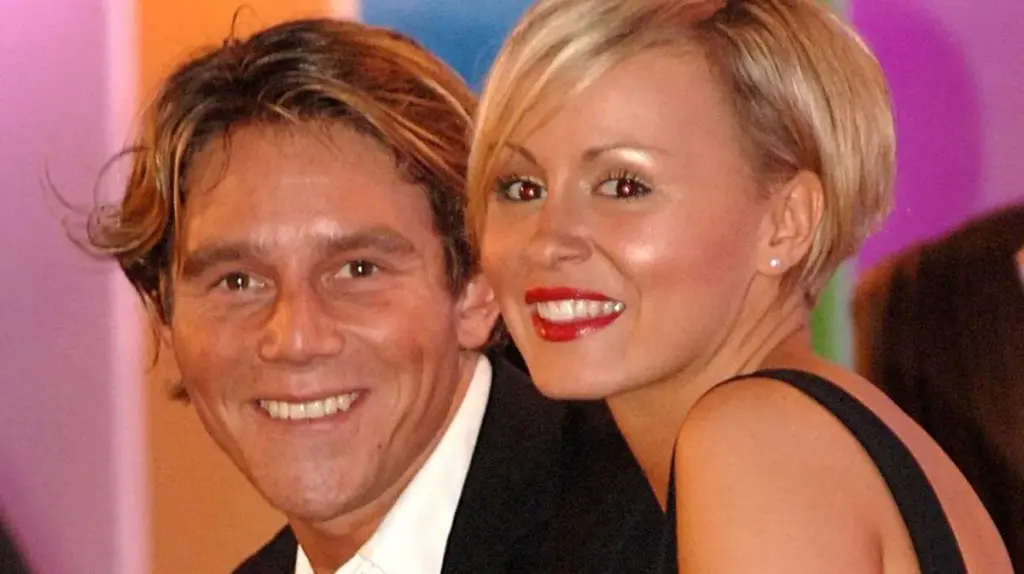
Few pairs encapsulate that chaotic, magnetic era quite like Chanelle Hayes and Zachariah “Ziggy” Lichman. Rising to prominence during the legendary eighth series of Big Brother on Channel 4 in May 2007—ultimately won by Brian Belo—the duo captured the public imagination in a way few other contestants ever managed. Instantly dubbed the "Posh and Becks" of the compound due to their striking aesthetic resemblance to David and Victoria Beckham, nineteen-year-old Chanelle and twenty-six-year-old former boyband singer Ziggy became the axis upon which the entire series spun.
What began as a playful, heavily scrutinized flirtation quickly snowballed into an all-consuming romance that dominated tabloid front pages, dinner table conversations, and watercooler debates across the United Kingdom. It was a relationship characterized by dizzying highs, catastrophic lows, clandestine rendezvous under the duvet, and a bitter, high-profile breakup that played out both inside and outside the fishbowl of the house.
Years later, the reverberations of their romance continue to fascinate pop culture historians. From long-held secrets finally brought to light to surprise television reunions and an unexpected enduring friendship, the saga of Chanelle and Ziggy remains a masterclass in the complexities of manufactured fame. This comprehensive retrospective explores the definitive chronology of their romance, the intense pressures of early-noughties tabloid stardom, and where the former reality stars stand today.
Detailed Chronology: From the Channel 4 Launch to the Ultimate Crash-Out
The 2007 Launch and the Ultimate Twist
When Channel 4 launched Big Brother 8 in May 2007, producers implemented a disruptive psychological twist right from the outset. In a departure from previous seasons, the initial intake of housemates consisted entirely of women. Among this pioneering all-female cohort was nineteen-year-old Chanelle Hayes, a Victoria Beckham lookalike whose ambition, youth, and distinct aesthetic immediately drew the attention of viewers. Alongside her were twins Amanda and Sam Marchant, controversial personality Charley Uchea, and Nicky Maxwell.
The social dynamic shifted dramatically on Day 3 with the arrival of the house’s first male contestant: twenty-six-year-old Zach “Ziggy” Lichman. A former member of the boyband Lexington and a man whose sharp jawline and styling drew immediate comparisons to David Beckham, Ziggy walked into a house dominated by women. The impact was instantaneous.
The Birth of "Posh and Becks"
Almost from the moment Ziggy crossed the threshold, a gravitational pull formed between him and Chanelle. Their pairing felt almost algorithmically engineered for the British tabloid press. Chanelle, with her pout, oversized sunglasses, and fierce dedication to glamour, mirrored Victoria Beckham at the peak of her pop-stardom, while Ziggy—confident, well-groomed, and harboring the polished charm of a boyband alumnus—played the Beckham counterpart with ease.
Viewers were granted a front-row seat to the unfolding dynamic, which rapidly escalated from flirtatious banter to intense, emotionally charged intimacy. However, the pressure cooker environment of the Big Brother house began to warp their fledgling connection. External opinions from fellow housemates, combined with the constant surveillance, stoked fires of paranoia and jealousy.
The relationship suffered its first major public fracture when Ziggy infamously attempted to let Chanelle down gently, deploying the ultimate cliché of romantic avoidance: "It’s not you, it’s me." The resulting emotional fallout provided Big Brother editors with some of the most compelling television of the decade, driving viewing figures sky-high and cementing the pair as household names.
The Voluntary Exit and the Outside World
Unable to cope with the mounting emotional strain and the daily friction of house life, Chanelle made the momentous decision to voluntarily walk from the house on Day 62. Her departure left a gaping void in the compound and devastated Ziggy, who remained inside to finish out his run. In a classic Big Brother twist, producers brought Chanelle back two weeks later as a mystery guest to participate in a housemate task, offering a fleeting, emotionally charged reunion before she was once again whisked away into the outside world.
When the cameras finally stopped rolling on the series and Ziggy emerged into the real world, the pair attempted to translate their on-screen chemistry into a lasting offline relationship. They reunited, embarking on a high-profile romance that courted relentless media attention. However, the foundations built under studio lights and artificial constraints proved fragile. Just six months after the series wrapped, the couple called it quits, officially bringing an end to the "Posh and Becks" era of reality television.
Supporting Context & Metrics: Uncovering the Truth Behind Closed Doors
Years of Denials and the 2014 Confession
For years following their split, the true nature of what transpired between the sheets inside the Big Brother house remained a subject of intense speculation. During the broadcast of the series, both Chanelle and Ziggy consistently downplayed the physical nature of their relationship, maintaining that their connection was primarily emotional and conversational, punctuated by heated arguments and dramatic reconciliations.
However, seven years after their season aired, the narrative underwent a seismic shift. In a remarkably candid 2014 interview with Now Magazine—coinciding with the release of her autobiography, Baring My Heart—Chanelle dropped a bombshell confession that shattered years of carefully maintained public image: they had secretly engaged in sexual activity on a daily basis for weeks while trapped inside the house.
"I fell madly in love. One thing led to another and yes, we had sex in the house—every day, in fact, for about three weeks," Chanelle confessed in 2014. "We did it in the shower and in bed—spooning quietly under the duvet.
"I know I’ve always denied that anything happened in Big Brother other than arguments and drama because I didn’t want to sound like the UK’s biggest slapper. But now we’ve got Geordie Shore and The Valleys, I feel totally OK being honest and saying we actually had sex every day for about three weeks. Sorry, not sorry!"
The revelation provided a stark look at the double standards female reality contestants faced during the mid-2000s compared to the hyper-explicit content of later reality television generations. Chanelle admitted that her initial denials were driven by a fear of intense misogynistic backlash from the tabloid press—a stark contrast to the modern reality television landscape where physical intimacy is frequently used as a primary engine for ratings.
Post-Show Trajectories and Career Paths
Following their time on the show, both individuals navigated the treacherous waters of post-reality fame in distinctly different ways.
- Chanelle Hayes: Leveraging her immense public profile, Chanelle forged a multi-faceted career in the entertainment industry. She established herself as a sought-after glamour and fashion model, released a pop single, launched her own signature perfume, and penned her aforementioned 2014 tell-all memoir. Beyond her commercial ventures, Chanelle transitioned into family life, welcoming her first son, Blakely, with ex-partner Matthew Bates, and later finding lasting marital happiness with Ryan Oates, whom she married in 2024 and with whom she shares her second son, Frankie.
- Ziggy Lichman: Capitalizing on his newfound celebrity status, Ziggy pivoted toward entrepreneurial and philanthropic endeavors. He teamed up with Emily in Paris star Lucien Laviscount to open two successful bars in London’s Kensal Rise. Furthermore, Ziggy utilized his platform for social good, fronting a high-profile homelessness awareness campaign to draw attention to urban poverty in the capital.
Official Statements: The Loose Women Confrontation & Modern Reflection
Despite their messy breakup and allegations of being "ghosted" in the immediate aftermath of the show, time has a unique way of softening the sharpest edges of reality TV trauma. This was never more evident than in 2018, when fans across the nation experienced a wave of pure nostalgia as Chanelle and Ziggy came face-to-face for the first time in years during a joint appearance on ITV’s daytime talk show Loose Women.
Sitting across from one another on live television, the former couple engaged in a remarkably mature post-mortem of their whirlwind romance.
"I have no doubt we were in love," Ziggy declared on the programme, reflecting on the genuine intensity of their feelings during the scorching summer of 2007.
Chanelle offered a balanced, deeply analytical perspective on why their relationship ultimately imploded under the weight of external interference:
"I don’t think even we knew if we were on or off. We had people in our ears telling us different things. Pushing us together, plotting to split us up."
When pressed by the panel on whether they could have made the relationship work under normal circumstances, Chanelle offered a nuanced appraisal:
"If we met in different circumstances perhaps, but I would still have been a fish out of water down in London."
Further cementing the thawing of their decades-long estrangement, Chanelle revealed in a 2020 interview with The Sun that Ziggy remains the sole survivor of her Big Brother social circle—the only housemate from that historic summer with whom she maintains a line of communication.
"Yeah, we’ll chat every now and again. I don’t talk to anybody else from the show really," she shared, before offering a humorous nod to the sheer psychological weight of their time in the spotlight. "I don’t think we could watch [our series again]—we’d probably get PTSD flashbacks."
Future Outlook: The Enduring Blueprint of Reality Romances
As the cultural landscape prepares to welcome a new generation of contestants into the most scrutinized home in Britain, the legacy of Chanelle Hayes and Ziggy Lichman serves as both a blueprint and a cautionary tale. In an era where reality television is frequently criticized for being over-produced, hyper-calculated, and devoid of genuine stakes, the chaotic, unscripted reality of 2007 remains a watershed moment in British broadcasting history.
The "Posh and Becks" of Big Brother 8 proved that genuine human vulnerability—complete with all its flaws, youthful misjudgments, defensive denials, and eventual reconciliation—holds an eternal fascination for the viewing public. While modern contestants enter the house armed with public relations teams, social media strategies, and crisis management plans, Chanelle and Ziggy stumbled blindly into an unprecedented storm of fame, emerging bruised, battered, but ultimately resilient.
Today, as mothers, fathers, entrepreneurs, and mature adults, their modern lives bear little resemblance to the twenty-something starlets who gazed into each other’s eyes under a duvet on Channel 4 nearly two decades ago. Yet, whenever the conversation turns to the greatest romances in the history of British reality television, the names Chanelle and Ziggy will forever occupy a legendary status—a glittering, messy reminder of a bygone era when television was appointment viewing and reality stars were born overnight.