Executive Overview
As the war in Ukraine grinds relentlessly through its fourth grueling year, the security architecture of the West faces its most profound stress test since the Cold War. Recent intelligence disclosures and stark warnings from high-ranking Western officials indicate that the threat envelope involving the Russian Federation is expanding well beyond the borders of Eastern Europe. US Ambassador to NATO Matt Whitaker has issued a sobering call to action, urging member states of the 32-nation alliance to prepare vigorously for a potential Russian strike on sovereign allied territory.
This urgent posture is catalyzed by alarming leaks from classified intelligence assessments, highlighted notably by reports in the Wall Street Journal, suggesting that Moscow’s military rejuvenation and industrial mobilization could enable President Vladimir Putin to launch a limited conventional incursion, territorial land grab, or devastating cyber onslaught against a NATO member state much sooner than previously anticipated. Traditional Western models once estimated a 10-to-15-year recovery window for the Russian armed forces following their catastrophic losses in Ukraine. Today, those timelines have been radically compressed.
Simultaneously, bilateral tensions between Moscow and London have reached a boiling point. Following the United Kingdom’s robust military assistance to Kyiv—culminating in the sharing of advanced technical blueprints for the Storm Shadow cruise missile system—the Kremlin has intensified its belligerent rhetoric. Russian state actors have openly branded the UK an "accomplice and co-perpetrator" in ongoing operations, while President Putin himself issued a chillingly evasive "military secret" response when directly asked whether British military infrastructure is in the crosshairs of Russian targeting matrices.
As the Kremlin pivots its national economy entirely toward a wartime footing, NATO is scrambling to match this industrial output, forcing a historic re-evaluation of defense spending, collective readiness, and the true threshold of Article 5 deterrence.
Detailed Chronology of Escalation
The Intelligence Shift and the Compression of Timelines
The foundational baseline of Western strategic planning has historically relied on the assumption that a degraded Russian military would require over a decade to reconstitute its armored divisions, long-range precision strike capabilities, and command structures after the attrition suffered in Ukraine. However, classified intelligence reports emerging in late 2025 and accelerating through September 2026 have shattered these assumptions.
According to these leaked assessments, the Russian defense industrial base has achieved hyper-acceleration, fueled by state-directed economic overhauls, the clandestine procurement of dual-use technologies, and robust supply chain workarounds orchestrated with foreign partners. Consequently, intelligence agencies now warn that Putin could possess the operational bandwidth to execute a "limited-scope" provocation against NATO’s eastern flank or strategic partners well before the end of the decade. These potential actions span a grim spectrum: targeted cyber warfare capable of crippling critical national infrastructure, localized maritime blockades, sabotage of undersea data cables, or a rapid, limited-land incursion designed to test the political cohesion of the alliance.
The UK-Russia Flashpoint: Storm Shadows and Direct Threats
The friction between London and Moscow has intensified sharply over the deployment and technological transfer of deep-strike capabilities. Throughout the summer of 2025 and into 2026, the United Kingdom has remained one of Kyiv’s staunchest military benefactors, supplying sophisticated weaponry, intelligence, and operational training.

The crisis deepened exponentially when reports confirmed the UK had provided Ukraine with technical specifications and operational blueprints for the Storm Shadow air-launched cruise missile, enabling Ukrainian forces to maximize the standoff precision of strikes against high-value Russian military logistics hubs far behind the front lines.
In late August 2025, the Russian Embassy in London issued an inflammatory diplomatic communiqué, explicitly accusing the British government of crossing a definitive Rubicon. The statement asserted that London had transformed from a passive supporter into an active "accomplice and co-perpetrator" of attacks on Russian sovereign territory, charging British leadership with "deliberately opting for an escalation" of the global crisis.
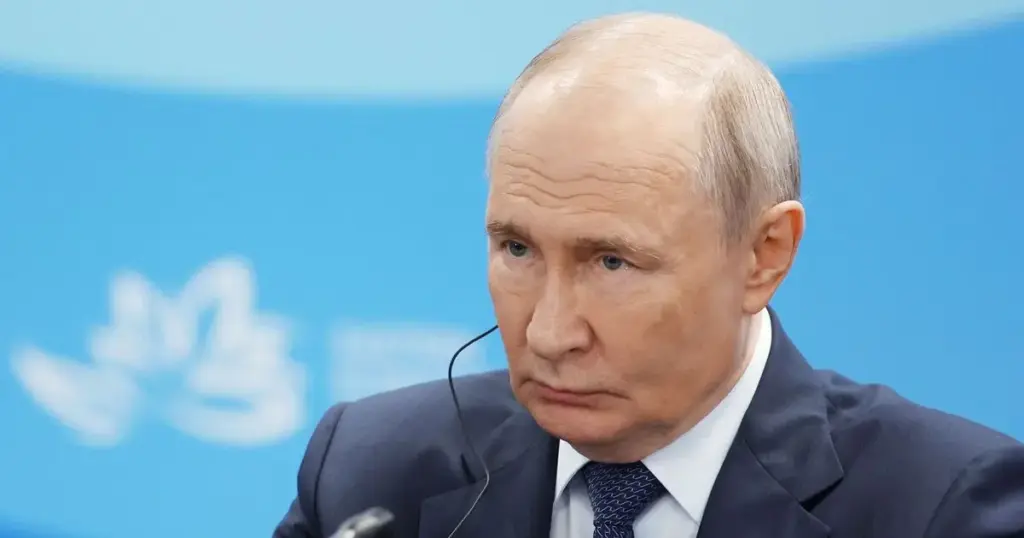
The rhetorical escalation culminated in early September 2026 during a high-profile press conference, when President Vladimir Putin was directly queried by international media on whether the Kremlin was actively weighing retaliatory military strikes against British military installations on UK soil. Putin’s refusal to deny the allegation—cynically dismissing the query as a classified "military secret" while offering no further calming reassurance—was widely interpreted by security analysts as an intentional psychological operation designed to keep London off-balance and deter further transfers of advanced missile technology.
Supporting Context & Metrics
The Asymmetry of Industrial Capacities
A critical analytical theme driving Western anxiety is the stark divergence between the economic models of Russia and the NATO alliance. While Western economies have largely maintained peacetime fiscal policies—relying on complex, drawn-out commercial procurement cycles to replenish depleted munitions stockpiles—the Russian Federation has undergone a total structural transformation.
- Wartime GDP Allocation: Russia has transitioned nearly a third of its federal budget into military and security outlays, shifting heavy manufacturing plants to a 24/7 operational rhythm.
- Shell and Missile Production: Despite sweeping international sanctions, Moscow has managed to scale up artillery shell manufacturing—surpassing Western output velocity in standard calibers—and continuously replenishes its inventories of Kalibr, Iskander, and Kh-101 cruise missiles.
- Manpower Regeneration: Through systematic conscription drives and lucrative contract-soldier incentives, the Russian Ministry of Defense has successfully absorbed hundreds of thousands of casualties while maintaining a steady operational reserve.
NATO’s Fiscal and Operational Pivot
Recognizing the widening capability gap, NATO leadership has undertaken radical budgetary reforms. During the landmark defense summits, allied nations finalized an ambitious agreement to aggressively overhaul their financial commitments. Under the revised guidelines, member states have committed to allocating up to 5 percent of their annual Gross Domestic Product (GDP) toward national defense by the year 2035, with a strict baseline floor mandating that at least 3.5 percent must be dedicated to core military capabilities and force modernization.
This historic funding surge is designed to correct decades of post-Cold War underinvestment, expand munition stockpiles, upgrade integrated air and missile defense networks, and ensure rapid-reinforcement corridors across Europe are fully operational and heavily fortified.
Official Statements & Diplomatic Positions
The public messaging emanating from Washington, Brussels, and Moscow underscores the high-stakes chess match currently defining international security.

-
US Ambassador to NATO, Matt Whitaker:
In a hard-hitting interview with national media, Whitaker addressed the pervasive anxiety surrounding potential Russian aggression. Emphasizing the unpredictability of the Kremlin, Whitaker stated:"You can’t predict what Vladimir Putin’s going to do or any adversary. All you can do is be prepared for it and deter and make it not worth their time to make that move… And I think we are preparing every single day to prevent that from happening, and if it does happen, to be ready for it."
Highlighting the imperative of active deterrence, Whitaker added: "We need to exercise, as it matters. We need to prepare, we need to invest in capabilities." -
The Kremlin’s Stance:
Through official state agency channels and diplomatic notes, Moscow maintains that NATO’s continuous expansion eastward and its robust military assistance to Ukraine constitute an existential threat to Russian security. The Kremlin frames Western arms transfers—such as missile blueprints and heavy armor—not as defensive aid, but as active participation in the conflict, thereby reserving what it terms "all necessary asymmetric options" to respond. -
UK Ministry of Defence (MoD) Response:
While British officials have repeatedly declined to comment on specific operational threats or intelligence leaks, Downing Street has remained steadfast in its commitment to Ukraine. Defense ministers have asserted that the UK will not be cowed by nuclear saber-rattling or veiled military threats from Moscow, emphasizing that sovereign nations retain the inherent right under international law to assist victims of unprovoked aggression.
Future Outlook and Strategic Implications
As the geopolitical landscape stretches toward the mid-2020s, the trajectory of European security hangs in a delicate balance. The immediate future will likely be characterized by an intensification of sub-conventional warfare—frequent cyber attacks, targeted infrastructure sabotage, and aggressive electronic jamming across the Baltic and North Sea corridors—even if a direct, full-scale conventional invasion of a NATO state remains deterred by the alliance’s Article 5 collective defense pledge.
For the United Kingdom, the growing hostility from Moscow signals a permanent end to post-Cold War detente. British defense planners are accelerating investments in long-range counter-strike capabilities, integrated air defenses, and cyber resilience to neutralize potential asymmetric reprisals.
Ultimately, the warnings articulated by Ambassador Matt Whitaker serve as a stark reality check for Western populations. The era of the "peace dividend" is definitively over. As Russia militarizes its society for a protracted struggle against the democratic West, NATO’s ultimate survival will depend entirely on the speed, scale, and steadfastness with which it implements its historic defense spending pledges and restores its deterrence posture.