Executive Overview
When Eric Goode burst onto the global consciousness with the Netflix juggernaut Tiger King, he exposed a subculture defined by eccentricity, lawlessness, and the grim realities of the exotic animal trade. Yet, with his latest five-part HBO docuseries, Monsters of God, Goode dives even deeper into a shadowy, high-stakes underworld: the global reptile smuggling rings that traffic in some of the rarest, most endangered cold-blooded species on Earth.
The climax of the series, which premiered its fifth and final episode on HBO, delivers a narrative twist so startling it threatens to overshadow the extensive investigative work that preceded it. Beyond tracking down international kingpins through lax jurisdictions and corrupt bureaucracies, the docuseries trains its lens on a jarring domestic reality. In its closing scenes, Monsters of God exposes Ken McCloud—a retired special agent for the U.S. Fish and Wildlife Service who dedicated his career to hunting down wildlife traffickers—harboring one of the world’s rarest and most critically endangered reptiles inside a grubby living room terrarium.
This revelation bridges the gap between high-level international crime and localized psychological compulsion, blurring the traditional boundaries that separate the enforcers of the law from the perpetrators of wildlife trafficking. For Goode, an internationally renowned turtle conservationist and founder of the Turtle Conservancy, the confrontation is not merely a journalistic coup; it is a deeply personal crusade against the illicit collection of creatures hanging by a thread of extinction.
Detailed Chronology: Unraveling the Web of ‘Monsters of God’
Mapping the Underworld
From its inception, Monsters of God promised an unvarnished look at the multi-billion-dollar global trade in exotic reptiles. Over the course of the first four episodes, Goode and his production team systematically unspooled the complex supply chains that sustain this illicit economy. The series documents the pipeline from wild extraction points in remote jungles to affluent private collectors, struggling legitimate zoos, and complicit regulatory bodies.
Goode’s investigative methodology relies on patience, immersion, and acute psychological observation. By gaining the trust of various cogs in the machine—dealers, middlemen, and compromised bureaucrats—the series paints a comprehensive portrait of an industry driven by immense profit margins, minimal regulatory oversight, and widespread jurisdictional blind spots.
The Ascent to the Mountain Fortress
The culmination of this investigative journey arrives in the fifth and final episode, where Goode achieves what law enforcement agencies have spent decades attempting: a face-to-face encounter with Anson Wong. Widely dubbed the "Pablo Escobar of animal trafficking," Wong operated a massive, lucrative wildlife smuggling enterprise out of Malaysia for years. Capitalizing on porous borders, lax domestic wildlife protection statutes, and officials susceptible to bribery, Wong built an empire on the systematic plunder of rare fauna.
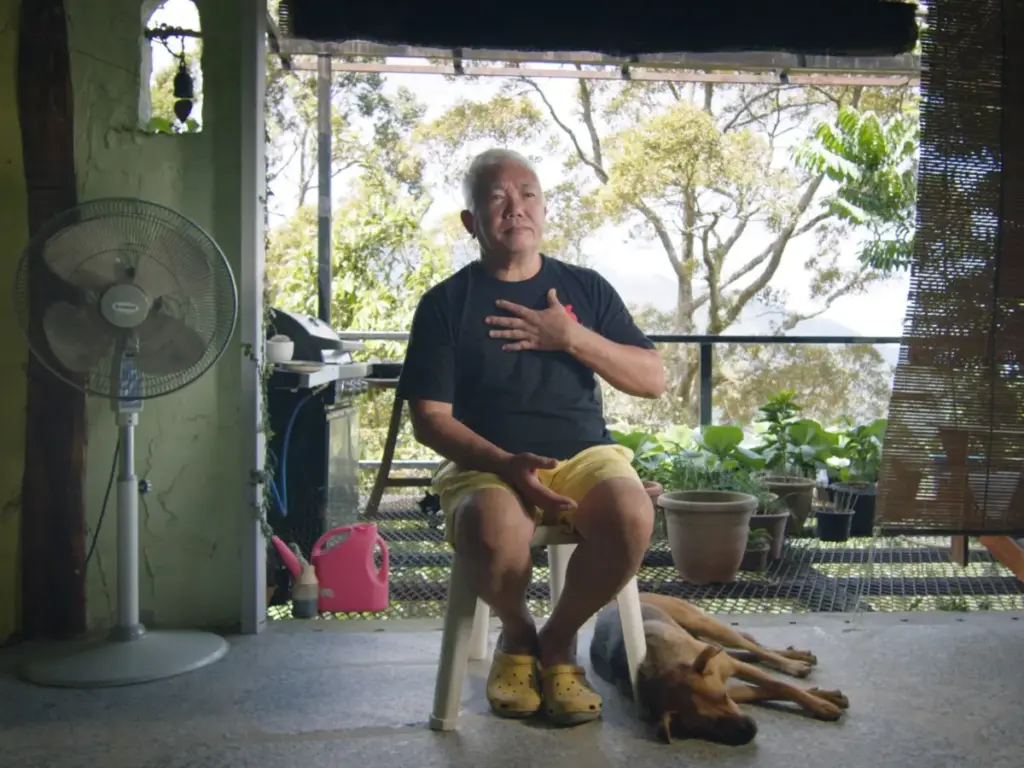
Rather than conducting a sterile, distant interview, Goode traveled directly to Wong’s heavily fortified mountain compound in Penang, Malaysia. There, the investigator and the notorious kingpin engaged in a surprisingly chummy, surreal conversation regarding the logistics of an illegal global empire.
Reflecting on the harrowing encounter in an interview with Variety, Goode admitted to the visceral terror of the assignment. "I was definitely fearful the day before meeting him and wondering how this was going to play out," Goode recalled. "Sometimes I wonder if I’m just being stupid. It’s not that I’m brave by any stretch, but you just feel it out. I don’t know if it’s the most nervous I’ve been, but it’s certainly up there."
The Ultimate Twist: The Enforcer’s Secret
While securing an audience with an international fugitive of Wong’s stature would serve as a fitting climax for most investigative series, Monsters of God saves its most shocking revelation for the aftermath of Goode’s return to the United States.

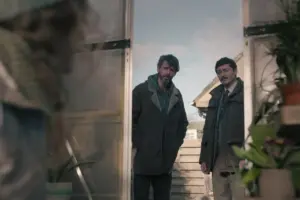
The docuseries pivots from the steamy jungles of Southeast Asia to the quiet, suburban domesticity of Ken McCloud, a former U.S. Fish and Wildlife Service special agent. McCloud had built a formidable reputation as an indefatigable investigator, spending decades attempting to dismantle the very networks Goode was exploring. Yet, the final moments of the series expose a glaring hypocrisy: McCloud has been keeping a ploughshare tortoise—widely recognized as the most endangered tortoise species on the planet, with an estimated global wild population of roughly 100 individuals—confined within his home.
Because McCloud had grown increasingly hostile and protective over his prized possession—at one point greeting Goode with a drawn firearm during a previous visit—Goode was forced to deploy a hidden camera to document the animal’s living conditions. The resulting footage captured the critically endangered creature languishing inside a rudimentary, sub-optimal terrarium nestled within the living room of McCloud and his wife, Rose.
Supporting Context & Metrics: The Plight of the Ploughshare Tortoise
To fully comprehend the gravity of McCloud’s clandestine possession, one must understand the ecological precipice upon which the ploughshare tortoise (Astrochelys yniphora), also known as the angonoka, currently stands.
Conservation Metrics
- Wild Population: Conservation biologists estimate that fewer than 100 mature ploughshare tortoises remain alive in their native habitat.
- Geographic Distribution: Endemic exclusively to a small, isolated region of northwestern Madagascar, primarily around the Baly Bay National Park.
- Threat Factors: Highly coveted by international collectors due to its striking, domed golden-and-black shell, the species has been decimated by rampant poaching for the illegal pet trade, habitat degradation, and recurring wildfires.
- Legal Protections: Listed under Appendix I of the Convention on International Trade in Endangered Species of Wild Fauna and Flora (CITES), meaning commercial international trade is strictly prohibited except under exceptional, non-commercial circumstances.
Goode’s Conservation Legacy
The discovery strikes at the core of Eric Goode’s life’s work. Beyond his contributions to documentary filmmaking, Goode is a preeminent turtle and tortoise conservationist. As the founder of the Turtle Conservancy, his nonprofit organization has successfully protected 65 distinct turtle species and preserved over 70,000 acres of critical wildlife habitat worldwide. Furthermore, Goode serves as the official U.S. Studbook Keeper for all accredited American zoos regarding ploughshare tortoises, placing him in the unique administrative position of tracking every single individual of the species housed legally outside of Madagascar.
For Goode, the presence of a ploughshare tortoise in a suburban living room terrarium represents an acute conservation emergency. The ultimate goal for any surviving specimen outside the wild—particularly those rescued from illegal channels—is integration into coordinated, professional breeding colonies designed to bolster the species’ dwindling genetic diversity and stave off functional extinction. In solitary confinement in a domestic home, the animal is rendered entirely useless to global recovery efforts.
Official Statements and Psychological Analysis
The psychological profile of Ken McCloud presented in Monsters of God opens a disturbing window into the behavioral patterns of law enforcement personnel embedded within specialized, illicit trades. Goode draws a direct parallel to the dynamics of substance abuse enforcement.
"He used to work for a reptile dealer in L.A., so he just so happened to end up on the other side of the fence in law enforcement, but he could have ended up on a different side of the fence," Goode observed. "He has the fever, or the addiction, if you want to use a drug analogy, so he knew that he wanted those animals. And even though he was taking them from people that brought them in, he loved that he got to be the guy who kept them. It’s like the DEA agent who becomes an addict. There’s some weird psychological stuff going on there."
This addiction dynamic manifested in extreme paranoia. According to Goode, McCloud’s obsession with the animal intensified over the years. Rather than allowing the critically endangered reptile access to natural sunlight or secure outdoor enclosures, McCloud kept it strictly indoors out of a paralyzing fear of theft. The creature’s immense black market value—driven by extreme rarity—transformed it into a liability that consumed its captor.
"I didn’t know he was trying to keep it a secret," Goode noted. "He was very paranoid about theft, and didn’t even want to put the tortoise outside in his backyard because he was so worried that someone might steal it, since it’s so valuable. He got increasingly paranoid and that tortoise became more and more important to him, almost like his only child."

The ethical and legal implications of the discovery remain a central point of contention for the filmmaker. Goode highlights the stark double standard applied to law enforcement figures who cross ethical boundaries.
"It’s sad," Goode reflected. "I asked him, ‘What separates the prisoner from the prison guard?’ and about the ethics of keeping that animal in solitary confinement by itself, and tried to convince him that that wasn’t the best place for that tortoise."
He added, expressing ongoing frustration with institutional responses: "I would think that the government would want to do something about it. If you were an ex-DEA agent who had a garage full of cocaine after you retired, you might think, ‘Hey, we’ve gotta do something about this ex-DEA agent!!’ I’m still talking to people in the government about what to do about that."
Future Outlook: Accountability and Conservation Recovery
As the dust settles on the release of Monsters of God, the fallout from its concluding episodes extends far beyond the realm of television ratings and critical acclaim. The documentary has inadvertently catalyzed a high-level administrative and legal dilemma regarding federal accountability and the recovery of stolen wildlife assets.
Regulatory Interventions
Legal experts and environmental NGOs are increasingly applying pressure on federal agencies to investigate the disclosures made in the docuseries. While McCloud is retired, the possession of CITES Appendix I species—particularly one obtained or retained outside official legal channels during or after active federal service—constitutes a severe violation of both domestic and international conservation statutes, notably the Endangered Species Act and the Lacey Act.
The Path Forward for the Tortoise
For conservationists like Goode, the immediate priority remains the welfare of the ploughshare tortoise itself. Efforts are actively underway through diplomatic and conservation channels to negotiate the surrender of the animal from McCloud’s custody. If successful, the tortoise is slated to be transferred into a certified, highly secure breeding facility participating in the global Species Survival Plan (SSP), where it can be paired with conspecifics to contribute to the long-term demographic recovery of the species.
The Broader Impact of Monsters of God
Ultimately, Monsters of God transcends the traditional true-crime genre by shifting the diagnostic gaze from overt criminals to the intricate, often morally compromised systems designed to police them. By exposing how the allure of rare wildlife can captivate even those sworn to protect it, Eric Goode has delivered a masterclass in investigative journalism—one that forces audiences to confront the uncomfortable reality that the guardians of the natural world are sometimes infected by the very sickness they seek to cure.