For over a decade, the cultural fault lines of digital style have been neatly drawn across the crown of the head. On one side stand Generation Z, staunchly advocating for the geometric symmetry of the middle part; on the other, the steadfast millennials clinging to the effortless, voluminous sweep of the deep side part. This generational aesthetic proxy war has played out across TikTok, Instagram, and red carpets worldwide. Yet, style paradigms are rarely immutable.
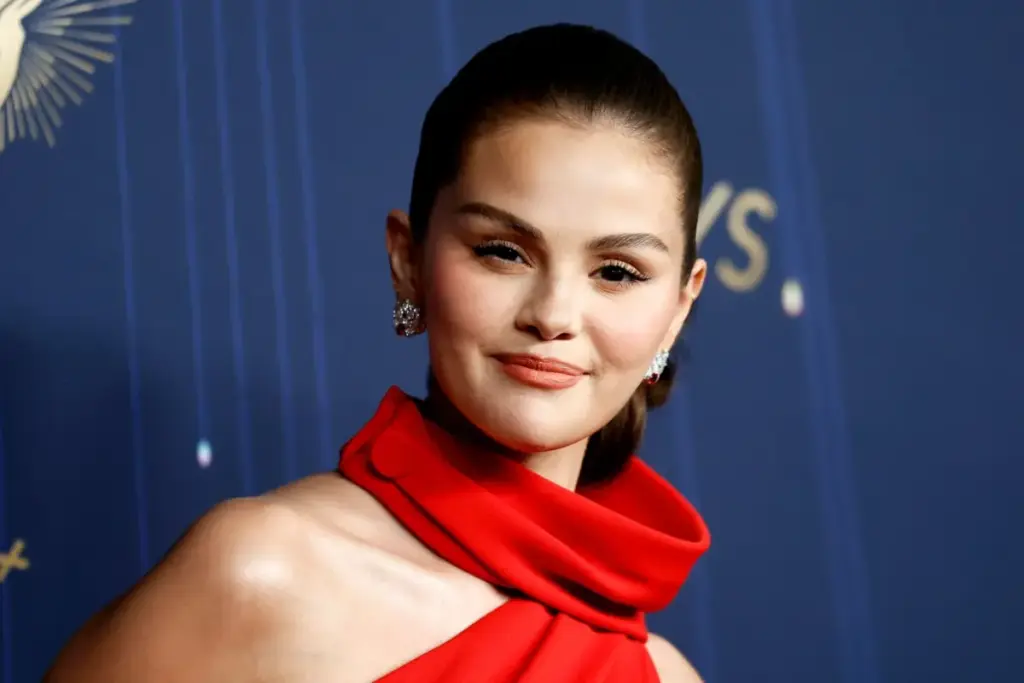
Enter Selena Gomez—a quintessential millennial born in 1992—stepping onto the streets of New York City on September 17, sporting a look that sent shockwaves through beauty circles. Styled by renowned celebrity hairstylist Renato Campora, Gomez debuted a razor-sharp, mathematically precise middle part anchoring a sleek, ’60s-mod-inspired blowout. Complete with curled-under ends and tucked-back front sections, the look was an exercise in sophisticated, business-chic minimalism.
This deep dive examines the broader cultural, psychological, and historical implications of Gomez’s stylistic pivot. Beyond merely analyzing a celebrity hair transformation, this report investigates the enduring psychology of hair partings, the mechanics of modern retro styling, the business acumen behind Gomez’s public appearances, and why this specific aesthetic moment signals a thawing of the generational beauty cold war.
Detailed Chronology: The New York City Style Offensive
September 16: The Tribeca Bombshell Preview
The groundwork for Gomez’s style transition was laid 24 hours prior to her official speaking engagement. Walking through the cobbled streets of Tribeca in lower Manhattan, Gomez was spotted by paparazzi testing the waters of a high-volume aesthetic.
Rejecting the sleek, flat styling of the subsequent day, her hair—which has recently transitioned into a lush, enviable long-length phase—was styled into a full, cascading bombshell blowout. Crucially, however, the root origin of this voluminous style was not the familiar lateral sweep characteristic of millennial styling, but a stark, uncompromising center part.
Industry insiders immediately took note. The juxtaposition of a high-octane, voluminous blowout with a severe middle part offered a hybrid aesthetic: the youthful, contemporary symmetry favored by Gen Z combined with the rich, glamorous texture traditionally associated with millennial styling.
September 17: The Fast Company Innovation Festival Appearance
The definitive style statement arrived the following day. Stepping out to speak on a high-profile panel regarding her billion-dollar beauty empire, Rare Beauty, at the Fast Company Innovation Festival, Gomez solidified her commitment to the center part.
Collaborating once more with master stylist Renato Campora, Gomez’s look shifted from casual Tribeca cool to boardroom-ready authority. The execution was masterclass-level precision:
The Parting: A razor-straight center line tracing from the forehead to the crown, executed with such mathematical exactness that it divided her face into perfect symmetrical halves.
The Sides: Rather than retaining full volume at the temples, the hair flanking the face was smoothed down almost flat, with the front sections tucked cleanly behind each ear to elongate the neck and frame her features.
The Lengths and Ends: The mid-lengths and ends were treated to a smooth, retro blowout featuring a distinct, intentional curved-under sweep. This nod to 1960s mod culture added tactile movement and kinetic energy to the look, preventing the style from appearing overly severe or dated.
The look was instantly codified by fashion critics as "business-chic," marrying corporate professionalism with retro-futuristic styling cues.
Supporting Context & Metrics: The Great Generational Part Debate
To understand the weight of Gomez’s stylistic shift, one must analyze the socio-cultural mechanics of the hair-parting wars that have defined 2020s pop culture.
The Generational Divide
The hair part has evolved far beyond a functional mechanism for managing tresses; it has become a tribal marker.
The Millennial Side Part: Born out of the late-2000s indie-sleaze and 2010s tumblr-era aesthetics, the side part offers facial contouring through asymmetry. It softens strong jaws, creates artificial volume at the crown, and carries deep sentimental value for a generation that grew up watching side-swept bangs dominate adolescent media.
The Gen Z Middle Part: Championed heavily on TikTok around 2020, Gen Z famously declared the side part "out of style," associating it with aging, over-styling, and an adherence to rigid corporate norms. The middle part, by contrast, is viewed as fresh, unpretentious, and structurally balanced.
The Psychology of Parting
Stylists and behavioral psychologists note that changing a hair part is the lowest-risk, highest-impact transformation an individual can make. A shift in the part alters how light hits the face, modifies perceived facial symmetry, and can even signal an internal psychological shift—a desire for reinvention or a willingness to break personal habits.
For millennials like Gomez, who have spent decades training their hair follicles to fall heavily to one side, adopting a center part requires physical and psychological retraining. Hair develops a "growth memory," meaning a sudden, unyielding center part fights against natural tension and cowlicks. Overcoming this physical resistance requires targeted heat styling, setting products, and structural pinning—all of which Campora expertly executed for Gomez’s New York run.
Official Statements & Expert Analysis
While Gomez herself has largely let her hair speak for its performance, industry authorities and beauty historians have weighed in heavily on the implications of her look.
Renato Campora on the Vision
Though detailed technical breakdowns from Campora remain exclusive to select editorial features, the architectural blueprint of the hairstyle speaks volumes about contemporary hair engineering.
"When working with a clean, centered axis, the margin for error is zero," notes master editorial stylist Marcus Vance. "If a middle part is even two millimeters off-center, the entire geometric balance of a sleek blowout collapses. Campora achieved a level of structural precision that elevates a simple retro reference into high-fashion architecture."
Cultural Reception and the "Rare Beauty" Synergy
Gomez’s appearance was explicitly tied to her role as founder and entrepreneur behind Rare Beauty. Industry analysts point out that visual branding during corporate appearances is rarely accidental.
Transitioning from the approachable, bohemian waves of her casual outings to the sleek, authoritative, ’60s-inspired mod blowout served a dual purpose:
It underscored her evolution from pop-culture icon to serious corporate titan.
It visually reinforced the clean, modern, and accessible ethos of the Rare Beauty brand.
By shedding the defensive, face-hiding comfort blanket of the traditional side part and opening her face entirely to the public gaze via a precise center parting, Gomez projected absolute confidence and transparency—qualities intrinsic to her brand’s mission of mental health advocacy and authentic self-expression.
Future Outlook: The Death of the Part Monoculture?
As we look toward the upcoming beauty and fashion cycles, Selena Gomez’s high-profile embrace of the center-part blowout signals a larger trend: the dissolution of rigid generational beauty rules.
For years, adherence to either the side part or the middle part functioned as an unwritten badge of generational allegiance. Cross-pollination—millennials wearing middle parts or Gen Z experimenting with deep side sweeps—was viewed with ironic detachment or digital derision. However, as icons like Gomez seamlessly bridge these worlds, the beauty landscape is moving toward a more fluid, agnostic approach to personal grooming.
What This Means for Consumers
Versatility Over Dogma: Consumers are increasingly realizing that face shape, hair density, and personal wardrobe choices should dictate parting style, rather than arbitrary internet decrees.
The Rise of Retro-Modern Hybrids: The success of Gomez’s ’60s mod blowout points to a broader appetite for historical hair silhouettes executed with modern, lightweight product formulations. Heavy lacquers are out; glossy, touchable movement is in.
The Longevity of Long Hair: Gomez’s transition away from signature bobs toward rich, cascading long hair—styled with intentionality—proves that long hair does not have to look unkempt or default to beach waves. Structured styling is returning to the forefront.
Conclusion
Selena Gomez’s New York style offensive was much more than a routine celebrity sighting; it was a masterclass in aesthetic evolution. By trading her comfort zone for a razor-sharp, retro-modern middle part, she has successfully challenged the millennial side-part monopoly while proving that versatility is the ultimate luxury. As the seasons shift and beauty trends continue to cycle at breakneck speed, one thing is certain: the middle part is no longer just Gen Z’s territory—it is officially open to all.