Executive Overview
As the scorching days of late August yield to the crisp, amber-tinted embrace of September, an unspoken yet powerful cultural migration takes place across the globe. Millions of streaming accounts flick to life, greeted by the iconic acoustic strumming of Carole King’s "Where You Lead." The destination is always the same: Stars Hollow, the fictional Connecticut hamlet where the coffee flows endlessly, the town meetings are delightfully chaotic, and the leaves are perpetually on the verge of falling.
For nearly two decades since its initial television run concluded, Gilmore Girls has transcended its status as a mere noughties dramedy to become an entrenched seasonal institution. Much like Mariah Carey’s ubiquity in December or festive pumpkin spice lattes in October, the Amy Sherman-Palladino creation has become synonymous with autumn. This phenomenon is not merely an anecdotal observation by nostalgic millennials; it is a measurable statistical spike. Data reveals that streaming metrics for the series surge by upwards of 46% during the final four months of the year compared to the January-to-August baseline.
Yet, this collective ritual begs a compelling psychological and cultural question: Why do millions of viewers, possessing diverse contemporary television tastes and consuming millions of hours of new prestige media, instinctively return to a show they already know inside and out? To untangle this modern cultural phenomenon, we must examine the intersection of seasonal psychology, trauma-informed viewing habits, and the deep-seated human need for "low-effort belonging" in an increasingly turbulent world.
Detailed Chronology: The Evolution of a Cultural Anchor
To understand how Gilmore Girls captured the collective autumn consciousness, it is essential to trace the journey of the show from a niche WB/CW network darling to a global streaming behemoth.
Phase 1: The Broadcast Era (2000–2007)
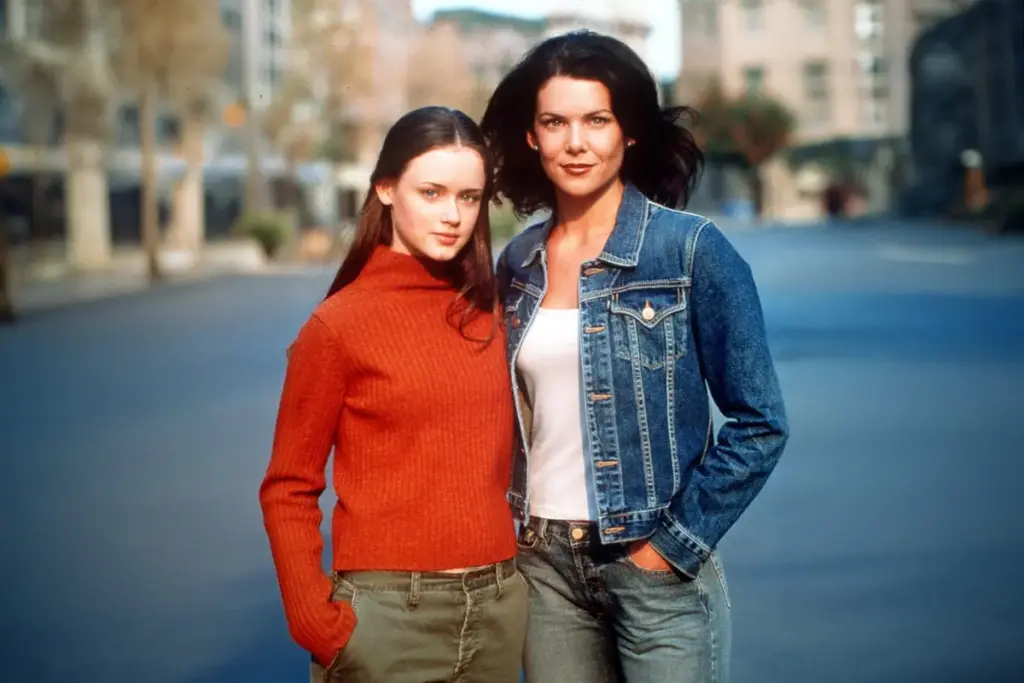
When Gilmore Girls first premiered on October 4, 2000, television was dominated by gritty procedurals, high-concept sci-fi, and traditional multi-cam sitcoms. Created by Amy Sherman-Palladino, the series stood out due to its lightning-fast pop-culture-laden dialogue, dynamic mother-daughter relationship between Lorelai and Rory Gilmore, and its richly realized, quirky small-town setting.
During its original seven-season run, the show aired primarily during the fall and winter months. For millions of viewers tuning in on Tuesday (and later Thursday) nights, the cozy aesthetics of Stars Hollow—punctuated by knit sweaters, falling leaves, and Luke’s Diner—became visually and temporally linked with the changing of the seasons. It wasn’t explicitly marketed as a holiday show, but its tonal DNA was inextricably bound to autumn.
Phase 2: The Syndication and DVD Golden Age (2007–2016)
Following its cancellation in 2007, the show lived on through syndication and physical DVD box sets. During this period, the autumn rewatch began to crystalize as a personal tradition for early fans. Owning the complete series box set became a rite of passage for college students and young professionals navigating the chaotic transitions of early adulthood. The physical act of pulling the autumn-toned DVDs off the shelf during the first cold snap of the year cemented the habit into an institutionalized ritual.
Phase 3: The Netflix Renaissance and A Year in the Life (2016–Present)
The true catalyst for the modern macro-phenomenon arrived when Netflix acquired the global streaming rights to the series in the mid-2010s, paving the way for the 2016 revival miniseries, Gilmore Girls: A Year in the Life.
While the revival met with mixed critical and fan reception—largely due to its jarring narrative updates and polarizing character arcs—it successfully introduced a new generation of viewers to the original series. More importantly, it solidified the show’s place in the digital zeitgeist. Social media platforms like TikTok, X (formerly Twitter), and Instagram transformed Stars Hollow into a digital aesthetic playground. Every September, digital feeds flood with aesthetic video edits, quote cards, and debates over whether Dean, Jess, or Logan was the superior beau for Rory.
Supporting Context & Metrics: The Science of the Seasonal Rewatch
The cultural dominance of Gilmore Girls in the autumn months is not just a vibe; it is supported by hard data and psychological frameworks.
The Numbers Behind the Fall Surge
Industry tracking highlights the staggering longevity of the series. Industry metrics from streaming platforms consistently show that viewing hours for Gilmore Girls experience an aggressive upward trajectory beginning in September and holding strong through December. In 2023, data published by The Hollywood Reporter highlighted that streaming figures during this four-month stretch were 46% higher than during the first eight months of the year.
This dramatic seasonal bump defies traditional television consumption models, where older catalog titles usually experience flat, predictable viewing curves. Instead, Gilmore Girls acts as a seasonal commodity—a piece of media consumed not continuously year-round, but deployed tactically as a psychological comfort blanket when the weather cools.
Cultural Concurrency
Interestingly, this ritual transcends specific demographics and contemporary viewing preferences. Modern audiences juggle an immense volume of prestige television—from high-stakes sports docuseries and gritty historical period dramas to intense romantic rivalries and reality television obsessives. Yet, when autumn arrives, these disparate viewing tribes momentarily drop their respective obsessions to return to the fictional confines of Connecticut. It is a unifying cultural event, albeit an entirely decentralized one.
Official Statements and Psychological Perspectives
To unpack the deeper mechanics driving this mass migration to Stars Hollow, we consulted Dr. Ashley Gerken, a specialist in clinical psychology and trauma-informed care. According to Dr. Gerken, our instinctual return to familiar media during transitional seasons is deeply rooted in how the human brain processes stress, safety, and identity.
1. Low-Stakes Narratives and Trauma-Informed Viewing
In contemporary media, audiences are routinely subjected to high-octane narrative structures designed to elicit anxiety: major characters are abruptly killed off, episodes conclude on terrifying cliffhangers, and global catastrophes form the backdrop of daily viewing.
"There are breakups, family arguments, and career disasters, but the world itself rarely feels dangerous," explains Dr. Gerken. "Major characters aren’t constantly being killed off, episodes aren’t engineered around terrifying cliffhangers, and most crises are ultimately human-sized. From a trauma-informed perspective, that’s significant: you can become emotionally invested without constantly being asked to tolerate fear."
This creates a psychological safe haven. Viewers can experience the catharsis of dramatic storytelling—frustration, romance, ambition, and disappointment—without triggering the body’s acute stress response.
2. Emotional Mastery and Predictability
Furthermore, the act of rewatching offers cognitive rewards that first-time viewings cannot replicate.
"Predictability offers something else beyond simply knowing what happens: a sense of emotional mastery," Dr. Gerken notes. "When you rewatch a story, you can notice details you missed, laugh at something that once made you anxious, or watch a painful storyline knowing you can handle it."
In a world where future outcomes are intensely uncertain, rewatching a beloved series provides absolute certainty. The viewer holds all the cards; they know Rory will recover from crashing into the deer, they know Lorelai will eventually open her own inn, and they know the final four words will inevitably arrive just as they did before. This narrative control translates to a calming sense of psychological mastery.
3. Identity Anchoring and "Low-Effort Belonging"
Autumn is universally recognized by psychologists as a season of major biological and psychological transition. Days grow shorter, temperatures drop, schedules shift with the academic or fiscal year, and the external environment undergoes a stark visual transformation.
"Autumn can make rewatching particularly appealing because it is psychologically a transition season. Transitions often bring people back toward familiar parts of their identity," says Dr. Gerken.
Compounding this is Stars Hollow’s unique social architecture—one that addresses a modern epidemic of loneliness and isolation.
"Stars Hollow offers something many people struggle to replicate: low-effort belonging. You’re simply expected at the town meeting, festival, or diner. Someone notices when you aren’t there," Dr. Gerken observes. "The characters reinforce that. Paris is intense. Emily is difficult. Lorelai is messy. Kirk is unmistakably Kirk. Yet nobody has to become perfectly regulated, polished, or uncomplicated before they’re allowed to belong."
In an era dominated by hyper-curated social media personas and exhausting social expectations, the messy, flawed, unapologetic humanity of Stars Hollow’s residents offers a radical form of acceptance.
Future Outlook: The Enduring Legacy of Stars Hollow
As we look toward the future of media consumption, the Gilmore Girls autumn phenomenon shows zero signs of abating. In fact, its cultural footprint appears to be expanding rather than contracting.
As streaming services become increasingly saturated with algorithmic, short-lived content designed for hyper-engagement, the value of "comfort viewing" has skyrocketed. Consumers are fighting back against decision fatigue by retreating to legacy titles that carry emotional resonance. Gilmore Girls occupies the pinnacle of this catalog category.
While the modern world grapples with compounding anxieties—ranging from geopolitical instability and economic pressures to rapid technological shifts like generative AI—the psychological necessity of safe spaces will only grow more acute. Stars Hollow stands ready to welcome them back.
So long as the leaves turn amber, the autumn air carries a chill, and millions of viewers crave a world where the biggest crisis is running out of coffee at Luke’s, the inhabitants of Stars Hollow will continue to leave the lights on. Just, perhaps, we can all agree to quietly skip the controversial Netflix revival and stick to the original seven seasons of small-town perfection.