Executive Overview
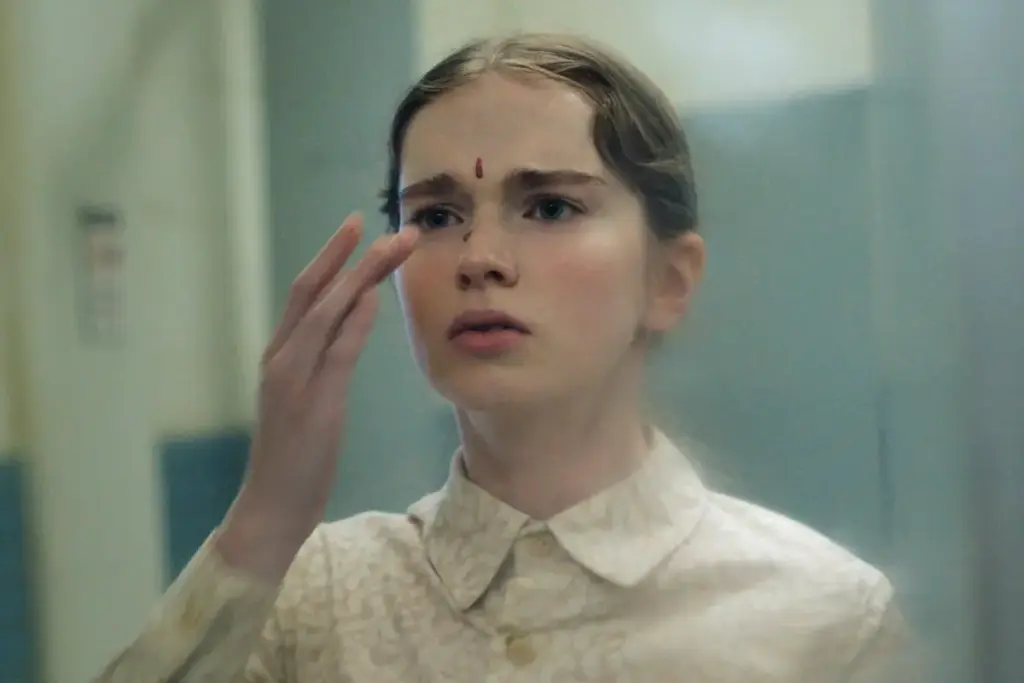
Nearly half a century after Stephen King published his debut horror masterpiece in 1974, the tragic, terrifying tale of Carrie White has found new life. In a high-profile adaptation premiering on Prime Video, visionary horror auteur and showrunner Mike Flanagan has reimagined the iconic story for the 2026 landscape. No longer confined to the analog halls of 1970s Maine, Flanagan’s Carrie drags the narrative kicking and screaming into the 21st century—an era defined by metal detectors, active-shooter drills, algorithmic hostility, and the inescapable nightmare of cyberbullying.
While the core narrative elements remain intact—an isolated, friendless high school girl navigating an abusive, hyper-religious household alongside latent telekinetic abilities—the mechanics of her torment have radically transformed. In Flanagan’s hands, the horrors inflicted upon Carrie are not merely localized to locker rooms or school corridors; they are broadcast, weaponized, and immortalized online.
At an exclusive advance screening in London, Flanagan addressed the creative impetus behind tackling such a towering piece of cultural folklore. Accompanied by stark reflections on modern technology, institutional failure, and the shifting definition of youth safety, the series posits an uncomfortable question: Why hasn’t society changed, even as the tools of cruelty have evolved? This investigative feature explores the mechanics of Flanagan’s adaptation, the chilling intersection of modern schooling and tech-driven harassment, and the deeper cultural reckoning surrounding justified female rage.
Detailed Chronology: From King’s 1974 Page-Turner to Flanagan’s 2026 Vision
To understand the weight of Flanagan’s 2026 adaptation, one must trace the cultural trajectory of Carrie from its inception to its status as modern mythology.
The Birth of an Icon (1974–1976)
Stephen King famously fished the first draft of Carrie out of the trash, convinced he had failed to capture the voice of a teenage girl. Published in 1974, the novel became a seismic cultural event. It pulled back the unvarnished curtain on adolescent cruelty, forcing readers to confront their own capacity for malice. When Brian De Palma adapted the novel into a feature film in 1976, Sissy Spacek’s haunting portrayal of Carrie White—drenched in pig’s blood, wearing a tiara, and standing amidst the flames of destruction—cemented itself permanently in the global zeitgeist.
Reboots and Cultural Drift (1999–2013)
Over the decades, Carrie became a cinematic touchstone, spawning a Broadway musical (notoriously short-lived), a 1999 sequel (The Rage: Carrie 2), a 2002 television film, and a 2013 cinematic remake starring Chloë Grace Moretz. Yet, these iterations largely adhered to the template of the original story: a high-school tragedy isolated to a specific prom night, fuelled by analogue bullying and religious zealotry.
The 2026 Reinvention
When Mike Flanagan announced he was tackling the property for Prime Video, the industry response was marked by skepticism. "Why the hell would anybody remake Carrie?" Flanagan admitted he asked himself the very same question.
The turning point came at the intersection of his personal life and the exhausting news cycle. With his teenage son preparing to enter high school, Flanagan observed the terrifying realities of contemporary adolescence. He realized that King’s warnings about human cruelty were no longer just relevant—they were desperately overdue for an update. By shifting the timeline to 2026, Flanagan’s Carrie transforms the character’s torment from isolated high-school abuse into a 24-hour digital marathon, capturing the chilling synergy between institutional neglect and relentless online harassment.
Supporting Context & Metrics: The Modern Hellscape of American High Schools
What sets Flanagan’s adaptation apart from its predecessors is its unflinching critique of contemporary institutional environments. At the London advance screening, the depiction of modern American high schools struck a visceral, deeply unsettling chord with British audiences—unaccustomed to the hyper-militarized realities of 21st-century American education.
The Normalization of Violence
In Flanagan’s series, Carrie White does not simply walk into school; she passes through metal detectors. Her daily routine includes active-shooter drills—bizarre, theatrical, and deeply traumatic exercises where students crouch beneath desks while individuals in full SWAT gear simulate mass casualties, complete with fake blood and simulated gunfire.
As critics and viewers alike noted during the screening, the irony is staggering. Schools invest astronomical resources into staging the aftermath of unimaginable violence, yet invest virtually nothing in proactive measures to dismantle the root causes. Systemic bullying goes unchecked. The emotional abuse festering in the hallways is ignored by administrators, leaving vulnerable students to fend for themselves against a rabid peer culture.
The Digital Panopticon
Beyond the physical architecture of fear lies the digital landscape. For teenagers growing up in 2026, the school bell does not signal the end of the day’s psychological warfare.
- The Perpetuation of Image-Based Abuse: Modern statistics surrounding deepfakes, non-consensual image sharing, and digital harassment paint a grim picture. Laws and institutional policies continue to lag devastatingly behind technological capabilities. When an intimate photo of a student is leaked, the fallout is swift and asymmetrical: the victim is often forced out of the school system, while the perpetrator faces little to no social or academic consequence.
- Algorithmic Humiliation: In Flanagan’s Carrie, the infamous prom-night blood-drenching scene does not end in the gymnasium. It goes viral. An anonymous social media account captures the moment, ensuring that Carrie’s most agonizing humiliation is broadcast to millions and lived a thousand times over through comments, shares, and algorithmic amplification. This is a trauma unknown to any previous incarnation of the character.
- The Scale of Real-World Harassment: This fictional escalation mirrors alarming real-world trends. From university fraternity chat groups exchanging misogynistic rhetoric regarding "free pussy upstairs" to massive online forums dubbed "rape academies" attracting millions of visitors, the architecture of the internet has given modern bullies unprecedented reach and anonymity.
Official Statements & Industry Perspectives
The creative philosophy driving the Prime Video series was a focal point of discussion during its promotional rollout.

Mike Flanagan on Human Cruelty and Wish Fulfillment
Speaking to audiences in London, Flanagan elaborated on why King’s core thesis remains potent:
"Carrie was so seismic when it was published because it really pulled back the curtain unflinchingly on human cruelty. It forced the reader to admit, as they read it, that they were capable of the same kind of treatment of Carrie White that the characters on the page were."
Flanagan also addressed the psychological undercurrents of the narrative, noting that the story’s enduring appeal relies heavily on a controversial emotion: catharsis.
"Something else about Carrie that’s always been in its DNA is a certain degree of wish fulfillment, a certain degree of wanting to see people get what they deserve, especially those who dish out enormous amounts of cruelty."
Confronting "Female Rage"
Addressing the recurring critical conversation surrounding female anger, Flanagan argued that the suppression of justified rage is, in itself, a systemic form of abuse:
"Especially talking about female rage, that in so many cases it is so beyond justified that to say, ‘Hey, let’s try to bottle that and be diplomatic about this’ is in itself a form of suppression and abuse."
While Flanagan frames the central moral message of Carrie as an urgent plea to "choose kindness," cultural critics and modern audiences argue for a more radical interpretation—one where survival requires abandoning politeness altogether.
Future Outlook: The Reckoning of Rage and Resistance
As Carrie streams on Prime Video, its cultural resonance extends far beyond the horror genre. The series arrives at a pivotal cultural moment where the societal expectations placed upon young women are undergoing intense scrutiny.
For generations, women and girls have been socialized to "choose kindness" even in the face of hostility. They have been instructed to smile through discomfort, politely reject unwanted advances, forgive their tormentors, and make themselves smaller, softer, and quieter to preserve social harmony.
Flanagan’s modern retelling shatters this illusion. The true terror of Carrie is not merely that a bullied girl finally snaps and unleashes supernatural destruction upon her tormentors; the true terror is how long everyone expected her not to. It is the staggering endurance required to survive daily micro-aggressions, institutional apathy, and digital degradation without losing one’s mind.
Moving forward, the cultural legacy of this 2026 adaptation may lie not in its special effects or its faithful homage to Stephen King, but in its validation of female rage. While real-world teenagers do not possess telekinetic powers, they have other avenues at their disposal: speaking out, refusing to laugh at sexism masked as humor, and embracing being "difficult" rather than perpetually compliant.
In an era where technology has expanded the boundaries of cruelty, Carrie serves as a flashing warning light. If society refuses to address the root causes of systemic bullying and digital harassment, we will continue to create environments where explosion is inevitable—and where, terrifyingly, we have no one to blame but ourselves.