Executive Overview
The luxury streetwear landscape has experienced another seismic shift. On Monday morning, high-end fashion label Off-White officially announced the departure of its creative director, Ib Kamara. Having stepped into the creative helm in 2022, Kamara was the first individual to formally occupy the role following the untimely and tragic death of the brand’s visionary founder, Virgil Abloh, in November 2021.
Kamara’s exit marks a profound and definitive breakpoint in the modern history of a label that once defined the intersection of high fashion and street culture. Under Abloh, Off-White was not merely a clothing brand; it was a sprawling cultural movement, an omnipresent dialogue bridging the gap between youth subcultures, fine art, luxury tailoring, and mass-market consumption. However, the years following Abloh’s passing have been fraught with corporate restructuring, shifting consumer demands, and an identity crisis that has steadily eroded the brand’s once-impenetrable cultural cachet.
With Kamara’s departure—and with Off-White confirming it has no successor currently lined up, nor any plans to present a runway collection during the upcoming September fashion weeks—the brand enters an era of deep uncertainty. Once the undisputed darling of global luxury streetwear, Off-White is now aggressively pivoting toward mass-market accessibility, launching affordable sub-brands, securing partnerships with discount and warehouse retailers like Costco, and retreating from major global fashion capitals. As industry stakeholders, designers, and business analysts weigh in on the label’s trajectory, the overarching question remains: Can Off-White survive the loss of its founder, or has its cultural engine gone permanently quiet?
Detailed Chronology: From Abloh’s Peak to Kamara’s Exit
To understand the weight of Ib Kamara’s departure, it is necessary to retrace the meteoric rise and subsequent turbulence that has characterized Off-White’s corporate and creative timeline over the past decade.
The Abloh Golden Age (2012–2021)
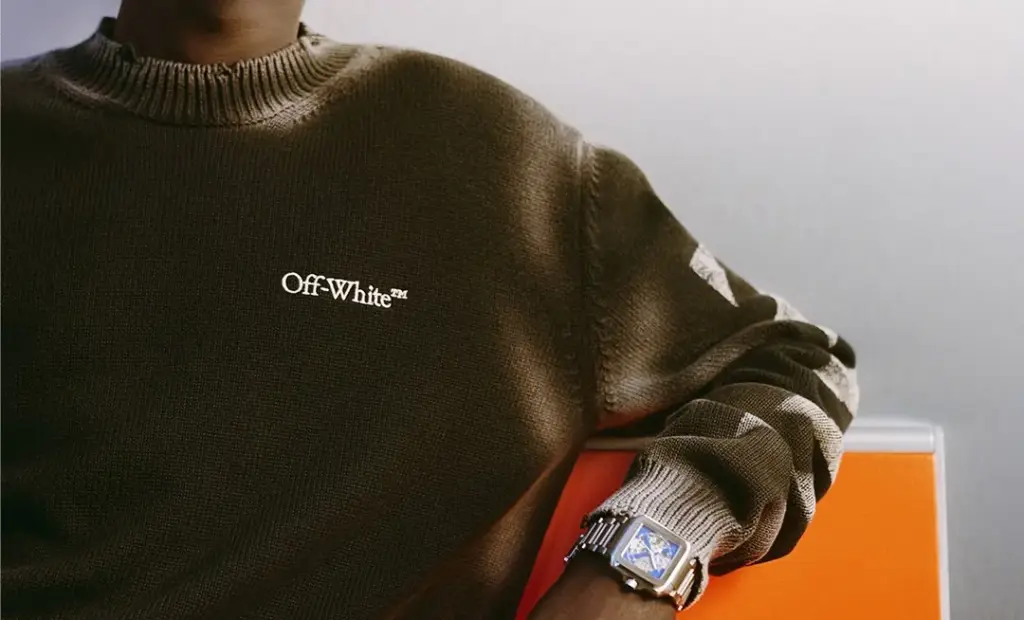
Founded by Virgil Abloh in 2012 (evolving out of his earlier project, Pyrex Vision), Off-White quickly became a global phenomenon. At the time, streetwear was experiencing a Renaissance, and Off-White sat comfortably at the absolute vanguard of this paradigm shift. The brand’s industrial aesthetic—defined by zip-ties, quotation marks, diagonal stripes, and ironic branding—resonated deeply with a generation of consumers who rejected traditional luxury codes in favor of elevated casualwear.
Abloh’s genius was manifold. Not only did he possess an uncanny ability to forecast trends, but his simultaneous appointment as the director of menswear at Louis Vuitton in 2018 cemented his status as a titan of the global fashion industry. Off-White became the nexus where the colliding worlds of streetwear and traditional luxury met, generating billions in cultural value and consumer demand.
The Vacuum and Corporate Shuffle (2021–2024)
The sudden death of Virgil Abloh in November 2021 plunged the fashion world into mourning and left Off-White adrift. Without its visionary captain, the brand entered a prolonged period without a designated creative leader, relying instead on internal design teams and collaborative capsule collections.
Simultaneously, the corporate ownership structure of Off-White underwent a dizzying series of transitions. The brand’s journey through corporate hands includes:
- New Guards Group: The Italian production and distribution platform that originally powered Off-White’s global scaling.
- Farfetch: The luxury e-commerce giant that acquired New Guards Group in 2019.
- LVMH Moët Hennessy Louis Vuitton: The luxury conglomerate that acquired a majority 60% ownership stake in Off-White in 2021, just months before Abloh’s death.
- Bluestar Alliance: The brand management firm that purchased Off-White from Farfetch in 2024 as Farfetch restructured its business model.
The Kamara Interregnum (2022–2025)
In April 2022, Off-White announced that Ib Kamara—then the editor-in-chief of Dazed magazine and a close creative collaborator of Abloh—would take over as art and image director. Kamara was tasked with a monumental challenge: to resurrect the prestige, storytelling, and aesthetic authority that the label enjoyed during the Abloh era.
While Kamara produced striking imagery and critically appreciated runway presentations, the macro-environment for high-end streetwear had fundamentally shifted. Consumer fatigue, coupled with a broader economic slowdown, began to deflate the speculative secondary market for luxury sneakers and hoodies. By early 2025, it became clear that artistic direction alone could not insulate the brand from deeper structural and commercial challenges, culminating in Kamara’s departure on Monday morning.
Supporting Context & Metrics: The Decline of High-End Streetwear and Off-White’s Footprint
The narrative surrounding Off-White’s struggles is not merely anecdotal; it is firmly rooted in changing retail metrics, shifting consumer behavior, and hard data from the secondary luxury market.
Resale Data and Market Cooling
According to historical trend data provided to Glossy by luxury resale platform The RealReal from its August Resale Report, the valuation and demand for Off-White products have experienced a noticeable downward trajectory. Over the past year alone, Off-White’s Gross Merchandise Value (GMV)—representing the total dollar value of products from the brand successfully sold on the platform—has fallen by nearly 9%.
This decline mirrors a broader market correction. The era of unchecked hyper-growth for luxury streetwear—fueled by hype culture, limited drops, and astronomical resale markups—has largely cooled. Consumers are increasingly prioritizing timeless tailoring, quiet luxury, and sustainable wardrobe investments over logos and graphic-heavy streetwear.
Retail Retreats and Cultural Clout
While Bluestar Alliance, as a private brand management company, does not publicly break down detailed revenue reporting for individual subsidiaries, the brand’s physical footprint tells a stark story. Over the past year, Off-White has systematically scaled back its high-end physical retail presence. Most notably, the brand shuttered its iconic flagship store in New York City and systematically closed out its entire retail network in mainland China—historically one of the most lucrative markets for luxury streetwear.
Fashion critics and trade publications have repeatedly noted that Off-White has struggled to command the same cultural clout it once did. When the brand shifted its presentation schedule from Paris Fashion Week to New York Fashion Week last year, industry observers viewed it as a retreat from the global epicenters of high fashion toward a more commercial, domestically focused strategy.
The Mass-Market Pivot: L/AB and Big-Box Retailers
Perhaps the most telling indicator of Off-White’s current strategic direction is its recent departure from its original luxury value proposition. In June, Off-White announced the launch of “L/AB c/o Off-White,” a newly minted sub-brand explicitly designed to distance itself from the brand’s high-end heritage.
Products within the L/AB line are positioned at a vastly more accessible price point, with core items like T-shirts and hoodies retailing in the $100 range—a fraction of the $500 to $1,000+ price tags typical of core Off-White pieces. More controversially for purists, Off-White struck commercial distribution deals in June with mass-market and warehouse retailers, including Pacsun and Costco, to carry the line’s goods.
For Bluestar Alliance, this is a calculated play for volume. Bluestar Alliance CEO Joey Gabbay described L/AB in a press statement as an “important evolution” for the company, emphasizing that management sees “significant opportunity” in building up sub-brands as primary revenue drivers. However, purists argue that flooding big-box stores with discounted apparel risks permanently diluting the equity of a brand that was built on exclusivity.
Official Statements and Industry Perspectives
The announcement of Kamara’s departure has elicited a wave of analysis from independent designers, business owners, and fashion critics who have watched Off-White navigate the post-Abloh landscape.
Corporate Silence on the Future
In its official press statement regarding Ib Kamara’s exit, Off-White management remained tight-lipped about the label’s immediate creative future. The company confirmed that no successor creative director has been named, and crucially, that the brand has no plans to show at any official fashion weeks this coming September. This vacuum suggests that Bluestar Alliance may be pausing the traditional runway cycle to re-evaluate the brand’s identity and commercial priorities.
The Identity Crisis: Insights from Industry Insiders
To gain a deeper perspective on where Off-White went wrong—and where it might go next—industry experts weighed in on the core challenges facing the label.
Cesar Cruz, a stylist, designer, and founder of luxury menswear and tailoring brand Sebastian Cruz Couture, offered a blunt assessment to Glossy:
"That’s not to say there haven’t been other impressive collections since [Abloh’s death]," Cruz noted. "But based on my analysis as a designer and business owner, I don’t think Off-White has yet found its footing since Virgil. The biggest problem is identity or a lack thereof. Under Abloh, Off-White was always greater than its products. It had a cultural point of view. It was a conversation between streetwear, luxury, art, music, and youth culture. Virgil himself was the person connecting all of those worlds. Now, the cultural engine has gone quiet."
Similarly, Nnagozie Ifebi, founder of the streetwear brand Multiversity, pointed out that Off-White’s original visual identity was inextricably bound to Abloh’s personal aura. When Abloh passed away, Off-White inherited a distinct visual vocabulary, but as Ifebi noted, "retaining the meaning behind that vocabulary was much harder."
Over the last few years, Off-White has frequently looked backward, launching archival projects such as the 10×10 collection, which enlists contemporary collaborators to re-imagine 10 iconic pieces designed by Abloh from the brand’s archives. However, Ifebi argues that leaning too heavily on nostalgia may be a strategic miscalculation:
"I don’t think Off-White needs to return to the Abloh era to succeed. In fact, attempting to recreate that period may be the wrong objective," Ifebi stated. "The opportunity is to determine which elements of Off-White are permanent brand codes and then give its next creative leadership enough freedom to establish a new worldview around them."
Future Outlook: Whither Off-White?
As Off-White enters this new, leaderless chapter under the stewardship of Bluestar Alliance, the brand stands at a profound philosophical crossroads. The tension between commercial viability and brand heritage has never been more acute.
The Dual-Track Dilemma
Off-White’s current corporate strategy appears to be splitting down the middle:
- The Mass-Market Engine: Leveraging the equity of the name through accessible sub-brands like L/AB, expanding into watches, and partnering with high-volume retailers like Pacsun and Costco to generate steady, reliable revenue streams.
- The Luxury Heritage: Maintaining a baseline connection to high fashion through archival re-issues, celebrity-led collaborations (such as recent projects with Kid Cudi), and intermittent artistic drops—even as it steps back from the traditional seasonal runway calendar.
Can a Brand Outlive Its Creator?
History shows that luxury fashion houses can indeed survive the loss of their founding geniuses—think of Chanel after Coco Chanel, or Alexander McQueen following Lee Alexander McQueen. However, those transformations typically require a definitive severing of the umbilical cord, allowing a new creative director total autonomy to write an entirely new chapter.
For Off-White, the reluctance to appoint a new creative director, combined with the aggressive push into mass retail, signals that Bluestar Alliance is currently treating the label less as an avant-garde fashion house and more as an intellectual property portfolio to be monetized across diverse consumer tiers.
Whether this corporate pragmatism will alienate the brand’s remaining loyalists or successfully capture a new, younger demographic remains to be seen. What is certain, however, is that the departure of Ib Kamara closes the final chapter of Off-White’s romanticized past. As the cultural engine falls silent, the next iteration of Off-White will have to prove that it can stand on its own two feet—without Virgil Abloh, without Ib Kamara, and far away from the runways of Paris.