Executive Overview
In the contemporary entertainment landscape, traditional gatekeeping is undergoing a seismic collapse. For decades, independent filmmakers seeking to bridge the chasm between raw talent and major streaming distribution faced a rigid, nearly impenetrable wall of executive demands. Aspiring creators were frequently forced to play by the rules of old-school studio infrastructure—rules that relied less on narrative vision and more on algorithmic celebrity attachment.
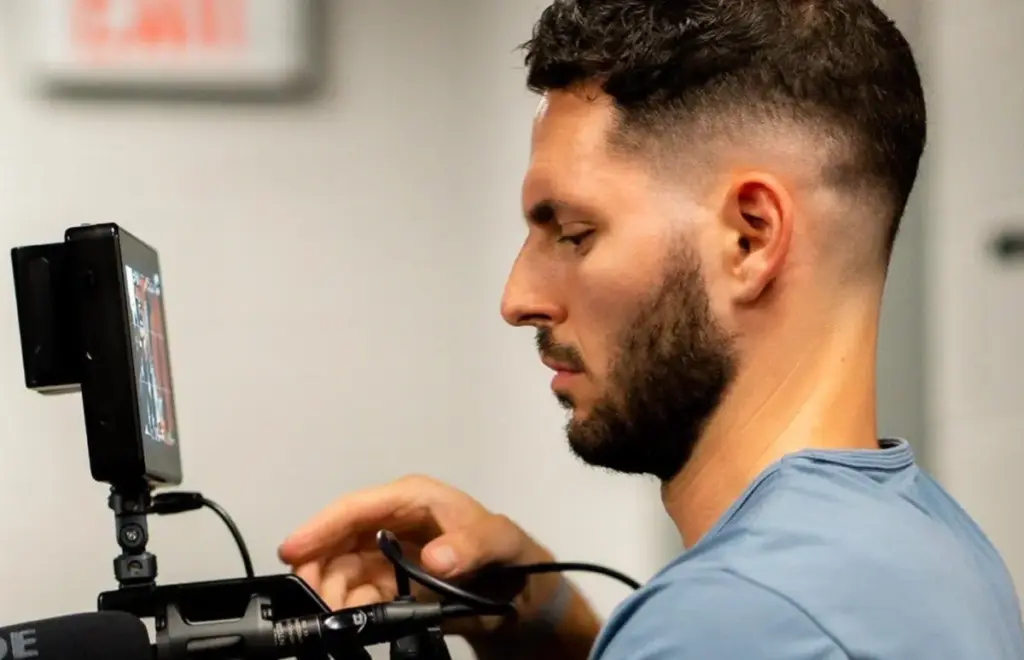
Filmmaker, composer, and YouTuber Alex Zarfati knows this institutional friction intimately. After experiencing firsthand the frustration of having polished, high-effort pitch packages rejected by major streaming platforms simply due to a lack of pre-existing influencer capital, Zarfati engineered a paradigm shift. Rather than chasing external clout, he decided to build it himself.
Today, Zarfati commands a thriving digital community of 140,000 subscribers, pulls in 150,000 monthly views, recently signed with major talent management agency Viral Nation, and has completed his debut feature-length short film, Fail Safe. More than just a digital creator, Zarfati has positioned himself at the bleeding edge of independent cinema by leveraging generative artificial intelligence to scale up low-budget productions. By using AI strictly for set extensions, logistical gap-filling, and world-building while fiercely preserving authentic human performances, Zarfati exemplifies a new breed of modern auteur: one who refuses to wait for Hollywood’s permission to tell stories.
Detailed Chronology: From Musical Scoring to Digital Rebellion
The Scoring Roots and Early Production Trials
Alex Zarfati’s journey into the cinematic arts did not begin behind a camera; it started behind a mixing board and a musical score. Initially entering the filmmaking ecosystem as a composer, Zarfati specialized in scoring documentaries crafted by fellow artists. While music was his foundational artistic love, proximity breeds ambition. Working intimately within the behind-the-scenes machinery of film and television exposed him to the broader spectrum of production.
"I realized there were so many things in the space that I wanted to do and get my hands into," Zarfati reflects.
Driven by this multidisciplinary curiosity, he pivoted first into video editing, absorbing the rhythm of visual storytelling. Soon after, he acquired his first professional camera and transitioned into directing. Just before the onset of the global COVID-19 pandemic, Zarfati immersed himself in his most ambitious undertaking to date: a gritty docuseries titled Law of the Goat, which followed a young, hungry Mixed Martial Arts (MMA) team striving for greatness.
The Hollywood Rejection Wall
Law of the Goat was a labor of intense physical, financial, and emotional investment. Zarfati and his production team poured substantial capital and relentless labor into capturing authentic footage, carefully constructing a sophisticated pitch package designed to capture the attention of major streaming powerhouses like Netflix, Amazon, and Hulu. Initial industry feedback was overwhelmingly encouraging; several mid-level producers reviewed the materials and expressed immense enthusiasm.
However, when the rubber met the road and Zarfati formally entered pitch meetings with major entertainment executives, the reality of modern industry risk-aversion struck hard.
"One by one, we got the door slammed in our face," Zarfati recalls.
The rejection was rarely tied to the cinematography, pacing, or narrative integrity of Law of the Goat. Instead, executives repeatedly hammered home a single, demoralizing question: Do you have any major influencers involved?
The production team did have a peripheral connection to superstar creator Logan Paul, whose training took place at the very gym the docuseries chronicled. Streamers aggressively probed this connection: "Can you get Logan Paul in on this? Can you get that person in on this?"
The encounter served as a profound epiphany for Zarfati. Staring across boardroom tables at executives obsessed with prefabricated digital audiences rather than artistic merit, he asked himself a defining question: "Man, they care so much about these influencers. Why don’t I just become an influencer myself?"
The Brutal Reality of the Creator Economy
Recognizing the game was one thing; winning it was entirely another. In 2022, Zarfati launched his digital content channel with the deliberate intent of manufacturing the exact kind of digital footprint that Hollywood executives demanded. He hoped to build an audience that would grant him independent leverage, allowing him to bypass traditional gatekeepers altogether.
The initial results, however, were humbling. For an entire calendar year, Zarfati posted videos with relentless discipline, only to be met with deafening silence. His very first YouTube upload limped along at a meager 768 views.
"I was getting no views and nobody cared," he admits. "It was so tough!"
The breakthrough arrived only when Zarfati abandoned the relentless pursuit of algorithmic optimization. Exhausted by trying to reverse-engineer what an anonymous audience might want to watch, he resolved to pivot entirely inward. He decided to craft a behind-the-scenes chronicle of his own production process—not for retention metrics, and not to appease platform algorithms, but purely for his own creative fulfillment.
"You know what? I’m going to make this video the way I want to make it," Zarfati decided. "I’m not going to try to be anything that I’m not. I’m just going to do what I want to do."
That uncompromising, authentic upload catalyzed a massive algorithmic surge. Viewership skyrocketed from double-digit trickles to tens of thousands of views per upload. He rapidly cultivated a highly engaged, niche community of fellow filmmakers and cinephiles who deeply appreciated raw, unvarnished insight into indie production. That pivotal creative pivot transformed his channel into a sustainable digital ecosystem.
Supporting Context & Metrics: Scaling the Digital Footprint
The Numbers That Matter
Today, Alex Zarfati’s digital footprint reflects sustained, organic growth within the creator-filmmaker niche. Key operational metrics include:
- Subscribers: 140,000 dedicated followers.
- Monthly Reach: Approximately 150,000 views per month.
- Management Representation: Signed with premier talent agency Viral Nation, working alongside Covering Agent Alonso Benavente and Head of Programming Paul Telner.
- Monetization & Education: Beyond direct platform metrics, Zarfati successfully funnels his engaged viewer base into a specialized educational filmmaking course, empowering the next wave of independent creators.
The Rise of Creator-Led Cinema
Zarfati’s trajectory mirrors a broader, structural transformation within the entertainment sector. As Head of Programming Paul Telner notes, the modern Hollywood apparatus has developed a voracious appetite for intellectual property originating directly from independent digital creators. Landmark indie successes such as Iron Lung, Backrooms, and Obsession have proven that audiences are eager to consume cinematic projects built outside traditional studio pipelines.
In this climate, digital platforms have transitioned from mere promotional tools into standalone incubators for cinematic greenlights. For Zarfati, YouTube evolved from an institutional workaround into a vital creative sanctuary—a place where the invisible labor of filmmaking is rendered visible to an appreciative global audience.
Official Statements & Industry Insights
The Generative AI Debate: "Dangerously Creative"
As Zarfati’s digital presence and cinematic ambitions have expanded, so too has his methodology. His recent video uploads proudly proclaim that generative artificial intelligence has rendered him "dangerously creative," utilizing neural models to handle the heavy-lifting "grunt work" of independent production.
Zarfati openly acknowledges the intense controversy surrounding generative AI within artistic communities, categorizing the technology as a complex moral and professional "gray area."
"I could totally see how people could be 100% against it," Zarfati acknowledges. "On the other hand, I think there is something that is being unlocked for independent filmmakers that is a huge opportunity to make your small production feel a lot larger with the use of AI. These tools are given to us, and if you use them in a responsible way, it gives you limitless opportunity."
Rather than deploying AI to replace human labor indiscriminately, Zarfati maintains a strict ethical boundary: he refuses to replace speaking human actors with synthetic digital avatars. Instead, his application of generative tools is strictly architectural and logistical.
"I use AI to expand sets. I use AI to fill in some of the gaps that we just couldn’t afford to shoot, whether it was that we couldn’t get a permit or we don’t have the budget for an aerial shot with all these different cop cars and things," Zarfati explains. "I use it to make the world feel bigger than it actually is, and I think that is a great place to inject AI into your independent filmmaking."
He clarifies that if he operated under massive studio financing—such as the multi-million dollar budgets commanded by directors like Christopher Nolan—he would eagerly capture physical explosions, real-world environments, and tangible locations. However, in the absence of boundless capital, AI acts as a strategic equalizer.
"What I think AI has given me is the opportunity to say, ‘This is the film I want to make, and I’m going to spend all my time and all my money on capturing the actors’ performances, and not spend $10,000 of our budget to get an aerial shot with some cop cars.’"
Casting and Performance Integrity in Fail Safe
While AI expands his virtual canvas, Zarfati keeps his creative focus relentlessly anchored on authentic human talent, particularly in his gripping FBI thriller Fail Safe, which is currently being shopped to film festivals. The project’s success hinges on rigorous casting choices that prioritize raw, visceral screen presence over marketable celebrity names.
When casting the primary antagonist, Zarfati auditioned numerous actors before discovering Nikolas Kolasinski.
"It’s not even that he said the lines convincingly, it was the way his presence was so intimidating," Zarfati notes. "It was big. His eyes were scary, his face was scary. It was his presence."
Similarly, Zarfati was drawn to Nicoletta Hanssen, who portrays Agent Morales.
"You could feel her sincerity," Zarfati says. "Immediately it felt like, ‘I believe that girl.’ In a sea of actors, you’re listening to them all day long, and you’re like, ‘I don’t believe you.’ It’s so refreshing to watch someone’s reel and be like, ‘Oh, no, I believe that person. I totally see a single mom in her early 30s trying to be an agent and juggle two things.’"
Future Outlook: The Self-Greenlit Future
Having spent over a year meticulously filming and finalizing Fail Safe, Zarfati is refusing to rest on his laurels. He is currently deep in production on his next major narrative venture, The Divide—a project in which he is not only writing and directing, but also stepping in front of the camera as a lead actor.
With self-deprecating humor, Zarfati acknowledges the classic pitfall of his new venture: "That’s probably the dumbest thing you could do early on in your career, but it’s a passion project of mine and is something that I think can showcase my skills as a director and lets people know, ‘Hey, this dude knows what he’s doing.’"
Supported by Viral Nation agents like Alonso Benavente and Paul Telner, Zarfati stands at the intersection of a rapidly shifting industry. His journey—from a frustrated composer slamming against closed boardroom doors to an empowered digital auteur orchestrating AI-enhanced sets and festival-bound thrillers—serves as a definitive blueprint for the modern creative class.
As Paul Telner and digital pioneers continually advocate, the era of waiting for Hollywood’s blessing is over. Creators can, and increasingly must, greenlight themselves.