Executive Overview
For nearly two decades, the cinematic landscape of Marvel’s most recognizable properties was rigidly partitioned. While the Marvel Cinematic Universe (MCU) expanded exponentially under the stewardship of Kevin Feige and The Walt Disney Company, Earth’s mightiest heroes existed in a sandbox entirely separate from Marvel’s premier mutant collective. The X-Men, alongside the Fantastic Four and Deadpool, resided under the 20th Century Fox banner, creating an invisible wall that prevented crossovers, shared continuity, and the rich interweaving of storylines that made the source material so enduring.
That wall officially crumbled following Disney’s historic acquisition of 21st Century Fox in 2019. Ever since, the global fanbase has held its collective breath, eager to witness how Marvel Studios would weave the concept of mutants—humans born with the X-gene granting extraordinary, often burdensome abilities—into the complex, sprawling tapestry of the MCU.
Now, the waiting is finally over. Disney and Marvel Studios have pulled back the curtain on their comprehensive, multi-phase strategy to introduce the X-Men. Spearheaded by a star-studded ensemble cast, visionary creative talent from both prestige television and blockbuster cinema, and a rollout plan beginning with key cameos and building toward a tentpole feature film slated for May 2028, the Children of the Atom are officially coming home.
This deep dive explores everything we know so far about the monumental new X-Men franchise: the strategic setup within the MCU timeline, the stellar creative team behind the camera, the newly announced A-list cast, and what this paradigm shift means for the future of superhero cinema.
Detailed Chronology: From Fox’s Legacy to MCU Integration
The journey toward a unified Marvel universe has been a slow-burn narrative spanning years of corporate realignment, strategic cameos, and careful world-building. To understand the gravity of the upcoming X-Men reboot, it is vital to trace the chronological evolution of how Marvel Studios has laid the groundwork for mutantkind’s arrival.
Phase 1: The Post-Acquisition Horizon (2019–2023)
When the ink dried on the Disney-Fox merger, Marvel Studios inherited a cinematic property that had experienced both soaring critical heights (such as Logan and X-Men: Days of Future Past) and devastating creative troughs (such as X-Men: Dark Phoenix). Rather than rushing an immediate reboot, Marvel adopted a methodical approach. The studio allowed legacy franchises to wind down while carefully seeding mutant lore into ongoing Disney+ series and cinematic releases—most notably introducing the concept of genetic mutations in projects like Ms. Marvel and Black Panther: Wakanda Forever.
Phase 2: Multiversal Teases and Soft Introductions (2024–2025)
The barriers between universes began to dissolve through the multiverse saga. Fans caught exhilarating glimpses of legacy actors reprising their roles, alongside Hugh Jackman’s triumphant return as Wolverine in Deadpool & Wolverine. However, Marvel made it clear that these nostalgic excursions were merely bridging the gap. The true challenge lay in establishing a brand-new, native MCU iteration of the X-Men—characters who would exist organically alongside Spider-Man, the Avengers, and the cosmic entities of the sacred timeline.
Phase 3: The Catalyst – Spider-Man: Brand New Day
The first major domino in the new X-Men narrative fell with the theatrical release of Spider-Man: Brand New Day. In a bold creative choice, the film utilized one of the X-Men’s most iconic and formidable members as a primary antagonist: Jean Grey.
Portrayed by Sadie Sink, this iteration of Jean Grey was introduced as a singularly powerful telepath operating outside the traditional superhero networks. Throughout the film’s runtime, her volatile psychic abilities and ideological misalignment placed her at direct odds with Peter Parker. However, in a climactic narrative pivot, Jean ultimately aids Spider-Man in neutralizing a mutual threat before vanishing into the shadows. Her parting trajectory—setting out to find others like herself—served as the ultimate thematic springboard for the overarching mutant narrative that Disney is now preparing to unleash.
Phase 4: The Immediate Future and Beyond (2025–2028)
Following her explosive debut in Spider-Man: Brand New Day, Jean Grey’s narrative thread will continue to be teased across upcoming MCU crossover events. Industry insiders point to the upcoming December 18 release of Avengers: Doomsday as a crucial milestone where further connective tissue regarding the mutant population, anti-mutant sentiment, and the looming threat of genetically superior humans will be explored.
Ultimately, all roads lead to May 2028, the officially designated release window for Marvel Studios’ flagship X-Men feature film.
Supporting Context & Metrics: The Creative Engine and Thematic Core
A cinematic universe is only as strong as the creators steering the ship. Recognizing the immense cultural weight of the X-Men property, Marvel Studios has assembled a powerhouse behind-the-scenes team known for balancing high-octane spectacle with razor-sharp character work and psychological depth.

The Creative Blueprint
- Director: Jake Schreier, fresh off his celebrated work on Marvel’s upcoming anti-hero ensemble Thunderbolts, has been tapped to direct the feature film. Schreier’s ability to ground heightened concepts in raw, character-driven realism makes him an ideal fit for a franchise rooted in themes of alienation and societal rejection.
- Screenwriters: The screenplay is being penned by an elite creative duo: Lee Sung Jin, the acclaimed creator of Netflix’s Emmy-winning sensation Beef, and Joanna Calo, co-creator of FX’s runaway critical darling The Bear. The inclusion of Jin and Calo signals that Marvel is heavily prioritizing interpersonal conflict, sharp dialogue, and deeply human emotional stakes over purely CGI-driven set pieces.
Thematic Pillars: Prejudice, Evolution, and Unity
At its core, the X-Men mythology has always functioned as a complex allegory for marginalization, civil rights, and the human fear of the "other." Unlike the Avengers—who are largely celebrated as public defenders, billionaire industrialists, and government-sanctioned heroes—mutants face systemic prejudice.
As the narrative framework establishes, the conflict in the upcoming film stems not merely from super-powered villains, but from societal response. Spontaneous mutations force ordinary humans to confront an evolutionary leap they cannot control. While some factions within society advocate for peaceful coexistence, others demand strict government regulation, containment, or outright eradication.
At the center of this sociological storm stands Professor Charles Xavier, a visionary telepath who has dedicated his life to bridging the gap between baseline humanity and mutantkind. Operating from his Westchester academy, Xavier mentors young, volatile minds, guiding them to use their powers for good while defending a world that frequently fears and hates them.
Official Statements and Casting Revelations
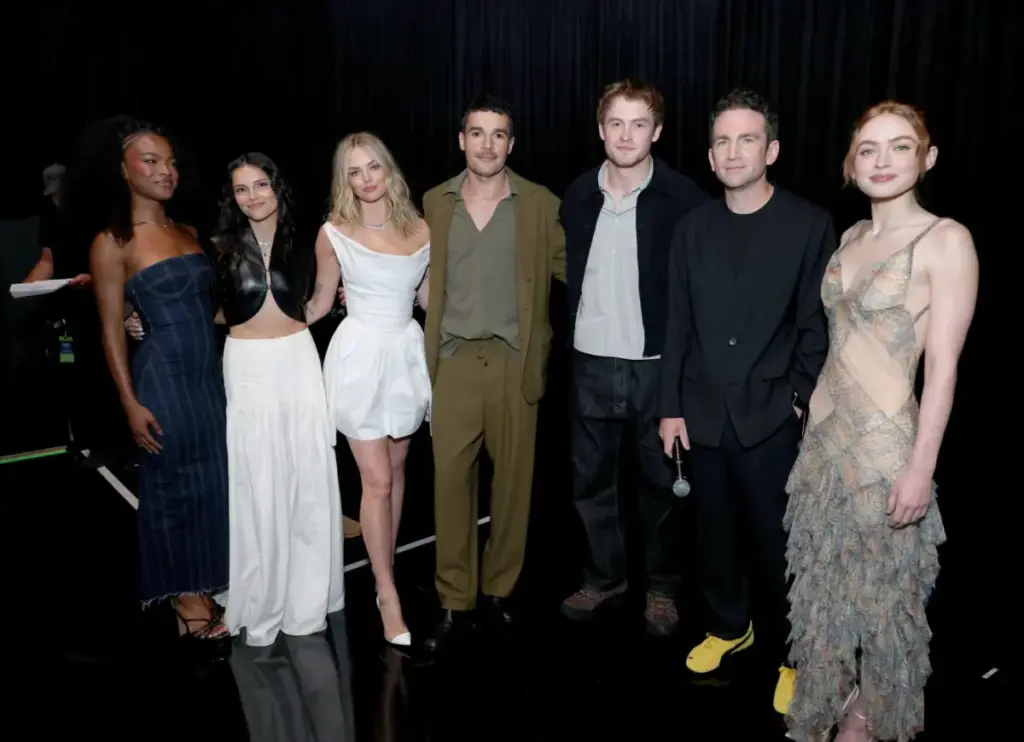
The most electrifying moment of the campaign arrived during Disney’s massive D23 presentation on August 14, when studio executives pulled back the curtain to reveal the principal cast of the new mutant ensemble. The announcement confirmed weeks of internet speculation and introduced a brilliant blend of rising critical darlings and seasoned dramatic actors.
The Official Cast Lineup
- Sadie Sink as Jean Grey: Following her impactful introduction in Spider-Man: Brand New Day, the Stranger Things breakout star steps fully into the mantle of the universe’s most powerful telepath and telekinetic.
- Kit Connor as Scott Summers (Cyclops): Known for his work in Heartstopper, Connor brings a quiet intensity and natural leadership quality to the team’s tactical field commander.
- Samara Weaving as Emma Frost (The White Queen): Bringing razor-sharp wit and formidable psychic prowess, Weaving is perfectly cast as the morally ambiguous mutant telepath and former Hellfire Club member.
- Christopher Abbott as Professor Charles Xavier (Professor X): A masterclass in dramatic casting, Abbott takes over the iconic wheelchair-bound visionary, promising a nuanced, emotionally complex portrayal of the dream of peaceful coexistence.
- Maya Boyd as Ororo Munroe (Storm): Rising talent Boyd steps into the legendary role of the weather-controlling goddess and foundational pillar of the X-Men leadership structure.
- Adam Driver as Mister Sinister (Nathaniel Essex): In a major coup for Marvel Studios, two-time Academy Award nominee Adam Driver joins the MCU as the immortal, coldly analytical geneticist and principal adversary, whose obsession with mutant DNA poses an existential threat to all mankind.
- Inde Navarette as Anna-Marie / Rogue: Bringing fierce energy and emotional depth, Navarette is set to portray the southern-drawling mutant whose life-altering absorption touch makes human connection both her greatest desire and her deepest burden.
Reflecting on the camaraderie developing among the newly minted ensemble, Sadie Sink noted in a recent statement:
"I think a great cast is coming together, and I think people are going to be really excited about it when it’s all announced."
Future Outlook: What the X-Men Mean for the MCU
The integration of the X-Men represents far more than a routine casting announcement or a nostalgic nod to comic book history. It fundamentally alters the future trajectory of the Marvel Cinematic Universe.
For over fifteen years, the MCU has relied on a relatively stable paradigm of enhanced individuals, cosmic entities, and advanced technologists. The introduction of millions of mutants across the globe introduces an entirely new socio-political dynamic. It transforms the world of the MCU from a place where heroes occasionally save the day into a world fundamentally changing on a biological level.
With top-tier creative talents like Jake Schreier, Lee Sung Jin, and Joanna Calo steering the ship, and a powerhouse cast breathing new life into characters like Jean Grey, Cyclops, and Mister Sinister, Marvel Studios is positioning its mutant franchise to dominate the late 2020s.
As the release date approaches in May 2028—with mandatory narrative stepping stones arriving via Avengers: Doomsday and beyond—fans can rest assured that the Children of the Atom are in capable hands. The dawn of the mutant age is officially upon us, and the Marvel Cinematic Universe will never be the same again.
This post will be continuously updated as further developments, trailers, and official announcements emerge from Marvel Studios.