Executive Overview
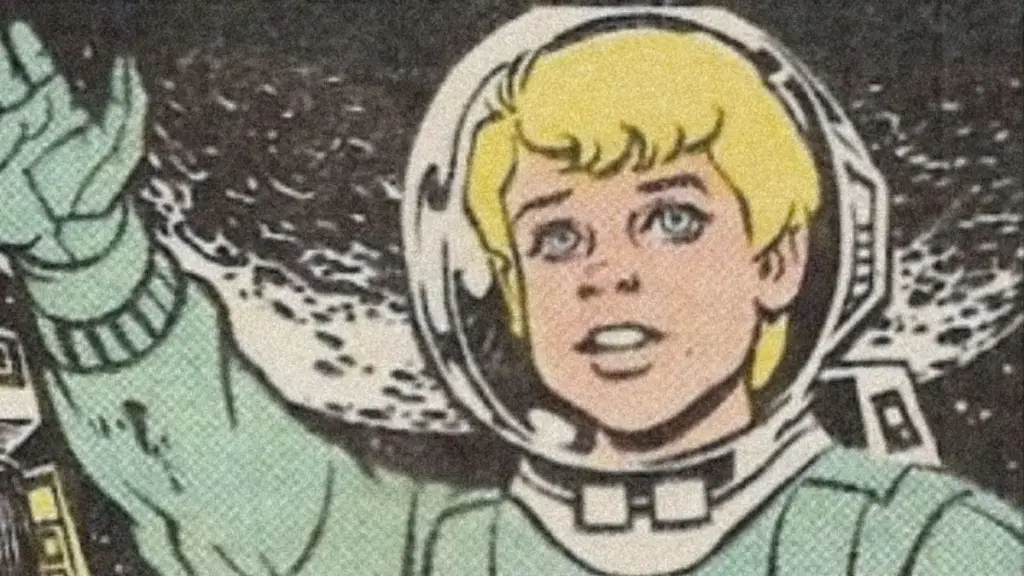
In the mid-1980s, the intersection of American political ambition, corporate entertainment, and burgeoning space exploration yielded a peculiar artifact of broadcast history: The Young Astronauts. Commissioned in 1985 by CBS in partnership with Marvel Comics, this ambitious animated series was backed by a hefty $3 million production budget—a substantial financial commitment for children’s television at the time. The series was designed to serve a dual purpose: entertain Saturday morning audiences and actively promote the Young Astronaut Council, a federally encouraged educational initiative established by President Ronald Reagan just a year prior to foster children’s interest in science, technology, and space travel.
Yet, despite boasting a stellar, forward-looking voice cast featuring future legends like Nancy Cartwright and James Avery, alongside a dramatic premise involving an accidental voyage to Jupiter, The Young Astronauts never made it to traditional broadcast. Instead, the project became a ghost in the machine of television history, swallowed by a toxic mix of creative disputes, corporate cold feet, and one of the darkest days in the history of American space exploration.
The story of The Young Astronauts is not merely an entertaining anecdote about "lost media." It is an illuminating case study in how real-world tragedies can fundamentally alter media landscapes, freeze multi-million-dollar intellectual properties, and leave behind only audio fragments and court documents as testament to what might have been. This investigation examines the genesis of the show, its doomed production, the fateful intersection with the Challenger disaster, and the lingering legacy of a cartoon that was erased before it ever truly began.
Detailed Chronology: From Reagan’s Vision to the Cutting Room Floor
1984–1985: The Genesis of a Cosmic Partnership
The political and cultural climate of the mid-1980s was deeply intertwined with the space program. President Ronald Reagan’s administration placed a heavy emphasis on revitalizing American technological superiority and inspiring the younger generation to look toward the stars. Out of this ethos emerged the Young Astronaut Council, an educational program designed to encourage school-aged children to delve into math, science, and astronomy.
Sensing a lucrative cultural touchstone—and eager to tap into the patriotic fervor surrounding space exploration—Marvel Comics entered into a high-stakes partnership with CBS. The network shelled out an impressive $3 million to produce a 13-episode animated series based on the concept. Marvel, flexing its muscles beyond static comic book pages, poured over $1 million of that budget into the production of the pilot episode alone.
To ensure the show had commercial appeal and acting caliber, the producers assembled a remarkable cast of voice and screen talent. Among them was a young Nancy Cartwright, years before she would achieve global immortality as the voice of Bart Simpson, and James Avery, later beloved as Uncle Phil on The Fresh Prince of Bel-Air. The cast also featured a young Stephen Dorff, who would later transition into a prominent Hollywood film career.
The Plot: A High-Stakes Jupiter Odyssey
According to archival production notes and surviving script breakdowns, The Young Astronauts centered on the Hampton family. Nancy Cartwright was cast as Wendy Hampton, the eldest daughter, while Stephen Dorff voiced her brother, Mikey.
The narrative ambition of the pilot episode, titled "Ghost Ship," was surprisingly dark and high-stakes for a children’s morning cartoon. In the episode, Mikey Hampton accidentally ends up trapped aboard an unmanned, automated "ghost ship" that is hurtling inexorably toward Jupiter. Accompanying him is Retro, a robotic maintenance sidekick. The core conflict of the pilot requires Mikey’s parents to mount a desperate, high-speed rescue mission to pull their son from the vessel before it is completely incinerated by the crushing, extreme atmosphere of the gas giant.
Adding an eerie layer of dramatic tension, the ship’s computerized captain informs Mikey that the vessel’s previous human crew perished in an identical, catastrophic explosion—a plot point that, in hindsight, carries an unsettling premonition of real-world events.
Creative Friction and the First Red Flags
Even before the cameras rolled or the animation cells were finalized, trouble was brewing behind the scenes. Accounts from production insiders indicate that a fundamental philosophical clash had emerged between CBS executives and the creative minds at Marvel.
The conflict centered on a classic television dilemma: entertainment versus educational accuracy. CBS, driven by weekend ratings metrics and demographic reach, pushed for broader, more sensationalist entertainment value. Marvel and the educational consultants behind the Young Astronaut Council, conversely, advocated for scientific plausibility and educational fidelity. This tug-of-war delayed production workflows and pushed the show’s intended autumn 1985 debut well into the winter.
A high-stakes meeting to finally resolve these creative differences and reschedule the show’s premiere was officially scheduled for January 27, 1986. Little did the executives, artists, and actors know that the world outside the boardroom was about to change irrevocably.
January 28, 1986: The Day the Sky Fell
On the morning of January 28, 1986, the Space Shuttle Challenger lifted off from Kennedy Space Center on mission STS-51-L. Just 73 seconds into its flight, structural failure resulting from O-ring seal degradation caused the vehicle to disintegrate, instantly killing all seven crew members, including civilian schoolteacher Christa McAuliffe.
The disaster was broadcast live to millions of television viewers, plunging the United States into a period of profound national mourning and intense national soul-searching regarding the risks and hubris of the space program.
For CBS executives, the calculus changed in a fraction of a second. A children’s cartoon featuring automated ghost ships, near-incineration in planetary atmospheres, and harrowing tales of doomed space crews suddenly felt not only tone-deaf, but deeply exploitative and politically toxic. Without hesitation, CBS leadership pulled the plug on The Young Astronauts. All plans for the series were permanently shelved, and the multimillion-dollar investment was written off as corporate collateral damage in a transformed media landscape.
Supporting Context & Metrics
To fully understand the magnitude of The Young Astronauts cancellation, one must examine the financial and industrial metrics of 1980s television animation.
| Metric / Detail | Description / Figure |
|---|---|
| Total Production Budget | $3 million (allocated for 13 episodes) |
| Pilot Episode Expenditure | Estimated at over $1 million spent by Marvel Comics |
| Key Cast Members | Nancy Cartwright, James Avery, Stephen Dorff |
| Political Impetus | The Young Astronaut Council (backed by the Reagan Administration) |
| Fateful Date of Cancellation | January 28, 1986 (Challenger Disaster) |
| Legal Outcome | Lengthy litigation ending in a 1990 settlement favoring Marvel |
The financial fallout of the cancellation triggered a protracted legal battle between Marvel Comics and CBS. The network sought to walk away from its financial obligations and contractual commitments, while Marvel fought to recoup the substantial capital it had already expended on development, voice recording, and early animation. The legal wrangling dragged on for years, symbolizing the bitter end of what was supposed to be a triumphant multimedia marriage. In 1990, the courts finally ruled in Marvel’s favor, bringing formal legal closure to the dispute, though the creative assets remained locked away in corporate vaults.
Official Statements and Archival Recovery
Because the series was canceled at the eleventh hour, concrete physical evidence of The Young Astronauts has remained agonizingly scarce for animation historians and pop culture archivists. For decades, rumors circulated within message boards and lost media communities regarding whether the pilot had ever slipped out onto late-night television markets or international territories. Consensus among researchers indicates that the completed pilot never officially aired in the United States.
However, the digital age has allowed for minor archaeological triumphs. While no complete video footage of the animated episodes has surfaced in the decades since the cancellation, a crucial piece of audio history emerged in recent years. Archival recordings taken directly from the "Ghost Ship" episode’s voice-acting sessions—featuring the raw, unfiltered performances of Nancy Cartwright, James Avery, and Stephen Dorff—were uploaded to platforms like YouTube.
These audio fragments provide a haunting window into the production process. Listening to the actors deliver lines about impending doom in a spacecraft headed for Jupiter carries a chilling resonance, bridging the gap between innocent 1980s commercial animation and the somber historical reality that silenced it.
Future Outlook: The Quest for Lost Media
As the digital preservation movement matures, properties like The Young Astronauts occupy a fascinating space at the intersection of journalism, cultural anthropology, and entertainment history. The modern "lost media" community, spearheaded by platforms like the Lost Media Wiki, continues to pressure corporate archives and former production personnel for access to unreleased vaults.
While it is statistically unlikely that clean, broadcast-ready animation cells for all 13 commissioned episodes will suddenly materialize, the ongoing hunt for The Young Astronauts highlights a broader truth about the modern media ecosystem: nothing produced for public consumption is ever truly destroyed. As studio consolidation continues under massive media conglomerates like Disney (which now owns Marvel) and Paramount (the corporate successor to various iterations of CBS), the institutional memory of these failed experiments occasionally surfaces through leaked internal documents, pitch bibles, and personal collections.
The Young Astronauts stands today as a monument to timing. It captures a moment when the American consciousness was utterly fixated on the heavens—optimistic, heavily funded, and politically driven. When the harsh realities of space flight intervened, the fantasy was unceremoniously discarded. Today, the surviving audio tracks and court records serve as the sole remaining echoes of a cartoon that aimed for the stars, only to be grounded forever by tragedy.