Executive Overview
In the modern fitness era, activewear has transcended the gym. From running errands to meeting friends for brunch, premium leggings and moisture-wicking tops are staples of daily wardrobes. Naturally, this lifestyle shift has collided with modern economic and environmental consciousness, inspiring a popular habit among fitness enthusiasts: rewearing workout clothes without washing them between uses.
Proponents of this practice often justify it using lighthearted rationales—such as a low-intensity "hot girl walk" or a brief, gentle cycle on an indoor stationary bike that left them barely perspiring. After all, why generate extra laundry loads, waste water, and accelerate the wear-and-tear of expensive technical garments if the clothes look and smell clean?
However, beneath this convenient and sustainable habit lies a complex dermatological reality. While sweat itself is chemically odorless and relatively harmless on its own, it rarely remains isolated. When perspiration interacts with the rich ecosystem of natural microorganisms residing on human skin—and subsequently becomes trapped within synthetic performance fabrics—the chemical and biological equation changes rapidly.
To separate hygiene myths from dermatological facts, we spoke with leading skin health experts to investigate the true impact of rewearing activewear. The findings reveal a nuanced spectrum of risk: while lower-intensity routines paired with proper post-workout habits offer some flexibility, certain garments, synthetic materials, and high-sweat scenarios present a clear and present danger to skin health, triggering everything from persistent body acne to stubborn fungal irritation.
Detailed Chronology: The Lifecycle of Sweat and Skin Interaction
To understand why a seemingly harmless pair of leggings or a lightweight T-shirt can transform into a skin hazard, it helps to examine the chronological progression of what happens to your body and clothing from the moment you start exercising to hours after your workout has ended.
Phase 1: The Workout and Sweat Production
As physical exertion begins, the human body’s thermoregulatory system activates eccrine and apocrine sweat glands to cool the body down. Fresh sweat is composed primarily of water, salt, trace amounts of minerals, urea, and lactate. In its purest form, this fluid is completely odorless and non-irritating to healthy skin tissue.
Phase 2: Microbial Interaction
The moment sweat reaches the skin’s surface, it encounters the human microbiome—a complex community of resident bacteria and fungi, including Staphylococcus epidermidis and Cutibacterium acnes. These microbes feed on the lipids and proteins found in sweat and sebum. As they metabolize these organic compounds, they produce volatile organic compounds (VOCs) and byproducts that generate distinct body odors.
Simultaneously, activewear absorbs this mixture of sweat, sebum, dead skin cells, and surface bacteria, pulling it directly against the cutaneous barrier.
Phase 3: The Post-Workout Trap and Prolonged Contact
The critical juncture for skin health occurs after the workout concludes. Busy schedules, post-exercise social calls, or simple fatigue often lead individuals to remain in their damp activewear for extended periods. Dermatologists emphasize that this prolonged contact window is where micro-injuries to the skin’s barrier begin.
"The longer the bacteria stays in contact with your skin, the higher the chance it can become harmful," explains Dr. Brianna Olamiju, MD, FAAD, a board-certified dermatologist based in New York. "Usually, it can cause acne. I see a lot of patients who have breakouts on their chest or back, often people who work out frequently and maybe go to brunch afterwards or aren’t able to change or wash immediately."
Phase 4: Storage and Bacterial Persistence
For those who remove their workout gear, air it out, and attempt to rewear it the next day, a common misconception is that the garment has "reset." Unfortunately, microbiological data proves otherwise.
"Some of the bacteria from the prior workout can still linger," Dr. Olamiju warns. "It’s probably going to smell, but it can also still cause acne or irritation." When the garment is pulled back on, dormant bacteria are instantly reintroduced to body heat, moisture, and fresh sebum, rapidly accelerating microbial proliferation.
Supporting Context & Metrics: Workouts, Fabrics, and Dermatological Realities
Not all exercise routines and garments carry the same risk profile. Evaluating whether your post-workout wardrobe can survive a second round requires analyzing the intersection of exercise intensity, fabric science, and personal biology.
Exercise Intensity and Perspiration Rates
Dermatologists categorize workout-induced skin risks on a sliding scale dependent primarily on metabolic output and cardiovascular intensity.
- High-Intensity Training (High Risk): Activities such as running, interval sprints, hot yoga, and high-resistance spin classes elevate core body temperatures dramatically. This triggers profuse sweating, creating a humid microclimate beneath clothing that acts as an incubator for pathogenic bacteria and yeast (Malassezia). These workouts demand immediate laundering post-session.
- Low-to-Moderate Intensity Training (Lower Risk): Gentle movement styles, such as restorative yoga, beginner Pilates, or casual outdoor walking, generate minimal perspiration. For these sessions, the risk of acute bacterial colonization is significantly lower, offering a safer window for garment reuse—provided proper airing-out protocols are observed.
The Role of Textile Engineering: Synthetics vs. Natural Fibers
The material composition of your activewear plays a monumental role in skin health. Modern activewear is dominated by synthetic technical fabrics—predominantly polyester, nylon, spandex, and elastane.
While these materials excel at moisture-wicking and durability, they possess a major drawback: hydrophobic properties. Synthetic fibers trap sweat, oils, and bacteria within microscopic crevices, making them notoriously difficult to sanitize completely and prone to retaining stubborn odors.
"Most workout clothing has polyester, which traps sweat. Cotton is more breathable and less risky if you want to reuse clothes. But it can be harder to find cotton activewear." — Dr. Brianna Olamiju, MD, FAAD
Because true performance cotton can become heavy, soggy, and prone to chafing during intense athletic movements, the activewear market remains saturated with synthetics. Consequently, consumers must be doubly vigilant about hygiene when wearing polyester-heavy ensembles multiple times.
Garment-Specific Vulnerabilities
Skin sensitivity and sweat gland density vary across different regions of the human body. Consequently, dermatologists urge fitness enthusiasts to exercise selective judgment regarding which items they choose to rewear.
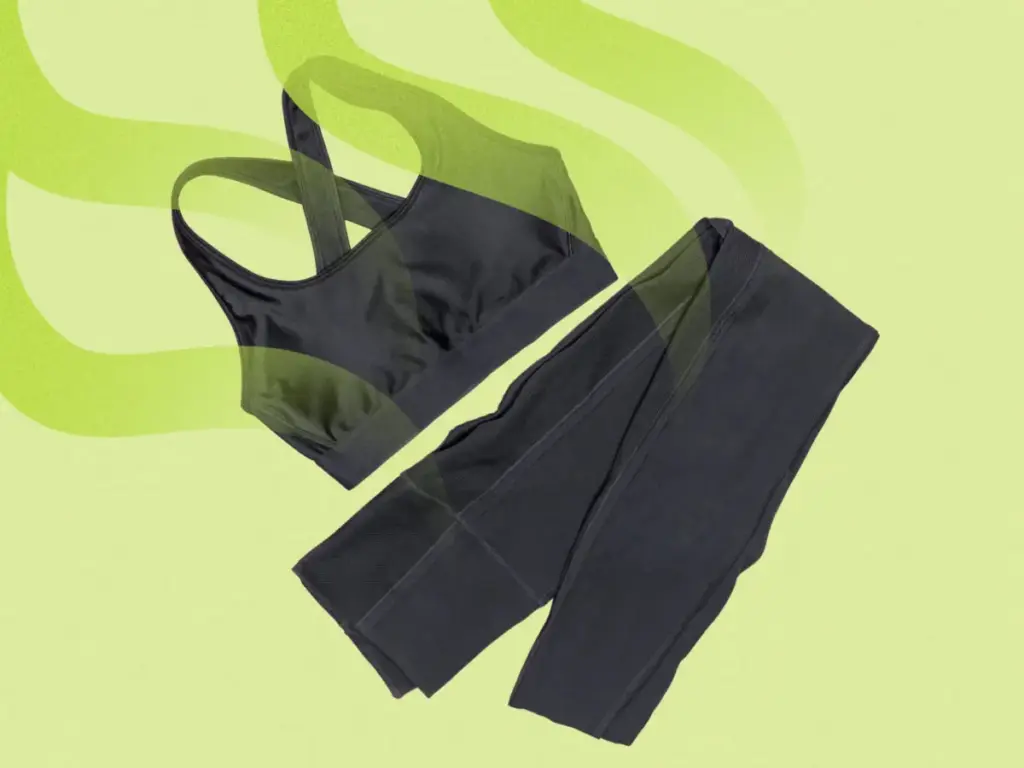
- Sports Bras and Underwear (Never Reuse): Due to high friction and dense concentrations of apocrine sweat glands in the chest, underbust, and groin regions, intimate activewear accumulates sweat and bacteria at exponential rates. Rewearing a sports bra is a primary catalyst for stubborn truncal acne (acne mechanica) and fungal folliculitis.
- Outer Layers and Loose Tees (Conditional Reuse): Loose-fitting outer layers, long-sleeve warm-up jackets, or sweatpants that experienced minimal internal moisture transfer carry a much lower risk profile and can occasionally be reworn safely.
Official Statements & Expert Guidance
Navigating the grey area between pristine hygiene and sustainable garment care requires expert frameworks. While clinical standards dictate an uncompromising rule, dermatological consensus acknowledges the practical realities of modern life.
+-------------------------------------------------------------------+
                  THE DERMATOLOGICAL SPECTRUM OF CARE
+-------------------------------------------------------------------+
|                                                                   |
|   [GOLD STANDARD]          [THE REAL-WORLD COMPROMISE]            |
|   Wash activewear after    Use individual discretion based on     |
|   every single use to      sweat levels, workout intensity, and   |
|   eliminate microbial      garment type (e.g., wash bras always;  |
|   build-up entirely.       air-out low-impact outer layers).      |
|                                                                   |
+-------------------------------------------------------------------+
"The dermatologist’s answer is after every workout," states Dr. Olamiju. "But people can use their own discretion—think about how comfortable you feel."
This balanced perspective recognizes that hyper-frequent laundering carries its own environmental footprint, contributing to microplastic shedding from synthetic garments into municipal water systems and accelerating textile degradation. Therefore, mastering the art of safe rewearing is an exercise in risk mitigation rather than all-or-nothing perfectionism.
Common Dermatological Conditions Linked to Unwashed Activewear
- Acne Mechanica: Breakouts triggered by the combination of friction, pressure, and trapped moisture against the skin. Most commonly observed on the back, shoulders, and chest.
- Folliculitis: Inflammation or infection of the hair follicles, frequently caused by Staphylococcus bacteria or yeast overgrowth thriving in damp, unwashed fabric environments.
- Contact Dermatitis: Skin irritation, redness, and itching caused by the breakdown of residual sweat, detergent buildup, and accumulated bacterial byproducts rubbing against compromised skin barriers.
Future Outlook: Sustainable Hygiene and Smart Textiles
As the intersection of wellness, dermatology, and sustainability continues to evolve, the future of activewear is poised for technological disruption designed to solve the unwashed garment dilemma.
Antimicrobial Fabric Treatments
Textile engineers are increasingly incorporating advanced antimicrobial treatments directly into activewear fibers at the manufacturing stage. Innovations utilizing silver ion technology, copper threads, and bio-based botanical finishes (such as eucalyptus or chitosan extracts) actively inhibit bacterial proliferation on the fabric surface. These treatments significantly extend the window of freshness, allowing garments to be safely reworn multiple times without cultivating harmful microbial loads.
Breathable Smart Blends
The textile industry is moving away from purely petroleum-based synthetics toward hybrid engineering. By blending high-performance recycled polyesters with natural, breathable fibers like Tencel, modal, and organic cotton weaves, manufacturers are creating garments that offer the moisture management of athletics with the natural breathability and antimicrobial resilience of organic materials.
Consumer Education and Skin-First Fitness
Ultimately, the future of skin health in fitness relies on informed consumer choices. By understanding personal sweat profiles—recognizing whether one is a "heavy sweater" or experiences sensitive skin—individuals can tailor their laundry routines intelligently.
Actionable Takeaways for Safe Activewear Reuse
If you choose to rewear your workout gear, adhere to these golden rules established by dermatologists:
- The Air-Out Rule: Never toss damp workout clothes into a dark, enclosed hamper or gym bag where bacteria can multiply rapidly. Hang garments immediately in a well-ventilated, dry area to allow moisture to evaporate completely.
- The Smell Test is Not Enough: Absence of odor does not equal absence of bacteria. If a garment experienced moderate sweat during a low-intensity session, rely on visual inspection and duration of wear rather than scent alone.
- Prioritize Intimate Layers: Always wash sports bras, underwear, and compression shorts after a single use. Save potential rewears for outer layers, loose shirts, and hoodies.
- Wash with Purpose: When laundering technical synthetics, use specialized athletic detergents designed to break down body oils and eliminate trapped bacteria at lower water temperatures, preserving fabric elasticity while ensuring complete sanitization.
By balancing eco-conscious laundry habits with rigorous dermatological awareness, fitness enthusiasts can maintain clear, healthy skin without sacrificing sustainability or convenience. When in doubt, however, remember the ultimate rule: err on the side of fresh—your skin will thank you.