Executive Overview
Hair thinning is a deeply personal and surprisingly common concern that affects millions of women worldwide. Whether manifesting as a widening part, a less-than-full ponytail, or an alarming amount of strands left in the shower drain, changes in hair density can trigger anxiety and frustration. Fortunately, the beauty and wellness landscapes have shifted dramatically away from superficial quick fixes, moving instead toward a science-backed, scalp-first approach to hair restoration.

The philosophy is simple yet revolutionary: healthy hair begins at the root. By treating the scalp as an extension of the skin, modern formulations leverage cutting-edge ingredients—ranging from plant-based DHT blockers and biomimetic peptides to adaptogens and clinical-grade growth factors—to revitalize dormant follicles and fortify existing strands.

In this comprehensive guide, we explore top-tier, dermatologist-recommended hair serums and treatments designed to combat thinning, soothe irritation, and promote robust hair growth. Backed by insights from leading board-certified dermatologists, we break down the science of hair loss, evaluate the best products on the market for every hair type and budget, and answer critical questions about what to expect on your hair-growth journey.

Detailed Chronology: Understanding the Evolution of Scalp Care
To appreciate why topical scalp serums have become the gold standard in modern hair care, it helps to examine how the industry evolved from masking damage to treating biological root causes.

- The Era of Cosmetics (Pre-2010s): For decades, hair thinning and breakage were addressed almost exclusively through styling products—volumizing mousses, heavy lacquers, and silicones designed to coat the hair shaft and create the illusion of fullness. Little attention was paid to the scalp itself, often leading to product buildup and follicle congestion.
- The Rise of Minoxidil and Clinical Treatments (2010–2018): As awareness of female pattern hair loss and stress-induced shedding grew, consumers turned to medical treatments like minoxidil. While effective, these formulas often came with drawbacks such as greasy textures, scalp irritation, and a lack of cosmetic elegance that made daily adherence difficult.
- The Clean Beauty and Botanical Boom (2018–2022): Brands began recognizing the demand for cleaner, plant-based alternatives. Ingredients like rosemary oil, red clover extract (Redensyl), and caffeine entered the mainstream, offering gentler ways to stimulate circulation and block dihydrotestosterone (DHT) without harsh pharmaceutical side effects.
- The Modern Era of Precision Scalp Science (2022–Present): Today’s market bridges the gap between clean wellness and advanced biotechnology. Utilizing delivery systems like nanoliposomes, synthetic biomimetic growth factors, and custom-formulated extracts, modern scalp serums deliver targeted nourishment directly to the dermal papilla cells, optimizing the scalp microbiome and extending the anagen (growth) phase of the hair cycle.
Supporting Context & Metrics: The Anatomy of Hair Loss
Hair thinning rarely happens in a vacuum. According to dermatological research, more than 50% of women will experience noticeable hair thinning by the time they reach middle age. However, shedding and thinning are distinct phenomena driven by different biological mechanisms.

Hair Loss vs. Shedding: Knowing the Difference
- Shedding (Telogen Effluvium): This occurs when a systemic stressor—such as major life stress, postpartum recovery, rapid weight loss, or nutritional deficiencies—shocks a large percentage of hair follicles into the resting (telogen) phase prematurely. While alarming, the follicles remain healthy and fully capable of regrowth once the underlying trigger resolves.
- Thinning (Androgenetic Alopecia / Structural Shrinkage): This is a more progressive condition where hair follicles become hypersensitive to androgens, causing them to gradually miniaturize. Over time, the follicles produce finer, weaker vellus hairs instead of thick, pigmented terminal strands.
Key Drivers of Female Hair Thinning
- Hormonal Shifts: Fluctuations during postpartum, perimenopause, and menopause significantly impact hair density.
- Chronic Stress: Elevated cortisol levels can disrupt the natural hair growth cycle and provoke localized scalp inflammation.
- Nutritional Deficiencies: Inadequate intake of key micronutrients (such as iron, vitamin D, and biotin) starves hair follicles of the building blocks required for keratin production.
- Mechanical Stress: Traction alopecia, caused by tight hairstyles, heavy extensions, or frequent chemical processing, physically damages the follicle over time.
Curated Expert Picks: The Best Hair Growth Serums and Treatments
Navigating the crowded marketplace of hair growth solutions can be daunting. To help you choose the right product for your specific concerns, we have curated a list of top-rated, dermatologist-approved serums and treatments, categorized by their unique active formulations and target benefits.

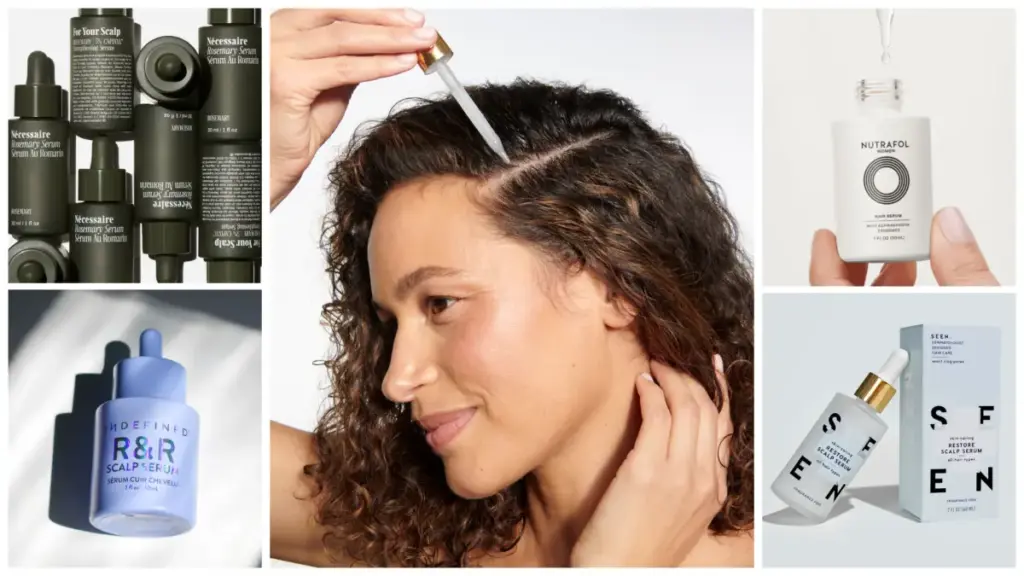
1. Nutrafol Women’s Hair Serum
- Price: $69 at Amazon
- Key Ingredients: Plant-based DHT blockers, peptides, adaptogens
- Best For: Early signs of hair loss, sensitive scalps, and daily maintenance.
- The Breakdown: Designed to deliver visibly thicker, stronger hair within 90 days, this non-greasy formula replenishes key nutrients directly at the scalp. Dermatologist Dr. Kseniya Kobets frequently recommends it to patients experiencing early thinning or inflammation due to its soothing, lightweight profile.
2. Vegamour Gro Hair Serum
- Price: $64 at Vegamour (Advanced version available for $188)
- Key Ingredients: Redensyl, vegan active botanicals
- Best For: Early-stage thinning and postpartum shedding.
- The Breakdown: Powered by Redensyl—a plant-based active clinically shown to support hair density and minimize shedding—this vegan, fragrance-free serum absorbs instantly without leaving residue. For those dealing with more persistent or advanced hair fall, Vegamour also offers an enhanced professional-grade formulation.
3. Nécessaire Rosemary Serum (30-Day Supply)
- Price: $48 at Nécessaire
- Key Ingredients: 5% Capixyl, organic rosemary extract
- Best For: Enhancing overall hair density and strengthening fine strands.
- The Breakdown: Building on the cult-following of their rosemary hair care line, Nécessaire’s quick-drying, hypoallergenic serum is EU-compliant and dermatologist-tested. It works progressively to improve scalp health while increasing overall hair strength and resilience.
4. Cécred Restoring Hair & Edge Drops
- Price: $56 at Ulta Beauty
- Key Ingredients: Peptides, fermented rice powder, biotin, Cécred keratin ferment
- Best For: Receding edges, textured hair, and protective styles (wigs and extensions).
- The Breakdown: Beyoncé-approved and backed by heavy-hitting strengthening agents, this proprietary peptide blend targets scalp density and structural hair health. Notably, its lightweight delivery system makes it exceptionally compatible with protective styles, wigs, and extensions.
5. Undefined Beauty R&R Scalp Serum
- Price: $28 at Amazon
- Key Ingredients: CBD, adaptogens, clarifying botanicals
- Best For: Stressed, flaky, or irritated scalps prone to oil imbalance.
- The Breakdown: Taking a wellness-first approach to scalp health, this calming serum utilizes adaptogens and CBD to soothe inflammation, reduce flakiness, and regulate sebum production without clogging hair follicles.
6. Seen Restore Scalp Serum
- Price: $48 at Amazon
- Key Ingredients: Bisabolol, squalane, skin-soothing agents
- Best For: Highly reactive, allergy-prone, or sensitive skin types.
- The Breakdown: Formulated specifically to avoid triggering redness or contact dermatitis, this non-comedogenic, fragrance-free serum is free of sulfates, silicones, and common allergens. Dr. Kobets notes that it has been clinically tested for common allergens, making it a premier choice for easily irritated scalps.
7. Aunt Jackie’s Curls & Coils Batana, Jojoba & Rice Elixir
- Price: $9 at Amazon
- Key Ingredients: Batana oil, jojoba oil, rice extract
- Best For: Curls, coils, and textured hair prone to dryness.
- The Breakdown: Often hailed as "liquid gold" within Afro-Caribbean communities, batana oil is deeply nourishing and renowned for its ability to restore thinning edges and promote the appearance of thick, resilient coils.
8. KeraFactor Scalp Stimulating Solution
- Price: $174 at mykerafactor.com
- Key Ingredients: Synthetic biomimetic growth factors, nanoliposomes
- Best For: Advanced thinning and clinical-grade regrowth.
- The Breakdown: Developed by dermatologist Dr. Amy Taub, this high-performance solution utilizes synthetic biomimetic growth factors designed to mimic natural signaling proteins. Encased in nanoliposomes, these active ingredients penetrate deeply into the scalp. Dermatologist Dr. Teresa Song highlights it as a trusted, science-backed option for both prevention and restoration.
9. RevitaLash Volume Enhancing Foam
- Price: $152 at Amazon
- Key Ingredients: Proprietary peptide complexes, panthenol
- Best For: Postpartum volume loss and fine, flat hair.
- The Breakdown: While technically a conditioning foam rather than a liquid serum, this lightweight treatment is dermatologist-approved to stimulate growth and amplify volume without irritation. Dr. Kobets recommends it particularly for postpartum clients seeking an immediate aesthetic boost alongside long-term follicle support.
10. Hårklinikken Hair Gain Extract
- Price: $102 at harklinikken.com
- Key Ingredients: Proprietary bioactive botanical extracts
- Best For: Fine hair types that easily weigh down.
- The Breakdown: Applied directly to the scalp, this non-greasy extract strengthens hair at the root to stimulate regrowth without sacrificing volume. Hårklinikken also offers a personalized digital assessment to tailor formulations to individual scalp profiles.
11. Kerativ Redensify Treatment Serum
- Price: $65 at Kerativ
- Key Ingredients: Clinical-grade density actives, nourishing antioxidants
- Best For: Statistically proven improvements in volume and density.
- The Breakdown: Developed by dermatologists, this serum is supported by robust clinical data. Dr. Kristen Lo Sicco of NYU Langone points to an independent six-month study demonstrating statistically significant improvements in hair density and volume starting as early as the three-month mark.
Official Statements & Expert Insights
Understanding the underlying science requires listening to the medical professionals who treat hair loss daily.

- Dr. Teresa Song on Multi-Factorial Thinning: "Hair thinning in women is surprisingly common and can happen for a mix of reasons. Hormones, stress, nutritional deficiencies, and genetics all play a role. The scalp is incredibly responsive to what’s going on inside the body."
- Dr. Kseniya Kobets on Ingredient Synergy: "Hair loss is often multifactorial and rarely due to a single isolated cause. When selecting a serum, look for formulas that target multiple pathways—such as reducing micro-inflammation, extending the anagen phase, and supporting the skin barrier."
- Dr. Kristen Lo Sicco on Hair Texture Matching: "Oils are better used on curlier hair given it is more prone to desiccation. Someone with straighter hair may find an oil difficult to maintain use over time if it causes the hair to become greasier quicker. Lightweight serums are ideal for fine hair types that weigh down easily."
Future Outlook: What Lies Ahead in Hair Restoration
As biotechnology continues to merge with cosmetic chemistry, the future of hair restoration looks brighter than ever. Researchers are exploring advanced delivery mechanisms, including microneedling patch technologies, exosome therapies, and personalized genetic profiling of the scalp microbiome.

However, the golden rule of hair growth remains unchanged: consistency is key. No matter which serum or treatment you choose, hair follicles require time to progress through their natural growth phases. By committing to a daily scalp-care routine, protecting your hair from mechanical stress, and pairing topical treatments with overall wellness, achieving thicker, healthier hair is an entirely attainable goal.