Executive Overview
In the fast-moving intersection of digital content creation and corporate finance, few stories rival the sheer audacity of Mark Fischbach’s recent maneuvers. Better known to his massive global audience of tens of millions as Markiplier, the YouTube titan has fundamentally altered his relationship with legacy hardware giant GoPro—not through traditional influencer marketing contracts, but through aggressive, calculated equity acquisition.
What began as a routine industry snub at the annual NAB Show in Las Vegas this past April has blossomed into a transformative financial and creative partnership. After being denied a preview of GoPro’s highly anticipated, unreleased flagship cinema camera—the Mission 1 Pro ILS—Fischbach took matters into his own hands. Viewing the struggling hardware manufacturer’s depressed valuation as a market inefficiency, he quietly acquired enough stock to become the company’s largest single shareholder, securing an 8.5% passive stake representing roughly 13.5 million shares.
This unprecedented power play did more than just shock Wall Street; it immediately injected life into a flagging stock, sending shares surging 33% upon disclosure. More importantly, it granted Fischbach direct access to the exact piece of technology that sparked his financial crusade: a $699.99 interchangeable lens cinema camera that he boldly claims matches, and in some ways surpasses, the output of cinema-grade equipment costing ten times as much.
As GoPro fights for its survival amid severe financial distress, the arrival of a creator-first advocate with deep pockets and unmatched cultural reach might just be the lifeline the company desperately needs. This report examines the chronological sequence of events, the financial realities of GoPro’s downward trajectory, Fischbach’s crusade for accessible indie filmmaking tools, and what this high-stakes convergence means for the future of digital media production.
Detailed Chronology: From Las Vegas Snub to Wall Street Shockwave
The saga of Mark Fischbach’s unexpected foray into corporate ownership traces back to the sprawling convention floors of the Las Vegas Convention Center during the National Association of Broadcasters (NAB) Show in April.
April 2024: The NAB Show Cold Shoulder
Walking the floor of the industry’s premier broadcasting convention, Fischbach sought out the GoPro booth. Word had begun circulating within high-end production circles regarding the company’s upcoming, tightly guarded secret: its very first interchangeable lens cinema camera, designated the Mission 1 Pro ILS, ahead of its scheduled September 2 release date.
Seeking an early look to evaluate its potential for independent filmmaking, Fischbach approached the exhibit booth, only to be turned away. GoPro representatives declined to show him the device.
Rather than walking away frustrated or escalating the matter through social media complaints—a common route for aggrieved digital creators—Fischbach approached the situation through an analytical lens. Conducting a cursory examination of the company’s market standing, he identified a glaring discrepancy between the brand’s cultural legacy and its collapsing share price.
"I saw the stock and where it was, I was like that seems undervalued," Fischbach revealed in an interview with Bloomberg. "It’s just something I’ve been cooking in the background; I want the company to succeed."
The Accumulation Phase
In the weeks following the NAB Show, Fischbach engaged in a quiet accumulation of GoPro common stock. While corporate insiders and institutional investors were fleeing the sinking ship, the YouTuber steadily built a massive position.
According to an official Securities and Exchange Commission (SEC) filing submitted in late August, Fischbach amassed a staggering 13.5 million shares, translating to an 8.5% ownership stake in the company. This massive holding officially crowned him GoPro’s single largest individual shareholder.
Crucially, filings confirmed that Fischbach’s position is entirely passive; he did not acquire the shares to orchestrate a hostile corporate takeover or stage a boardroom coup. Instead, his motives were twofold: an opportunistic financial investment in an undervalued asset, and a strategic maneuver to command the attention of a hardware manufacturer whose products he genuinely believed in.
The Reconciliation and the Review
Armed with his newly minted status as a major stakeholder, Fischbach resumed outreach to GoPro executives. Realizing the immense value of having one of the planet’s most influential digital creators invested—both literally and figuratively—in their hardware, GoPro leadership extended an invitation to their corporate offices.
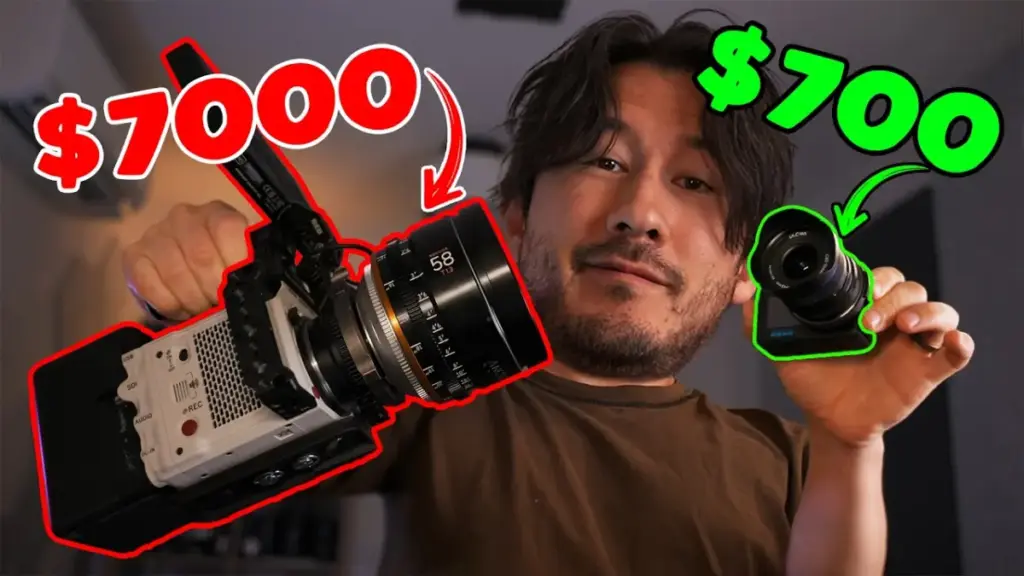
During this visit, the company finally handed over the Mission 1 Pro ILS. The reconciliation culminated in a formal channel sponsorship and a comprehensive, gushing 14-minute YouTube review titled $700 vs $7000 Camera | GoPro Mission 1 ILS Review.
Released to his audience of millions, the video was an unabashed endorsement of the hardware’s capabilities. Fischbach appeared genuinely captivated by the camera’s performance, declaring it a potential paradigm shift for independent filmmaking.
Supporting Context & Metrics: The Anatomy of a Corporate Rescue
To fully grasp the magnitude of Fischbach’s intervention, one must examine the perilous financial landscape GoPro has inhabited over recent years. The hardware pioneer, once a darling of consumer electronics, has faced an existential crisis that brought its very viability into question.
GoPro’s Downward Financial Spiral
GoPro’s market capitalization and stock price history trace a steep, disheartening descent from its glory days. During its Initial Public Offering (IPO) in June 2014, the company priced its shares at a robust $24, capturing the zeitgeist of the extreme sports and action-camera boom.
However, intense competition from rivals like DJI and Insta360, coupled with plateauing consumer upgrade cycles and strategic missteps, severely eroded the company’s bottom line. By early 2025, GoPro shares were trading below $1.
The situation deteriorated further following disastrous second-quarter financial results. In a chilling regulatory filing with the SEC, GoPro management took the extraordinary step of admitting there was "substantial doubt about the Company’s ability to continue as a going concern." Following this disclosure, the stock plunged to an all-time low of just $0.57 per share.
The Markiplier Effect on Wall Street
The announcement of Fischbach’s 8.5% stake acted as an immediate, violent catalyst in the public markets. Upon the public disclosure of his holdings via regulatory filings, market sentiment instantly shifted.
Retail investors, algorithmic traders, and tech enthusiasts flooded the market, driving GoPro stock up by a staggering 33% in a single trading session, pushing shares to $1.39. While still a far cry from its 2014 IPO highs, the sudden surge provided the company with much-needed breathing room, restored a degree of market confidence, and demonstrated the tangible economic power wielded by top-tier digital creators.
Democratizing Cinema: The Philosophy Behind the ILS
Fischbach’s investment in GoPro is not merely a financial gamble; it aligns directly with his long-standing crusade to lower the barriers of entry for independent filmmakers—a mission brought sharply into focus during his own experiences producing the indie film adaptation of Iron Lung.
The Hard Lessons of Iron Lung
As detailed in earlier reporting regarding his cinematic ventures, Fischbach spent upwards of $50 million (factoring in production, marketing, and distribution efforts) bringing the indie horror project Iron Lung to the big screen. Navigating the treacherous waters of traditional distribution left him acutely aware of the systemic hurdles independent creators face.
To combat this, Fischbach went so far as to work directly with YouTube to establish himself as an official video aggregator. This strategic move empowers him to advocate for and list other creator-made and independent films directly for sale on Google’s dominant video platform, bypassing traditional studio gatekeepers.
Challenging Industry Cost Barriers
While distribution represents the tail end of the filmmaking process, production hardware sits at the beginning—and the costs have historically been prohibitive.
Fischbach utilized a RED Komodo-X cinema camera, which retails for approximately $7,000, to film Iron Lung. While renting such equipment is an option, Fischbach noted that the rental fees alone often eclipse the entire purchase price of consumer-accessible alternatives.
During his research, he encountered an absurdity typical of high-end cinema equipment: a simple metal camera handle manufactured by RED cost $699—the exact price point of the entire GoPro Mission 1 Pro ILS.
"It’s because I care about tools being accessible for people," Fischbach emphasized in his review. "The entry level into the cinema world cannot be $7,000, because people cannot afford $7,000… I love this camera. I love what it represents. I love that it opens up a whole world for people to get access to cinema-quality things. And make no mistake—this is cinema-quality."
The creator went as far as to state that if he were filming Iron Lung today, he would actively substitute shots taken with the $7,000 Komodo-X with footage from the $699 GoPro ILS, confirming he intends to use the hardware extensively in his future cinematic projects.
Official Statements and Industry Reception
Reactions to the Mission 1 Pro ILS extend well beyond Fischbach’s glowing endorsement, signaling a potential turning point for GoPro’s brand identity.
Critical Acclaim and Market Validation
Industry reviewers and professional cinematographers who have tested pre-production and launch units of the ILS have largely echoed Fischbach’s sentiments. Praising its dynamic range, color science, and interchangeable lens versatility at an unprecedented price point, tech analysts have begun asking a singular, pressing question: Could this camera be the product that rescues GoPro from impending bankruptcy?
For years, GoPro was pigeonholed as a niche manufacturer of rugged action cameras strapped to surfboards, helmets, and bicycle handlebars. By pushing aggressively into the cinema camera market with a modular, high-performance, low-cost device, the company is attempting a high-stakes pivot toward traditional videographers, indie filmmakers, and digital content creators.
Corporate Silence Met with Practical Partnership
While GoPro corporate leadership initially kept their cards close to their chest at the NAB Show—refusing a private demonstration to an unknown-to-them quantity of a YouTuber, even one as massive as Markiplier—the subsequent equity revelation forced an immediate corporate pivot.
By welcoming Fischbach into their offices, providing him with early hardware, and locking down a channel sponsorship, GoPro successfully converted a snubbed consumer into an active brand evangelist and financial savior. Neither Fischbach nor GoPro executives have indicated plans for an active management role, respecting the passive nature of his 8.5% stake, but the symbiotic relationship between the creator’s platform and the hardware maker’s marketing apparatus is now stronger than ever.
Future Outlook: A New Paradigm for Creator-Brand Relations
Mark Fischbach’s transformation into GoPro’s largest single shareholder represents a watershed moment in the evolution of the creator economy. For over a decade, the standard dynamic between influencers and major corporations relied on transactional endorsement deals: a brand pays a flat fee or commission, the creator reads a script or showcases a product, and the campaign concludes.
Fischbach’s maneuver shatters this traditional paradigm. By utilizing his personal capital to acquire a meaningful equity stake in a publicly traded hardware manufacturer, he has tied his professional reputation not just to a marketing campaign, but to the long-term enterprise value of the company itself.
What Lies Ahead for GoPro and Markiplier?
As the Mission 1 Pro ILS hits the market following its September 2 launch, all eyes will be on sales figures and adoption rates within the indie creator community. If the camera succeeds in capturing market share from legacy cinema heavyweights, GoPro’s financial turnaround could transform from a speculative hope into an audited reality.
For Fischbach, the success of the ILS validates his ongoing crusade for democratized tools. Whether he is negotiating distribution rights for independent films on YouTube, self-funding cinematic projects like Iron Lung, or engineering a rescue package for a struggling hardware manufacturer from his own investment portfolio, Mark Fischbach is no longer just a digital entertainer. He has cemented his status as a formidable industry mogul, capable of moving markets and shaping the very tools future generations of filmmakers will use to tell their stories.