Executive Overview
The modern fitness landscape is heavily saturated with the imagery of clanging metal, heavy chalked-up barbells, and grueling weight-room sessions. For many wellness enthusiasts, navigating this environment can be deeply intimidating. The culture of the traditional weight room—often characterized by heavy equipment, roaring exertion, and the underlying anxiety of potential injury—drives a significant portion of the fitness-curious population to seek alternative avenues for physical conditioning. Enter bodyweight training: a form of strength training that utilizes the practitioner’s own mass as the primary source of resistance. Moves like air squats, lunges, planks, and push-ups offer a streamlined, highly accessible pathway to physical fitness.
However, a persistent debate lingers within the exercise science community: Can calisthenics and bodyweight routines genuinely compete with traditional iron when it comes to building muscle mass and maximizing strength?
The short answer is nuanced. While bodyweight exercises provide exceptional accessibility, functional movement benefits, and low barriers to entry, their capacity to induce muscular hypertrophy depends heavily on the individual’s current fitness level, exercise selection, and the implementation of advanced training variables. According to leading kinesiologists and certified strength coaches, bodyweight training can indeed build muscle and drive strength adaptations—provided that exercisers understand how to push their bodies close to the physiological threshold of muscular failure. Yet, for intermediate to advanced trainees, bodyweight routines will eventually hit a biochemical ceiling, necessitating either advanced movement progressions or the introduction of external loads to sustain continuous growth.
Detailed Chronology & Evolution of Bodyweight Training
To understand the modern debate surrounding bodyweight versus weighted resistance training, it is helpful to examine how physical conditioning has evolved over centuries.
Ancient Origins of Calisthenics
Long before the invention of the cast-iron dumbbell or the Olympic barbell, human strength was forged entirely through bodyweight manipulation. The ancient Greeks practiced calisthenics—derived from the Greek words kalos (beauty) and sthenos (strength)—as a foundational method for building resilient soldiers, formidable gladiators, and elite Olympic athletes. Warriors relied on push-up variations, primitive pull-ups on tree branches, and deep-squat patterns to cultivate functional power without the need for external apparatuses.
The Industrial Revolution and the Iron Age
The 19th and early 20th centuries marked a seismic shift in physical culture. With the advent of industrial manufacturing, heavy iron became widely accessible. Strongmen like Eugen Sandow popularized the use of dumbbells and barbells, shifting public perception. Strength began to be quantified not merely by what a human body could do with itself, but by how many plates of cast iron it could lift off the floor. The weight room quickly became the gold standard for structural development, overshadowing the historical roots of bodyweight calisthenics.
The Modern Re-Emergence: Accessibility in the 21st Century
In recent years, a pendulum swing has brought bodyweight training back into the cultural zeitgeist. Driven by global events, the rise of home-gym culture, and an emphasis on functional fitness, millions of individuals have rediscovered the merits of working out without gear. Platforms like gymnastics training, street workout communities, and mobile fitness apps have elevated calisthenics from a "lesser alternative" to a highly respected, distinct discipline. Today, fitness consumers are asking a critical question: Do I actually need a gym membership, or can my own skeleton and musculature provide all the resistance I require?
Supporting Context & Metrics: The Mechanics of Bodyweight Load
Not all bodyweight exercises are created equal. The mechanical stress placed on a specific muscle group depends entirely on physics—specifically, the distribution of mass and the leverage points of the human body.
The Physics of Load Distribution
Consider an isolation exercise like a bicep curl using only your arm’s mass. According to Meredith Witte, MS, CSCS, founder of functional strength training platform The Playground, doing bodyweight bicep curls yields virtually zero physiological benefit. Why? Because the only mass moving up and down is your forearm and hand, generating negligible mechanical tension on the biceps brachii.
Conversely, compound movements command massive portions of total body mass. A study published in the Journal of Strength and Conditioning Research investigated the biomechanics of the standard push-up and discovered that proper execution requires a person to support up to 75% of their total body mass. For a 150-pound individual, that translates to pressing roughly 112.5 pounds of resistance with every single repetition—explaining why push-ups remain notoriously difficult, even without stacking heavy weight plates across the upper back.
Lower-Body Realities: Why Squats Hit a Ceiling
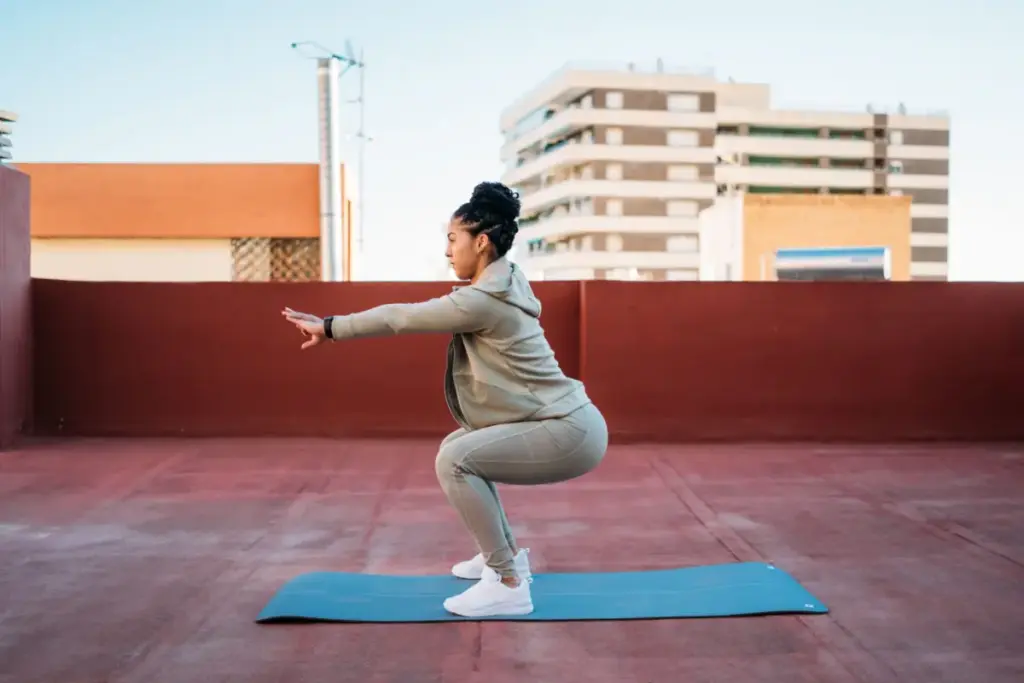
Lower-body exercises like bodyweight squats and lunges also engage major muscle groups, including the quadriceps, hamstrings, and glutes. However, because human legs are naturally engineered to carry our body weight all day long during walking, running, and standing, simple air squats rarely provide enough stimulus to prompt significant muscle growth in conditioned individuals.
"For the average person, bodyweight squats are not going to be enough," notes Witte. "Our legs are very strong, and so they’re going to feel challenged by body weight, but it’s still really not going to be enough to sufficiently build muscle, unless you truly have not worked out before, or you are an older adult who has not been working out."
Official Statements & Expert Insights
To gain a deeper understanding of the physiological mechanisms at play, leading voices in exercise science and strength conditioning weigh in on how muscles respond to unweighted resistance.
The Principle of Muscular Failure
To trigger hypertrophy—the scientific term for the enlargement of muscle fibers—an individual must generate sufficient mechanical tension. According to Dr. Stuart Phillips, a prominent kinesiology professor at McMaster University in Ontario whose research focuses on skeletal muscle protein metabolism, the specific source of the load is secondary to the proximity to muscular failure.
"In order to trigger hypertrophy, you need to get close to the point where the muscle ‘fails’—meaning, you feel like you can’t possibly whip out another rep," Dr. Phillips explains, referencing ongoing research conducted by his laboratory team. "It doesn’t matter whether you’re lifting heavy or light, or with no weights at all, as long as you generate enough tension in the muscles that get within a couple reps of that muscular failure."
When an individual reaches this physiological threshold, the sensation can be likened to "trudging through mud," where final repetitions slow down dramatically and demand supreme mental and physical effort.
Who Benefits Most?
While elite gymnasts achieve staggering levels of muscular hypertrophy and relative strength using purely bodyweight movements (such as iron crosses, planche push-ups, and muscle-ups), the everyday practitioner experiences a different curve of diminishing returns.
Kristie Larson, CSCS, founder of Tension, a strength training studio for women in Brooklyn, emphasizes the unparalleled accessibility of bodyweight routines. "Bodyweight is a great, free option that can be done anywhere," Larson notes.
Experts agree that the populations who stand to gain the most from unweighted bodyweight exercises are:
- Absolute Beginners: Individuals transitioning from a sedentary lifestyle to an active one.
- Rehab Patients: Those returning to physical activity following an orthopedic injury or surgical intervention.
For these groups, basic movements like arm circles, glute bridges, and modified push-ups stimulate neuromuscular adaptations. "You can teach your brain to recruit the muscle fibers that you maybe aren’t utilizing," Larson adds, highlighting the vital enhancement of the brain-body connection.
The Necessity of Progressive Overload
Regardless of whether an individual chooses barbells or body limbs, continuous physical progress requires the application of progressive overload—the systematic increase of stress placed on the body during exercise.
While traditional weightlifting achieves this by adding heavy plates to a bar, bodyweight training demands creative manipulation of physics. According to Witte and Dr. Phillips, progressive overload in calisthenics can be achieved through several strategic adjustments:
- Leverage and Variations: Transitioning from a double-leg squat to a single-leg (pistol) squat, or elevating the feet during a push-up to shift a greater percentage of body mass onto the upper chest and shoulders.
- Tempo Alterations: Slowing down the eccentric (descending) or concentric (lifting) phase of a movement to increase time under tension.
- Form Optimization: Eliminating momentum and utilizing strict, pristine technique to ensure target muscles are doing the work rather than secondary stabilizers or surrounding joints.
- Volume Management: Increasing repetitions and sets, though with a distinct caveat: once an exercise exceeds 30 to repetitions without inducing localized muscular fatigue, the physiological adaptation shifts from strength and hypertrophy toward muscular endurance.
Future Outlook: Finding the Right Balance
As the fitness industry continues to evolve past rigid dogmas, the false dichotomy between "bodyweight training" and "weightlifting" is dissolving. Fitness enthusiasts no longer need to view their regimens through an all-or-nothing lens.
For individuals whose primary wellness objectives include maintaining metabolic health, supporting joint longevity, functional mobility, and preserving lean muscle tissue into older age, bodyweight training can serve as an effective, lifelong prescription. As Kristie Larson notes, "If someone wants to just maintain muscle, then bodyweight could be appropriate indefinitely." You may never win a powerlifting competition or log a massive personal record on the bench press, but you will retain the robust structural integrity, bone density, and balance required to navigate daily life with vitality.
However, for those harboring ambitious aesthetic or functional goals—such as maximizing muscle volume, developing explosive athletic power, or continuously pushing past physical plateaus—skipping external weights entirely will eventually lead to a physiological dead end.
The future of strength training lies in integration. By respecting the mechanical limits of bodyweight load while embracing the profound accessibility of calisthenics, practitioners can build resilient, functional bodies—whether they are exercising in a high-tech Brooklyn studio, a hotel room while traveling, or under the heavy iron of a traditional weight room.