Executive Overview
Snow-capped peaks, lush green alpine meadows, cows adorned with heavy brass bells, and rustic wooden cabins: over the past year, hiking aesthetics have completely dominated digital feeds. It often feels as though everyone—including your best friend’s dog—has transformed overnight into a seasoned mountaineer, scrambling up rugged inclines in high-performance Gore-Tex gear and sipping iced Almdudlers at dizzying altitudes. But this cultural phenomenon begs a broader question: Where did everyone suddenly find the leg strength, and more importantly, why are we all retreating into the wilderness?
The resurgence of hiking is not merely a fleeting pandemic-era coping mechanism; it is a profound socio-cultural shift. In an era dominated by hyper-connectivity, digital exhaustion, and urban claustrophobia, the great outdoors has emerged as the ultimate sanctuary. This article explores the anatomy of the modern hiking boom, the psychological and physical mechanisms driving millions toward the trails, and how brands like adidas TERREX are capitalizing on this movement by merging outdoor endurance with holistic personal development—exemplified by initiatives like the "Design Your Life" hiking experience on the iconic Malerweg.
Detailed Chronology: From Fringe Hobby to Mainstream Movement
To understand the current obsession with alpine culture, one must look at how outdoor recreation has evolved over the past decade.
- Pre-2020: Hiking was largely perceived as a niche pursuit reserved for hardcore outdoor enthusiasts, older demographics, or specialized weekend clubs. Gear was strictly utilitarian, and digital documentation of trails was minimal.
- 2020–2022 (The Micro-Adventure Era): Lockdowns and travel restrictions forced populations to look inward and local. Urban dwellers discovered green spaces within city limits and nearby regional parks. Micro-adventures became the baseline for maintaining sanity during global uncertainty.
- 2023–Present (The Full Alpine Takeover): Social media platforms—particularly TikTok and Instagram—accelerated the aestheticization of the outdoors. Terms like "Gorpcore" entered the fashion lexicon. High-performance technical wear transitioned from mountain ridges to urban coffee shops. Hiking transformed from a quiet pastime into a vibrant, highly visible subculture characterized by community-driven excursions, storytelling, and digital badge-collecting via apps like Strava and AllTrails.
What began as a desperate escape from indoor confinement has crystallized into a permanent lifestyle choice. The modern hiker is just as likely to be a tech executive or a creative professional seeking mental clarity as they are a lifelong mountaineer.
Supporting Context & Metrics: Why We Fall in Love with the Trail
The reasons for lacing up hiking boots are manifold, spanning physiological health, psychological reset, and sociological bonding.
1. Accessibility and Affordability
Unlike golf, skiing, or equestrian sports, hiking remains fundamentally democratic. Beyond a sturdy pair of shoes and weather-appropriate layers, the barrier to entry is remarkably low. In most cases, accessing nature is entirely free. Whether tackling a multi-day trek or an impromptu afternoon micro-adventure, the trails are open to everyone—from absolute novices to seasoned veterans carrying backpacks reminiscent of archaeological excavations.
2. The Mechanics of the Mental Reset
The psychological benefits of hiking are well-documented by environmental psychologists and neuroscientists. Walking in natural environments reduces rumination, lowers cortisol levels, and combats the cognitive fatigue associated with constant screen time.
Without the distraction of dumbbells, gym mirrors, or digital notifications, hikers are forced to confront their internal dialogue. You feel the raw power in your legs, the uneven grade of the terrain beneath your soles, and the burning sensation in your lungs as the air thins at higher elevations. The body performs immense physical labor to propel you upward, fostering an embodied self-awareness that is difficult to replicate in a traditional indoor fitness setting.
3. The Power of Shared Vulnerability
While solo hiking offers profound solitude, hitting the trail with friends or a romantic partner unlocks a unique brand of interpersonal connection. The rhythmic, forward motion of walking side-by-side removes the awkwardness of face-to-face interrogation. Conversations on the trail achieve a depth and fluidity that is rarely matched in standard social settings.
When the group finally breaches the summit ridge, gasping for breath and breaking out into wide grins, a shared camaraderie is forged. Unpacking the camp stove for a well-earned snack while capturing the sweeping panorama on a smartphone cements a collective sense of achievement.
Official Statements and Industry Alignment: The Intersection of Outdoor Gear and Personal Growth
The wellness economy has taken note of this massive psychological shift. Brands are no longer just selling waterproof jackets and carbon-fiber trekking poles; they are selling transformation, mental resilience, and community.
A prime example of this evolution is adidas TERREX, the outdoor division of athletic giant adidas. Recognizing that the mountains serve as a natural classroom for life skills, adidas TERREX has actively championed the synergy between physical outdoor endurance and mental fortitude.
The "Design Your Life" Initiative
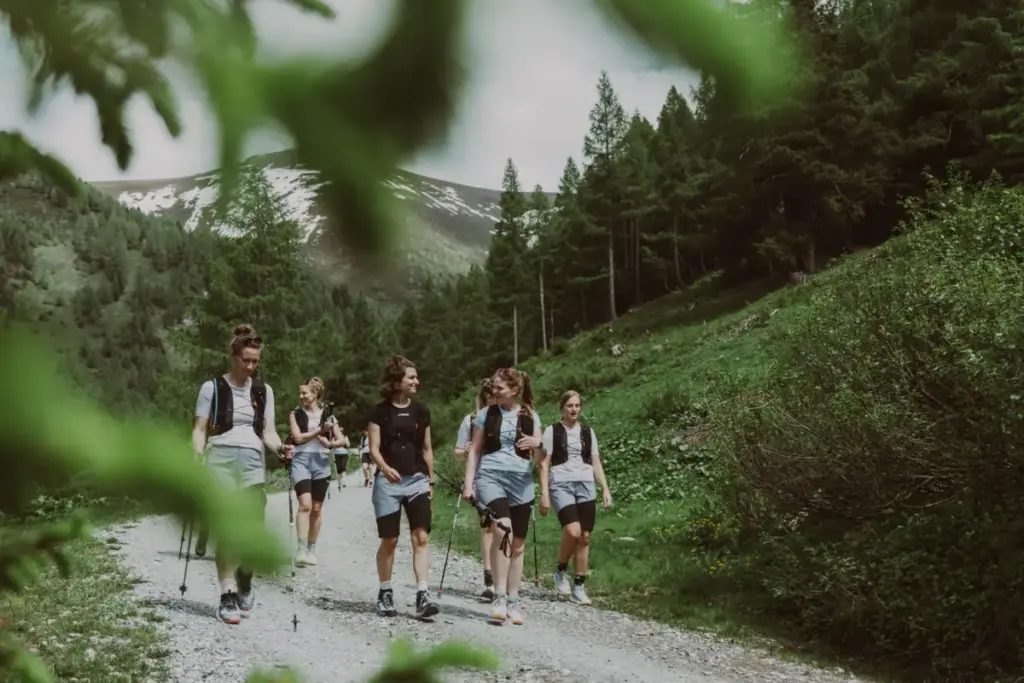
To foster this mindset among outdoor enthusiasts, adidas TERREX hosted a landmark immersive experience: the “adidas TERREX Design Your Life” Hiking Days. Designed exclusively for women seeking personal and physical growth, the multi-day event merged professional coaching with challenging hikes along one of Germany’s most visually stunning routes—the Malerweg (Painter’s Way) in the Elbe Sandstone Mountains (Elbsandsteingebirge).
While the application window for this specific event has closed and lucky participants have been notified, the ethos of the initiative continues to resonate across the outdoor community. The core philosophy of "Design Your Life" rests on a simple premise: the mental strategies required to conquer a grueling mountain ascent are identical to those needed to navigate life’s complex decisions.
Participants selected for the exclusive weekend received a comprehensive, fully sponsored package courtesy of adidas TERREX, illustrating the brand’s heavy investment in empowering female adventurers:
- Three nights of double-room accommodation at the prestigious Berghotel Bastei.
- Full board catering, customized for vegan and vegetarian preferences.
- Professional workshop moderation and expert mountain guides.
- Dedicated on-site event photography to capture the milestone moments.
- A premium adidas TERREX outdoor gear package valued at approximately €1,000.
The program targeted women with strong footing (trittsicherheit) and the stamina to endure 500 to 600 vertical meters over 6 to 7 hours of daily hiking. Beyond physical endurance, the weekend served as a crucible for self-discovery, encouraging participants to address pivotal questions:
- What personal hurdles am I currently facing, and how can I break them down step-by-step?
- How do I push through when exhaustion sets in—both on the trail and in my career or personal life?
- What does it mean to make intentional, courageous decisions that actively shape my future?
By gathering groups of like-minded women in breathtaking natural landscapes, initiatives like these prove that hiking is not merely an athletic endeavor, but an active exercise in agency and empowerment.
Future Outlook: The Evolution of the Modern Outdoors
As we look toward the future of outdoor recreation, several clear trajectories are emerging:
1. Sustainable Tourism and Local Exploration
The democratization of hiking has placed a heavy burden on local ecosystems. Moving forward, the industry must pivot toward sustainable exploration. Micro-adventures and regional getaways—discovering hidden waterfalls, mystical rock formations, and enchanted valleys right in our own backyards—will continue to replace carbon-heavy international travel. Respect for nature, adherence to "Leave No Trace" principles, and mindful interaction with local flora and fauna will become core competencies for the modern hiker.
2. The Integration of Mental Health and Physical Fitness
The boundary between traditional psychotherapy and outdoor adventure will continue to blur. Guided wilderness therapy, coaching-infused hikes, and wellness-focused outdoor retreats will expand from luxury offerings into accessible mental health tools. Brands that successfully merge physical gear performance with psychological empowerment—such as the blueprint established by adidas TERREX—will define the next generation of consumer loyalty.
3. The Lifelong Application of Trail Logic
Ultimately, the greatest takeaway from the modern hiking boom is its psychological carryover. When we force ourselves to take another step despite heavy legs, when we consciously choose to rest when our breath gives out, and when we pause to marvel at the sheer beauty of a panoramic view, we are building cognitive frameworks.
Step by step, we make active decisions about the trajectory of our lives. We learn to trust our resilience, to manage our pacing, and to confront steep, unpredictable inclines with steady resolve. The mountains do not just change our view; they change how we view ourselves. And that is a summit worth striving for, long after the digital trends have faded.