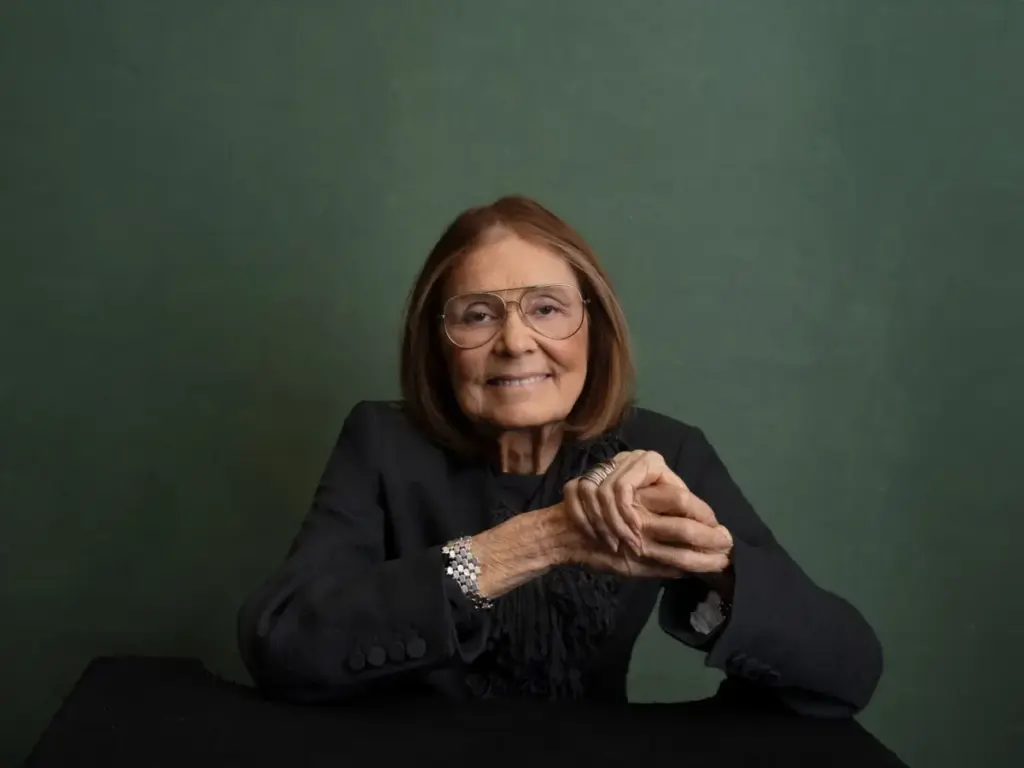
The passing of Gloria Steinem on September 2, 2026, at the age of 92, marked the end of an era for the global feminist movement. For more than six decades, Steinem stood at the vanguard of women’s liberation, serving as a journalist, activist, co-founder of Ms. magazine, and an enduring cultural touchstone. Six months prior to her death, while preparing for the release of her final memoir, An Unexpected Life: A Memoir (scheduled for publication on September 22, 2026), Steinem welcomed Glamour magazine into her iconic Upper East Side Manhattan home.
What resulted was an intimate, unfiltered portrait of an icon in her twilight years. Blending her historic ties to Glamour—where she worked as a contributing editor in the 1960s—with her trademark sharp wit, Steinem shared rare reflections on career freedom, love, aging, travel, and activism. This feature explores that final encounter, illuminating the enduring philosophy of a woman who fundamentally reshaped modern society while offering a deeply personal roadmap for generations to come.
Detailed Chronology: The Road to An Unexpected Life
Early 2026: Welcoming Glamour to the Upper East Side
In the early months of 2026, as Steinem finalized her upcoming memoir An Unexpected Life, she opened the doors of her historic New York City duplex to Glamour’s programming and creative development director, Anastasia Sanger, along with photographer Gillian Laub. Stepping into the Manhattan home felt like walking through a living archive of mid-century artistic and intellectual bohemianism. Connected by an airy spiral staircase, the residence featured walls painted in vibrant palettes reminiscent of a Frida Kahlo canvas, a secluded brick-lined patio, and a cozy guest room complete with a fireplace.
Even in her 91st year, Steinem’s relentless discipline and sharp humor were immediately apparent. Set up in her guest room alongside humanitarian awards and travel souvenirs was a small exercise bike. True to Steinem’s form, the equipment was customized: a needlepoint lumbar pillow rested on the seat bearing the embroidered declaration, "Being on the Best Sellers List Is the Best Revenge." Taped to a nearby mirror was a calendar tracking her progress titled "Gloria’s Cycling Marathon Tracker!"—documenting 14 miles completed thus far.
September 2, 2026: The Passing of an Icon
Steinem celebrated her 92nd birthday on set with the Glamour production crew, surrounded by cake and collaborators like her close friend and activist Amy Richards. Just months later, on September 2, 2026, Steinem passed away, leaving behind a legacy that transformed the legal, social, and cultural contours of the modern world. Her final memoir, An Unexpected Life, stands as her literary swan song, set for release on September 22, 2026.
Supporting Context & Metrics: Steinem’s Historic Roots in Media and Activism
Gloria Steinem’s relationship with Glamour stretches back to the 1960s, long before the Second-Wave feminist movement exploded into the mainstream cultural lexicon. As a young freelance journalist finding her footing in New York, Steinem served as a contributing editor for the magazine, writing insightful pieces that bridged the gap between dating culture, fashion, politics, and shifting social norms.
Her early bylines demonstrated the analytical wit that would later define her activism. Articles such as "Funny Ways to Meet Men on the Beach" (June 1963), "The Death of Cool and the Birth of Beyond-Cool" (October 1964), and "It’s a Young Man’s Game" (August 1965) revealed a writer deeply attuned to the complexities of gender expectations long before the term "patriarchy" became part of the vernacular. In 2011, Glamour honored her immense cultural footprint by presenting her with the Lifetime Achievement Woman of the Year award.
Official Statements and Reflections in Her Own Words
During her final interview in her Manhattan home, Steinem sat down to share a series of definitive life lessons, recorded on video to anchor her enduring wisdom. Below are her reflections, captured in her own words.
A Lesson on Career: Seeking Freedom Over Conformity
Reflecting on her entry into journalism in the early 1960s, Steinem emphasized the strategic advantage of freelance independence:
"In 1963 it was easier for me as a woman entering journalism because I was a freelancer. It wasn’t as if I was, as many women were, the only woman going into an all-male editorial meeting. I wasn’t full-time at Glamour, but I came to weekly editorial meetings… and I was grateful for that encouragement."
Steinem famously guarded her autonomy, recounting an early corporate misstep with a major publication:
"I remember one time I got a job, I think with Ladies’ Home Journal… and they had the nerve to expect me to be in the office! I quit. I remember walking in the street, getting an ice cream cone, walking in the sunshine, feeling happy."
On finding supportive platforms, she noted:
"New York Magazine allowed me to have a column of my own and also to have the freedom of working in my own house at my own desk… reporting on what I was discovering and caring about, like the farmworkers movement in California. I kind of wish I’d known there were more outlets than I understood where freelancers can submit and hopefully publish essays on what interests them."
A Lesson on Falling in Love: Dismantling Anti-Feminism
Addressing misconceptions about romance and feminist ideology, Steinem offered a robust defense of personal choice:
"As for what I would say to people who think falling in love with a man is anti-feminist? It makes no sense to say that because being a feminist is about becoming an equal human being. If the American family is viewed as a hierarchy with the male patriarch at the top, then feminism is democratising that structure."
She championed absolute autonomy in domestic arrangements:
"If a woman freely chooses to be a trad wife, fine. Maybe men should be free to choose to be dependent too. It’s all about choice and the power to make the choice… My view on marriage is that people should be able to choose it. The laws should be equal so that… the right to decide the future of those children should be equal. You should be able to choose your own name."
A Lesson on Style: Authenticity Over Corporate Expectations
Steinem’s signature aesthetic—characterized by aviator sunglasses, simple trousers, and understated tops—was born from a refusal to bow to external pressure:
"I first got aviator sunglasses because I’m nearsighted. I was in my 20s. I sort of remember going to a sunglasses shop on 57th Street here in Manhattan and the salesperson was saying, ‘No, those are men’s glasses.’ And I said, ‘Okay, but I want them anyway.’ As for my wardrobe, I never wanted to spend a lot of money on clothes so I guess what I wear is universal. I wear what I wear—and I get to choose what I wear."
A Lesson on Getting Older: Aging Without Apology
Steinem rejected societal anxieties surrounding female aging with characteristic humor and defiance:
"I was born in 1934. You do the math. I did look up online the oldest woman in the world, and the oldest one I could find was 130. So I have a new goal. I hope we’ll be rid of Donald Trump by then. [Laughs.]"
"Aging is a gift. Aging gracefully makes it sound as if aging is an external event and you’re supposed to age in a certain way. I think you’re supposed to age however the hell you want to. To lie about one’s age, especially for women, is to conform to the idea that women are only okay when we are seen as sexual or reproductive."
"I’m not immune to society’s idea of what you should look like, but I never felt the need to have a facelift or something that hurt… I want to be someone who helps assure other women that aging is a good thing because aging has been presented as being more a penalty for women than it is for men, and that’s just not true."
A Lesson on Travel: Stepping Into the Unfamiliar
Recounting her post-college travels to India following its independence from British rule, Steinem highlighted the transformative power of displacement:
"There was an available scholarship to go to India, so I was lucky… It was actually easier to travel alone as a woman in India than it was in this country, because there were women-only cars on the railroad… I spent the first many months living in a women’s dormitory at the University of Delhi."
"There’s something about traveling that requires you to be on your own and figure things out. I still fly coach. I mean, I understand that first class is more comfortable, but you’re going to get to the same place at the same time. So what’s the point? [Laughs.]"
A Lesson on Activism: The Power of Difference
Reflecting on overcoming her early terror of public speaking alongside civil rights icons like Flo Kennedy and Dorothy Pittman Hughes, Steinem underscored the necessity of intersectional unity:
"The differences are precious because you don’t learn from sameness—hello, you learn from difference. I think if we’re sitting in a group and everybody looks like us, there’s probably something wrong. It’s a joy to learn, and recognising that we know more now than we did maybe 10 or 20 years ago is a process and a joy."
Final Words: Rejecting Universal Dogma
In keeping with her lifelong advocacy for individual sovereignty, Steinem’s ultimate piece of guidance was characteristically paradoxical:
"My advice for women now is don’t take my advice. Do what you love; do what you’re curious about. I’m living my life as best I can, but I don’t know your life, so I don’t want you to take my advice unless it feels like it fits your life."
As the literary and activist worlds prepare for the September 22 publication of An Unexpected Life: A Memoir, the global community continues to process the immense void left by Gloria Steinem’s death. Her final interview with Glamour serves as a vital historical bridge—connecting the pioneering journalism of the 1960s with the modern feminist landscape of the 21st century.
Steinem’s legacy will not be measured merely in the legislative milestones she championed, the equal rights amendments she fought for, or the institutions she helped build. Rather, it endures in the intellectual permission slip she handed to generations of women: the freedom to question hierarchy, to embrace aging as an uncompromised gift, and, above all, to write the rules of one’s own existence.