Sharper than a ballet flat yet more relaxed than an oxford, the best loafers for women bring effortless polish to everyday dressing. Their characteristic features—think sturdy leather uppers and substantial outsoles—offer year-round wearability in an elegant shape. Whether styled with tailored wide-leg trousers, knit dresses, or classic denim, they strike a balance few leather shoes can: sensible, self-assured, and timeless.
Executive Overview
For decades, the loafer has occupied a singular space in the sartorial landscape. Rooted in the traditions of menswear and collegiate subcultures, it has transitioned into an essential cornerstone of contemporary women’s wardrobes. Today, the footwear category represents a convergence of heritage craftsmanship and avant-garde design. As consumer demands shift toward versatile, high-utility investments, footwear designers have responded by reinventing the classic slip-on across multiple dimensions—from buttery suede iterations and high-shine patent finishes to architectural heeled variants.
This comprehensive analysis examines the current landscape of women’s loafers, tracking their aesthetic evolution, detailing key style categories, analyzing market drivers, and providing expert-backed guidance on selection, sizing, and break-in methodologies.
Detailed Chronology: From Heritage Staple to Runway Avant-Garde
The journey of the loafer is a testament to the blurring lines between traditional gendered dress codes.
- Mid-20th Century Origins: Originally adapted from Norwegian farm footwear and popularized by elite British shoemakers and American Ivy League campuses, the penny loafer emerged as a symbol of effortless, casual elegance.
- The Designer Reinterpretation (Late 20th Century): European luxury houses began adopting the silhouette, introducing refined lasts, delicate hardware, and supple suedes that moved the shoe out of the academic quad and onto European promenades.
- The Chunky Revolution (2020s): The footwear category experienced a massive resurgence driven by lug-soled, heavy-bottomed iterations from houses like Prada, establishing a modern juxtaposition between preppy heritage and punk-inspired volume.
- The Contemporary Runway (Fall 2026 Shift): On the fall 2026 runways, an unexpected take on the preppy staple stole the spotlight: the heeled loafer. From Celine to Khaite, the polished style retained much of the traditional silhouette—incorporating square toes and ruched leather—while adopting an elevated, sharper attitude. Simultaneously, designers introduced playful tassel details and glove-soft leathers, cementing the loafer not merely as a transitional shoe, but as a permanent focal point of high fashion.
Supporting Context & Metrics: Categorizing the Modern Loafer Market
Navigating the contemporary loafer market requires an understanding of distinct stylistic categories, each serving a unique sartorial function.
1. Classic Penny Loafers
Classic leather loafers are a no-brainer investment that work with everything from denim to tailoring, and only get better with wear. Heritage shoemakers and contemporary fashion houses alike have elevated the silhouette to justify its place in a capsule wardrobe.
- Church’s Natalie Leather Loafers ($995): Epitomizing British heritage craftsmanship, these structured leather loafers offer unmatched longevity and timeless appeal.
- G.H.Bass Blythe Penny Loafers ($160): As the originators of the classic Weejun, G.H.Bass delivers authentic prep style at an accessible price point.
- Madewell The Grayson Penny Loafers ($178): A reliable, everyday option that bridges the gap between casual comfort and polished tailoring.
- Saint Laurent Laurent Loafers ($970): Sleek, understated, and unmistakably luxurious, tailored for the minimalist dresser.
- J.Crew Camden Leather Loafers ($258): A preppy staple featuring crisp construction and versatile styling potential.
2. Soft Loafers
Supple, glove-like leather from brands like The Row, Miu Miu, and Bottega Veneta makes loafers feel more like decadent slippers. These silhouettes rely on Italian craftsmanship or playful lace-up details to prioritize uncompromised comfort.
- Dries Van Noten Leather Penny Loafers ($1,030): An artistic take on soft construction, blending rich texture with relaxed wearability.
- Bottega Veneta Dawson Loafers ($1,050): Demonstrating the house’s mastery of tactile leather manipulation.
- Bottega Veneta Leather Brogues ($1,250): A hybrid design incorporating traditional brogue detailing into a supple framework.
3. Patent Loafers
High-shine patent loafers offer a more fashion-forward spin on the classic style. They are the ideal mechanism for injecting visual interest into a minimalist look or amplifying an already statement-making ensemble.
- Loeffler Randall Rachel Leather Loafers ($350): A glossy, youthful iteration that balances structure with shine.
- Gianvito Rossi Georgie Loafers ($995): Impeccably sculpted patent leather that exudes effortless Italian sophistication.
- Black Suede Studio Arrow Loafers ($298): Contemporary and sleek, designed for the modern metropolitan wardrobe.
- Stuart Weitzman Lottie Penny Loafers ($495): A trusted footwear house offering a polished, high-gloss finish.
- Banana Republic Leather Moc-Toe Loafers ($240): A sharp, accessible entry point into patent footwear.
4. Tassel Loafers
Another breakout from recent runway presentations, classic loafer styles have received a playful, dynamic update. Tassel detailing adds a preppy, "borrowed-from-your-grandfather" touch to the timeless silhouette. Seen everywhere from Bottega Veneta to Ulla Johnson, this hardware brings subtle movement to every step.
- G.H.Bass Lennox Weejun Loafers ($210): A classic take on tasseled heritage footwear.
- J.Crew Alden Tassel Loafers ($967): Refined tassel placement on a structured, traditional last.
- Manolo Blahnik Bucky Tasseled Loafers ($1,195): Masterclass in luxury craftsmanship, offering exquisite tailoring and delicate tassel accents.
- Fortela Sophie Tassel Loafers ($630): Blending rugged utility with refined Italian tailoring.
5. Heeled Loafers
A slight lift—whether block-heeled or a more dramatic height—takes a pair of loafers seamlessly from day to night without sacrificing their grounded sensibility.
- Church’s Shelby Leather Loafers ($995): A structured heeled option delivering authoritative style.
- Proenza Schouler Slash Loafers ($890): Architectural and edgy, perfect for the downtown aesthetic.
- Prada Brushed Leather Loafers ($1,450): The definitive luxury heeled loafer, featuring iconic branding and a robust block heel.
- Herbert Levine Fair and Square 30 Pumps ($955): A hybrid design merging pump elegance with loafer construction.
- Tod’s Logo-Detailed Leather Pumps ($1,175): Italian luxury meeting architectural heel design.
6. Suede Loafers
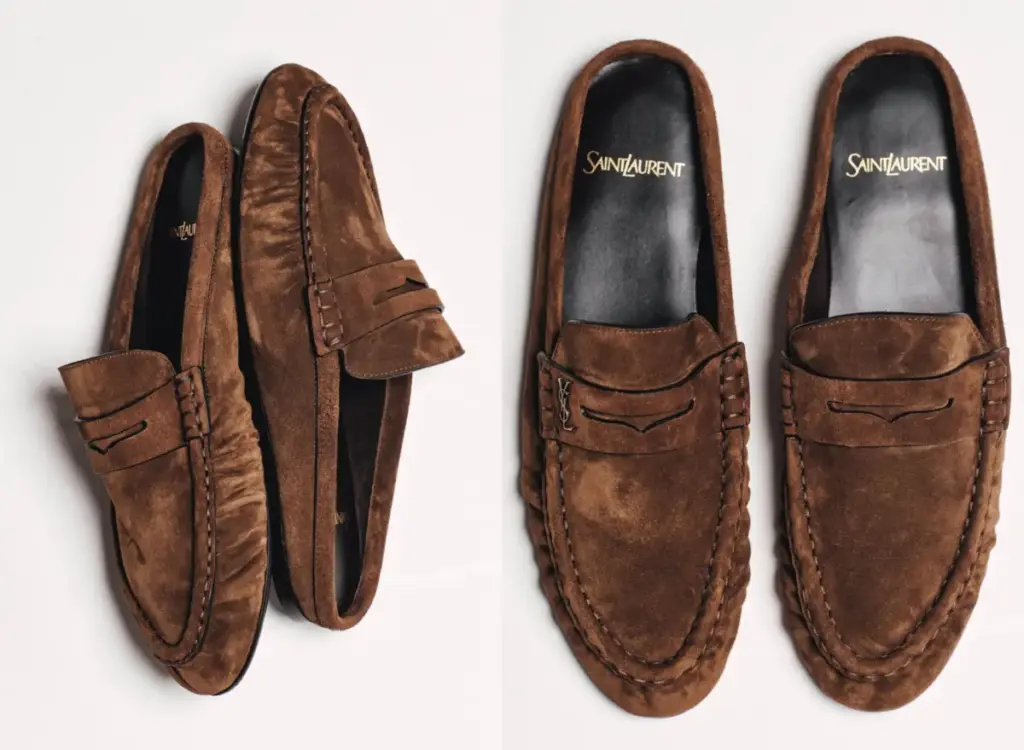
Slightly softer and more luxe, suede loafers bring texture and warmth to any autumnal palette. More delicate than their full-grain counterparts, they break in effortlessly—effectively bypassing the dreaded blister phase—while remaining durable enough to withstand inclement weather when treated with a protective spray.
- Saint Laurent Suede Laurent Loafers ($1,050): Luxurious, nap-heavy suede styled for high-end minimalism.
- Herbert Levine Soft Touch 30 Loafers ($1,245): Premium construction focusing on tactile softness.
- Black Suede Studio Allie Suede Loafers ($300): An approachable yet chic option for everyday wear.
- Jamie Haller Leather Penny Loafers ($625): Artisan-crafted with a vintage-inspired aesthetic.
7. Driving Shoes
The quintessential driving style includes flexible, rubber-pebbled soles built for pedal traction, yet they remain effortlessly chic off-road when paired with cropped denim or tailored trousers.
- Tod’s Gommino Suede Loafers ($775): The gold standard of driving moccasins, known for their iconic pebbled rubber soles.
- Scarosso Michael Driving Shoes ($365): Traditional Italian craftsmanship dedicated to lightweight comfort.
- Jenni Kayne Beck Moccasins ($495): Relaxed luxury defined by supreme softness and minimalist lines.
- Quince Suede Driver Loafers ($82): Direct-to-consumer accessibility without compromising on suede quality.
- Reformation Annette Moccasins ($248): Eco-conscious craftsmanship paired with effortless daytime charm.
Official Industry Statements & Styling Consensus
Fashion directors and footwear designers consistently emphasize the loafer’s unique position as an anchor piece. According to styling consensus across major fashion publications, the contemporary approach to wearing loafers relies heavily on intentional contrast.
Stylists recommend pairing substantial, chunky, or heeled loafers with delicate wardrobe elements—such as silk slip dresses, sheer hosiery, or pleated miniskirts—to create visual tension. Conversely, sleek, low-profile suede and leather loafers serve to ground voluminous silhouettes, including oversized trench coats, architectural blazers, and wide-leg wool trousers.
Furthermore, the resurgence of the loafer-and-sock combination has established itself as a definitive transitional styling choice, bridging the temperature gap between open-toe summer footwear and heavy winter boots.
Future Outlook: Investment Sustainability and Market Trajectory
As the fashion industry pivots toward conscious consumption and "buy better, buy less" philosophies, footwear analysts project sustained growth in the luxury and mid-tier loafer sectors. Unlike trend-driven footwear items that experience rapid obsolescence, the classic leather loafer possesses inherent longevity.
Key indicators pointing to the future resilience of the market include:
- Durability and Repairability: High-grain leathers and Goodyear-welted soles allow for resoling and long-term maintenance, making them economically sound investments over a multi-decade horizon.
- Gender-Fluid Design Adoption: The universal appeal of traditional menswear-inspired lasts ensures a broad consumer base that transcends traditional demographic boundaries.
- Material Innovation: Increased consumer interest in traceable, ethically sourced leathers and weather-resistant suedes will continue to drive product development among heritage shoemakers.
Expert Buyer’s Guide: Sizing and Break-In Methodology
Before making an investment in a luxury or heritage pair of leather loafers, proper sizing and break-in care are essential to ensure long-term comfort and foot health.
How to Choose the Right Size of Leather Loafers
One practical note before you invest: Leather loafers will stretch and soften with wear. Opting for a snug fit—or exploring half sizes when possible—is a wise strategy. If sizing feels slightly off upon initial try-on, a discreet insole or heel grip offers an easy, non-invasive adjustment.
How to Break in Leather Loafers
When attempting to break in a pair of stiff, full-grain leather loafers, industry experts recommend working the leather gently by hand prior to the first wear. Wearing thick socks during the first few indoor outings helps accelerate the molding process. Although it may not feel glamorous, keeping preemptive blister bandages on hand during the initial transition phase remains a tried-and-true styling secret.