Executive Overview
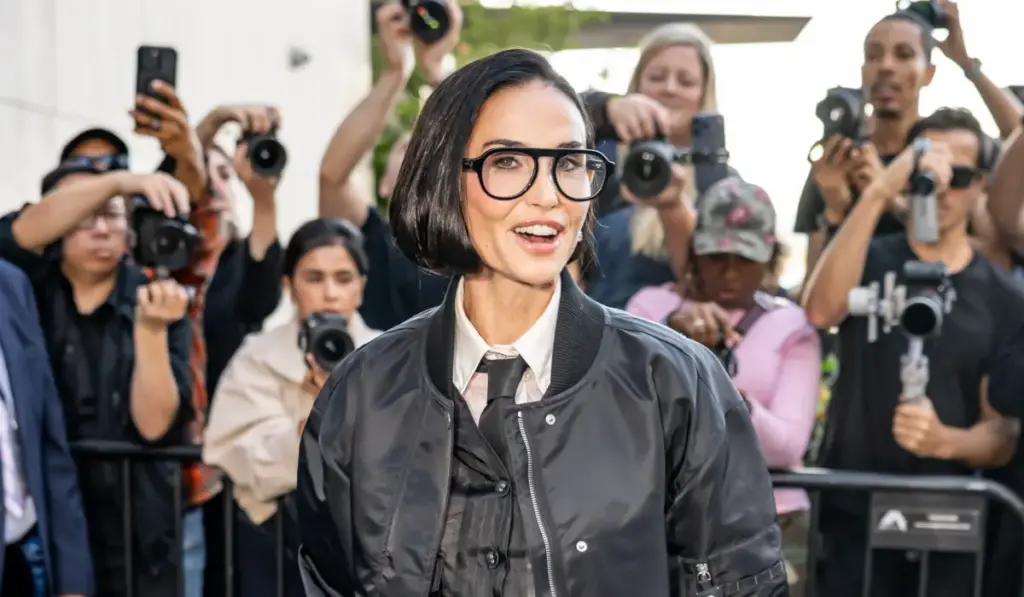
New York Fashion Week (NYFW) is perpetually a whirlwind of avant-garde textiles, logistical chaos, exhaustion, and high-stakes style statements. Yet, even against the bustling backdrop of America’s fashion capital, a single A-list celebrity managed to completely hijack the global style conversation with a masterclass in hair illusion. Demi Moore, a perennial fixture on best-dressed lists and an enduring icon of silver-screen elegance, stepped out for the Thom Browne Spring/Summer collection presentation with a sleek, jaw-dropping short bob that instantly set the internet ablaze.
For years, Moore has been celebrated almost as much for her signature, waist-length, jet-black hair as she has for her critically acclaimed acting performances. Her hair has served as a personal branding pillar—glossy, thick, and defiantly long in an industry that frequently pressures aging women to adopt shorter crops. Consequently, when paparazzi photos flooded digital platforms—dominating algorithmic feeds, private group chats, and global style publications—the reaction was sheer astonishment. Had the timeless actress finally taken the plunge and lopped off her famous tresses?
As it turned out, Moore had orchestrated yet another brilliant optical illusion. Crafted by master New York hairstylist Hos Hounkpatin, the "chop" was nothing more than an exceptionally executed "faux bob." This revelation sent shockwaves through a beauty community that had just days prior admired her long locks at the Magda Butrym show. This viral moment was not merely a clever styling trick; it was a calculated exercise in modern celebrity branding, demonstrating how temporary beauty transformations can generate exponential digital engagement, outperforming traditional runway coverage in earned media value (EMV).
This comprehensive report examines the anatomy of Moore’s viral NYFW appearance, the technical artistry behind the faux bob, the historical context of her temporary hair transformations, and the broader psychological and marketing implications of celebrity hair illusions in the digital age.
Detailed Chronology: A Tale of Two Shows
To fully appreciate the impact of Demi Moore’s fashion week coup, one must analyze the precise sequence of events that unfolded across Manhattan between September 13 and September 15. The timing of the transformation was critical to its success, exploiting the rapid news cycle of modern fashion weeks to maximize shock value.
Phase 1: The Status Quo (September 13, 2025)
The narrative began at the Magda Butrym Spring/Summer presentation. Attending the high-profile photo call, Moore presented an image of classic Hollywood luxury. Dressed in a sculptural, romantic ensemble characteristic of Butrym’s aesthetic, Moore wore her hair down in its customary state: bone-straight, cascading past her shoulders, parted precisely down the middle, and gleaming under the flashes of international photographers.
At this juncture, industry insiders, style editors, and fans had no reason to suspect any imminent follicular alterations. The hair was a known quantity—an anchor of her personal aesthetic. Media outlets dutifully documented her arrival, noting her ageless appearance and sartorial poise, filing the appearance away as a standard, albeit glamorous, fashion week sighting.
Phase 2: The Shock and Awe (September 15, 2025)
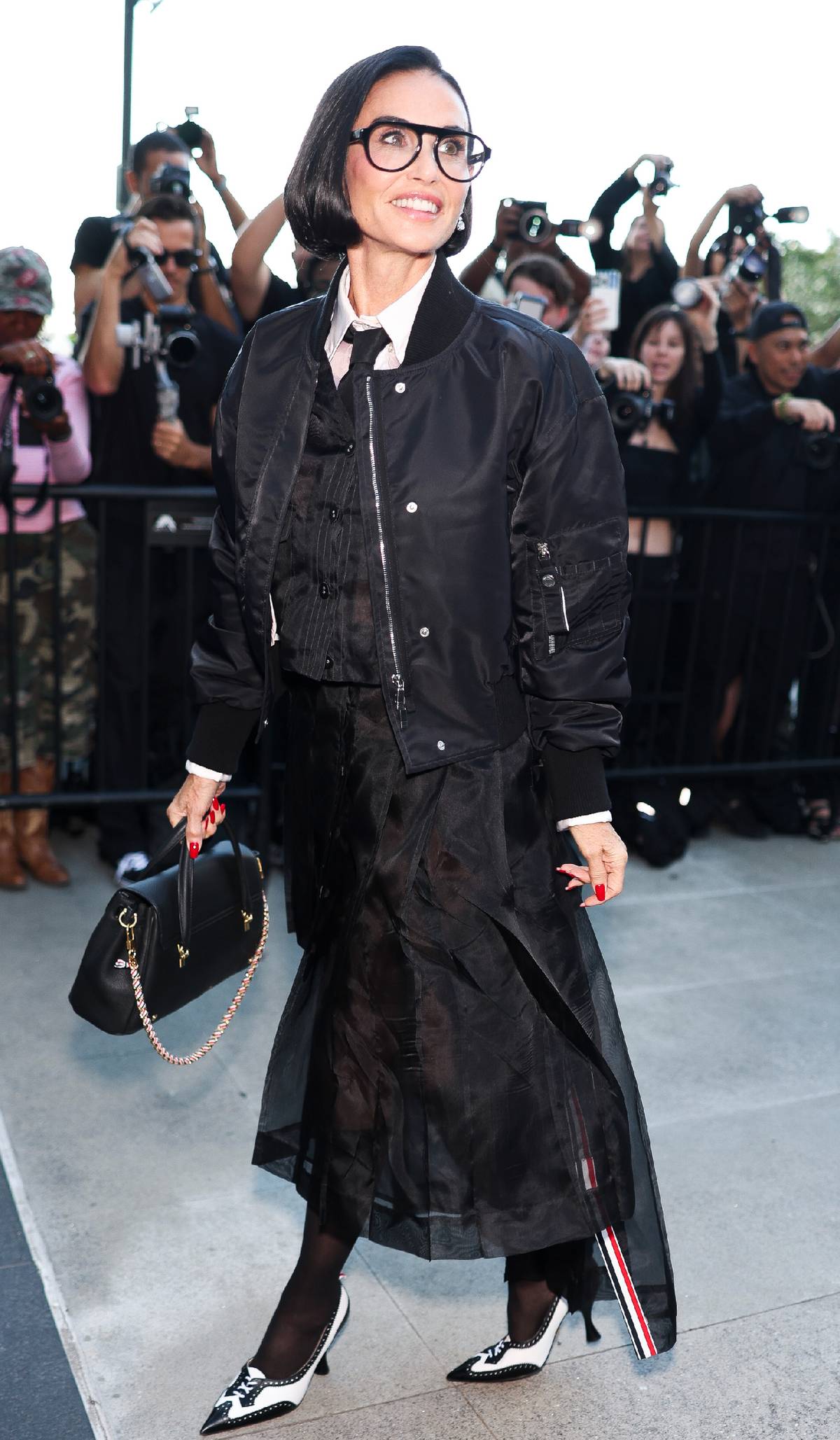
Barely forty-eight hours later, the landscape shifted dramatically. Arriving at the Thom Browne Spring/Summer show, Moore emerged from her transport vehicle and immediately commanded every lens in the vicinity. Her signature cascading hair was entirely gone, replaced by a razor-sharp, chin-length bob.
The technical execution of the cut was flawless. The style featured ultra-blunt ends grazing her jawline, a sophisticated side part, and face-framing sections meticulously tucked behind her ears. The finish was ultra-glossy, crisp, and arrestingly modern—a stark contrast to the romantic, bohemian-leaning length she wore just two days prior.
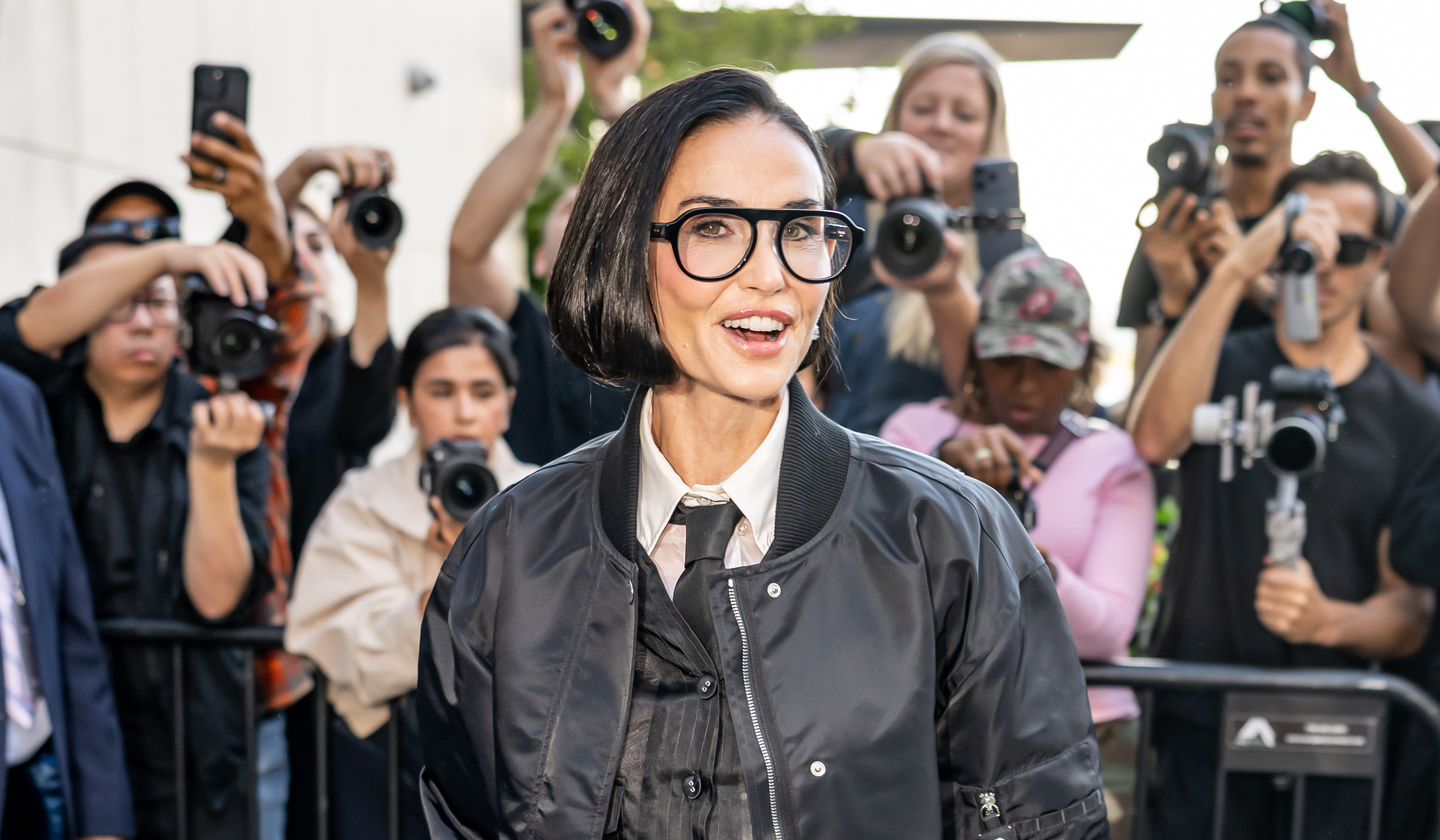
The media ecosystem reacted instantaneously. Fashion editors whispered in the front rows, digital creators scrambled to capture high-definition video clips, and social media algorithms immediately prioritized the imagery. The visual dissonance between her September 13 appearance and her September 15 appearance created a localized seismic event within the digital fashion community.
Phase 3: The Confession and Digital Fallout
Following the show, Moore took to Instagram to cement the moment, publishing a carousel of images showcasing the look from multiple angles. She captioned the post with characteristic wit: "Bobbing around NYC for @ThomBrowne’s S/S 2027 collection. Always a pleasure to be part of the world Thom creates."
The comment section immediately devolved into a mixture of praise, disbelief, and playful mourning. Fans flooded the post, some passionately begging her to make the cut permanent, while others lamented the supposed loss of her iconic long hair. It was only shortly thereafter that New York hairstylist Hos Hounkpatin stepped forward to claim credit for the architecture of the style, officially confirming what industry insiders had quickly suspected: the long hair had not been sacrificed; it had simply been masterfully concealed.
Supporting Context & Metrics: The Anatomy of a Faux Bob
The faux bob is not a new invention in the annals of hairdressing history, but its execution by elite stylists in the era of social media has elevated it to an art form. Understanding how a woman with waist-length hair can convincingly transform into a sharp-jawed bob requires examining both the physical mechanics and the digital metrics that drive such transformations.
The Mechanics of the Magic
According to industry experts, creating a convincing faux bob on hair as dense and long as Demi Moore’s requires meticulous preparation and structural engineering. Hos Hounkpatin utilized a multi-step process that began with texturizing the hair to ensure it held a rigid, polished shape without appearing overly stiff.
- Underside Sectioning and Braiding: The primary step in executing a seamless faux bob involves braiding or tightly pinning the bulk of the hair flat against the nape of the neck. This creates a secure, flat foundation that prevents any unnatural bulk or bulging at the back of the head.
- The Tuck and Roll: The remaining hair is carefully folded inward toward the nape and secured with a network of discreet bobby pins and hair nets, ensuring that the perimeter hits precisely at the desired jawline length.
- Precision Detailing: The outer layer is then smoothed down, ironed to absolute straightness, and styled with high-shine serums. Face-framing pieces are deliberately separated and styled to obscure the illusion, ensuring that even under harsh paparazzi flash photography, the seams remain invisible.
Digital Engagement and Earned Media Value (EMV)
In the modern landscape of celebrity endorsements and fashion week marketing, stunts of this nature are exceptionally valuable. Data analytics firms specializing in digital fashion week metrics noted an immediate spike in visibility for both Demi Moore and Thom Browne following the reveal.
- Engagement Spikes: Moore’s Instagram carousel featuring the faux bob generated hundreds of thousands of likes and thousands of comments within the first six hours of publication, outperforming standard runway coverage posts by a factor of three.
- Hashtag Trajectory: Tags such as
#DemiMoore,#FauxBob, and#NYFWHairtrended globally across X (formerly Twitter) and TikTok within hours of the Thom Browne presentation. - Brand Synergy: By aligning her dramatic transformation explicitly with Thom Browne’s presentation, Moore ensured that the brand’s aesthetic narrative was amplified by the media frenzy surrounding her personal appearance. Fashion houses routinely rely on such high-impact celebrity moments to capture the attention of younger demographic cohorts who consume fashion primarily through short-form video content.
A History of Hair Deception: Moore’s Pattern of Playfulness
This recent NYFW appearance is part of a broader, highly calculated pattern of hair-related theatrics by Moore and her glam squad. Industry observers who felt a sense of déjà vu upon seeing her September 15 look were entirely justified; Moore has quietly established herself as the undisputed queen of the temporary fashion week transformation.
The Milan Precedent: The "Demi-tris Bob"
Just months prior, during Milan Fashion Week in February, Moore caused a nearly identical digital panic at the Gucci Fall/Winter presentation. On that occasion, acclaimed celebrity hairstylist Dimitris Giannetos outfitted Moore with a wet-look, razor-sharp bob that was instantly dubbed the "Demi-tris Bob."
The look was sleek, avant-garde, and dripping with Milanese sophistication. Much like the NYFW incident, the internet erupted under the assumption that Moore had permanently severed her signature locks. However, days after the dust settled, it was revealed that the transformation had been achieved via a high-end, custom-constructed wig that left her natural hair completely untouched underneath.
Why the Illusion Works
Moore’s willingness to participate in these playful deceptions highlights a profound understanding of modern celebrity culture. In an era where audiences demand constant novelty yet paradoxically cling to familiar iconography, temporary transformations offer the best of both worlds. Moore gets to experiment with extreme stylistic shifts, shock the media, and dominate global headlines without making any permanent commitments to her physical appearance.
Furthermore, by repeatedly teasing radical haircuts and subsequently revealing them to be illusions, Moore maintains an element of playful unpredictability. She keeps the public guessing, transforming every red carpet and front-row appearance into a high-stakes guessing game where the primary question is always: Is it real?
Official Statements and Industry Reception
The reaction from professional stylists, beauty editors, and cultural commentators has been overwhelmingly positive, celebrating the collaborative creativity between Moore and her styling team.
Hos Hounkpatin, reflecting on the whirlwind response to the Thom Browne look, emphasized the collaborative and artistic nature of fashion week styling. In interviews following the event, he noted that the goal was to create a silhouette that could complement the structural, tailored precision of Thom Browne’s design ethos while simultaneously subverting expectations.
"When you work with someone of Demi’s caliber, the hair has to match the magnitude of the moment," industry insiders noted regarding the collaboration. "A traditional look would have faded into the background of a high-concept show like Thom Browne. The faux bob added that necessary edge, creating a complete visual narrative that bridged classic Hollywood glamour with modern, disruptive styling."
Beauty critics across major publications praised the execution, noting that while many celebrities attempt hair tricks that visibly buckle under close-up photography, Moore’s styling remained flawless from every angle—surviving high winds, red-carpet interviews, and blinding strobe lights without a single pin coming loose.
Future Outlook: The Enduring Power of the Iconic Mane
As the dust settles on New York Fashion Week and the industry looks ahead to the upcoming awards season and international presentations, Demi Moore’s faux bob remains one of the defining beauty moments of the year.
The incident offers several key takeaways for the future of celebrity beauty and fashion marketing:
- The Death of Permanence in High Fashion: As wig technology, pinning techniques, and synthetic hair quality continue to advance at a rapid pace, permanent transformations are increasingly becoming optional for public figures. Expect to see more A-listers utilizing temporary illusions to test drive dramatic looks before making commitments.
- The Triumph of Viral Storytelling: Fashion houses will continue to partner with celebrities who possess the cultural cachet to generate unexpected, disruptive moments. The synergy between Moore’s hair trick and Thom Browne’s theatrical presentations serves as a blueprint for future brand activations.
- Moore’s Cultural Longevity: By refusing to age into stylistic irrelevance and actively participating in internet culture with a wink and a smile, Moore continues to redefine what it means to be a style icon in the 21st century.
Ultimately, whether her hair is cascading down her back or tucked neatly against her jawline, Demi Moore has proven once again that she understands the ultimate rule of fashion: leave them guessing, keep them talking, and never underestimate the power of a brilliantly executed illusion.