Executive Overview
Jeju Island, celebrated globally as South Korea’s ultimate idyllic honeymoon destination, is currently grappling with an unsettling wave of panic. Famed for its dramatic volcanic topography, subterranean maze-like cave systems, cascading waterfalls, and serene coastal views, the island has long offered a romantic escape for millions of domestic and international travelers. However, the idyllic illusion has been violently shattered by a string of grim discoveries. In a span of just three days, four individuals previously reported missing across the island turned up dead, exposing not only the vulnerability of its rugged terrain, but also a deeply systemic and alleged administrative rot within local law enforcement.
While South Korean authorities have publicly stated they have found no definitive evidence linking the deaths or establishing widespread foul play, the timing and context of the recoveries have ignited public fury. The discoveries closely followed shocking revelations that a local police detective allegedly falsified records, faked communications with a missing person, and prematurely closed an investigation to bypass administrative burdens. This apparent dereliction of duty has triggered nationwide scrutiny, forcing officials to re-examine hundreds of cold missing persons cases on the island.
As online sleuths map out body recovery locations and wild speculation regarding a potential serial killer spreads across social media, tourism is taking a severe hit. Visitors are canceling trips to the volcanic paradise, casting a dark cloud over what was meant to be a banner year for Jeju’s vital tourism economy. This investigative report delves into the timeline of the discoveries, the mechanics of the alleged police cover-up, the physical impossibilities cited by grieving families, and the broader crisis shaking South Korea’s criminal justice system.
Detailed Chronology: The Anatomy of a Cover-Up and Discovery
The Disappearance of Jang Mi-ran
The harrowing sequence of events centers heavily on the case of 37-year-old Jang Mi-ran, whose tragic fate has become the focal point of the scandal. Jang vanished from Jeju City in the early hours of May 13. Distraught, her boyfriend immediately reported her missing to local authorities, hoping for a swift and comprehensive search operation.
Instead, the case was handled by a detective identified only by his surname, Bu. According to the missing person’s report, Detective Bu allegedly informed Jang’s boyfriend that he had personally spoken with her. The officer claimed Jang stated she was voluntarily leaving, cutting ties, and no longer wished to see her partner. Operating under an entrenched, dismissive institutional mindset that "real crimes do not happen on this peaceful island," the case was swiftly classified and closed.

The Thread Begins to Unravel
However, subsequent internal investigations revealed a disturbing reality: Detective Bu’s claims were entirely fabricated. Digital forensics investigators uncovered no phone records, call logs, or electronic footprints supporting the assertion that the officer had ever spoken to Jang. Compounding the suspicion, nearby closed-circuit television (CCTV) footage that could have verified the officer’s claims had conveniently been deleted.
Official police logs submitted by Bu claimed that Jang had called an emergency dispatch center to state she refused to meet her partner and requested her location remain confidential. For more than 100 days, this falsehood stood as the official administrative record.
It was only when Jang’s weary and persistent parents launched an independent push for a renewed missing persons probe that the truth began to surface. On August 24—more than three months after she was last seen—Jang’s body was discovered hanging from a palm tree. Chillingly, the grim discovery site was located less than a 10-minute walk from where she was originally last seen alive.
Forensic Skepticism and Physical Impossibilities
Following the discovery, local law enforcement swiftly briefed Jang’s family, asserting that she had died by suicide based on the position and physical location of the remains. Yet, her grieving boyfriend and family members remain deeply skeptical of the official narrative.
Speaking to local television network Chosun, Jang’s boyfriend expressed utter disbelief. "She said she found that place frightening whenever she passed by," he noted, highlighting the jarring contradiction of her choosing such a location to end her life.

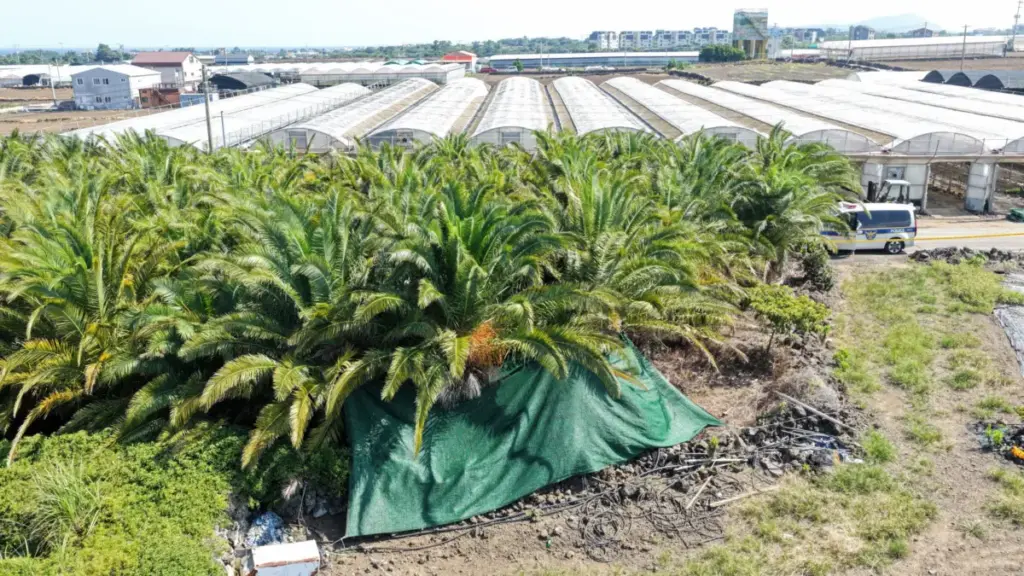
Local residents familiar with the terrain echoed this profound skepticism. The discovery site was a dense palm tree farm dominated by Canary Island date palms. These specific trees are heavily armed with sharp, rigid, and hazardous spines.
"Even for a man, it would be nearly impossible to hang a rope from one of those trees," a Jeju resident explained to investigators. "They don’t have regular branches like ordinary trees, and you would risk severe injury just trying to get close to the trunk."
Investigators have since noted that Detective Bu allegedly utilized a similar administrative shortcut to prematurely close the case of a man in his 60s, who was also subsequently discovered dead.
A Cascading Wave of Bodies
Jang’s recovery was not an isolated incident; it served as the opening salvo of a terrifying three-day span. On the exact same day Jang’s remains were located, another individual previously registered as missing was found dead near a secluded valley in Aewol-eup. Just 24 hours later, a local fisherman spotted the floating body of a man in his 70s in coastal waters frequently populated by surfers.
As the body count climbed, Detective Bu was publicly perp-walked to a court detention hearing. In a dramatic scene broadcast live on national television, grieving members of Jang’s family confronted and attacked the disgraced officer. Bu has steadfastly denied any wrongdoing, insisting through his legal counsel that he successfully contacted the missing individuals prior to closing their cases.

Supporting Context & Metrics: The Scale of South Korea’s Missing Persons Crisis
To understand the public panic gripping Jeju Island, one must examine the broader statistical reality of missing persons reports across South Korea. While Jeju is widely perceived as a tranquil getaway, the sheer volume of administrative caseloads creates vulnerabilities for institutional negligence.
According to data from the Jeju Tourism Association and national police registries:
- Tourist Inflow: Jeju Island drew approximately 1.2 million foreign visitors in the first half of 2026 alone, cementing its status as an economic powerhouse driven by hospitality and leisure.
- National Missing Adults Volume: South Korean police received a staggering 70,814 reports of missing adults last year.
- Annual Averages: Since 2022, the nation has consistently processed upwards of 70,000 missing person cases annually.
- Resolution Rates: While police maintain that the vast majority of these cases—often upwards of 90%—are successfully resolved within a 30-day window, the remaining percentage represents a significant pool of vulnerable individuals whose fates remain entirely unaccounted for.
In response to the Jeju scandal, high-level commands have ordered an exhaustive administrative review. Nearly 300 historical missing persons cases originating from the island are currently being audited, with an initial cohort of ten cases flagged for rigorous examination regarding potential improper closure by local precinct personnel.
Official Statements & Public Reaction: Panic in Paradise
The revelations surrounding Detective Bu and the cluster of bodies have eroded public trust in local institutions, triggering a wave of digital vigilantism and widespread cancellations in the tourism sector.
The Social Media Storm
In the absence of clear, transparent, and timely communication from law enforcement, online forums and social media platforms have filled the vacuum. Virtual sleuths and internet commentators have begun mapping the geographical coordinates of the recent body discoveries, fueling unsubstantiated rumors that a serial killer may be operating unchecked across the island.

The anxiety has been amplified by high-profile residents. Hong Hye-geol, a prominent South Korean television personality and author who has resided on Jeju for seven years, took to Instagram to express deep safety concerns regarding the island’s more remote pathways.
"When I cycle around Jeju, I often come across deserted roads in villages without even venturing deep into Hallasan," Hong wrote in a widely shared post. "Stray just a little from a trail, and you can find yourself somewhere no one would hear you scream. I wouldn’t recommend either women or men going around here alone, even in broad daylight or on paved roads."
Such warnings, amplified by millions of followers, have directly impacted the local economy. Hotels, rental car agencies, and tour operators have reported an uptick in reservation cancellations as prospective travelers redirect their vacations to the mainland or alternative international destinations.
Law Enforcement Response
Under intense pressure from the National Police Agency and the Ministry of Interior and Safety, local Jeju authorities have pledged full transparency. Officials have announced plans to conduct comprehensive forensic scene reconstructions for all four recent deaths to definitively rule out—or confirm—any third-party criminal involvement.
Furthermore, internal affairs units have expanded their probe beyond Detective Bu, examining whether a broader culture of apathy, administrative shortcut-taking, or falsification of public electronic records exists within regional substations.

Future Outlook: Restoring Trust in the Volcanic Haven
The unfolding crisis on Jeju Island represents a critical inflection point for South Korean law enforcement. The systemic failures that allowed Jang Mi-ran’s case to be swept under the rug for over 100 days highlight an urgent need for administrative reform, mandatory oversight in missing persons investigations, and stricter digital verification protocols for case closures.
For Jeju to reclaim its reputation as a safe, welcoming sanctuary, accountability must be visibly served. The ongoing forensic audits of nearly 300 cold cases will test the judiciary’s commitment to justice for victims’ families, while the ongoing criminal proceedings against Detective Bu will set a definitive legal precedent for police negligence.
Until comprehensive answers are delivered and systemic reforms are institutionalized, the shadow cast over the volcanic paradise will remain—serving as a stark reminder that even the most picturesque landscapes can harbor dark, unresolved secrets.