Executive Overview
Target is once again at the center of the retail media cycle, navigating a dual narrative of aggressive commercial expansion and compounding public relations challenges. As the retail giant gears up to launch its ambitious Target Beauty Studio—a 1,600-product, 90-brand initiative rolling out to over 600 stores next month—it is simultaneously working to quell severe backlash stemming from racially insensitive Halloween merchandise.
This high-contrast moment captures the modern tightrope walked by major big-box retailers. On one hand, Target is doubling down on an experiential, prestige-driven retail strategy designed to capture market share from high-end specialty stores. On the other hand, the company is grappling with the enduring fallout of consumer alienation following years of fluctuating corporate stances on diversity, equity, and inclusion (DE&I) initiatives.
The upcoming rollout represents a decisive evolution for Target’s beauty segment. Following the winding down of its high-profile partnership with Ulta Beauty earlier this year, Target is stepping out on its own. By weaving luxury names like Dyson, Boy Smells, and Billie Eilish into its aisles alongside a robust curation of founder-led indie brands, Target aims to transform the everyday shopping trip into an immersive journey of discovery. However, the success of this multibillion-dollar gamble depends heavily on whether disillusioned consumers can look past recent controversies and embrace Target as their experiential "happy place."
Detailed Chronology: From Ulta Partnership to the Target Beauty Studio
To understand the scale of the Target Beauty Studio, one must examine the strategic pivot points that brought the retailer to this juncture.
The Ulta Beauty Era (2021)
In 2021, Target made waves by launching shop-in-shop partnerships with Ulta Beauty. This collaboration successfully introduced prestige mainstays like The Ordinary, MAC Cosmetics, and Urban Decay to hundreds of suburban and urban Target locations. It proved that Target shoppers were eager to purchase prestige skin care, cosmetics, and hair care alongside their groceries and home goods.
The Evolution and Separation (Early 2024)
As consumer shopping habits shifted and Target sought deeper integration across its proprietary spaces, the Ulta Beauty partnership came to a close earlier this year. Rather than retreating to mass-market beauty basics, Target executives chose to build upon the momentum of the Ulta collaboration, developing an independent, highly curated prestige model tailored specifically to the behavioral patterns of the modern Target shopper.
The Target Beauty Studio Announcement (Current)
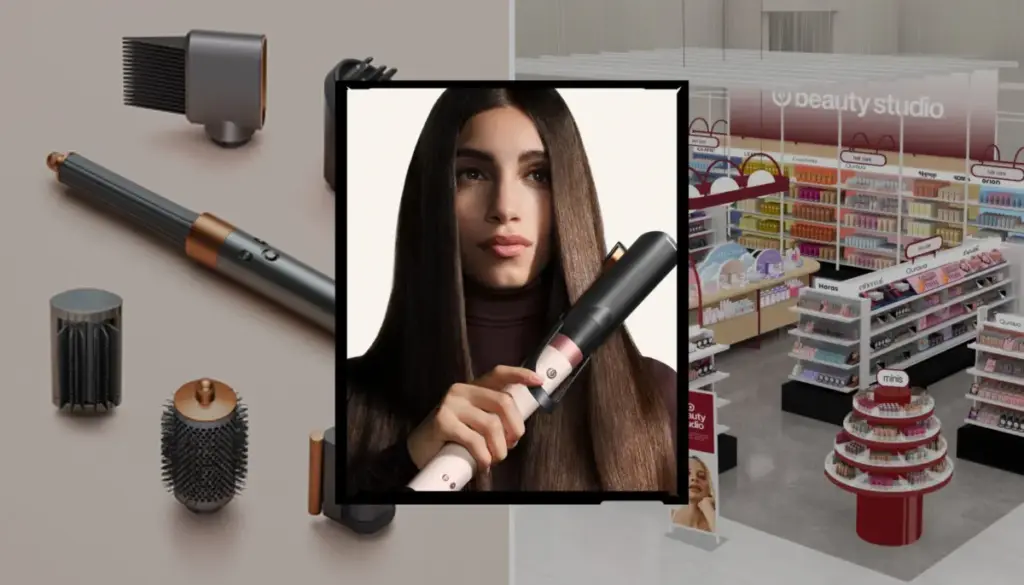
Scheduled to debut next month across more than 600 stores, the Target Beauty Studio is the culmination of years of consumer research and merchandising fine-tuning. Spanning hair care, skin care, fragrance, and nail care, the initiative introduces over two-thirds new brands to Target’s ecosystem.
Simultaneously, however, the brand’s timeline has been punctuated by reputational friction. In tandem with the beauty studio’s announcement, Target faced immediate and fierce online backlash over a Halloween costume deemed reminiscent of harmful racial imagery and stereotypes. Acting swiftly, the retailer issued a public apology and pulled the item from its website. This incident arrived on the heels of nearly two years of vocal consumer boycotts and polarization regarding Target’s rollbacks on Pride displays and DE&I commitments—pledges the company had loudly championed following the murder of George Floyd in 2020.
Supporting Context & Metrics: The Anatomy of the Beauty Studio
Despite external controversies, Target’s merchandising team remains bullish on the financial and cultural viability of the new beauty strategy. The metrics behind the Target Beauty Studio illustrate a massive operational undertaking.
Scale and Scope
- Total Products: Approximately 1,600 SKUs.
- Brand Count: 90 distinct brands, more than two-thirds of which are entirely new to Target.
- Footprint: Rolling out to over 600 physical storefronts nationwide.
Category Breakdown
- Hair Care: High-end appliances like the Dyson Supersonic Travel dryer sit alongside professional and trending lines such as Verb, Paul Mitchell, Joico, and IGK.
- Skin Care: Comprising over 30 dedicated brands, the assortment ranges from accessible cult favorites like Mario Badescu and Tula to innovative skin tools from Shark, alongside specialty labels like Doré.
- Fragrance: Tapping into Gen-Z and millennial culture with prestige and celebrity-backed scents from Boy Smells, Billie Eilish, Coach, and Ariana Grande.
- Body & Nails: Wellness-forward and self-care essentials from Maude, Voesh, and Buff Beauty.
Experiential Retail Architecture
The physical layout of the Target Beauty Studio is designed to disrupt the traditional linear drugstore aisle experience. According to leadership, the spaces will feature dedicated experiential zones:
- The Minis Destination: Capitalizing on the travel-size beauty craze.
- The Fragrance Mini Bar: Allowing low-risk scent discovery.
- Trending and Hero Displays: Showcasing viral TikTok products and foundational bestsellers.
By pairing these physical transformations with rigorous employee training and weekend experiential events, Target is intentionally attempting to pivot its brand perception from a utilitarian errand destination to an imaginative, experiential retail hub.
Official Statements and Industry Perspectives
To gauge the reception and internal philosophy driving this massive retail pivot, industry leaders and Target executives have shared candid insights regarding the democratization of luxury and the resilience of the consumer base.
The Target Leadership Perspective
Amanda Nusz, Senior Vice President of Merchandising, Essentials, and Beauty at Target, emphasizes that the studio is designed to fill a gap in the market for experiential discovery.
"This really is our platform for prestige beauty," Nusz states. "A lot of time and energy has been spent with the consumer working on what we believe is going to make us compelling in our next chapter of beauty. This allows us to curate an assortment and an experience that allows people to explore beauty in more inspiring spaces."
Nusz envisions the department as an antidote to routine shopping fatigue: "We hear all the time that Target is the place where you go to get things done, but it’s also your happy place. Our goal is to make it more fun to browse, wander, and learn about the existing assortment in a more playful and imaginative way, so it feels more candy store than grocery store."
Founder and Brand Partner Perspectives
For independent beauty founders, entering the Target ecosystem represents an unprecedented opportunity for scale, even amid recent corporate controversies.
Kim Baker, founder of Glamazon Beauty, is launching a Target-exclusive lineup alongside her bestselling items. She believes her target demographic remains fundamentally aligned with the retailer:
"She’s like me. She’s a busy mom, or a businesswoman, or a wife. She’s of a certain age. I look at my base now, and she’s skin-conscious, but she’s wise with her money," Baker shares. Addressing the elephant in the room regarding recent consumer backlash, she notes: "I talk to other women because I get a lot of them in my makeup chair. They say the same thing. Even when the boycott happened, so many women were like, ‘Oh my God, I miss going into Target.’"
Dawn Hilarczyk, Chief Operating Officer of 70-year-old heritage brand Borghese Roma, views the partnership through the lens of democratization:
"We are premium, but we also want to democratize it. For Borghese, the brand is 70 years old and yet still new to so many people. I felt Target is the perfect intersection to democratize beauty and premium beauty."
Echoing this sentiment of consumer trust and accessibility is Courtney Somer, founder of Lake & Skye, which is debuting a new collection in the scent 222 specifically for the partnership:
"They have trust with their beauty consumer. They also have an elevated environment for discovery in what they’re planning to do. There’s just a strong alignment between Target and Lake & Skye, in terms of accessibility, discoverability, and the experience that we’re looking to provide. It feels like the right place for us to expand."
Future Outlook: Can Experience Overcome Alienation?
As Target prepares to pull back the curtain on the Target Beauty Studio across its 600-plus participating stores, the overarching question for retail analysts is one of consumer sentiment.
There is no denying the mathematical reality: adding over 600 new points of sale for high-end beauty brands fundamentally makes prestige items more accessible to the American public. The curated mini-bars, high-end hair tools, and experiential weekend events signal a mature, thoughtful evolution in how big-box retail can compete with specialty cosmetics chains and e-commerce giants.
However, operational excellence alone may not be enough to heal brand fractures. The ongoing consumer discontent resulting from shifting DE&I policies, Pride month backpedals, and recurring merchandising missteps—such as the recent Halloween costume controversy—have left segments of Target’s loyal consumer base feeling alienated.
Ultimately, the success of the Target Beauty Studio will test a core psychological principle of modern retail: Can the irresistible allure of discovery, convenience, and accessible luxury outweigh lingering consumer skepticism? If the enthusiasm of independent founders and the foot traffic of everyday shoppers hold true, Target may very well successfully reinvent its aisles as the ultimate beauty destination. But if the retailer fails to align its corporate values with the diverse communities it serves, even a Dyson Supersonic dryer or an exclusive Boy Smells fragrance might not be enough to win back wandering hearts.