Translating a beloved, multi-decade-running anime and manga property into a live-action medium is one of the most perilous tightrope walks in modern entertainment. When Netflix rolled the dice on its live-action adaptation of Eiichiro Oda’s pirate epic One Piece, skeptics predicted a catastrophic misfire. Instead, season one became a global phenomenon, winning over both die-hard fans (nakama) and mainstream audiences alike through its reverence for the source material, energetic performances, and meticulous production design.
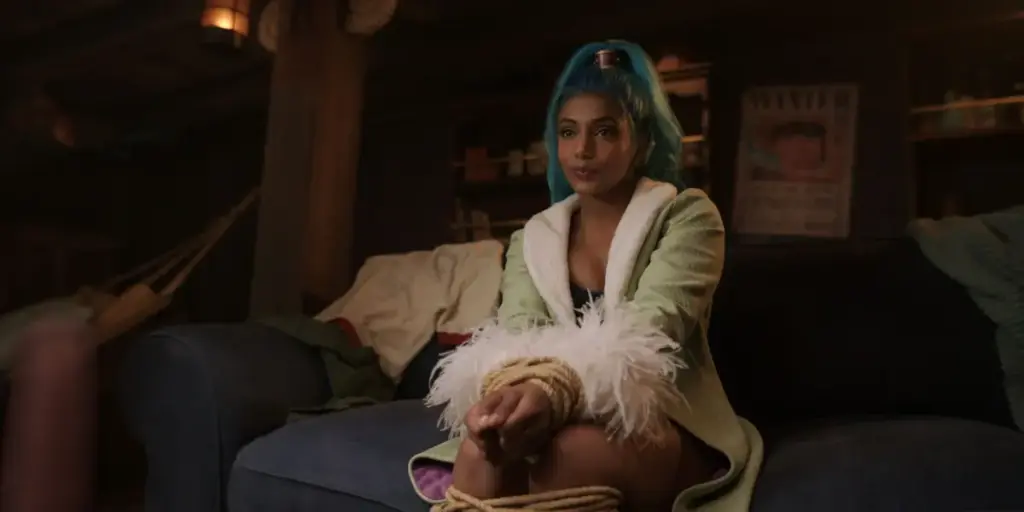
As the production machine gears up for its highly anticipated second season—slated to introduce some of the most pivotal characters and locations in the grand Grand Line narrative—the spotlight has inevitably turned to the casting and styling of Nefertari Vivi, also known by her alias Miss Wednesday. Portrayed by breakout star Charithra Chandran, the transition of the Alabastan princess from page to screen hinges heavily on one striking visual element: her signature, vibrant blue hair.
In a candid, exclusive cover story for Teen Vogue alongside co-star Iñaki Godoy (who leads the Straw Hat Pirates as Monkey D. Luffy), Chandran pulled back the curtain on the exhaustive, deeply technical, and surprisingly intimate process of bringing Vivi’s hair to life. From initial head-wraps in London to the blistering sets of Cape Town, South Africa, Chandran detailed the creation of "Vicky"—affectionately nicknamed after her alter ego—offering a masterclass in how modern television production transforms 2D anime aesthetics into grounded, believable human realities.
Detailed Chronology: From London Measurements to the Sands of Little Garden
The journey of Vivi’s custom blue hair did not begin on the soundstages of South Africa, nor did it start with a hurried makeup chair consultation. The timeline of bringing Princess Vivi’s iconic look to fruition spans continents, meticulous artistic trial-and-error, and a healthy dose of actor vulnerability.
Phase 1: The Blueprint in London
Long before Chandran set foot on set or packed her bags for the Cape Town production hub, the groundwork was laid in the British capital. Residing in London when not actively shooting, Chandran participated in an intensive fitting process where her head was carefully wrapped and measured.
Because the production required a custom-built solution that could withstand high-octane action sequences, stunt work, and harsh outdoor lighting, the wig could not simply be ordered off-the-shelf. An external specialist took precise measurements to construct a base that would comfortably and securely fit Chandran’s head shape, ensuring she could wear it for 12-hour shooting days without compromising performance or safety.
Phase 2: First-Look Anxieties and the Arrival in Cape Town
Despite her growing portfolio of high-profile period pieces and fantasy dramas—including her celebrated turn as Edwina Sharma in Netflix’s Bridgerton—Chandran admitted to harboring intense nervousness regarding her impending transformation.
"I was like, ‘Oh my God, I’ve never dyed my hair and I’m going to have blue hair! What is this going to look like?’" Chandran recalled.
Compounding her anxiety was the logistical separation from the creation process; because an external professional handled the initial structural measurements, Chandran was left temporarily in the dark without progress photographs. Her burning question—"Do you have any pictures?"—was met with a reassuring yet suspenseful response from the styling team: the magic would reveal itself live on set.
Phase 3: The Revelation and Customization on Set
Upon arriving in Cape Town, Chandran’s fears instantly evaporated. Walking into the hair and makeup department, she witnessed firsthand the profound level of thought, artistry, and technical labor poured into her character’s visual identity.
The styling team did not merely slap a monochromatic blue helmet onto the actor’s head. Instead, they engaged in a delicate, hour-long daily ritual of customization. As documented in time-lapse videos shared by Chandran on TikTok, the process involves a dedicated crew systematically plucking individual hairs from the lace-front hairline to create a hyper-realistic illusion of growth.
Phase 4: Evolution Across Plot Lines
As the narrative progresses, Chandran’s character undergoes a transitional identity shift, moving from her initial introduction as the Baroque Works agent Miss Wednesday to her true self as Princess Vivi. To reflect this narrative arc physically, the hair and makeup team engineered two distinct versions of the wig:
The Miss Wednesday Iteration: Described by Chandran as "quite heavy," this version features a sharply pulled-back, high ponytail outfitted with extra extensions. It took the glam squad roughly an hour and a half to install, signaling a severe, aggressive, and high-maintenance aesthetic fitting for a secret agent.
The Vivi Iteration: Used for the majority of the season, this version softens the silhouette, utilizing a relaxed ponytail and delicate curtain bangs that gently frame Chandran’s face. Once streamlined, the installation process was honed into a precise science, taking exactly one hour.
Supporting Context & Metrics: Translating 2D Anime to 3D Reality
The challenge of adapting One Piece lies in creator Eiichiro Oda’s hyper-stylized universe, where characters routinely sport unnatural hair colors, impossible proportions, and gravity-defying costumes. In anime and manga, bright blue hair reads naturally within the illustrated medium. In live-action, however, a flat, primary-colored wig can easily evoke a cheap Halloween costume.
The Science of Undertones and Roots
Chandran was deeply conscious of this pitfall. She noted that things in manga and anime cannot always translate 1:1 because human beings possess natural skin undertones, shadows, and textures.
To achieve believability, the lead hairstylist went to great lengths to engineer a complex color profile. Rather than utilizing a uniform shade of blue, the wig was constructed with darker roots. This design choice serves a dual purpose:
Realism: It mimics the appearance of a person who regularly dyes their hair or possesses a natural root shadow, anchoring the fantasy element in reality.
Dimensionality: Darker roots prevent the wig from washing out the actor’s face under harsh cinematic lighting, giving the character a more dynamic, "lifted" presence on screen.
The "Little Garden" Showcase
Every custom element of Vicky was put to the ultimate test during the production’s location shoots, particularly within the perilous, prehistoric jungle setting of Little Garden.
According to Chandran, this specific arc is where the hair truly shines. Against a dense backdrop of natural greens and earthy tones, the rich blue of Vivi’s hair provides a striking, deliberate contrast that pops visually without breaking immersion. It transforms the aesthetic hazard of anime hair into a distinct, memorable piece of cinematic iconography.
Official Statements & Industry Perspectives
The behind-the-scenes transparency offered by Chandran highlights a broader shift in how major streaming platforms market their tentpole adaptations. By pulling back the curtain on the painstaking labor required for physical transformations, Netflix encourages a collaborative dialogue between the fandom and the production team.
In her Teen Vogue feature, Chandran reflected on her deepening relationship with theatrical hairpieces, joking that she is fundamentally "so about that wig life." Having cut her teeth on high-budget Regency dramas where wigs are standard industry fare, Chandran has developed a deep appreciation for the protective and transformative nature of hair styling.
"I feel so mysterious wearing her," Chandran remarked regarding her personal collection of wigs featuring bobs and bangs—a clever strategy she employs to shield her natural hair from the constant damage of heat styling and chemical processing while maintaining privacy in her everyday life.
Industry analysts have praised the casting and styling choices for One Piece season two as a masterclass in risk mitigation. By investing heavily in high-end, custom prosthetic and hair solutions, Netflix is successfully neutralizing the "uncanny valley" effect that so frequently dooms live-action anime adaptations.
Future Outlook: The Horizon for Season 3 and Beyond
With season two poised to expand the scope of the Grand Line—introducing sprawling desert kingdoms, prehistoric islands, and complex political factions—the stakes for the production have never been higher.
Fortunately, fans can rest assured that Princess Vivi and her trusty hair companion will not be a one-season wonder. Netflix has already cemented the long-term future of the franchise, confirming that Charithra Chandran and "Vicky" are officially locked in to return for One Piece season three.
As the production machine continues to churn out episodes in South Africa and beyond, the meticulous dedication demonstrated by Chandran and her hair styling team signals a bright future for the adaptation. It proves that when respect for the source material meets high-end craftsmanship, even the wildest creations of a manga artist can find a convincing, breathing home in the live-action world. For the nakama around the globe, the journey across the Grand Line is in exceptionally capable—and impeccably styled—hands.